
BVV
-
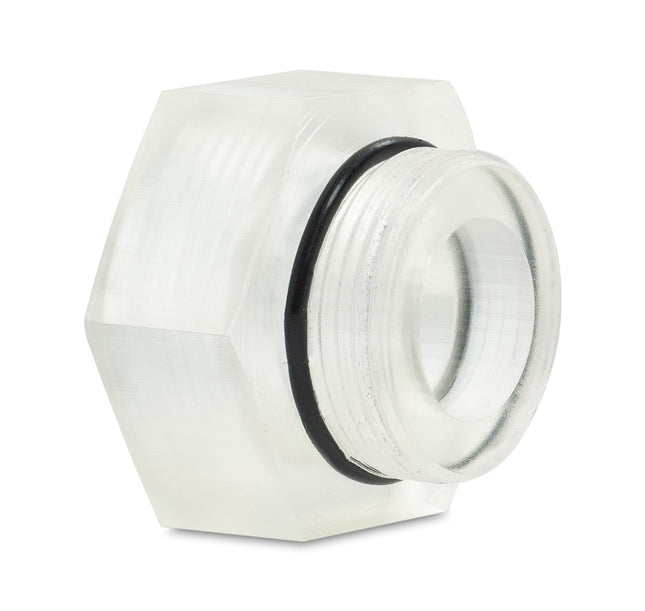

Adapter from VE filters to BVV/CPS pumps
This adapter will fit the exhaust ports on BVV VRD series vacuum pumps and adapt them to fit our BVV carbon exhaust filter.
$15.00 $12.00
-
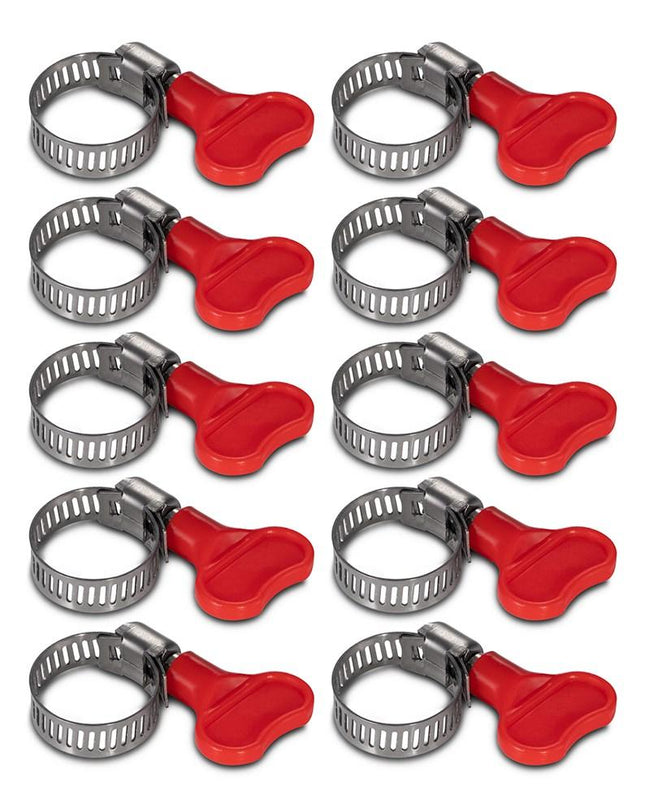

Adjustable Stainless Steel Hose Clamp with Red Butterfly Key - 10 Pack
Adjustable Stainless Steel Hose Clamp with Red Butterfly Key – 10 Pack Secure hoses and tubing with confidence using these premium stainless steel clamps. Engineered to withstand high-pressure applications, each clamp features a smooth, burr-free design and adjustable worm-gear mechanism for precise, tool-free tightening. Built from 301 series stainless steel band and housing with a corrosion-resistant 410 stainless screw, these clamps deliver durability and reliability in demanding environments. Small Clamp Specifications: Clamping range: 7/32" to 5/8" Adjustable worm-gear design 301 series stainless steel construction Smooth, burr-free edges Large Clamp Specifications: Clamping range: 5/16" to 7/8" Adjustable worm-gear design 301 series stainless steel construction Smooth, burr-free edges Pack of 10. Choose your size to match your application needs.
$12.50 - $15.00
-
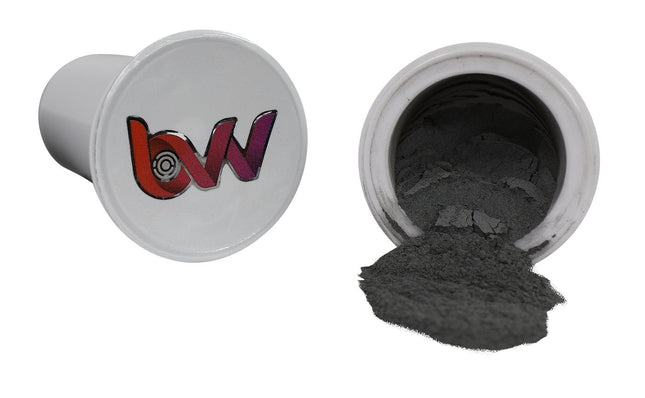
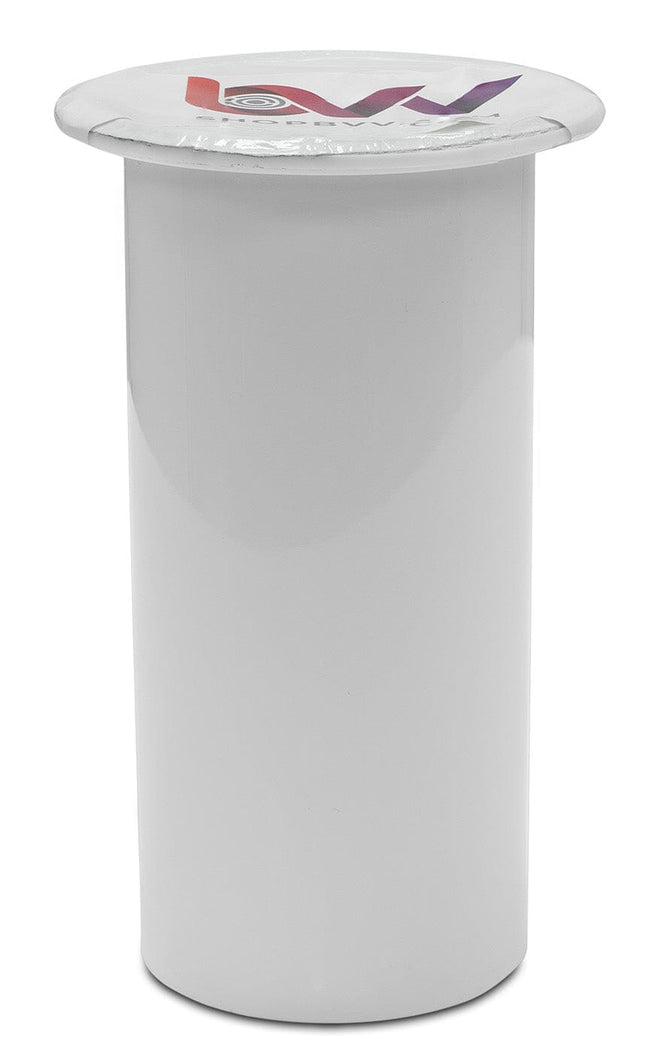
AFS Disposable Color Bleach / B80 Cartridge *FDA Certified Material
AFS Disposable Color Bleach Cartridge Note: Stainless Steel filter housing sold separately. (Click Here for Housing) AFS Instruction Manual Download Here AFS Filters are the first and only disposable color remediation filter cartridges for the botanical extraction industry. The Patent Pending design allows for an easy to use solution implemented into existing extraction systems; and is now available as a standard integration from many equipment manufacturers. AFS Filters are a simple solution that allows for the use of prepackaged filters, which are available in different recipes depending on the application. With the integrated 2.5µm paper filter molded and sealed into the cup there is no media leak through. Pre-packed means there's no need to be an expert in remediation filter media and how to construct filters; as well as eliminates the messy process of building/packing filters yourself. Disposable offers no need for cleaning the filter housings afterwards and trying to un-clog stainless filter screens. Less R&D investment, less mess, and less down time allows for higher throughput and more profit. The media contained in the BVV™ Color Bleach filter cartridge is a low pH Pure-Flo® Perform 6000 bentonite clay in a 10:1 ratio of BVV™ T-1 Activated Hardwood Carbon. Using only made in the USA materials that are FDA-GRAS and NSF certified. *The results show are using the same material for each extraction. Butane only method vs. BVV™ color bleach (110g filled Cartridge) Light Filtration is the trimmed down version of the standard Medium filter. These are best suited for extractions using fresh high end input materials that only needs a light cleaning. Medium Filtration is our standard go-to filter. This is the most commonly used and sold filter. It's great for general filtration and lightening of extracted products. Heavy Filtration is packed with the highest amount of active extraction media. These filters are best suited for exceptionally dark extractions or for extractions with normal input materials where the desired outcome is closer to clear. Heavy filters offer the highest level of filtration. Technical Specifications: Life Span: 1 Time use, Good for 5-7 lbs. of dry material. Temperature Rating: -40°C-70°C Top Seal: Induction Sealed (No glue is used) Filter: Cellulose Paper Pressure Rating: Recommended 60psi, Paper will hold 80-90 psi Max. Media: Low pH bentonite clay in a 10:1 ratio of activated 100% hardwood carbon, USA Made Materials and Certificates of Analysis available. Shell Material: Polypropylene Excellent compatibility and Safe for chemicals in our industry (Butane, Propane, Ethanol). Pressure Method: Nitrogen Assist, unless you open blast CRC. Then you can assist with an air compressor. AFS Cup weight: 48g Media Fill Volume: 110-120g Recommend Minimum Biomass: 1lb (lesser biomass will see drastic yield losses) AFS Safety Data Sheets *Please recycle your spent Cartridges. *Yield losses under refinement are to be expected but overall potency will be retained and will proportionally increase.
$55.00 - $627.00
-


AFS Economy CRC Botanical Extraction Filter
AFS Economy CRC Botanical Extraction Filter When to use Economy Filtration AFS's 2.5" Economy Botanical Extraction Filter is our best-valued extraction product. These filters are ideal when you are looking for CRC filtration without significant cost. Reformulated by eliminating some of the higher-end media this filter is a great economical alternative. Seamlessly fitting into our 2.5" housing products, this filter handles standard extraction filtration with ease. Contact us if you need advice on which filter is best for you. Perfect for: Low-cost filtering When higher-end filtering media is not required General filtration Why Choose AFS Filters? AFS Filters are the first and only disposable color remediation filter cartridges for the botanical extraction industry. Our patent-pending design allows for an easy-to-use solution implemented into existing extraction systems and is now available as a standard integration from many equipment manufacturers. AFS Filters are a simple solution that allows for the use of prepackaged filters. With the integrated 2.5 µm paper filter molded and sealed into the cup, there is no media leak through. Prepacked means there's no need to be an expert in remediation filter media or how to construct filters. In addition, it eliminates the messy process of building/packing filters yourself. Disposable means no need for cleaning the filter housings afterward or trying to unclog stainless filter screens. Less R&D investment, less mess, and less downtime allow for higher throughput and more profit.
$18.00 - $216.00
-
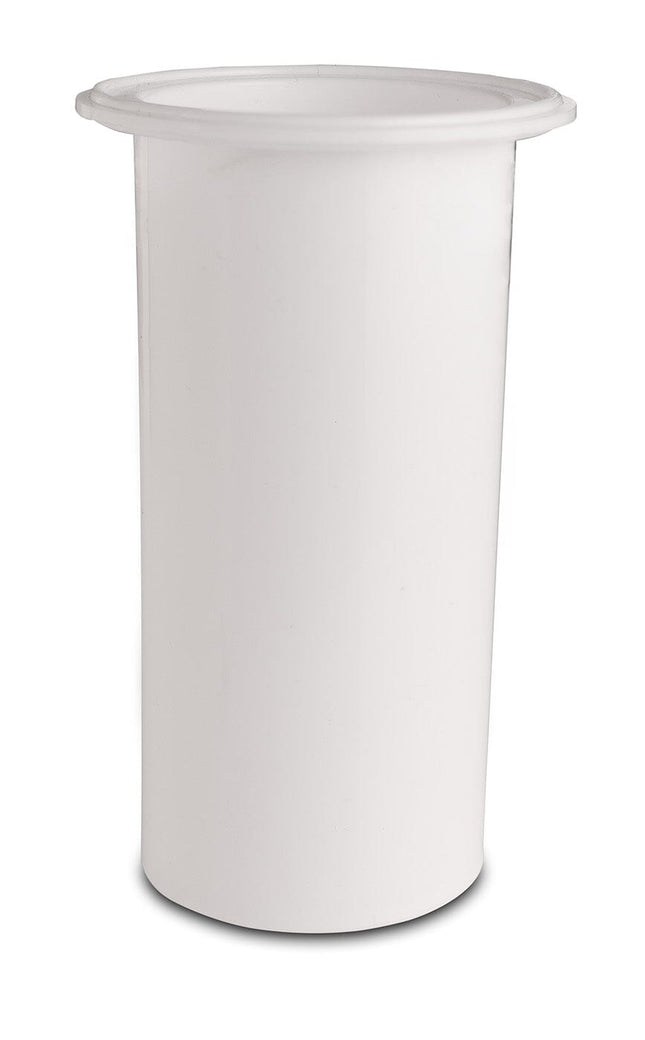

AFS Empty 2.5" CRC Botanical Extraction Filter Cup
2.5" CRC Botanical Extraction Filter Cup
$14.99 $11.00
-
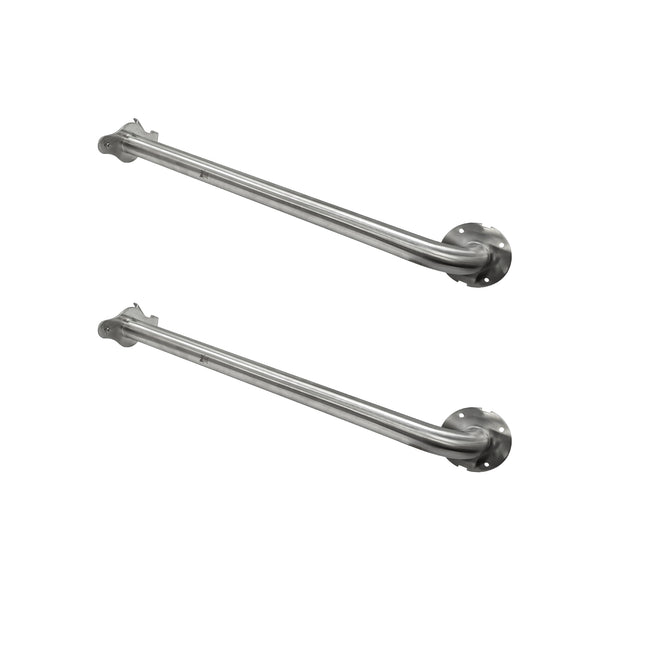

Air Inlet Long Tube Intake Pipe Valve BBQ Drum Smoker DIY Parts Set (2)
Pair of 304 Grade Stainless Steel Air Intake pipes for BBQ Drum Smokers. Intake pipe ID: 1.5" Overall Length is 26 1/4" from top of tube to bottom of radius. Flange with 4 screw holes is 4" diameter
$200.00
-
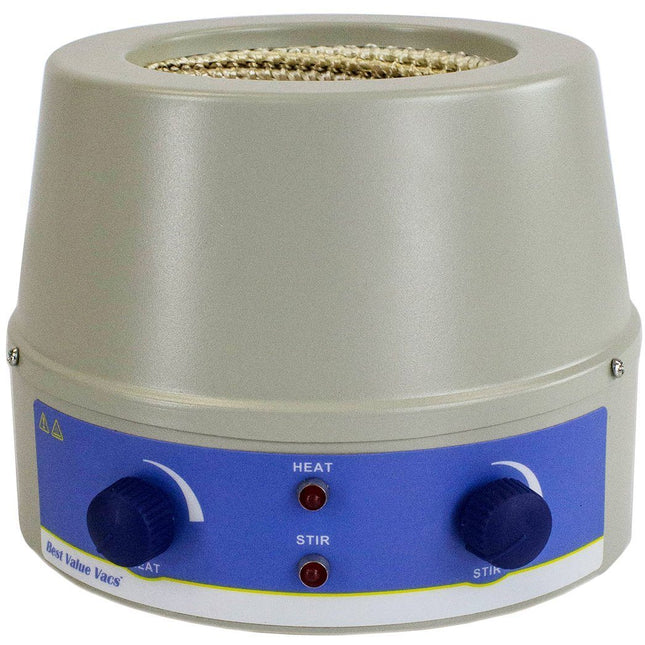
Analog Heating and Stirring Mantle
Analog Heating and Stirring Mantle is used to heat up a glass round bottom flask and stir the contents inside. Heating and stirring functions are analog and sizes range from 500ml to 2000ml. (Mantle's are tested in house and may show slight discoloration on the heating surface.) Certifications: CE Approval Warranties: 500ml - 30 Day Limited Warranty 1000/2000ml - 90 Day Limited Warranty.
$135.00 - $195.00
-


Angled Compression Ball Valve
BVV manually operated two-way ball valves provide quick ¼ turn directional flow control of fluids in instrumentation and process systems. This Valve body has a 90 degree angle to combine the utility of a ball valve and shape of a compression elbow to eliminate extra parts in the system. Features: Directional handle indicates flow direction Panel Mountable 90-degree actuation Straight through flow path Micro-finished ball provides positive seal Free-floating ball design provides compensation for seat wear for repetitive sealing Blow-out proof ball & stem BVV™ Compression Ball Valve - Data Sheet Specifications Body Material 316L Stainless Steel Pressure Rating @ 100F 1000 PSIG Connection Type 1 Double Ferrule Tube Fitting Connection Size 1 Specified by User Connection Type 2 Double Ferrule Tube Fitting Connection Size 2 Specified by User Handle Type Nylon-Stainless Steel Insert Handle Color Black Packing Material PTFE
$145.00 - $192.00
-
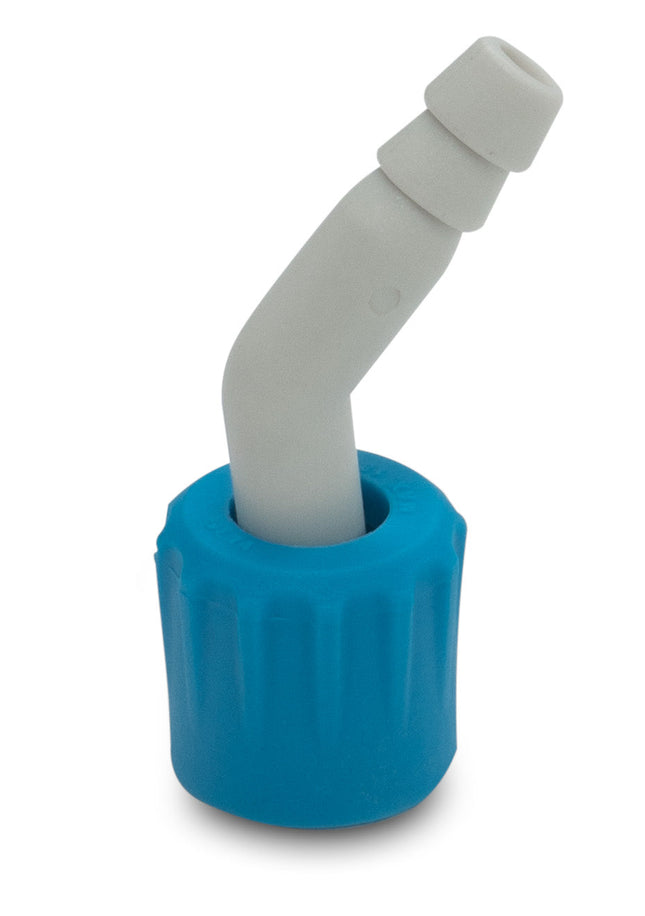
Angled GL-14 Barb
Angled GL14 Barb Disclaimer: This item may come in either a Red or Blue color. Angled GL14 Barb Connection. Specifications: 8MM GL14 Female Connection Angled Style
$7.00
-
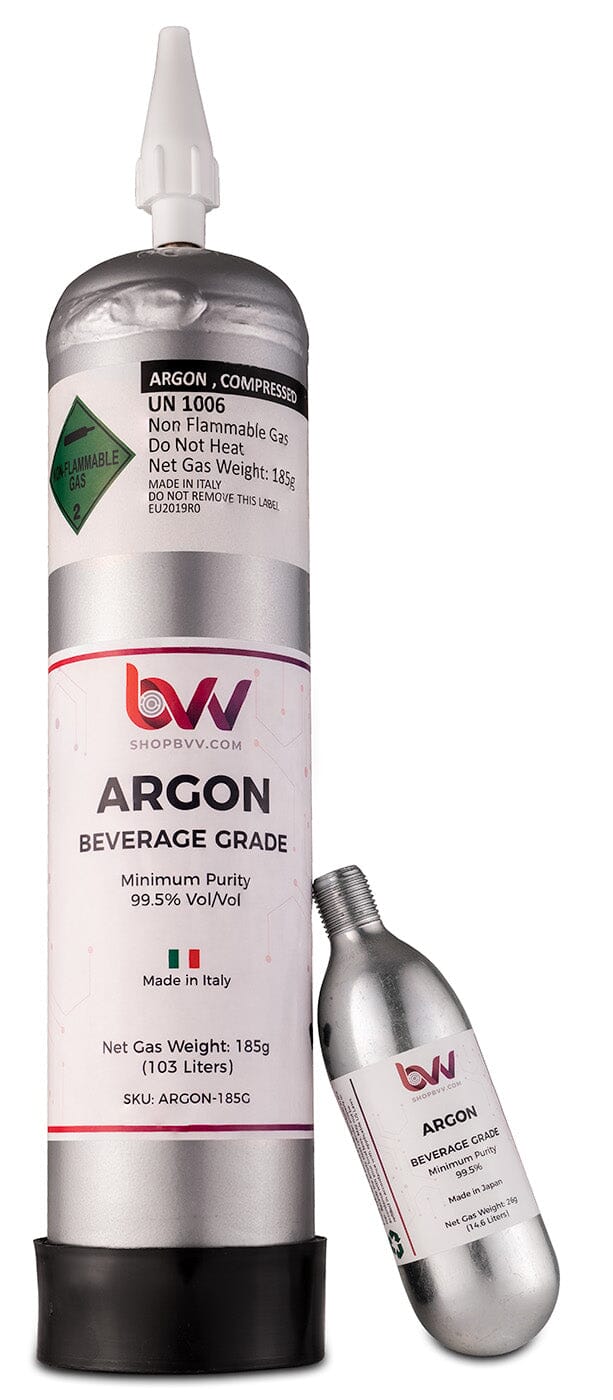

Argon Gas 99.5% - Pure gas for preserving terpenes in flowers and concentrates 103 Liters Tank Only 103 Liters Tank Only
Argon Gas Beverage Grade 99.5% Pure Made in Italy Our Pure Argon gas is for preserving terpenes and maximizing shelf life, for flowers and concentrates. The pure argon gas displaces air inside your storage containers, this eliminates oxygen, carbon dioxide and humidity to prevent oxidation of your terpenes and lengthens your shelf life. For the large tank of Argon the gas can be removed using our regulator or valve dispenser that attaches to the top of the tank. Directions: Using an empty container. Point nozzle toward the bottom of your container. Apply 2-seconds per every 4oz of container volume. Immediately fill container with desired material and securely close the lid. *Note Argon is heavier than air, Tank/Cartridge Pressure 1450 PSI Tank Volume of Argon Coverage Product Sku: 26g / 14.6 Liters / 3.8 Gallons ~6.3 lbs of flower ARGON-26G 185g / 103 Liters / 27 Gallons ~31.7 lbs of flower ARGON-130G Regulator Details 14.6 Liters/ with Duster Kit - Thumb touch control button w/ Lock, regulated to 40 PSI. Made in Japan. Thread: 5/8"-18 for use with the 26g Argon Cartridge. 3.5" long nozzle. (Duster Valve can be purchased separately.) 103 Liters/ with Regulator Kit - Adjustable via. needle valve, regulated to 80 PSI. Made in Italy. Thread: M11x1 (tank connection). Output: 1/4" Brass Barb, Includes 12" Tygon Tubing. Gauges read in BAR. 103 Liters/ with M11 Valve Dispenser Kit - Includes adjustable pushpin style valve dispenser. Output: 1/4" Brass Barb, Includes 12" Tygon Tubing. NO GAUGES *All single 130g argon tanks come with a plastic nozzle for general dispensing. If the regulator is beyond your budget you can attach a tube of your choice. Nozzle tip diameter 3/8" - Recommend choosing a 3/8" Inside Diameter tube or larger and cut to your desired length. *At end of use, completely empty the tank for recycling. What Is Argon? Argon is a chemical element with the symbol "Ar" and atomic number 18. It is a noble gas, which means it belongs to a group of inert and colorless gases that are chemically stable and relatively non-reactive under normal conditions. Argon is the third most abundant gas in the Earth's atmosphere, making up about 0.93% of the air we breathe. Despite its abundance, argon is mostly used in specialized industrial applications due to its inert and non-reactive properties. It is obtained as a byproduct of the production of liquid oxygen and liquid nitrogen through the fractional distillation of air. In its natural state, argon is odorless, tasteless, and colorless. What Is Argon Used For? Argon has a variety of practical and industrial uses due to its inert and non-reactive nature. Some of the key applications of argon include: Welding: Argon is commonly used as a shielding gas in welding processes, such as TIG (Tungsten Inert Gas) and MIG (Metal Inert Gas) welding. It helps prevent oxidation and ensures clean and strong welds. Laboratory Research: Argon is used as a carrier gas in gas chromatography and as an inert atmosphere in scientific laboratories to prevent reactions with sensitive materials. Electronics and Semiconductors: Argon is used in the production of semiconductors and other electronic components, providing a controlled environment for manufacturing processes. Preservation of Perishable Goods: In the food and beverage industry, argon is used to displace oxygen and extend the shelf life of perishable goods, such as wine, by preventing oxidation and spoilage. Medical Applications: Argon is employed in laser surgery and serves as a coolant for superconducting magnets in MRI (Magnetic Resonance Imaging) machines. Deep-Sea Diving: Argon-helium mixtures are used in deep-sea diving to reduce the effects of high pressure on the human body. Lighting: Although less common now, argon was used in incandescent light bulbs to prevent the filament from oxidizing. Metal Manufacturing: Argon is used in the production of metals like titanium and other reactive metals to create a controlled atmosphere. Heat Treating: In heat-treating processes, argon is used as a protective atmosphere to prevent oxidation and maintain the desired material properties. Window Insulation: Argon is sometimes used to fill the space between double or triple-pane windows to improve insulation and energy efficiency. Astronomy: Argon is used in some types of telescopes to create a stable and controlled environment for the detectors. These applications highlight the versatility of argon in various industries, where its inertness and non-reactivity play a crucial role in maintaining controlled and stable conditions for specific processes. How Does Argon Preserve Terpenes? Argon can be used to preserve terpenes through its inert and non-reactive properties. Terpenes are volatile organic compounds responsible for the aroma and flavor of various plants. When exposed to oxygen or other reactive gases, terpenes can degrade or oxidize, leading to a loss of their aromatic and flavor characteristics. By using argon as a protective gas, you can create an oxygen-free environment that prevents terpenes from coming into contact with reactive molecules. This helps to preserve the integrity of terpenes and maintain their original aroma and flavor profiles. When storing or handling terpene-rich products, such as essential oils or botanical extracts, introducing argon gas can help extend the shelf life and ensure that the product retains its desirable sensory attributes. Argon's inert nature means it does not chemically interact with the terpenes, preventing unwanted reactions that could lead to degradation. It forms a barrier between the terpenes and the surrounding air, effectively shielding them from oxygen and moisture, both of which can contribute to terpene degradation. Argon can be a valuable tool for terpene preservation during storage, Helping you preserve the unique terpene profiles of different strains making it crucial for maintaining product quality. How Does Argon Displace Oxygen? Argon displaces oxygen through a process called inert gas displacement or dilution. This occurs when argon, which is denser than air, is introduced into an enclosed space, pushing the lighter oxygen molecules upward and out of the area. As a result, the concentration of oxygen in the space decreases, creating an atmosphere that is less conducive to combustion and other chemical reactions. Here's how the displacement process works: Density Difference: Argon is significantly denser than air, which means it has a higher mass per unit volume. When argon is released into an enclosed space, it naturally sinks to the bottom, displacing the lighter gases like oxygen and nitrogen that make up the atmosphere. Mixing: As argon is introduced, it starts to mix with the existing air in the space. The heavier argon molecules tend to concentrate near the bottom, while the lighter oxygen molecules rise to the top. Oxygen Reduction: As argon continues to fill the space, the concentration of oxygen molecules decreases. Oxygen is gradually pushed upward and out of the area, leading to a lower oxygen content in the atmosphere. Inert Environment: The increasing presence of argon creates an inert environment where oxygen is less available to support oxidation. This is particularly useful in storing oxidizable compounds. It's important to note that while argon displaces oxygen, it does not chemically react with other gases or substances. Instead, it creates a physical barrier between oxygen and the materials that could ignite or react with it. This property makes argon a valuable tool in fire suppression systems, as well as in applications like food preservation, where a low-oxygen environment helps extend the shelf life of products. When working with argon, especially in confined spaces, proper safety measures should be followed to prevent oxygen depletion and ensure a safe working environment. How Do I Use Argon For Flower and Concentrate Storage? Using argon for flower and concentrate storage is a simple and effective method to help preserve the quality and freshness of your products. Follow these steps to properly use argon gas for storage: Prepare the Container: Start with a clean and empty container that is suitable for storing your flower or concentrate. Ensure that the container has a tight-fitting lid or cap to create a sealed environment. Position the Nozzle: Hold the argon gas canister with the nozzle pointing toward the bottom of the container. This helps ensure that the argon gas displaces any oxygen present in the container. Apply Argon Gas: Press the nozzle to release the argon gas into the container. The recommended dosage is approximately 2 seconds of spraying for every 4 ounces of container volume. This dosage helps create a protective layer of argon gas within the container. Fill the Container: Immediately after applying the argon gas, place your desired flower or concentrate into the container. The argon gas will create a blanket of protection over the material, minimizing its exposure to oxygen. Securely Close the Lid: Once the container is filled with the material, seal it tightly with the lid or cap. Make sure the container is properly closed to maintain the sealed environment. Store in a Cool, Dark Place: Store the sealed container in a cool, dark place to further protect the contents from light and heat. Proper storage conditions are essential for maintaining the quality and potency of your flower or concentrate. Using argon gas in this manner helps create an oxygen-free atmosphere within the container, reducing the risk of oxidation and degradation of your products. By minimizing oxygen exposure, you can extend the shelf life and preserve the flavors, aromas, and potency of your flower and concentrate. Remember to always follow safety precautions when handling argon gas, including proper ventilation and avoiding direct inhalation. Additionally, ensure that the argon gas canister is stored and used in accordance with manufacturer guidelines. How Can I Preserve Wine With Argon? Preserving wine with argon is a popular method to extend the shelf life of opened bottles and maintain the wine's freshness and flavor. Follow these steps to effectively use argon gas for wine preservation: Gather the Necessary Equipment: Argon gas canister with a preservation nozzle or wine preservation system An opened bottle of wine with a cork or closure Position the Nozzle: Insert the dispensing line or nozzel into the neck of the wine bottle. If using an argon gas canister with a preservation nozzle, insert the nozzle into the bottle's neck, ensuring a tight fit. If using a wine preservation system, follow the manufacturer's instructions for attaching the system to the bottle. Apply Argon Gas: Press the nozzle to release a short burst of argon gas into the bottle. The argon gas is heavier than air and will displace the oxygen present in the bottle, creating a protective layer on top of the wine. Recap or Recork: Immediately after applying the argon gas, recap the bottle with its original cork or closure. Make sure the closure is securely in place to maintain a seal. Store the Bottle: Store the wine bottle upright in a cool and dark place, away from direct sunlight and temperature fluctuations. Enjoy Over Time: When you're ready to enjoy the wine again, simply remove the closure and pour a glass. The argon gas layer will have helped protect the wine from oxidation, allowing you to savor the wine's original flavors and aromas. It's important to note that argon gas is denser than air, so it will naturally settle on top of the wine. This layer of argon forms a barrier between the wine and the oxygen, preventing oxidation and preserving the wine's quality. Using argon gas for wine preservation is a convenient and effective method to enjoy opened bottles of wine over an extended period. It's particularly useful for wines that are meant to be enjoyed gradually, as well as for special bottles that you want to savor over time without worrying about deterioration. Always follow the manufacturer's guidelines for using argon gas for wine preservation and handle the gas canister with care. Chemical Formula: Ar Molecular Weight: 39.9 g/mol CAS Registry Number: 7440-37-1 Appearance Colorless Odor: Odorless Density 0.103 lb/ft3 Boiling Point: N/A Solubility in water: N/A GHS Pictograms: GHS Signal Word: Warning GHS Hazard Statements: H280, H281 GHS Precautionary Statements P282, P336+P317, P403, and P410+P403 UN Identification Number: 1006 Proper Shipping Name: Argon, Compressed Transport Hazard Class: 2.2 Packing Group: None DOT Placard: Argon Safety Data Sheet (SDS)
$16.50 - $167.00
-


Ashless Filter Papers - 110MM - Quantitative
Ashless Filter Papers - 110MM - Quantitative Ashless quantitative and qualitative filter papers provide laboratory grade filtration for extraction systems and are specifically used in combination with a Buchner funnel to remove fats, waxes and any other unwanted contaminants from your solution. These filter papers are used in the pre-processing stage of short path distillation to clean up the material prior to processing. Key Features: ISO 9001 Approved Manufactured from alpha-cellulose and cotton linters High Purity and low background Consistent performance Low ashless content: <0.007% (Quantitative Filter Paper) Whatman equivalent quality Pre-Cut for ease of use Specifications: Classification Quantitative Sizes Available: BIO-40 8um - Medium BIO-41 20-25um - Fast BIO-42 2.5um - Slow BIO-44 3um - Slow Ash Content <0.007% Quantity per Pack 100 Diameter 110mm (4.33") Technical Data: Grade Particle Retention Appearance Speed Ash Content (%) Basis Weight (g/m2) Wet burst (mm H2O) BIO-1 11um Smooth Medium <0.1 80.0±4.0 >140 BIO-2 8um Smooth Medium <0.1 80.0±4.0 >140 BIO-4 20um Smooth Fast <0.1 80.0±4.0 >120 BIO-5 2.5um Smooth Slow <0.1 80.0±4.0 >180 BIO-6 3um Smooth Slow <0.1 80.0±4.0 >180 BIO-40 8um Smooth Medium <0.007 80.0±4.0 >140 BIO-41 20-25um Smooth Fast <0.007 80.0±4.0 >120 BIO-42 2.5um Smooth Slow <0.007 80.0±4.0 >180 BIO-43 16um Smooth Medium to Fast <0.007 80.0±4.0 >120 BIO-44 3um Smooth Slow <0.007 80.0±4.0 >180
$45.00
-


Ashless Filter Papers - 125MM - Quantitative
Ashless Filter Papers - 125MM - Quantitative Ashless quantitative and qualitative filter papers provide laboratory grade filtration for extraction systems and are specifically used in combination with a Buchner funnel to remove fats, waxes and any other unwanted contaminants from your solution. These filter papers are used in the pre-processing stage of short path distillation to clean up the material prior to processing. Key Features: ISO 9001 Approved Manufactured from alpha-cellulose and cotton linters High Purity and low background Consistent performance Low ashless content: <0.007% (Quantitative Filter Paper) Whatman equivalent quality Pre-Cut for ease of use Specifications: Classification Quantitative Sizes Available: BIO-40 8um - Medium BIO-41 20-25um - Fast BIO-42 2.5um - Slow BIO-44 3um - Slow Ash Content <0.007% Quantity per Pack 100 Diameter 125mm (4.92") Technical Data: Grade Particle Retention Appearance Speed Ash Content (%) Basis Weight (g/m2) Wet burst (mm H2O) BIO-1 11um Smooth Medium <0.1 80.0±4.0 >140 BIO-2 8um Smooth Medium <0.1 80.0±4.0 >140 BIO-4 20um Smooth Fast <0.1 80.0±4.0 >120 BIO-5 2.5um Smooth Slow <0.1 80.0±4.0 >180 BIO-6 3um Smooth Slow <0.1 80.0±4.0 >180 BIO-40 8um Smooth Medium <0.007 80.0±4.0 >140 BIO-41 20-25um Smooth Fast <0.007 80.0±4.0 >120 BIO-42 2.5um Smooth Slow <0.007 80.0±4.0 >180 BIO-43 16um Smooth Medium to Fast <0.007 80.0±4.0 >120 BIO-44 3um Smooth Slow <0.007 80.0±4.0 >180
$50.00
-


Ashless Filter Papers - 180MM - Quantitative
Ashless Filter Papers - 180MM - Quantitative Ashless quantitative and qualitative filter papers provide laboratory grade filtration for extraction systems and are specifically used in combination with a Buchner funnel to remove fats, waxes and any other unwanted contaminants from your solution. These filter papers are used in the pre-processing stage of short path distillation to clean up the material prior to processing. Key Features: ISO 9001 Approved Manufactured from alpha-cellulose and cotton linters High Purity and low background Consistent performance Low ashless content: <0.1% Whatman equivalent quality Pre-Cut for ease of use Specifications: Classification Qualitative Sizes Available: BIO-1 11um - Medium BIO-4 20um - Fast BIO-5 2.5um - Slow BIO-6 3um - Slow Ash Content <0.1% Quantity per Pack 100 Diameter 180mm (7.09") Technical Data: Grade Particle Retention Appearance Speed Ash Content (%) Basis Weight (g/m2) Wet burst (mm H2O) BIO-1 11um Smooth Medium <0.1 80.0±4.0 >140 BIO-2 8um Smooth Medium <0.1 80.0±4.0 >140 BIO-4 20um Smooth Fast <0.1 80.0±4.0 >120 BIO-5 2.5um Smooth Slow <0.1 80.0±4.0 >180 BIO-6 3um Smooth Slow <0.1 80.0±4.0 >180 BIO-40 8um Smooth Medium <0.007 80.0±4.0 >140 BIO-41 20-25um Smooth Fast <0.007 80.0±4.0 >120 BIO-42 2.5um Smooth Slow <0.007 80.0±4.0 >180 BIO-43 16um Smooth Medium to Fast <0.007 80.0±4.0 >120 BIO-44 3um Smooth Slow <0.007 80.0±4.0 >180
$55.00
-


Ashless Filter Papers - 350MM - Quantitative
Ashless Filter Papers - 350MM - Quantitative Quantitative and qualitative filter papers provide laboratory grade filtration for extraction systems and are specifically used in combination with a Buchner funnel to remove fats, waxes and any other unwanted contaminants from your solution. These filter papers are used in the pre-processing stage of short path distillation to clean up the material prior to processing. Key Features: ISO 9001 Approved Manufactured from alpha-cellulose and cotton linters High Purity and low background Consistent performance Whatman equivalent quality Pre-Cut for ease of use Specifications: Classification Quantitative Sizes Available: AFP-1 11um - Medium AFP-4 20um - Fast Quantity per Pack 100 Diameter 350mm (13.78")
$95.00
-
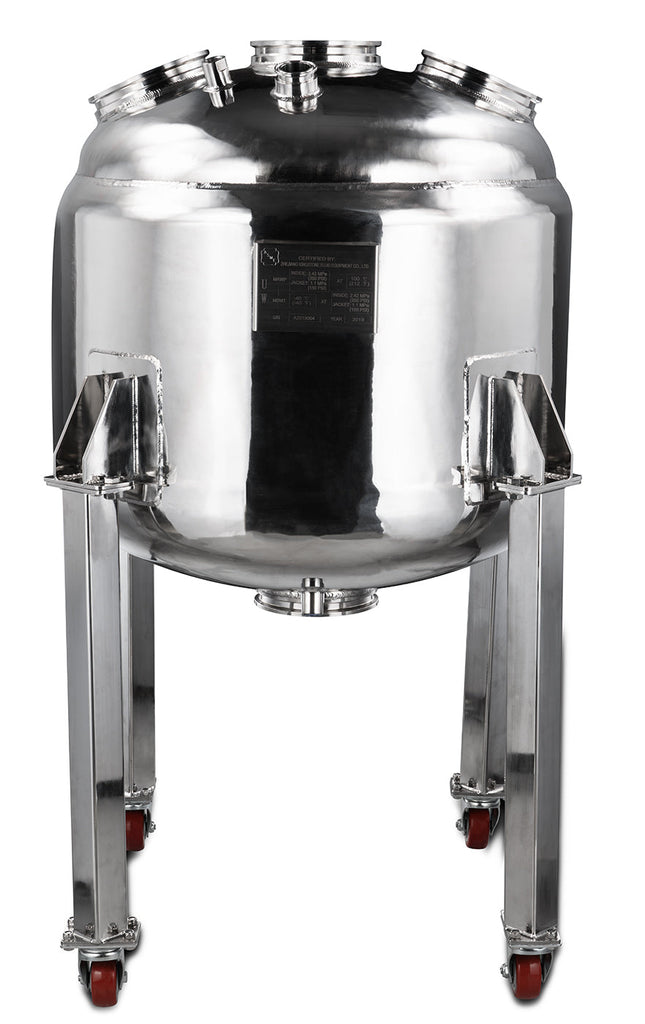

ASME 150L - 350 MAX working pressure, Pneumatic PSIG 385
ASME 150L - 350 MAX working pressure, Pneumatic PSIG 385 This is a custom manufactured made ASME Certified 150L Jacketed Solvent Tank with ASME Stamp and made out of 304 Stainless Steel. This base is designed to be configured to any application and can even be used as a solvent tank. This tank comes bare with no fittings and will hold 150LBS of liquid butane and is able to have fluid circulated around the outer jacket to increase recovery speeds in the extraction system. This unit also has welded lift points on the top of the tank. Specifications Material 304 Stainless Steel Certification: ASME MAWP @ 100°C / 212°F: Inside 350 PSI / 2.42 MPa Jacket 150 PSI / 1.1 MPa MDMT -40°C / -40°F MIN TEMP -20°F at 350PSI Butane Capacity 150LBS Connection Sizes: (3) 6" Tri-Clamp (2) 1.5" Tri-Clamp (2) 1/2" FNPT Weight 108LBS Outer Dimensions: 44.5" Tall 32.5" W x 32.5" L **This Item will ship Via FREIGHT ONLY.
$9,000.00
-
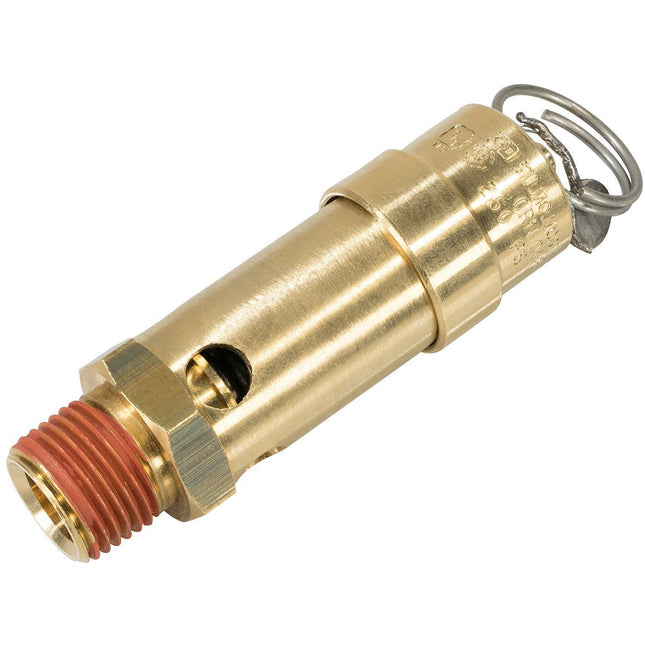
ASME 250 PSI Brass Safety Valve - 1/2" MNPT
ASME 250 PSI Brass Safety Valve - 1/2" MNPT Model “SB” ASME safety valve is a high capacity safety valve. Unique O-ring seal ensures valve is bubble-tight to within 10% of set pressure. Set pressure tolerance is +/-3%. SB50 Outline Drawing SB Flow Charts Specifications Construction: Brass Stainless Steel Springs FKM O-Ring Seal Set Pressure 250 PSI Max Temp. 250ºF
$76.00
-
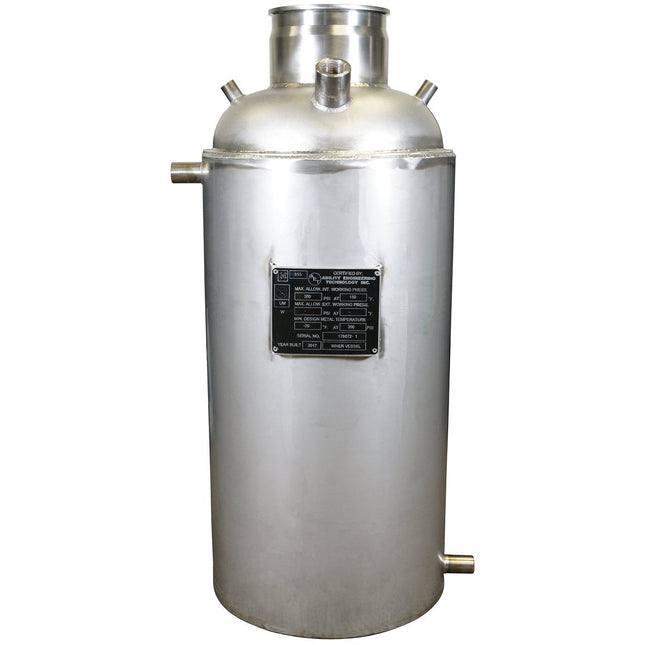
ASME Certified 50L Jacketed Solvent Tank 304L - Bare
ASME Certified 50L Jacketed Solvent Tank 304L - Bare This is a custom manufactured USA made ASME Certified 50LB Jacketed Collection base with UM Stamp and made out of 304L Stainless Steel. This base is designed to be configured to any application and can even be used as a solvent tank. This tank comes bare with no fittings and will hold around 50LBS of liquid butane and is able to have fluid circulated around the outer jacket to increase recovery speeds in the extraction system. **This Item will ship Via FREIGHT ONLY. Specifications Material 304L Stainless Steel Certification: ABILITY ENGINEERING TECHNOLOGY INC. ASME / UM / NB MAWIWP 350 PSI at 150°F MAWEWP N/A MIN TEMP -20°F at 350PSI Butane Capacity ~50LBS Connection Sizes: 6" Tri-Clamp (2) 1" NPT (2) 1/2" NPT - Outer Jacket Ports (2) 3/8" NPT Weight 146LBS Outer Dimensions: 32-7/8" Tall 14" Diameter Inner Dimensions: 24" Tall 12" Diameter
$2,000.00 $1,000.00
-
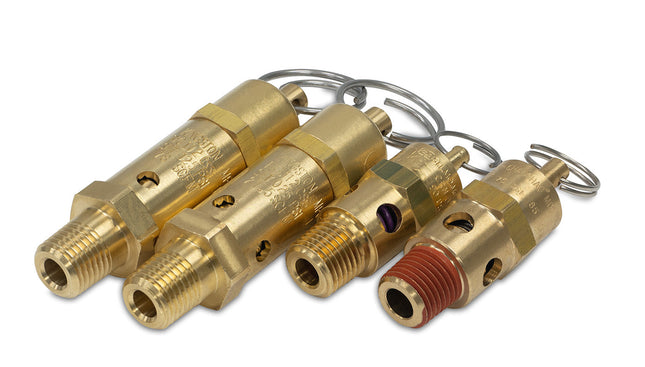

ASME-Code Fast-Acting Pressure-Relief Valve for Air, Silicone Seal, 1/4 NPT
ASME-Code Fast-Acting Pressure-Relief Valve for Air, Silicone Seal, 1/4 NPT Valve Function Pressure Relief For Use With Air, Inert Gas Activation Pressure Driven Inlet Pipe Size 1/4 Connection Type Pipe Pipe Connection Type Threaded Connection NPT Male Location Bottom Relief Port Connection Type Vent Relief Port Location Side Set Pressure Configuration Nonadjustable Temperature Range -15° to 250° F Valve Shape 90° Elbow Valve Body Shape Straight Overall Height Varies Material Body Brass Seal Silicone Test Mechanism Ring Valve Type Pop Safety Specifications Met ASME BPVC.VIII RoHS RoHS 3 (2015/863/EU) compliant with exemption 6(c) - Lead in copper alloy REACH Not Compliant DFARS Specialty Metals COTS-Exempt Country of Origin United States USMCA Qualifying No Schedule B 848140.0000 ECCN EAR99 To protect against damage in air lines, air receivers, compressor tanks, and other air-powered equipment, these valves spring fully open at the set pressure and remain open until the system pressure is restored below the set pressure. All meet ASME Code Section VIII for use with air and inert gas pressure vessels. They have a vented relief port to exhaust discharge directly. Silicone seals provide better leak protection than brass seals.
$45.00
-
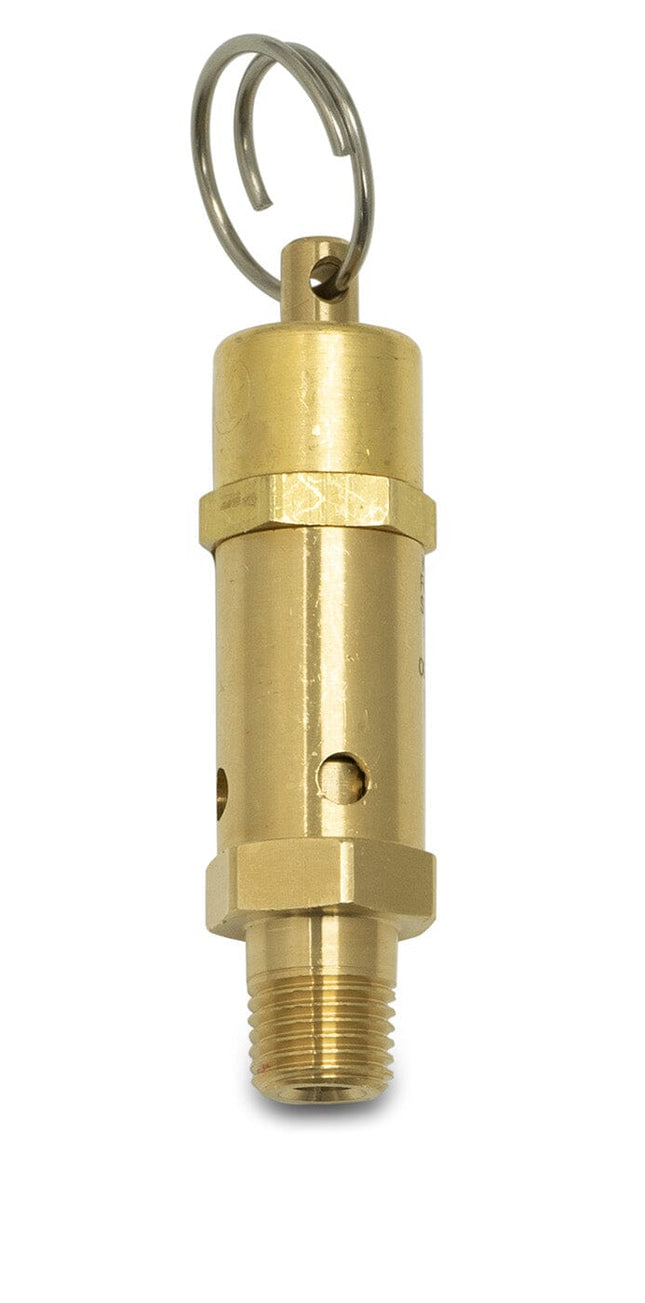

ASME-Code Fast-Acting Pressure-Relief Valve for Air, Test Ring, Brass Seal, 1/4 NPT, 3-1/8" High
ASME-Code Fast-Acting Pressure-Relief Valve for Air, Test Ring, Brass Seal, 1/4 NPT, 3-1/8" High Valve Function Pressure Relief For Use With Air, Inert Gas Activation Pressure Driven Inlet Pipe Size 1/4 Connection Type Pipe Pipe Connection Type Threaded Connection NPT Male Location Bottom Maximum Pressure 300 psi Relief Port Connection Type Vent Relief Port Location Side Set Pressure Configuration Nonadjustable Temperature Range -40° to 400° F Valve Shape 90° Elbow Valve Body Shape Straight Overall Height 3 1/8" Material Body Brass Seal Brass Test Mechanism Ring Valve Type Pop Safety Specifications Met ASME BPVC.VIII RoHS RoHS 3 (2015/863/EU) compliant with exemption 6(c) - Lead in copper alloy REACH REACH (EC 1907/2006) (07/08/2021, 219 SVHC) Compliant DFARS Specialty Metals COTS-Exempt Country of Origin United States USMCA Qualifying No Schedule B 848140.0000 ECCN EAR99 To protect against damage in air lines, air receivers, compressor tanks, and other air-powered equipment, these valves spring fully open at the set pressure and remain open until the system pressure is restored below the set pressure. All meet ASME Code Section VIII for use with air and inert gas pressure vessels. They have a vented relief port to exhaust discharge directly.
$67.00
-
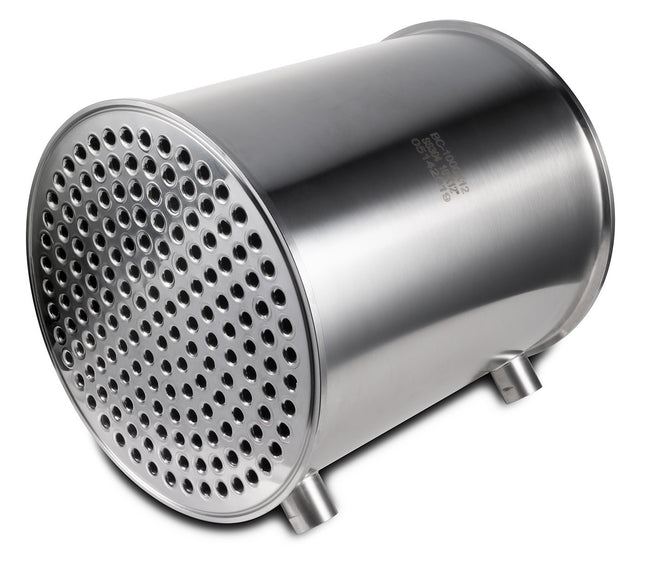

Baffled Condenser
Baffled Tri-Clamp Condenser This 304 Stainless Steel Tri-Clamp condenser allows the user to condense hot vapors and solvent while running an extraction system or use it as a heat exchanger if needed. It features internal baffles in the system allowing for better overall heat exchange, Tri-Clamp connections on each end and (2) 1/2" FNPT Ports on the side to allow various connections the user may need. The inside diameter of the tubing measures 7.5mm. BVV™ Baffled Tri-Clamp - Data Sheet
$245.00 - $5,900.00
-
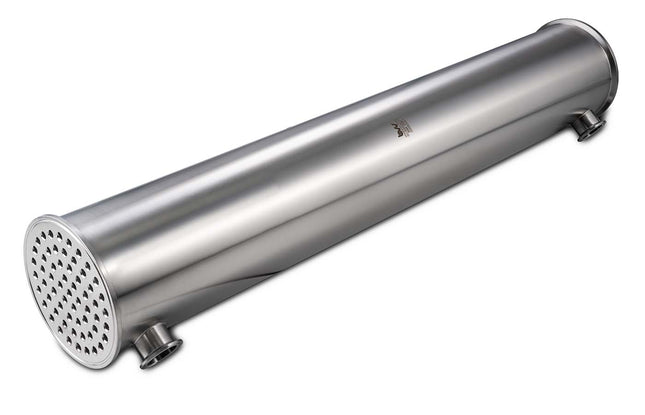

Baffled Condenser - 6" x 36" with 1.5" Tri-Clamp Side Ports
Baffled Condenser - 6" x 36" with 1.5" Tri-Clamp Side Ports This 304 Stainless Steel Tri-Clamp condenser allows the user to condense hot vapors and solvent while running an extraction system or use it as a heat exchanger if needed. It features internal baffles in the system allowing for better overall heat exchange, 6" Tri-Clamp connections on each end and (2) 1.5" Tri-Clamp ports on the side to allow various connections the user may need. From end to end it is 36" in length. The inside diameter of the tubing measures 7.5mm.
$3,000.00
-
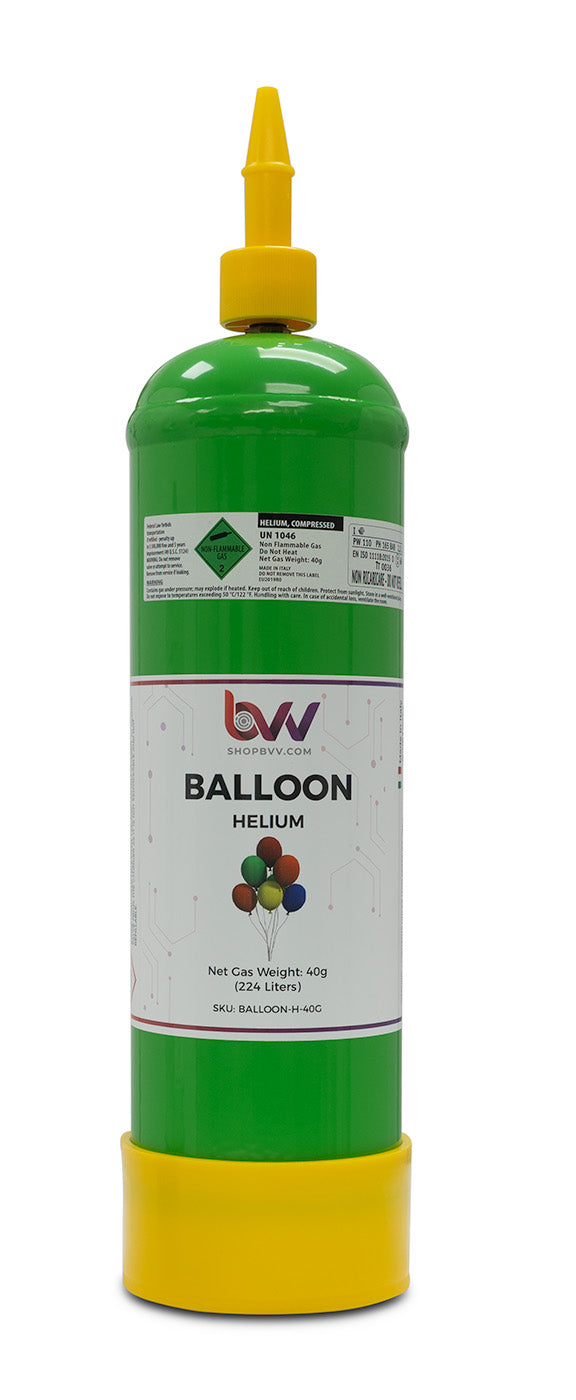

Balloon Helium Tank 7.9 cu ft. 224 Liters of gas
Balloon Helium Tank Made in Italy Non-Refillable Tank 7.91 ft³ / 40g / 224 liters This tank can fill approximately 26 (9" balloons). The tank is full of 99% pure helium unlike other tanks that use an 80% mix of helium. Although the tank is small its able to hold a much higher pressure compared to the other off the shelf larger tanks since its a thick walled tank. A typical off the shelf helium tank at the party store holds 8.9 cubic feet of gas @ 80% helium. This tank is 7.9 cubic feet of gas @ 99% helium. The tank includes a yellow filling nozzle that you twist to release the gas into the balloon. The balloon in the photo is a 36" balloon and demonstrates the full quantity of gas in the tank. Tank Thread Size: M10& (*Does not fit the BVV M11 regulators) Nozzle included *Tank is non-refillable Note* This is high purity helium and helium is the second smallest atom in the universe. Consider that helium nucli are so small that they can pass through gold foil without hitting other gold nuclei, as discovered in the Rutherford Gold Experiment. When using high purity helium with latex, a barrier should be used like HiFloat or Polyvinyl alcohol, To maximize float time on your balloon. It creates an extra barrier which slows down the rate at which helium leaves the balloon. Chemical Formula: He Molecular Weight: 4.00260 g/mol CAS Registry Number: 7440-59-7 Appearance Colorless Odor: Odorless Density 0.0104 lb/ft3 Boiling Point: N/A Solubility in water: Slightly Soluble GHS Pictograms: GHS Signal Word: Warning GHS Hazard Statements: H280, H281 GHS Precautionary Statements P282, P336+P317, P403, and P410+P403 UN Identification Number: 1046 Proper Shipping Name: Helium, Compressed Transport Hazard Class: 2.2 Packing Group: None DOT Placard: Helium Safety Data Sheet (SDS)
$44.00
-


Basic Activated Alumina Powder
Basic Activated Alumina pH: 10.8 | 50-200 Micron *Compare to Alumicel™ B This activated alumina is a High pH adsorbent used to remove excess moisture from your extraction and CRC process. The addition of this media is used as the last layer in the typical BVV™ CRC setups. This grabs any excess moisture from the previous CRC layers and the Biomass. The activated alumina will produce a sugary finish almost immediately after you start your purge. This rapid crystallization is because the process has stripped out additional phospholipoids and fats. Chromatographic Grade Activated Alumina Basic Powder Sample Certificate of Analysis (COA Example) Activated Alumina Basic Powder Safety Data Sheet SDS
$26.00 - $1,020.00
-
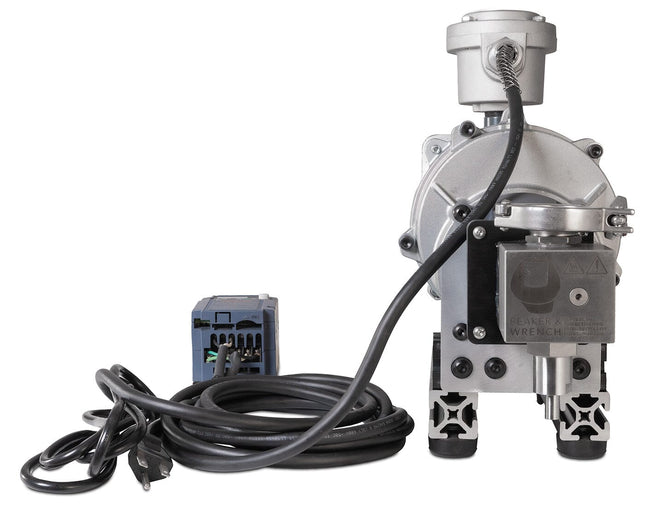

Beaker and Wrench Explosion Proof Oil Pump
Explosion Proof Oil Pump Optimized for Falling Film Evaporators C1D2 VFD (variable frequency drive, not C1D2 rated) cord is approximately 15′ Motor: 1/4 Horsepower Customizable mounting When ordering: Please indicate in the Note section what machine you will be attaching the Explosion Proof Oil Pump to. We need this information to assure the correct Inlet Adapter is provided and also the dimensions of the mounting configuration you will need. Hazardous Location Clas 1 C,D / 2 E,F,G Nominal Efficiency 85.5% Frame 56CZ Motor Application Hazardous Location Lead Length 6" RPM Range 1101-1200 Standards UL listed (E12044), CSA Certified (LR47504) Frame Material Rolled Steel Duty Continuous HP 1/4 Voltage Compatibility 115/208-230, 120/240 Length Less Shaft 11-7/8" Includes Conduit Box (Unmounted), Leads Through 1" NPT Nipple Motor Shaft Design Keyed Shaft Length 2-1/4" Item Harazardous Location Motor Motor Service Factor: 1.00 1.00 Motor Thermal Protection auto Motor Shaft Rotation CW/CCW Full Load Amps 6.8/3.1-3.4 Overall Length 14-5/16" Voltage 115/208-230 Motor Frame Material Rolled Steel Ins. Class B Motor Mounting Type Face Motor Design Capacitor- Start Shaft Dia 5/8" Hz 60 Motor Bearing Ball Temp. Code T3B Motor Enclosure Design Totally Enclosed Fan-Cooled Nameplate RPM 1140 Max. Ambient Temp 40 Degrees C Phase 1
$7,600.00
-
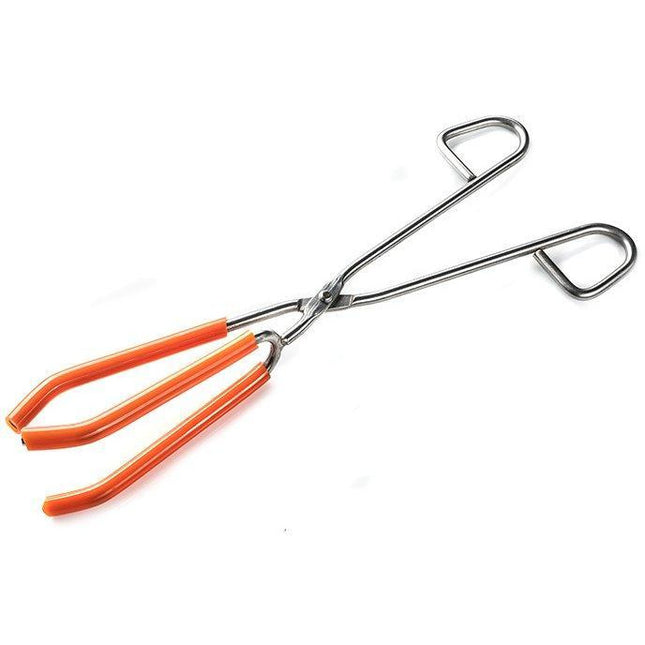
Beaker Tongs
Beaker Tongs These beaker tongs are great when handling any glassware that is too hot to handle or off-gassing and allows the user to handle the beaker at a safe distance with ease. These tongs are a 3 finger design with nickel plated metal and rubber coated fingers with an overall length of 10.5".
$5.00
-
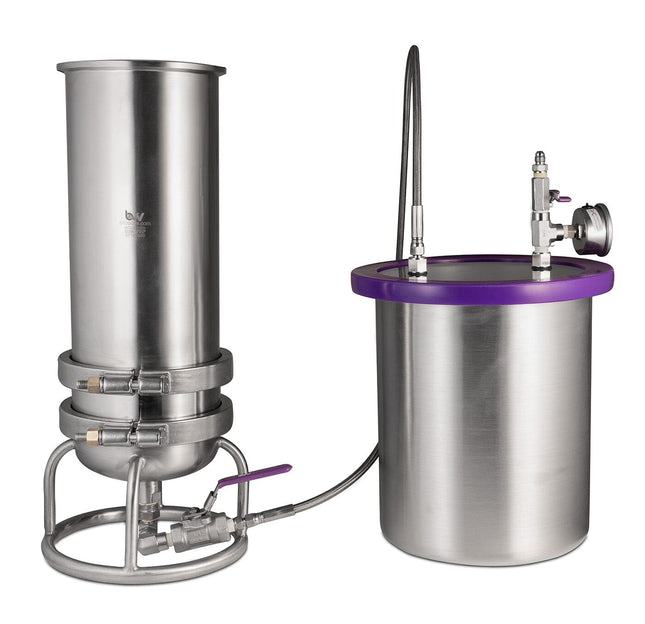
Benchtop 1 Micron Refinement Filter
Benchtop 1 Micron Refinement Filter Eliminate suspended particles with ease with our 1-micron Refinement filters. Complete with our 1-micron Dutch Weave sintered disk filter plate, these refinement filters provide complete retention of the filter paper,making it impossible for particulate to bypass the paper. Made from the highest-quality 304 stainless steel parts, these benchtop refinement filters are infinitely more robust than your typical porcelain Buchner funnels. They pair nicely with diaphragm vacuum pumps or our spark-free vacuum pumps paired with a cold trap. Processing Power Funnel Capacity: 5.5 Liters/1.45 Gallons Collection Capacity: 11.35 Liters/3 Gallons Specifications 6"x12" Funnel Body 6" 1um Dutch Weave Sintered Disk 6" Hemispherical Ring stand 1/4" Full Bore Ball valve with 1/4" JIC Drain port 3 Gallon Stainless Steel Collection Base with Glass Lid Back Mount Vacuum Gauge 1/4" JIC Butterfly Vacuum Valve 2.5UM 180MM Ashless Filter Paper Nitrile BUNA-N gaskets
$1,274.00
-
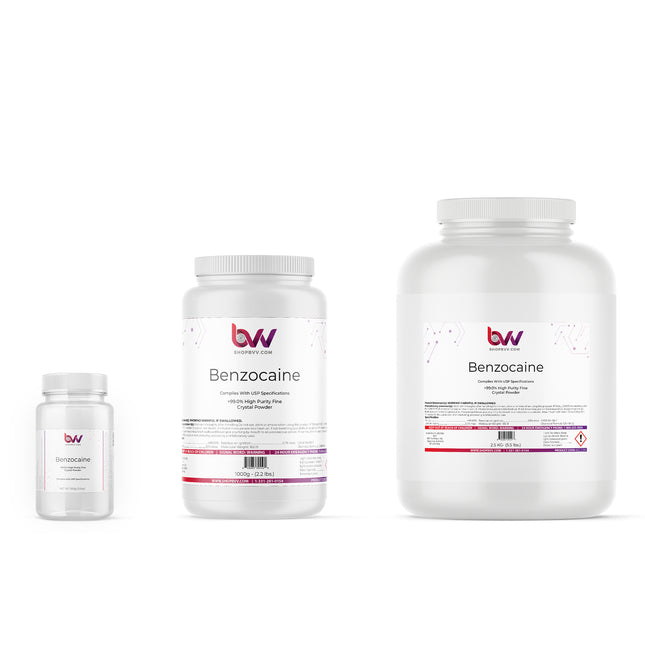

Benzocaine Powder 99%
Benzocaine 99% Complies with USP Testing Specifications Our high purity benzocaine is greater than ≥99% purity. It standard testing is meets USP DMF grade It's widely used across various industries, including pharmaceuticals, cosmetics, and research. * USP DMF GRADE : refers to materials, specifically raw materials and active pharmaceutical ingredients (APIs), that meet the quality standards established by the United States Pharmacopeia (USP) and are used in the production of pharmaceutical products. ** It is the responsibility of the purchaser to ensure that any product they buy complies with their local, state, and national regulations. Applications: Pharmaceuticals: Core ingredient in formulating topical anesthetics and pain relief solutions. Cosmetic Manufacturing: Used in skin-soothing and numbing products. Research & Development: Suitable for experimental formulations and chemical studies. Handling and Storage: Store in a cool, dry place away from direct sunlight. Ensure the container is tightly sealed after use. Important Notice: This product is intended for industrial and professional use only. Misuse or unauthorized handling may result in legal or health consequences. Benzocaine Powder 99% Certificate of Analysis (COA) Benzocaine Powder 99% Safety Data Sheet (SDS) Chemical Formula: C9H11NO2 Molecular Weight: 165.19 g/mol CAS Registry Number: 94-09-7 Appearance White Crystalline Powder Odor: Odorless Density 1.17 g/cm3 Boiling Point: 591.3°F (310.7°C) Solubility in water: Slightly Soluble GHS Pictograms: GHS Signal Word: Danger GHS Hazard Statements: H317, H370, H411 GHS Precautionary Statements P260, P261,P264, P270, P272, P273, P280, P302+P352, P308+P316, P333+P317, P362+P364, P391, P405, P501 UN Identification Number: None Proper Shipping Name: None Transport Hazard Class: None Packing Group: None DOT Placard: None
$24.00 - $650.00
-


Benzyl Alcohol 99.8% - High Purity Lab Grade
Benzyl Alcohol Lab Grade - High Purity Made in Germany Benzyl Alcohol is a clear, colorless liquid organic compound with a very mild, almond-like or floral aroma. This benzyl alcohol odor is so mild its nearly odorless to many people taking that first waft. It functions as a versatile solvent, antimicrobial preservative and fragrance ingredient in personal care. Its partially soluble in water, and completely miscible with alcohols. Benzyl alcohol acts as a preservative (Concentrations of 0.5-2%) in lotions creams, and shampoos. Its great as a blender for floral terpenes. Pharmaceutical formulations Personal care products Coatings and paints Industrial applications (solvent and intermediate) Inks and printing formulations Benzyl Alcohol Certificate of Analysis COA Benzyl Alcohol Safety Data Sheet SDS
$18.00 - $1,230.00
-
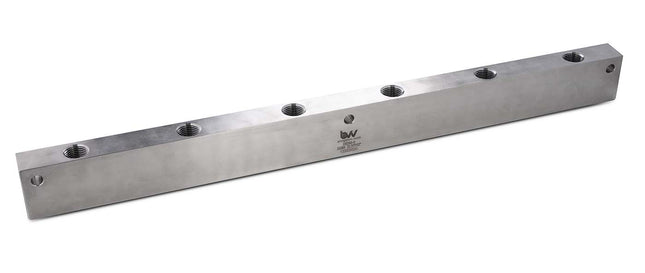

Block Manifold with 8 - 1/2" FNPT ports
Block Manifold with 8 - 1/2" FNPT ports This Manifold has 8x 1/2" FNPT ports that are commonly used for connecting multiple columns or different tanks to one input of vacuum and/or nitrogen. It has six ports on top and one on each end. The manifold has two 5/16 holes that can be used to easily mount on one of our extruded aluminum rack systems.
$300.00 $150.00
-

Boldtbags Open Top Wash Bag
Open top Washbags are the improved design from our classic washbags that feature an easy open and easy loading design. Each bag is constructed in full mesh 220 micron material. This allows for easy flow of water and easy of washing. All washbags have a zipper that circles the entire bag. Users can open to any degree for varied loading and collection. An extended flap is able to fold over the zipper for additional reinforcement. All current washbags feature upgraded stitching that ensures no product is lost to the seam. 10” Diameter 13” Height Designed for 5lb of organic material.
$75.00
-
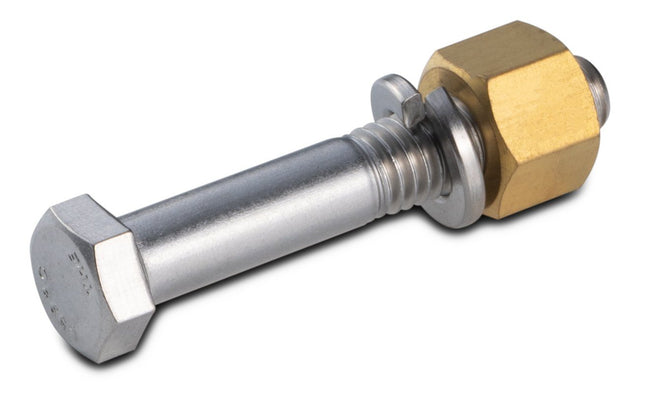
Bolt Kit For High Pressure Clamps
Bolt Kit For High-Pressure Clamps When high-pressure clamp bolts are used frequently the threads will wear down eventually causing the bolt to fail. User's need to replace their high-pressure bolts at the first sign of the threads wearing down or being marred. It is not recommended to tighten these bolts with an impact gun because it may cause the threads to be marred or jump threads causing the bolt to become stuck on the nut. This kit includes the following: Stainless Steel Bolt Stainless Steel Lock Washer Brass Nut ***Note: Size refers to size of Tri-Clamp not the actual length of the bolt. BVV™ only recommends tightening high-pressure clamps with wrenches and making sure the space on each side of the clamp is even. DO NOT tighten with an impact gun. Bolt Available for Clamp Sizes: 1.5" 2" 3" 4" 6"-12" Specifications: Material: Brass Nut, 18-8 Stainless Steel Bolt and Lock Washer. Threading: 3/8"-16
$4.00 - $7.00
-
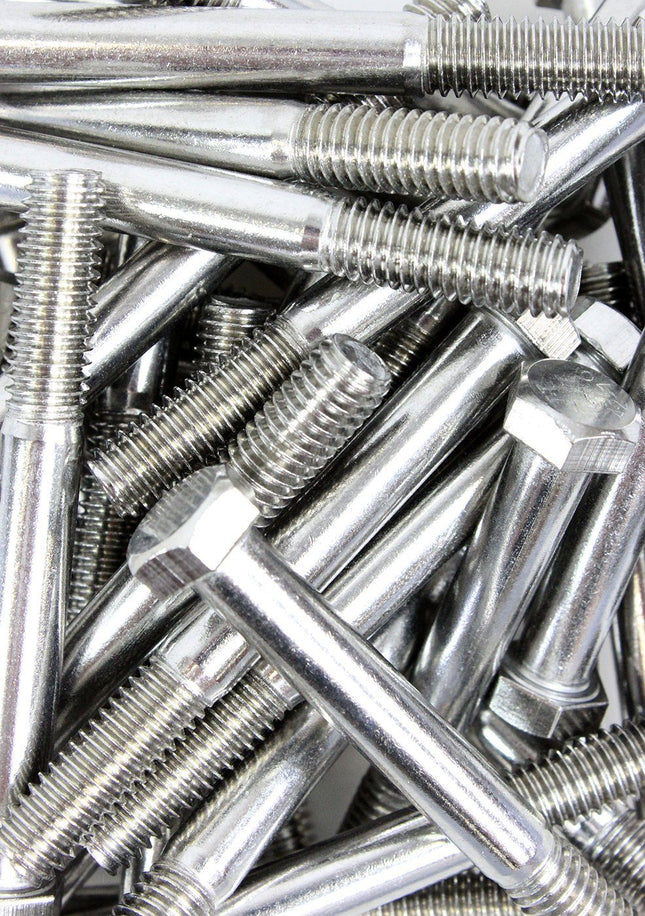
Bolts For High Pressure Clamps
Bolts For High Pressure Clamps When high pressure clamp bolts are used frequently the threads will wear down eventually causing the bolt to fail. User's need to replace their high pressure bolts at the first sign of the threads wearing down or being marred. It is not recommended to tighten these bolts with an impact gun because it may cause the threads to be marred or jump threads causing the bolt to become stuck on the nut. ***Note: Size refers to size of Tri-Clamp not the actual length of the bolt. BVV™ only recommends tightening high pressure clamps with wrenches and making sure the space on each side of the clamp is even. DO NOT tighten with an impact gun. Bolt Available for Clamp Sizes: 1.5" 2" 3" 4" 6"-12" - Fully Threaded Specifications: Material: 18-8 Stainless Steel Threading: 3/8"-16
$2.20 - $4.20
-


Borax Pentahydrate 5 Mol *High Purity
Borax Pentahydrate 5 Mol contains 5 fewer moles of water, making it more concentrated (approx. 15% boron), while 10 Mol (approx. 11.4% boron) is generally more soluble. Borax 5 MOL has a wide range of uses because its more concentrated its used as a flux in ceramics, glass, and metallurgical welding, a detergent builder, water softener, agricultural nutrient, fire retardant, and preservative against fungi. At BVV we have a range of requests but most notably we see our 5 MOL borax being used in soldering and welding to prevent metal oxidation and promote, for example, the flow of molten metals and solder. This product is made in USA. Borax Pentahydrate 5 Mol Cerificate of Analysis (Example COA) Borax Pentahydrate 5 Mol Safety Data Sheet (SDS)
$10.00 - $60.00
-
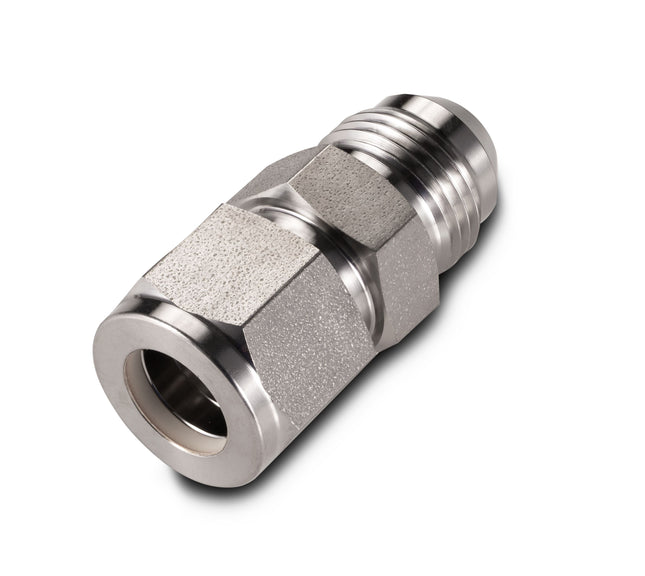
Bore Through 1/2" Compression Fitting x 1/2" MJIC
Bore Through 1/2" Compression Fitting x 1/2" MJIC made out of 304 stainless steel.
$18.00
-
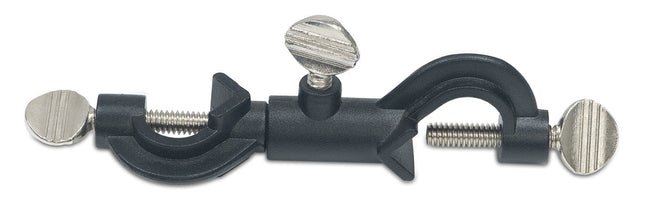
Boss Head - Double Swivel
Boss Head - Double Swivel Made of high strength powder coated alloy and can support up to 16mm rods. The boss head can be adjusted and locked to any angle (360°). It is also designed to carry heavy loads and prevent torque damage. Furthermore, it has three wide pad metal screws to easily secure itself to a clamp and support apparatus. Note:Clamps and rods are NOT included.
$11.00
-
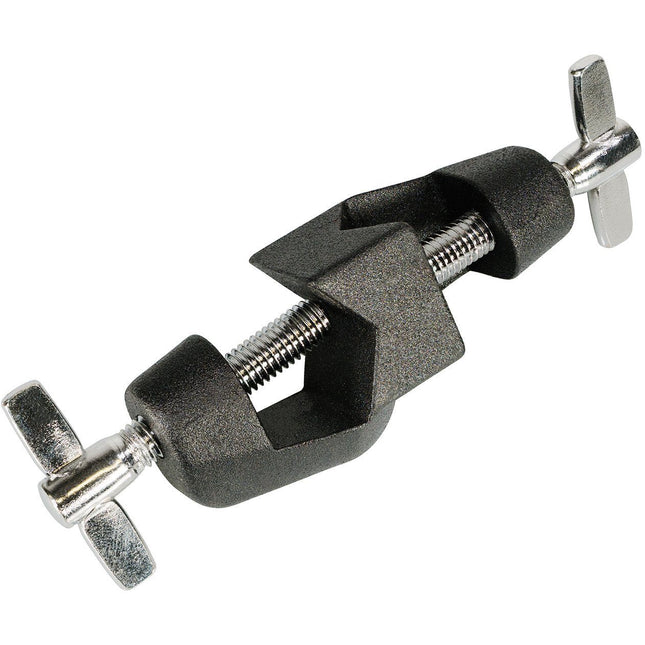
Boss Head Clamp for 16mm Rod (Premium Die Cast)
Boss Head Clamp - 16mm This Boss head clamp is made out of Die-Cast alloy and has nickel plated Wing Screws and will fit rod diameters up to 16mm.
$13.00
-
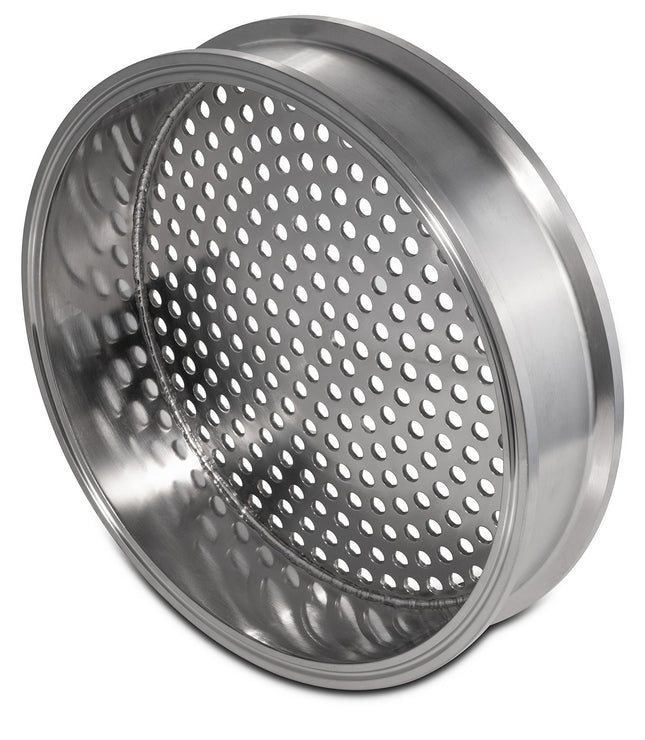
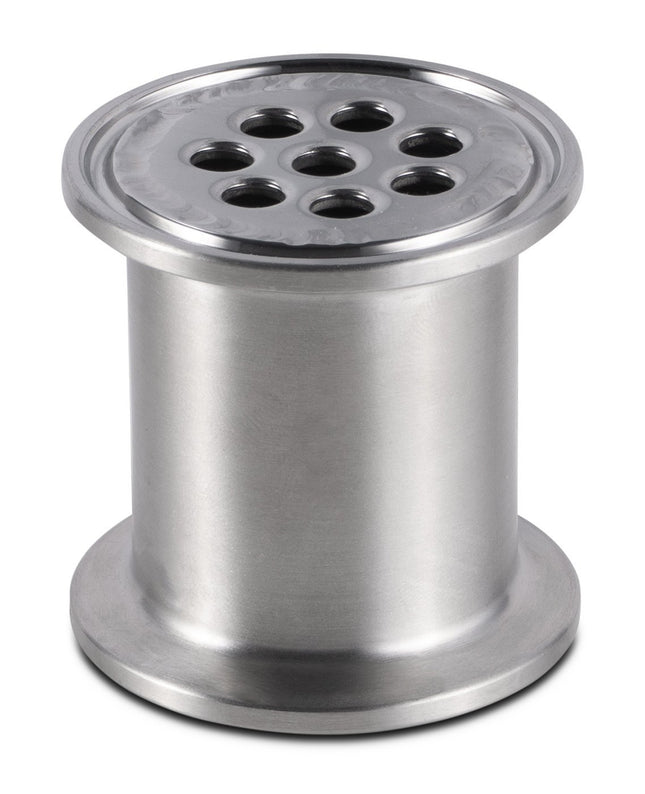
Bottom Weld Tri-Clamp Filter Plate
Bottom Weld Stainless Steel Tri-Clamp / Tri Clover Filter Plate Bottom Weld Stainless steel filter plates offer the user a great solid platform to help with filtration during the extraction process. These filter plates can be used simultaneously with ashless filter papers or any other filtration media like stainless steel ball bearings or steel wool to increase surface and filtration level to remove fats, lipids, waxes and any other unwanted material during the extraction process. **Note: Does not include Clamp, Gasket or Ring Sizes Available: 1.5" 2" 3" 4" 6" 8" 10" 12" Specifications: Material 304 Stainless Steel Standard 3A High Polish Connection Type(s) Tri-Clamp Hole Diameter 5.8mm Height 2" BVV™ Bottom Weld Tri-Clamp Filter Plate - Drawing
$28.00 - $365.00
-
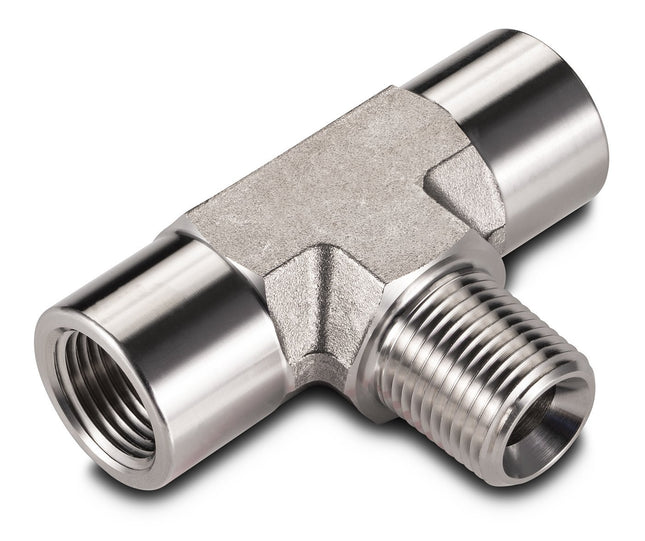
Branch Tee
Branch Tee BVV brand stainless steel parts are made with precision 304 Grade Stainless Steel and are clean and free from burrs or debris. These fittings are NPT threads (National Pipe Taper) and will compress against other Female/Male NPT threads creating a tighter and tighter connection. All NPT threads require thread sealant to create a watertight and gas-tight seal between the threads. We recommend using Yellow Gas PTFE Tape because it is rated for gases and is UL listed and it is NOT recommended to use white PTFE tape because it is not rated for gas service. **NOTE: Pre-Taped option comes from BVV Pre-taped with Yellow UL Listed Gas PTFE Tape on the Male NPT threads ONLY for a +0.50c charge per male npt end. (JIC Threads DO NOT need to be taped.) Branch Tee's are classified by the male threaded NPT connection coming off of the bottom pathway of the tee. This style of tee allows the user to reduce male pipe nipples or hex nipples and creates fewer leak points in an extraction system. BVV™ Branch Tee - Data Sheet Specifications Material 304 Stainless Steel Connection Type(s): 1/4"-18 FNPT 1/4"-18 MNPT 3/8"-18 FNPT 3/8"-18 MNPT Sizes Available: 1/4" 3/8"
$25.00 - $28.00
-
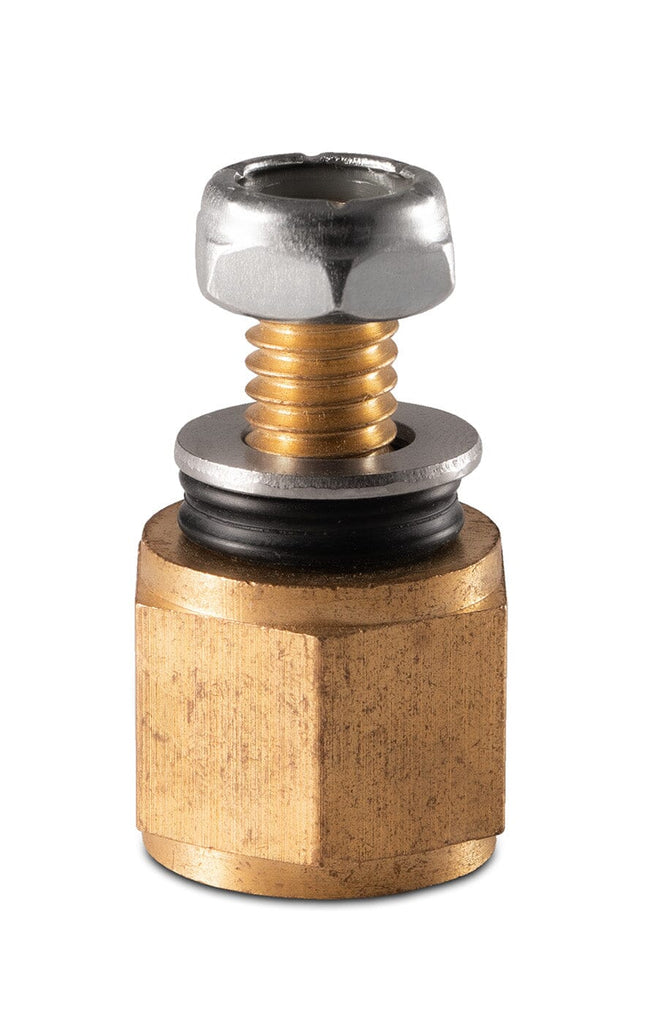

Brass Bulk Head Short
Brass Bulk Head Short This bulkhead is made to seal through a vacuum chamber wall up to 1/2" thick. The threads on the stem are 5/16" - 18, and on the outside of the chamber there will be 1/4" NPT threads to connect a variety of fittings.
$6.00
-
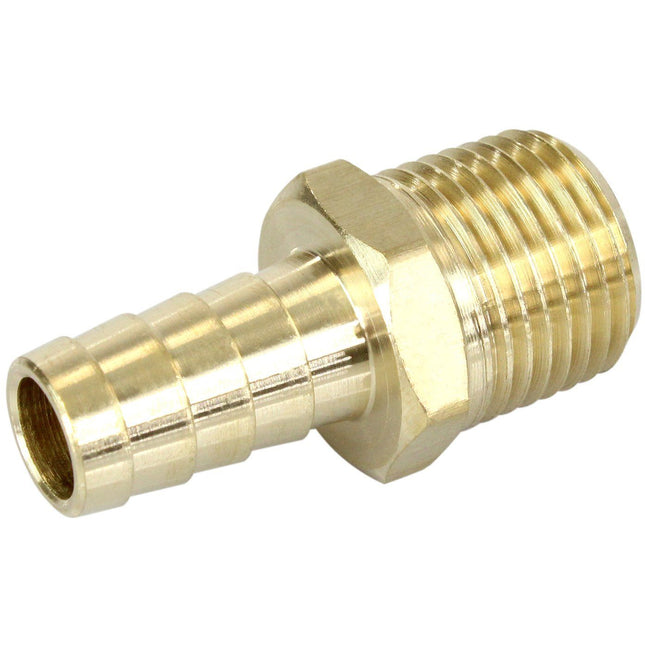

Brass Hose Barb x MNPT
Brass Hose Barb x Male NPT Threaded Connection. This fitting adapts from Male NPT to Hose Barb Fitting for use with tubing for flow. **NOTE: Pre-Taped option comes from BVV Pre-taped with Yellow UL Listed Gas PTFE Tape on the Male NPT threads ONLY for a +0.50c charge per male npt end. (JIC Threads and Barbs DO NOT need to be taped.) Sizes Available: 1/4" Barb x 1/4" MNPT 3/8" Barb x 1/4" MNPT 1/2" Barb x 1/4" MNPT 3/8" Barb x 3/8" MNPT 3/8" Barb x 3/8" MNPT 1/4" Barb x 1/2" MNPT 3/8" Barb x 1/2" MNPT 1/2" Barb x 1/2" MNPT
$1.00 - $1.50
-
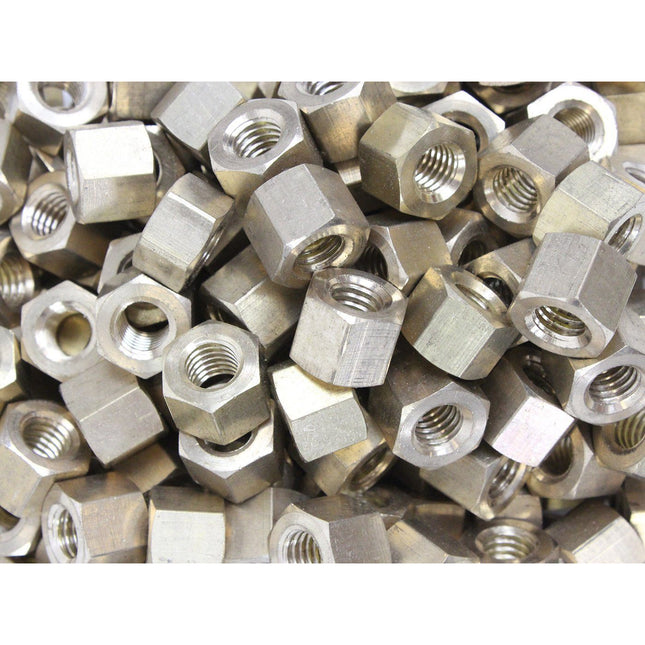
Brass Nuts For High Pressure Clamps
Brass Nuts for High Pressure clamps These are replacement nuts for High Pressure clamps and are made of brass and have a 5/8" Hex with a 3/8"-16 Threading. After repeated usage nuts on high pressure clamps will wear down and you will notice filings on the bolt when you notice this it is time to replace the bolts because they may fail unexpectedly.
$1.60
-
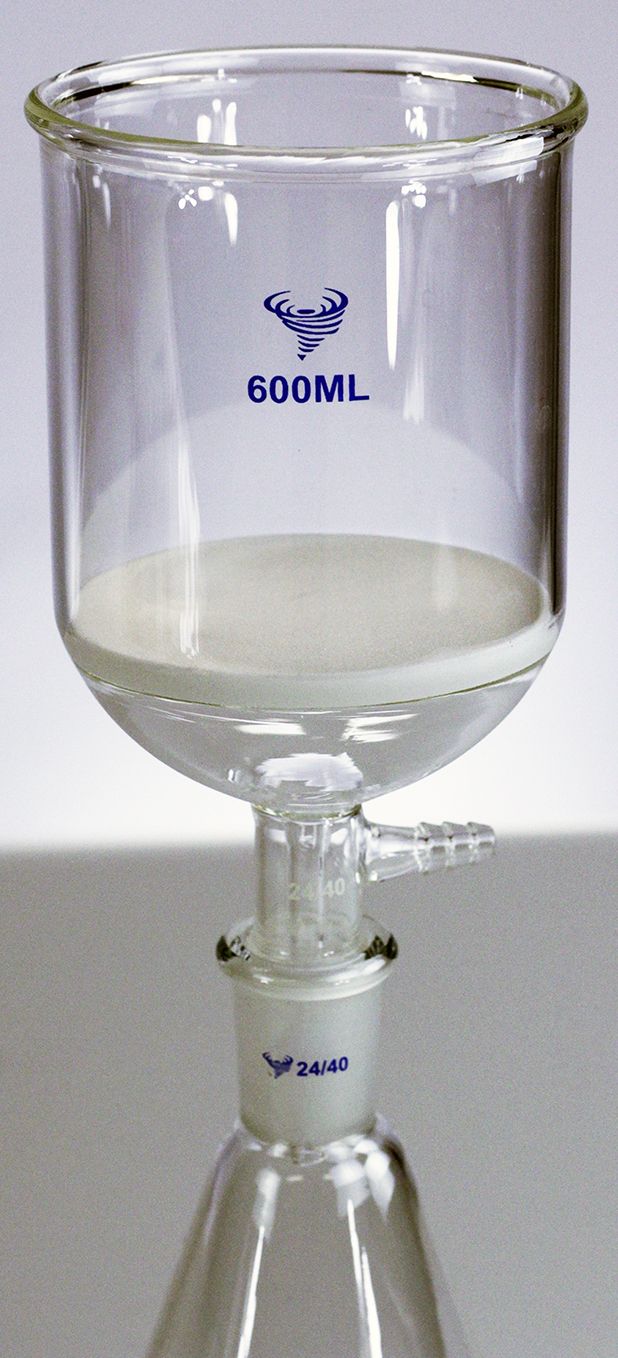
Buchner Funnel - Fritted 650ML
24/40 Joint
$90.00
-
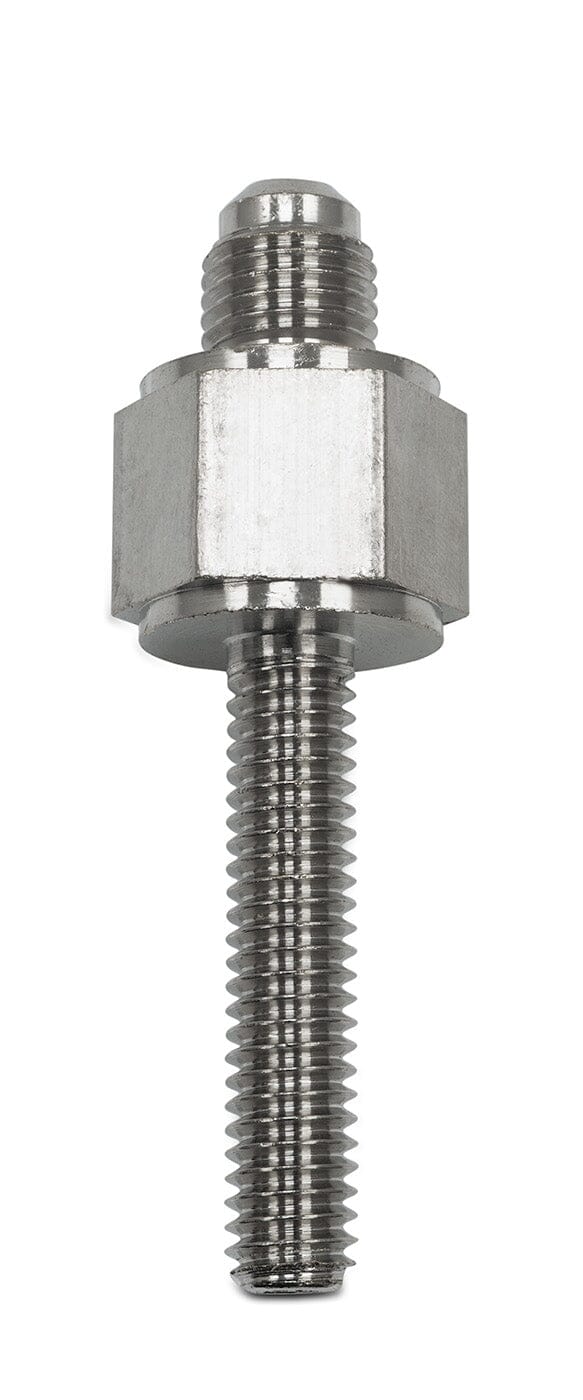
Bulk Head Long with Flare
Long Bulk Head with Flare This Long Bulk Head with Flare comes equipped with an extended 1/5" long thread with 1/4" MJIC flare perfect for applications with larger wall thicknesses. The optimal hole diameter for installing this bulkhead would be 5/16"
$8.00 $6.00
-
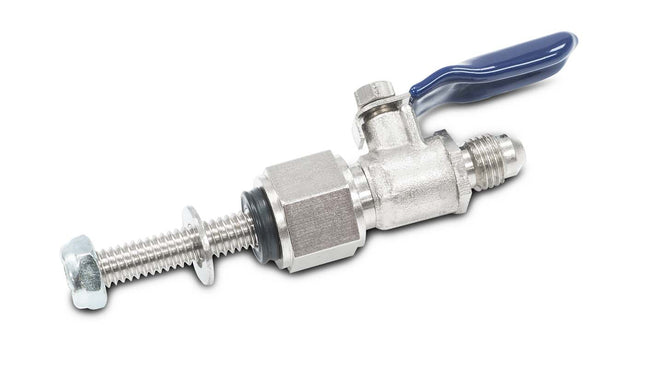
Bulk Head Long with Valve and Flare
Bulk Head Long with Valve and Flare This bulkhead with attached valve is perfect for passing through thin walls in vacuum applications such as vacuum chambers, the maximum recommended wall thickness is 0.25". The gasket design is only meant to hold vacuum, it is not intended to hold pressure. The hole diameter for installing the bulkhead is 5/16". The flare connection is 1/4" JIC.
$20.00
-
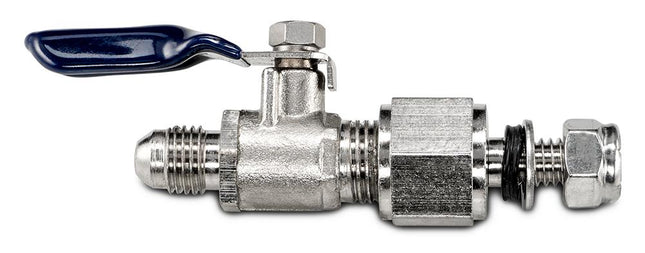
Bulk Head Short with Valve and Flare
Bulk Head Short with Valve and Flare This bulkhead with attached valve is perfect for passing through thin walls in vacuum applications such as vacuum chambers, the maximum recommended wall thickness is 0.25". The gasket design is only meant to hold vacuum, it is not intended to hold pressure. The hole diameter for installing the bulkhead is 5/16". The flare connection is 1/4" JIC.
$14.00
-
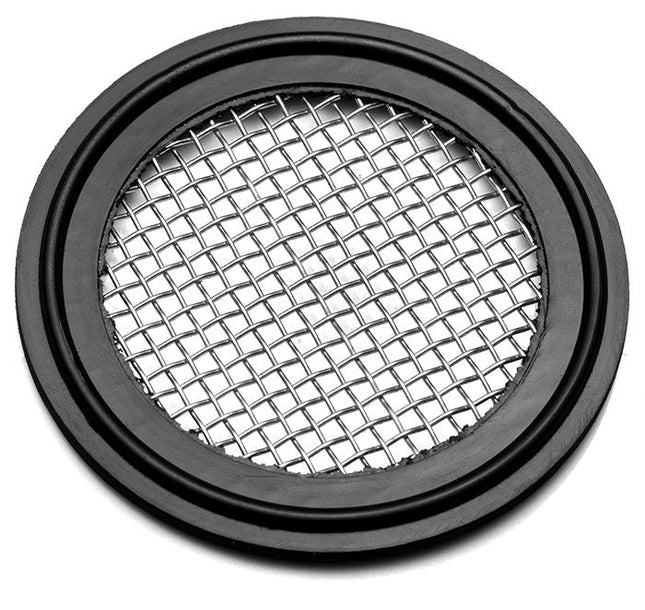
BUNA-N 10 Mesh (2000 Micron)
BUNA-N 10 mesh (2000 micron) Tri-Clamp Tri Clover Gasket MADE IN THE U.S.A Mesh / Micron Filter Chart Note: 'Cinnamon' Smelling Gaskets are Chinese made and are not standardized or regulated Disclaimer: BVV™ recommends no more than a -40F operating temperature and is not responsible for the user running their system with incompatible chemicals Why BUNA-N over Viton? Lower Temperature Range Lower Costs Better Compressibility and Springiness Excellent Resistance to Major/Popular Solvents(Butane/Propane) Better Tear Resistance Better Abrasion Resistance Specifications Materials: BUNA-N (Nitrile) 316 Stainless Steel Mesh Overmold Conformance FDA Compliant / Meets 3A Standards Thermal Properties: Low-Temperature Range: -70°F Minimum for Continuous Use(Static): -40°F Brittle Point: -70°F High-Temperature Range: +210°F to +250°F Maximum for Continous Use (Static): +250°F Gas Permeability: Excellent Durometer or Hardness Range: 20-95 Shore A Tensile Strength Range: 200-3,500 PSI Elongation Range(%): 350%-650% Abrasion Resistance: Excellent Resilience / Rebound: Good Chemical Compatibility Butane A - Excellent Propane A - Excellent Alcohols: Amyl B - Good Benzyl D-Severe Effect Butyl C-Fair Diacetone D-Severe Effect Ethyl C-Fair Hexyl A - Excellent Isobutyl B - Good Isopropyl B - Good Methyl A - Excellent Octyl B - Good Propyl A - Excellent
$18.00 - $148.00
-
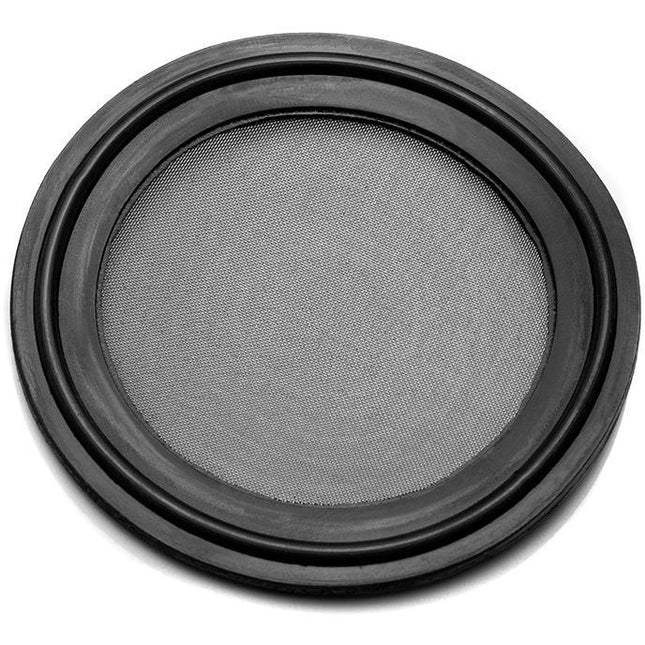
BUNA-N 100 Mesh (150 Micron)
BUNA-N 100 Mesh (150 Micron) Tri-Clamp Gasket MADE IN THE U.S.A Mesh / Micron Filter Chart Note: 'Cinnamon' Smelling Gaskets are Chinese made and are not standardized or regulated Disclaimer: BVV™ recommends no more than a -40F operating temperature and is not responsible for the user running their system with incompatible chemicals Why BUNA-N over Viton? Lower Temperature Range Lower Costs Better Compressibility and Springiness Excellent Resistance to Major/Popular Solvents(Butane/Propane) Better Tear Resistance Better Abrasion Resistance Specifications Materials: BUNA-N (Nitrile) 316 Stainless Steel Mesh Overmold Conformance FDA Compliant / Meets 3A Standards Thermal Properties: Low-Temperature Range: -70°F Minimum for Continuous Use(Static): -40°F Brittle Point: -70°F High-Temperature Range: +210°F to +250°F Maximum for Continous Use (Static): +250°F Gas Permeability: Excellent Durometer or Hardness Range: 20-95 Shore A Tensile Strength Range: 200-3,500 PSI Elongation Range(%): 350%-650% Abrasion Resistance: Excellent Resilience / Rebound: Good Chemical Compatibility Butane A - Excellent Propane A - Excellent Alcohols: Amyl B - Good Benzyl D-Severe Effect Butyl C-Fair Diacetone D-Severe Effect Ethyl C-Fair Hexyl A - Excellent Isobutyl B - Good Isopropyl B - Good Methyl A - Excellent Octyl B - Good Propyl A - Excellent
$18.00 - $142.00
-
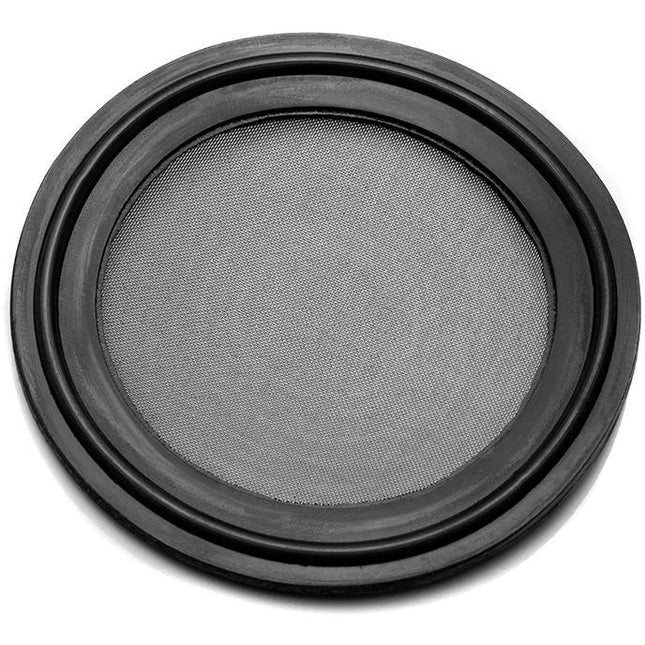
BUNA-N 150 Mesh (100 Micron)
BUNA-N 150 Mesh (100 Micron) Tri-Clamp/ Tri Clover Gasket MADE IN THE U.S.A Mesh / Micron Filter Chart Note: 'Cinnamon' Smelling Gaskets are Chinese made and are not standardized or regulated Disclaimer: BVV™ recommends no more than a -40F operating temperature and is not responsible for the user running their system with incompatible chemicals Why BUNA-N over Viton? Lower Temperature Range Lower Costs Better Compressibility and Springiness Excellent Resistance to Major/Popular Solvents(Butane/Propane) Better Tear Resistance Better Abrasion Resistance Specifications Materials: BUNA-N (Nitrile) 316 Stainless Steel Mesh Overmold Conformance FDA Compliant / Meets 3A Standards Thermal Properties: Low-Temperature Range: -70°F Minimum for Continuous Use(Static): -40°F Brittle Point: -70°F High-Temperature Range: +210°F to +250°F Maximum for Continous Use (Static): +250°F Gas Permeability: Excellent Durometer or Hardness Range: 20-95 Shore A Tensile Strength Range: 200-3,500 PSI Elongation Range(%): 350%-650% Abrasion Resistance: Excellent Resilience / Rebound: Good Chemical Compatibility Butane A - Excellent Propane A - Excellent Alcohols: Amyl B - Good Benzyl D-Severe Effect Butyl C-Fair Diacetone D-Severe Effect Ethyl C-Fair Hexyl A - Excellent Isobutyl B - Good Isopropyl B - Good Methyl A - Excellent Octyl B - Good Propyl A - Excellent
$21.00 - $162.00


You have seen 432 out of 1095 products