
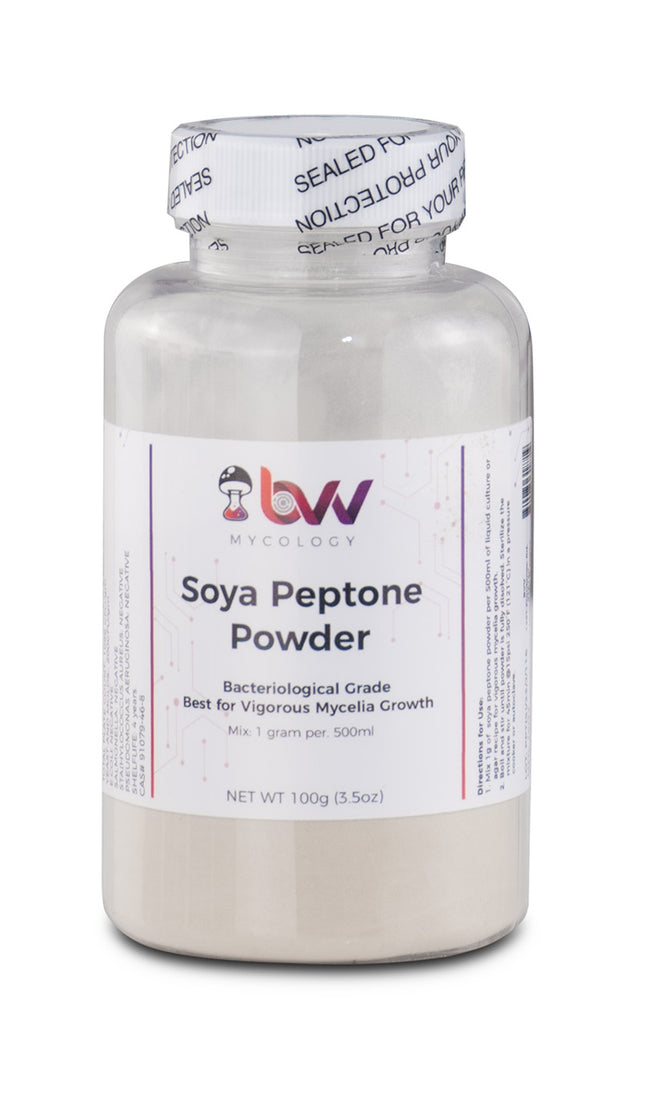
The Peptones collection at BVV provides high-quality nitrogen sources essential for the formulation of professional-grade culture media. Our current featured offering is Soya Peptone, a non-animal, vegan-friendly enzymatic digest of soybean meal. Rich in amino acids, vitamins, and carbohydrates, it serves as a powerful growth stimulant for a wide variety of fastidious microorganisms and fungal cultures.
Designed for use in both agar-based and liquid media, our peptones are sourced for maximum solubility and batch-to-batch consistency. Whether you are performing specialized mycological research or scaling commercial plant tissue culture, BVV’s nitrogen sources provide the nutritional foundation required for robust biological expansion. As we continue to expand our 2026 catalog, this collection remains the definitive source for the specialized proteins your laboratory demands.
What is a Peptone in microbiology?
A peptone is a water-soluble mixture of polypeptides and amino acids formed by the partial hydrolysis of proteins. In microbiology, it serves as a primary source of nitrogen for the formulation of culture media.
Why choose Soya Peptone over animal-based peptones?
Soya Peptone is a vegan, non-GMO nitrogen source. It is preferred in modern labs to avoid the use of animal-derived materials (BSE/TSE risks) and provides a broader nutrient profile that supports a wider variety of organisms.
How much Soya Peptone should be added to Agar recipes?
Standard recipes typically utilize 1g to 2g of Soya Peptone per liter of media. It is often combined with Agar and a carbohydrate source like Malt Extract or Dextrose.
Is Soya Peptone suitable for Mycology?
Yes. Many mycologists use Soya Peptone as a "supercharger" for liquid cultures and agar plates, as it provides the amino acids necessary for rapid mycelial expansion and dense growth.
Does Peptone affect the clarity of the media?
High-quality Soya Peptones are processed for high solubility. While they may add a slight amber tint to the media, they should remain clear enough for visual monitoring of cultures.
Can I use Peptone in Liquid Culture (LC)?
Absolutely. Adding a small amount of peptone to a liquid culture solution (approx 1-2g per liter) provides the nitrogen boost needed for faster colonization times.
How should dry Peptone be stored?
Peptones are hygroscopic and will absorb moisture from the air. Store in a cool, dry place in a tightly sealed container to prevent clumping and degradation.
Is your Soya Peptone non-GMO?
Yes. Our Soya Peptone is sourced to be non-GMO and free from enzymatic animal components, making it ideal for clean-label botanical and pharmaceutical research.
What is the shelf life of Soya Peptone?
When kept dry and sealed, Soya Peptone has a shelf life of approximately 2-3 years. Always check for signs of moisture absorption or off-odors before use in critical cultures.