Chapter 2: Solvent Based Extraction (Part 2: Ethanol Extraction)
,
by Avery Benitez
27 min reading time
ETHANOL EXTRACTION
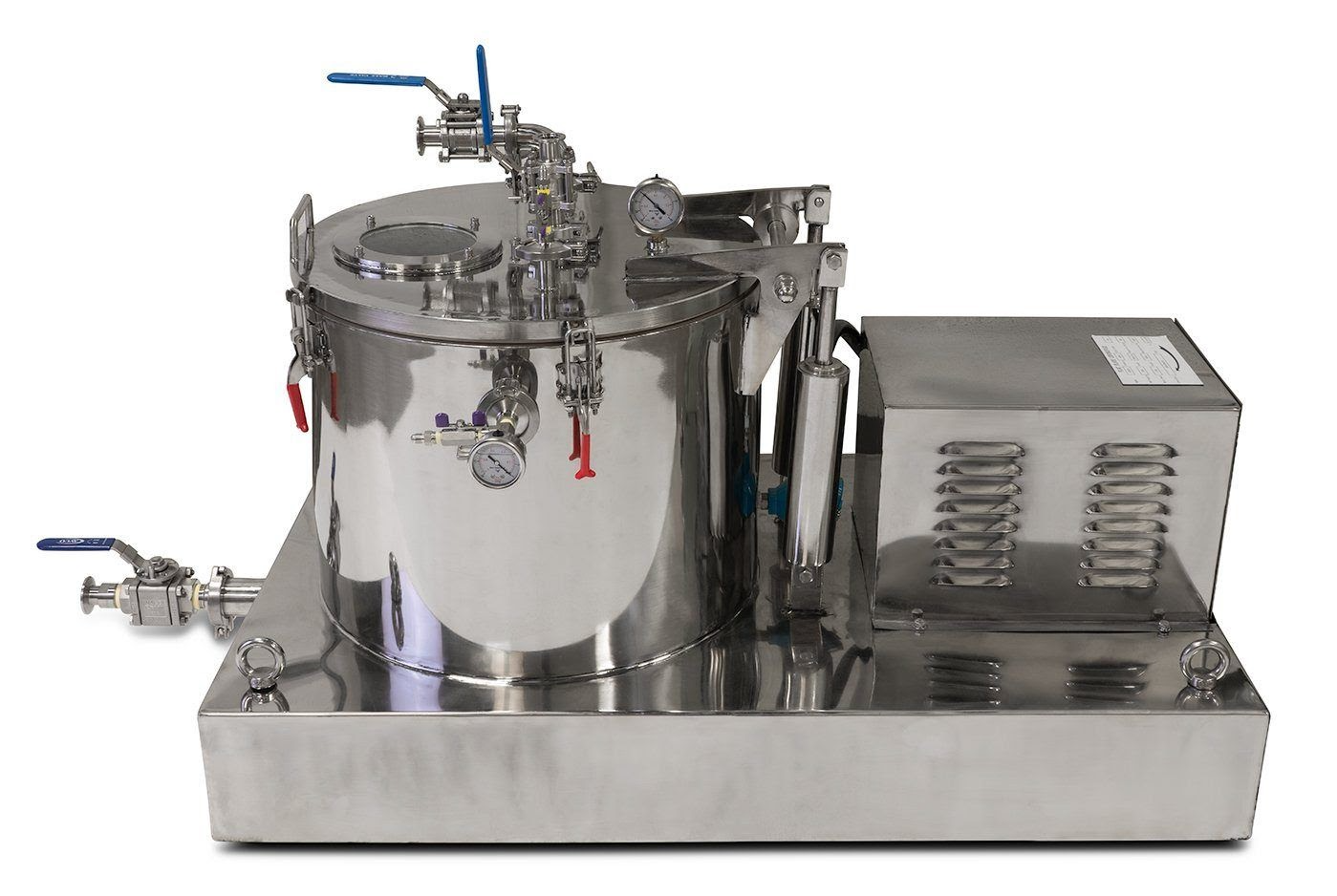
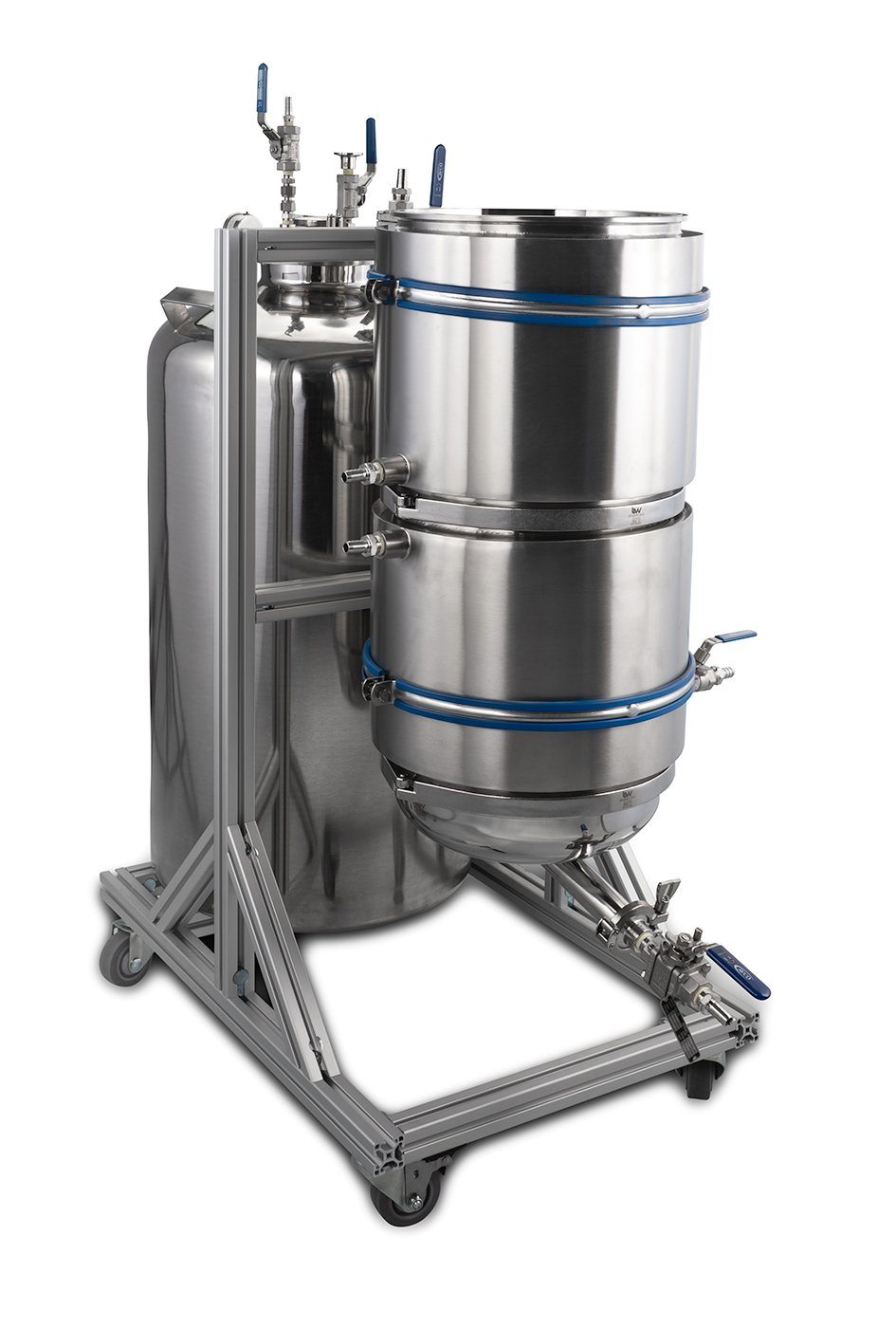
45L Jacketed Stainless Steel centrifuge By BVV
Ethanol extraction is an excellent method of botanicalextraction valued for its high throughput potential and reduced flammability compared to more volatilesolvent-basedextraction methods likehydrocarbon extraction.Ethanol is classified as alcohol made from starch-based plant materials through a complex fermentation anddistillation process.Ethanol (EtOH), commonly known as ethyl alcohol or grain alcohol, is a colorless flammable liquid with an incredible number of uses beyond botanicalextraction including fuel and a cleaning agent.
As anextraction solvent ethanol is unique due to its amphiphilic nature meaning it has bothpolar andnonpolar properties.Ethanol has a hydrotropicpolar head (water-loving) that can bind to water-soluble compounds, and anonpolar tail that can dissolve hydrophobic or oil-soluble compounds typically found in botanicalbiomass. As the plant matter issaturated withethanol, it dissolves bothpolar andnonpolar compounds from thebiomass material extracting them.Ethanol's amphiphilic nature can be ideal when seeking to create a more full-spectrum product, but it can be less than ideal for those looking to create a more concentrated extract.
Due toethanols'polar andnonpolar nature, it has an increased propensity to co-extract undesirableplant waxes andchlorophyllduring theextraction process. This typically results in a less potent and pure end product requiring morepost-processingto reach the same purity level than that of anonpolar solvent likebutaneorpropane. Whileethanol’sselectivity for undesirable plant waxes andchlorophyll can be altered by chilling theethanol prior toextraction, reducing thesolubility of undesirable plant waxes and color pigments, it also reduces thesolubility of target compounds as well.
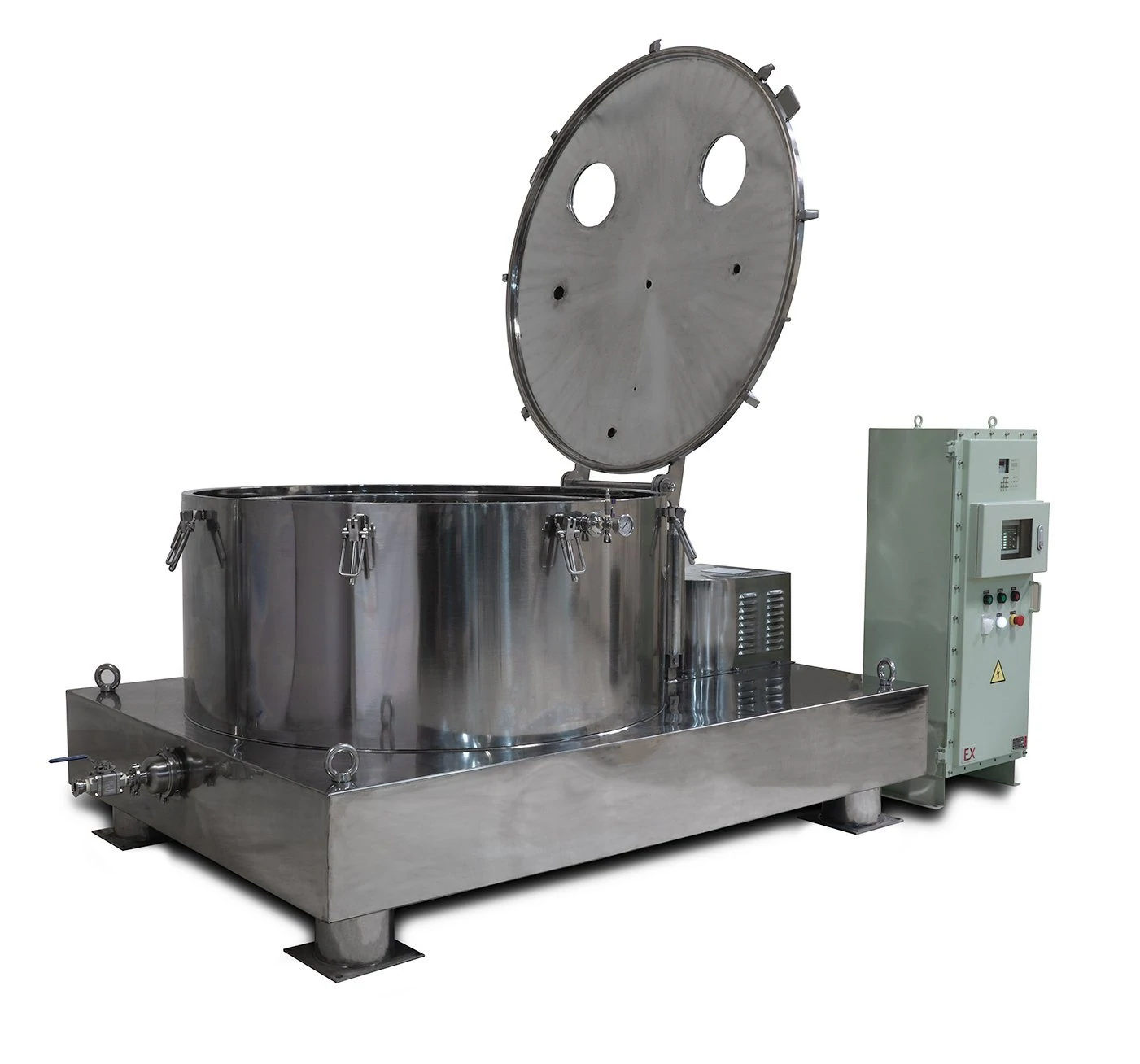
475L Jacketed Stainless Steel Centrifuge By BVV
Beyond itspolarity,ethanol has a highsaturationcapacity and only requires a shortretention timeto dissolve target compounds lending itself to short runtimes and high throughput potential.Ethanol is particularly well suited for bulk processing, with available systems that can extract thousands of pounds ofbiomass within a single working shift. This makesethanol a great option for those makingbotanical extracts at larger scales.
Whileethanol extraction can be extremely well suited for some applications, it may not be the best suited for applications with low budgetary requirements or when targeting lowerboiling pointbotanical compounds. These factors are typically the concern when it comes to thesolvent recovery process.Ethanol extractions typically require large amounts ofethanol and large-scalesolvent recovery systems to process efficiently. Unlikehydrocarbon extraction where the bulk of thesolvent recovery process happens within the sameextraction apparatus,ethanol solvent recovery is typically performed in a separate ancillarysolvent recovery system like arotary evaporatororfalling film evaporator.
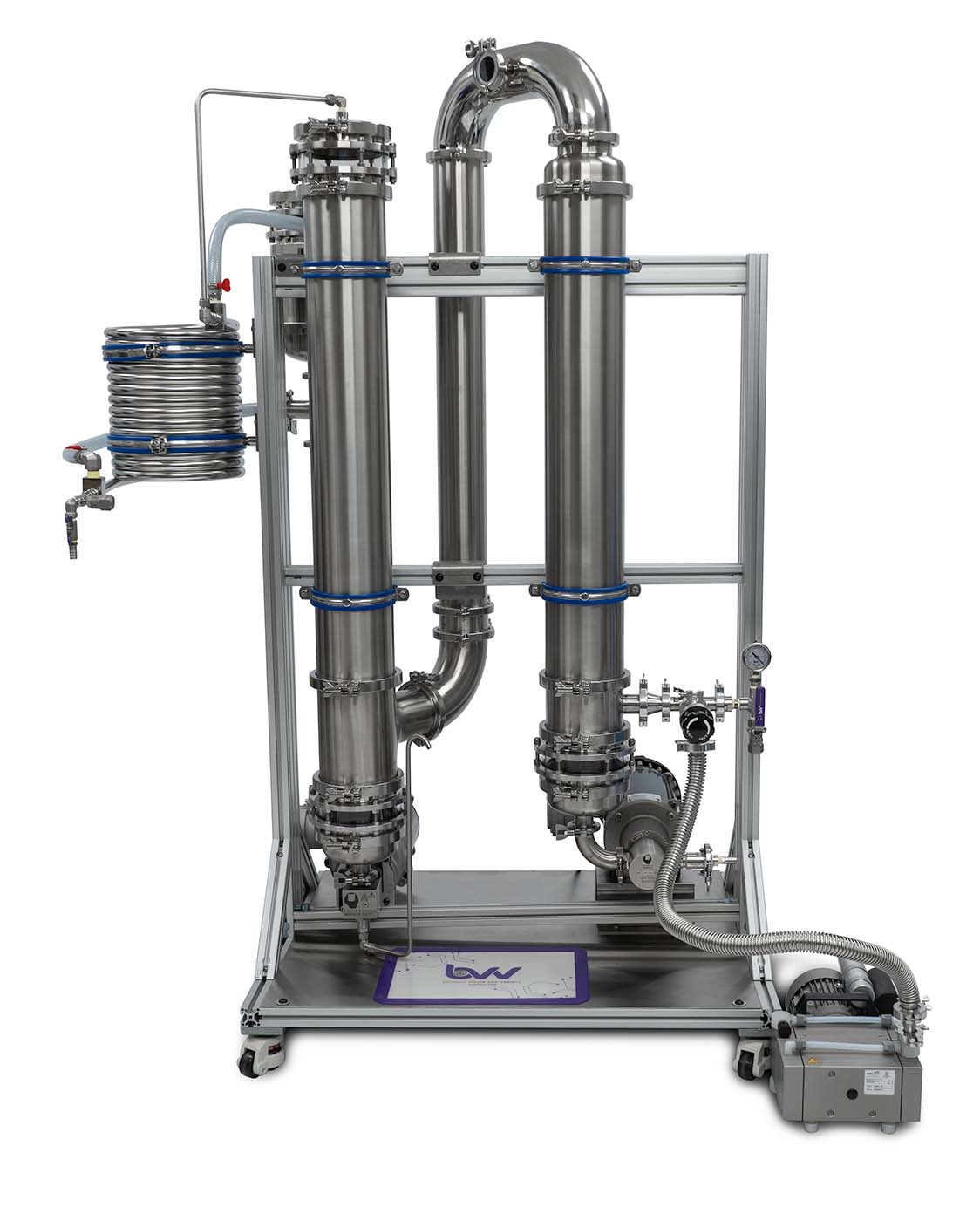
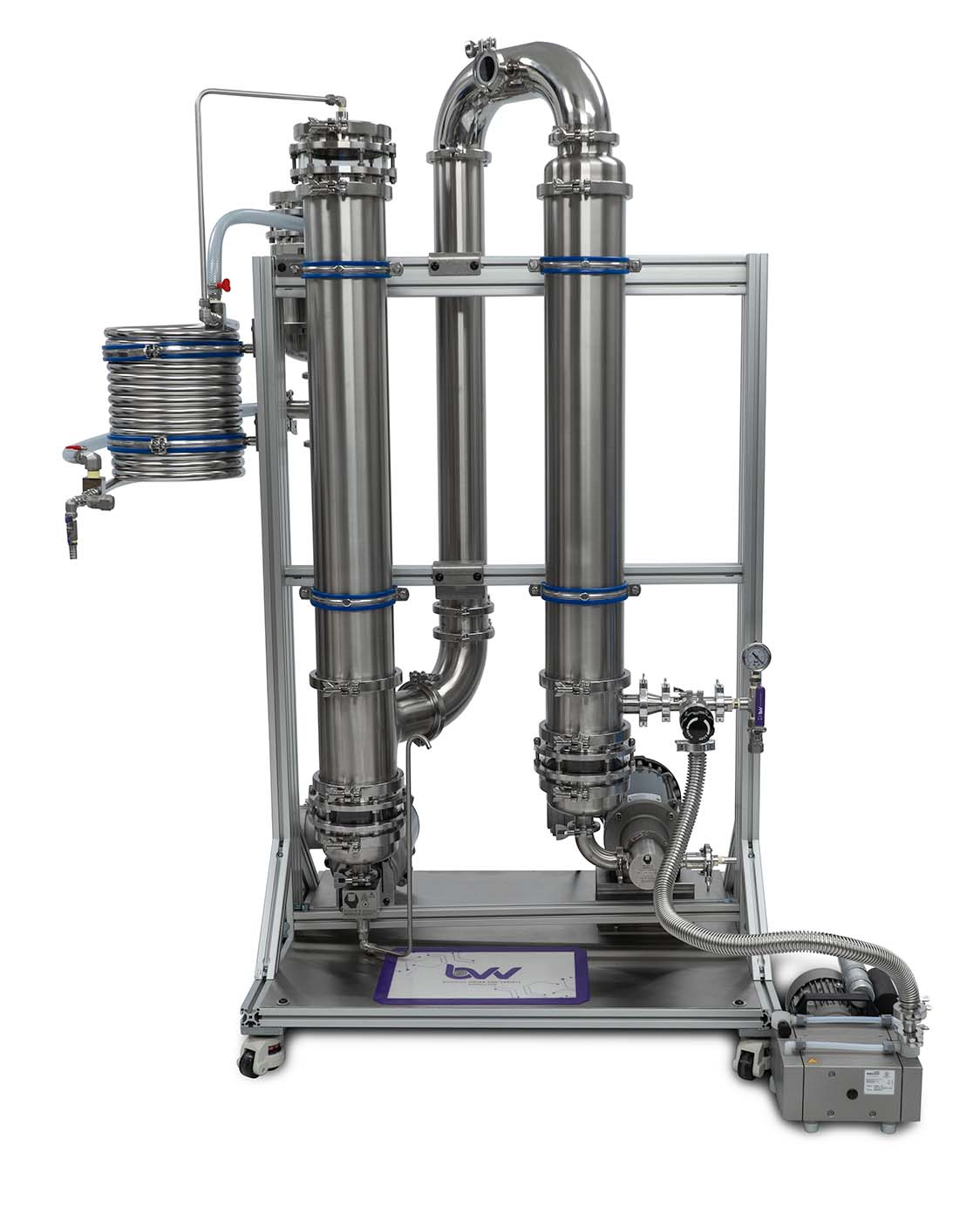
6" Falling Film Evaporator by BVV
When it comes toethanol solvent recovery,Ethanolsboiling pointof 78C/173F is considerably higher than that of lighthydrocarbons. Whileethanolsboiling pointstill makes thesolvent easily recovered from thebotanical extractit may be conflicting with some lowerboiling pointor highly volatile target compounds. Althoughethanolsboiling point is quite a bit higher in comparison tohydrocarbon boiling points it is typically well below most botanical compounds making it a considerable candidate for most botanicalextractions.
Aside from ancillary solvent recovery equipment ethanol extraction typically requires other ancillary post-processing procedures in the form of winterization/filtration and distillationin order to achieve a high purity extract. While this additional post-processing equipment drastically raises the startup cost of ethanol extraction it's well worth it when included in the ethanol processing flow resulting in a highly refined and potent botanical concentrate.
270 Gallon Tote of 200 Proof Food & Lab Grade Ethanol By BVV
Ethanol can come in a variety of different types, which can be utilized for botanicalextraction commonly classified by their proof which designates their purity and their potability, meaning its suitability for drinking. Commonlyethanol is made non-potable by denaturing it with a substance that discourages people from consuming it recreationally. While denaturedethanol is unfit for consumption, it can be utilized effectively for botanicalextraction resulting in a drastic reduction inextraction cost by circumventing the Federal Excise Tax on alcohol.
The most commonly used types ofethanol employed for botanicalextraction include200 proofethanol(pureethanol), potable 190 proofethanol (containing 5% water), and190 proof n-heptane denaturedethanol(containing 5%n-Heptane). Theseextraction-gradeethanols can be efficiently used to extract bothpolar andnonpolar botanical compounds. While 200 proofethanol is great to ensure theextraction solvent is of the highest purity, both potable 190 proofethanol and n-heptane denaturedethanol have their own unique benefits.
Potable 190 proofethanol contains roughly 5% water by mass. This small amount of water makes theethanol slightly morepolar than 200 proofethanol and forms anazeotrope between theethanol and water, decreasing itsboiling pointever so slightly. This increasedpolarity reduces affinity towards most targetnonpolar botanical compounds and undesirablenonpolar plant waxes. While this increasedpolarity can benefit when utilized in conjunction with chilling thesolvent prior toextraction to limit the pickup of unwanted plant waxes andlipids, this is somewhat counterintuitive when targetingnonpolar botanical compounds but nonetheless can be utilized to create higher purityethanolextracted botanical concentrate. 190 proofethanol is commonly the preferred type ofethanol when extracting cold for its excellentselectivity at chilled temperatures beyond -40C/-40F.
5 Gallon Ultra High Purity 710 Extraction Solvent By BVV
Conversely, 190 proof n-heptane denaturedethanol can be utilized, 190 proof n-heptane denaturedethanol similarly result in anazeotrope between theethanol and n-heptane, but due to n-heptanes non-polarity, this increases its affinity to extract targetnonpolar botanical compounds. Additionally, 190 proof n-heptane denaturedethanol allows for the Federal Excise Tax on alcohol to be circumvented, drastically reducing the cost of usingethanol as anextraction solvent.
55 Gallon Drum of CDA-12A Denatured Ethanol(n-Heptane Denatured) By BVV
Both potable and n-Heptanedenatured 190 proofethanol create anazeotrope between theethanol and either the water or n-heptane. Anazeotrope is defined as a mixture of two liquids that have a constantboiling pointand composition throughdistillation. Thisazeotrope results in theethanol and either water or n-heptane evaporating at the same temperature, making it extremely difficult to separate the two throughdistillation. While these azeotropicsolvents are still easily recovered from abotanical extractat a relatively lowboiling pointaround 78C/173F using a rotary evaporatoror falling film evaporator, they can be complicated to reuse after absorbing additional water frombiomass material.
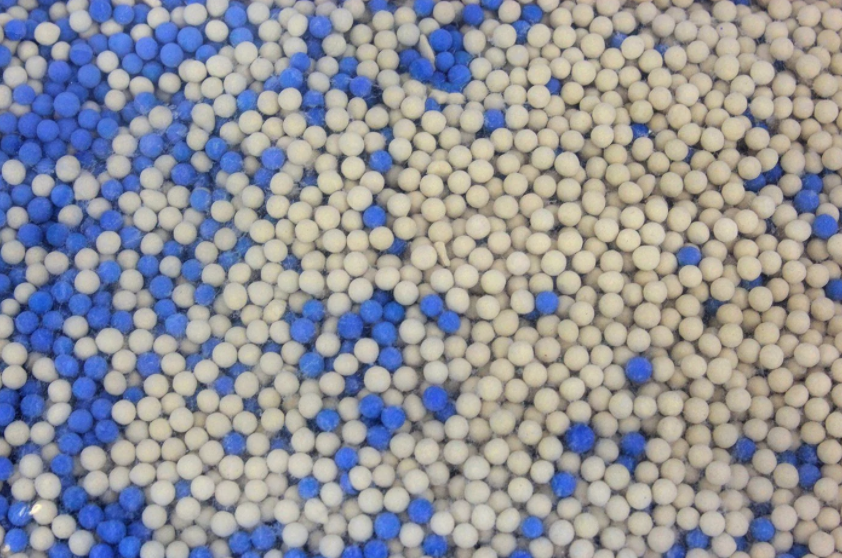
4A Molecular Sieve Beads By mSORB
While all types ofextraction gradeethanol can be easily distilled from abotanical extractto non-detectable levels, reuse proves challenging due to the pickup of additional water from thebiomass material. Additional water absorbed by thesolvent negatively affects itsextraction efficiency over time and requires reproofing using 4A molecular sieveto remove the excess water. Reproofing is especially important with n-heptane denaturedethanol as reuse results in a ternary (3-part)azeotrope between theethanol, n-heptane, and the additional water absorbed over time, resulting in dramatically reducedextraction efficiency.
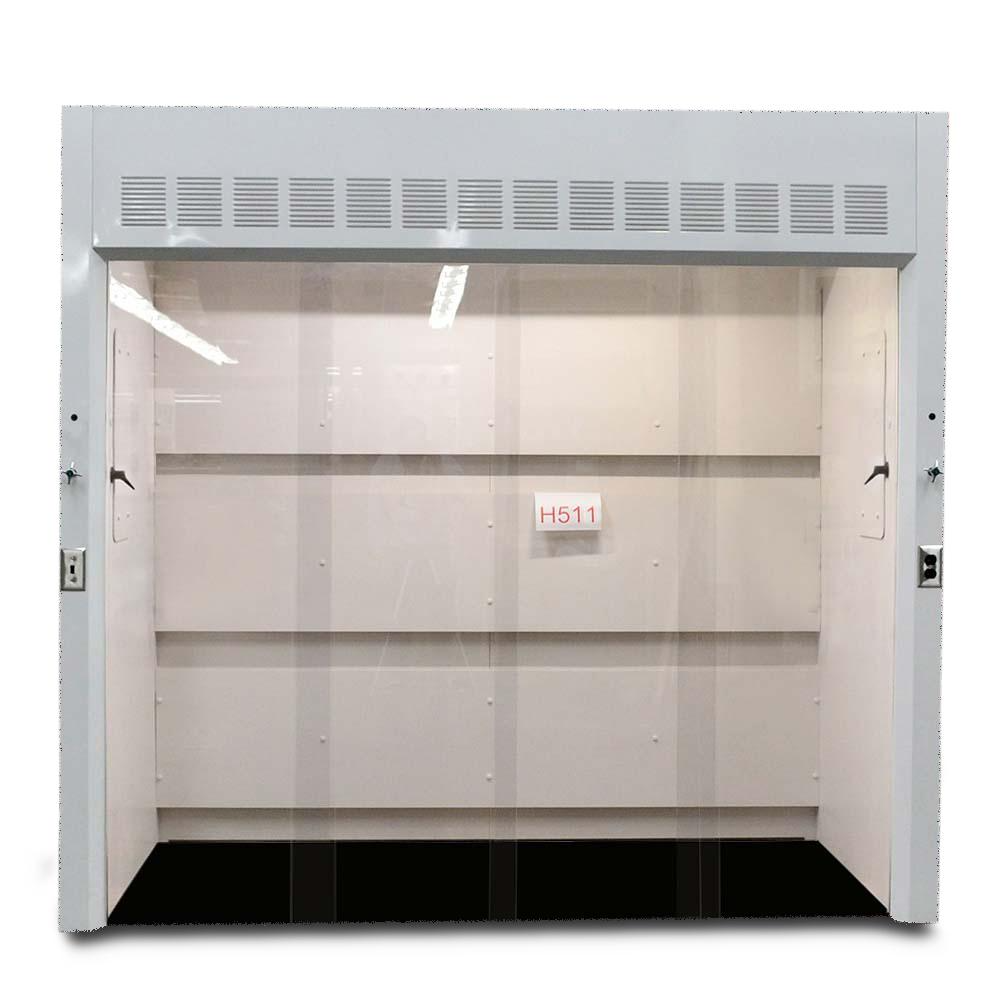
Walk-In Fume Hood By Fisher American
While non-denatured forms ofethanol are Generally Regarded as Safe (GRAS) by the FDA and are typically consumed regularly within alcohol by many, it can be toxic to humans in high concentrations. Whenethanol is used as anextraction solvent, this highly flammable liquid can be dangerous and requires careful storage and use. While it is highly unlikely thatethanol extraction will result in an explosion when performed properly, when utilizing this highly flammable liquid forextraction, there is always an inherent potential for ignition. For this reason, any and all potential sources of heat or flames should be kept far away from areas in whichethanol liquid orvapors are present.
Additionally, the temperature and airflow of storage andextraction areas should be carefully managed to reduce the level of flammableethanol vapors as low as possible. Keeping theethanol stored in a relatively cool area with good airflow reduces the release and level of flammablevapors in the atmosphere. By controlling the temperature and airflow of storage andextraction areas, the concentration ofvapors can be reduced, which drastically lowers the potential ofvaporignition. To further mitigate the potential for ignition,ethanol should always be stored in an appropriate fireproofsolvent cabinet, andextraction should be performed inside of aC1D2extraction boothwith all the proper safety and protective equipment.
Among the most important pieces of safety equipment forethanol extraction is a C1D2 ratedextraction booth which greatly reduces the potential hazard when working withethanol as asolvent. A C1D2 hazardous location is an area where ignitable concentrations ofvapor are handled, processed, or used, normally in closed containers or closed systems from which they can only escape through accidental rupture or breakdown of such containers or systems.
Mega Deluxe Series C1D1 Indoor Booth By Advanced Extraction Labs
Ethanol extraction typically falls under a Class 1 Division 2 hazardous location because ignitable concentrations ofvapor are handled, processed, or used, while normally in closed containers or closed systems from which they can only escape through accidental rupture or breakdown of such containers or systems. Depending on the specific municipality, a fire inspector may also require saidextraction booth to have a fireproof burn rating which is commonly needed when dealing with larger volumes ofsolvent within the enclosed area.
C1D2 Hazardous locations require all electrical/electronics equipment to be designed, tested, and labeled as being acceptable for use in C1D2 areas. Beyond utilizing appropriately rated electrical/electronic components, most C1D2extraction booths will come equipped with an explosion-proof exhaust fan providing a high air exchange rate, along with a lower explosive limitgas detector to alert of high levels ofgas and trigger an increased rate of exhaust ventilation.
While the use of appropriately rated electrical components within theextraction area drastically lowers the potential of a flammable substance being ignited, One of the more important functions of a C1D2extraction area is to reduce the risk of an explosion by regulating the airflow of the enclosed space to keep the levels ofgases below the lower explosive limit of the usedgas.
Lower Explosive Limit Gas Detector By Honeywell
A C1D2extraction booth helps mitigate the risk of an explosion through the use of an explosion-proof exhaust fan providing a high rate of air exchange, along with a lower explosive limitgas detector used to alert the user of high levels ofgas and trigger an increased rate of exhaust ventilation. When extracting withethanol it's best to keep the percentagesolvent vapors within the enclosure well below 25% of their lower explosive limit, which is 3.3% forethanol, through adequate ventilation.
When it comes to the storage ofethanol, OSHA requires thatethanol vaporsbe held below 25% of the 3.3% lower explosive limit through adequate ventilation. Commonly, the maximum amount ofethanol that can be stored in a flammable storage cabinet is 60 gallons, and the maximum storage permissible outside of a flammable cabinet or storage room is 25 gallons. While the storage requirements may be different in certain municipalities, typically, any volume ofethanol greater than 200 gallons is required to be stored in a C1D2 space with a 5-hour fire-rated wall. It is important to work with the local fire marshal to determine the exact requirements forethanol use and storage within the facility and get proper approval from the municipality to storeethanol and performethanol extraction.
Keep in mind, when performing anethanol extraction inside a C1D2 rated hazardous location, only appropriately rated explosion-proof electronics should be utilized, and great care should be taken to limit exposure to open flame or static electricity. A C1D2 Environment is a must-have to safely and competently performethanol extraction and should be worked into the budget of every newethanol extraction lab build. While a C1D2Extraction booth greatly reduces risk duringethanol extraction, to ensure personal safety while performingethanol extraction, personal protective equipment in the form of safety goggles, nitrile gloves, antistatic clothing, and a respirator should be worn at all times when working withethanol or where high concentrations ofethanol vapor exist.
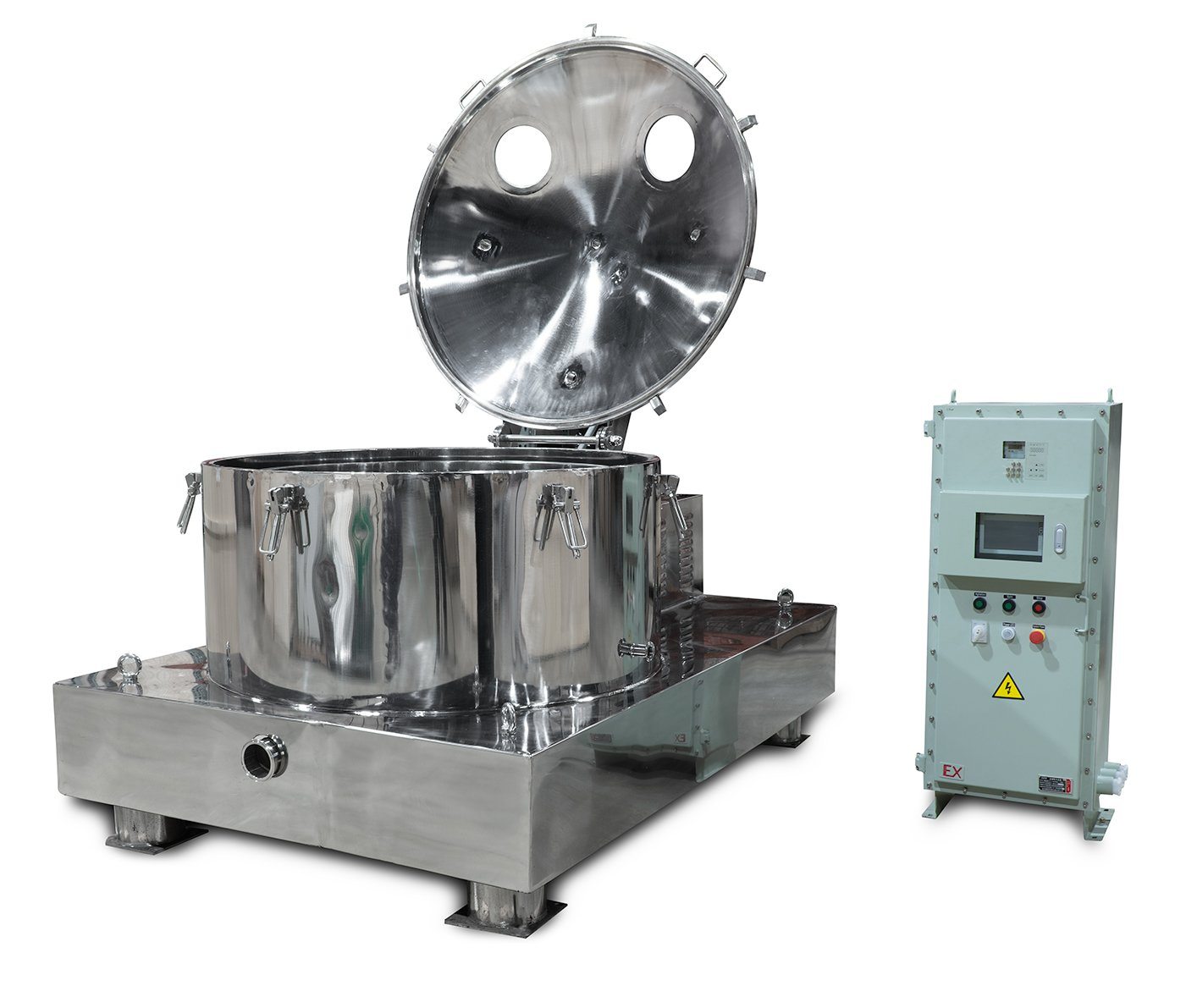
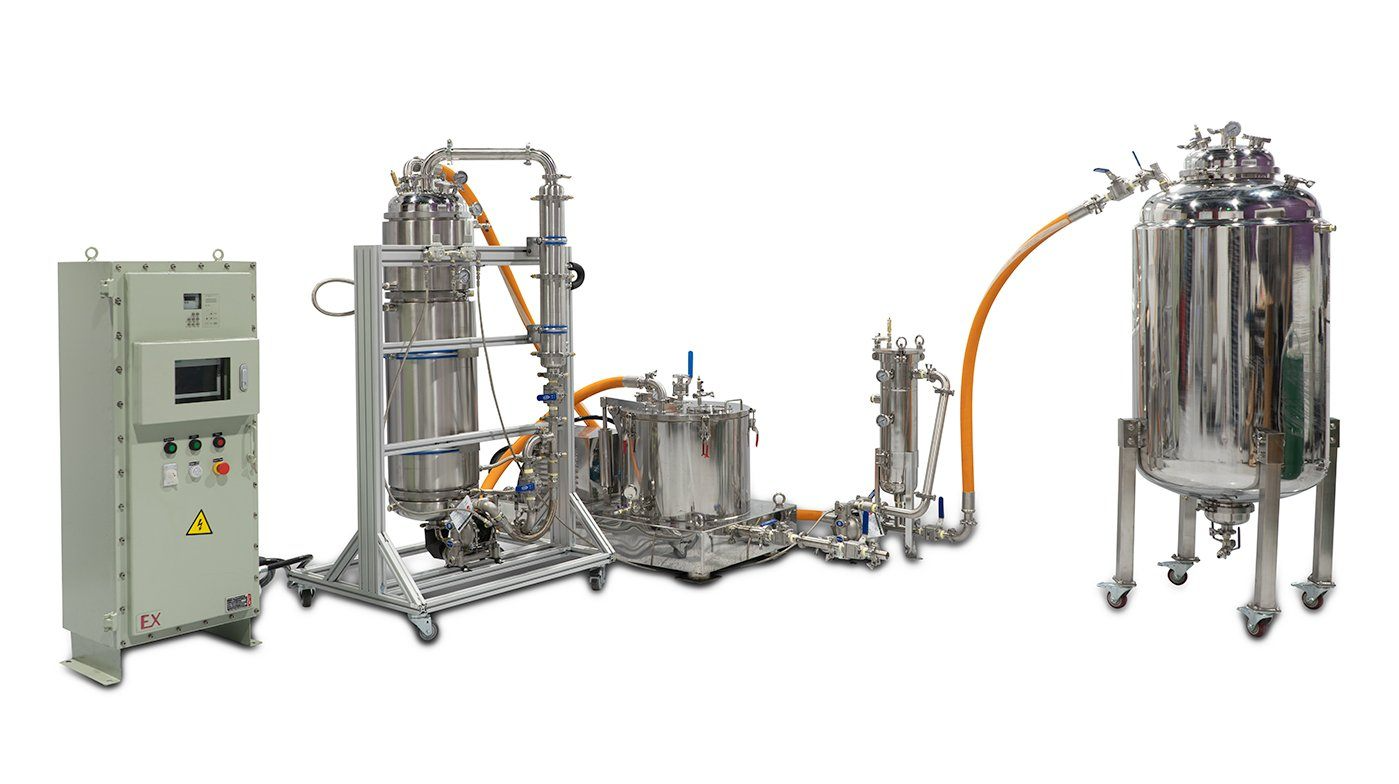
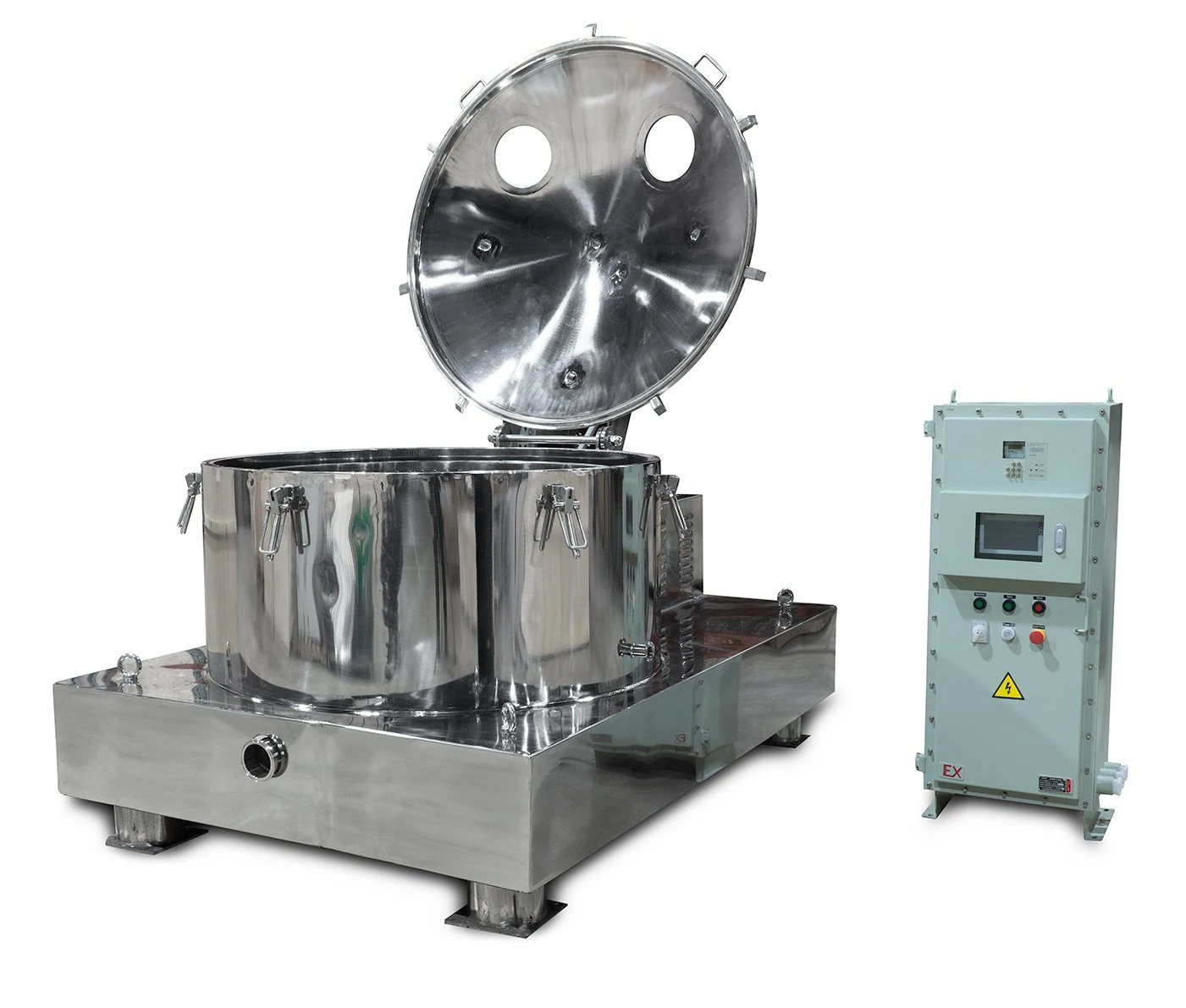
Certified 160L Jacketed Stainless Steel Centrifuge with Explosion Proof Motor and Siemens Controller By BVV
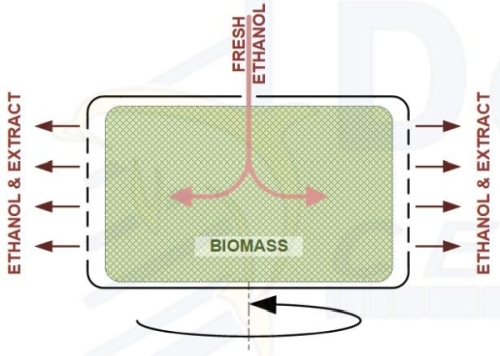
When operating within a C1D2 environment,ethanol extraction is performed utilizing a groundedexplosion-proofcentrifugeby first bringing thesolvent to the desiredextraction temperature and injecting it into theethanol centrifugefrom a bonded containerto completely submerge thebiomass material. Thebiomassmaterial is then agitated to increase thesaturation of thebiomass before draining the system and spinning thebiomass at high rpm to further separate the remainingsolution from thebiomass material.
Ethanol extraction is performed simply bysaturating thebiomass material withethanol solvent. As the liquidsolvent saturates thebiomass, it dissolves bothpolar andnonpolar compounds from the plant material. While this process is rather straightforward, there are several variables to the initialsaturation that can be optimized to increase the overall yield and purity of the resulting extract. During the initialsaturation, the most effective variables to adjust in order to optimize the efficiency of a centrifugalethanol extraction aresolvent temperature andretention time.
Solvent temperature is commonly altered either to increase the purity or overall yield of theethanol extraction. Theextractormay choose to either chill thesolvent -30C to -40C (-22F to -40F) to limit the pickup of impurities or extract using a room temperature or "warm"solvent (15-30C/59-86F) to increase the overall yield of the extract. Duringextraction, the temperature of asolvent plays a big role in thesolubility andsaturation capacity of asolvent. Generally, bothsaturation capacity andsolubility increase or decrease along with the temperature of thesolvent.
When asolvent is chilled prior toextraction, its overallsolubility is reduced, which helps limit the pickup of undesirable impurities like plant waxes andchlorophyll. While this alteredselectivity does come at a price of reduced efficiency in extracting the target compounds, it greatly increases the purity of the resulting extract.
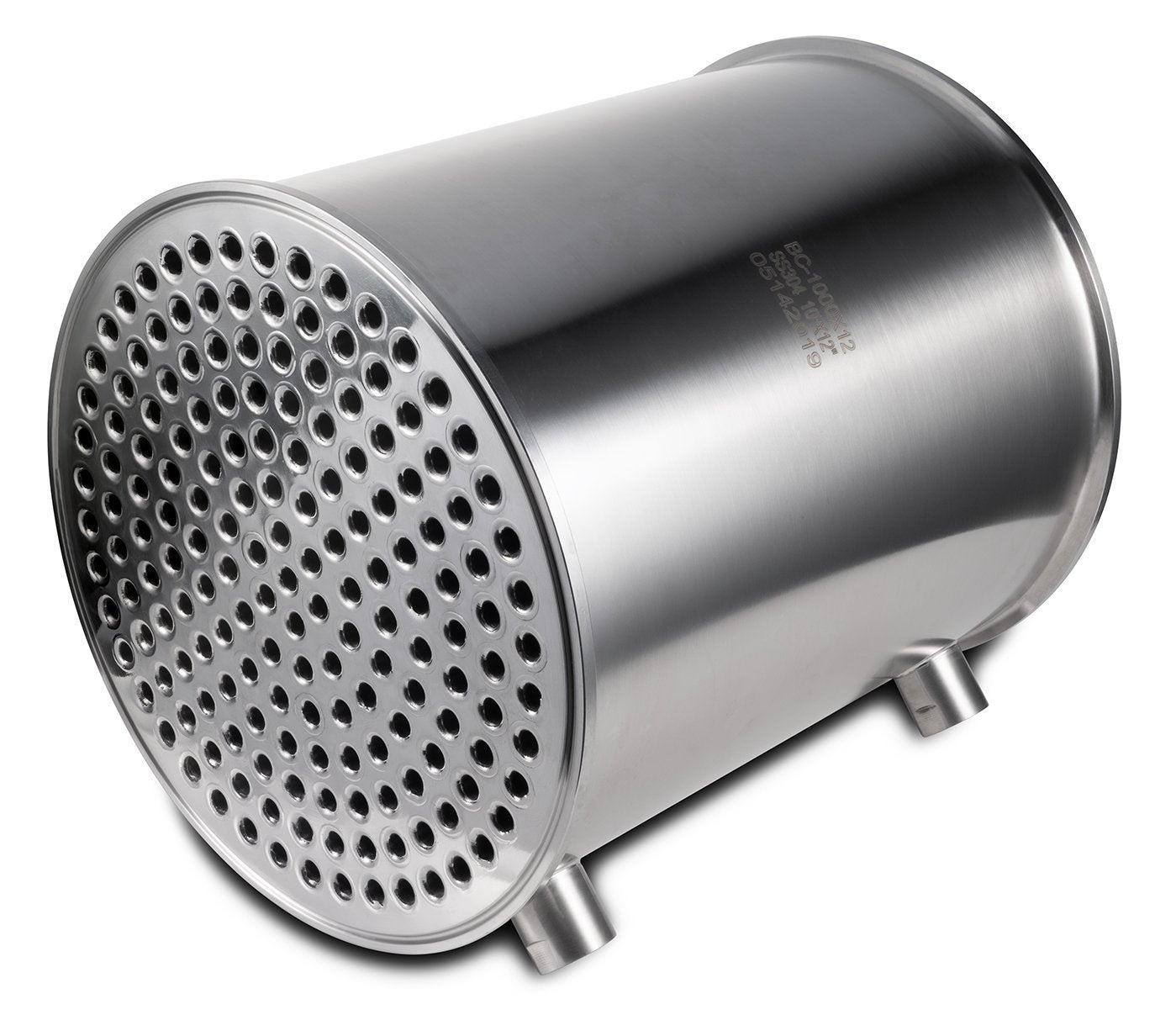
12"x24" Baffled Tri-Clamp Condenser/Heat Exchanger by BVV
Whenethanol is chilled to temperatures below -40C/-40F, the water-resistantnonpolar plant waxes have significantly reducedsolubility within thepolar ethanol. While plant waxes are particularly moreinsoluble in the morepolar potable 190 proofethanol, plant waxsolubility in 200 proof or n-heptane denaturedethanol is dramatically reduced at this temperature. This lowersolubility of plant waxes within chilledethanol is the same concept utilized to precipitate plant waxes from anethanol solution during the process ofwinterization, which will be covered in the next chapter.
Asethanol's temperature is further reduced below -70C/-94F undesirable plant waxes andchlorophyll are rendered almost completelyinsoluble, resulting in a significant reduction of both of these undesirables during anethanol extraction. Ethanols' selectivity at these extremely low temperatures is more of a physical mechanism than a chemical mechanism. At these low temperatures, there is such a drastic decrease in undesirable plant wax andchlorophyllsolubility due to the increased viscosityof theethanol making it much more "honey-like" and physically less able to permeate plant cell walls where these undesirable compounds reside.
The permeability of the biomass cell walls can also be attributed to the mill size of the biomass material. If the plant material is ground too finely, the cell walls are opened, allowing easy access for ethanol to dissolve undesirable plant waxes and chlorophyll. While shredding or hand-breaking biomass can reduce exposure beyond the plant's cell walls by leaving most cells closed. The extraction of plant waxes and specifically chlorophyll, are commonly unavoidable to some extent. Regardless, when cold ethanol extraction is performed properly it significantly limits the co-extraction of these undesirables from biomass material to the extent where only a small amount of plant waxes are extracted, making a winterization process unnecessary for further processing into a distillate.
Cryogenic 45L Centrifuge Extractor Kit By BVV
Commonly,ethanol is chilled to a range of -30C to -40C to increase theselectivity of theextraction and limit the co-extraction of impurities. Whileethanol can be chilled even colder to further increase itsselectivity, this becomes rather costly and can be less than cost-effective due to the energy requirements necessary to chill large volumes ofethanol past -40C/-40F. Typical methods of chillingethanol solvent include alow-temperature explosion-prooffreezeror a high-poweredethanol chillerthat chills theethanol prior to injection into thecentrifuge.
Conversely, room temperature or "warm" (15-30C/59-86F)ethanolcan be utilized to perform the initialsaturation. When utilizing room temperature or "warm"ethanol for botanicalextraction, theethanol has greatersolubilityandsaturation capacity allowing thesolvent to effectively dissolve target compounds from the plant matter. While this strategy allows for the target compounds to be more effectively dissolved from the plant matter, it also allows for undesirable botanical compounds like color pigments and plant waxes to be more easily dissolved, resulting in a greater number of total impurities.
Typically a warmethanol extraction is paired withpost-processingin the form ofwinterization and mediafiltering to remove co-extracted plant waxes, and undesired pigments, creating a refined botanical extractreferred to as winterized or refined crude oil. Warmethanol extraction is typically better suited for large-scale processors because the cost of chilling large volumes ofethanol is greater than the cost of dewaxing or color remediating the extractedcrude oil.
Xl Refinement Filter By BVV
Regardless of theextraction temperature strategy, once thesolvent has reached the desiredextraction temperature, thesolvent is then injected into thecentrifuge,saturatingthebiomass material. When it comes toethanol saturation, due toethanolspolar nature, it is magnetically attracted to otherpolar compounds, which explainethanols propensity to extract undesirablesfrom plant matter so rapidly.Chlorophyll extraction is commonly unavoidable during anethanol extraction, even with shortretention times. This leads mostethanol extractors to opt for a longerretention timestrategy to ensure target compounds are effectively extracted from thebiomass material.
Additionally, Alcohols are amphiphilic, meaning they are bothpolar andnonpolar at the same time. The OH groups ofethanol are capable of hydrogen bonding which is the strongest of the weak intermolecular bonds. This is one of the reasons why alcohols are so efficient even with very shortretention timesat low temperatures, but also why they dissolve a lot of undesirables when contact time or temperatures are high. For these reasons, typical shortretention timequick to wash methods are not as effective at limiting the co-extraction of impurities which leads mostethanol extractors to opt for a longerretention timebetween 3-10 minutes to ensure target compounds are effectively extracted.
Since quick wash saturation methods are not as effective at limiting impurities for ethanol extractions and ethanol has such a large saturation capacity, it is not uncommon for the same volume of ethanol to be reused for multiple saturations of fresh biomass. Reuse of saturated ethanol is commonly extended for 2-3 runs before an appreciable reduction of extraction efficiency is noticed. It is not uncommon for some extractors to opt to use the same volume of ethanol for up to 6 runs before opting to perform solvent recovery or winterization to get the most out of a given volume of ethanol. While the reuse of the same ethanol for multiple runs can reduce downtime between extractions, shorten the solvent recovery process, and reduce overall production costs, it does come at the cost of reduced extraction efficiency. Keep in mind this strategy is not as applicable with cold ethanol extraction due to the reduced saturation capacity at reduced temperatures and the potential for saturatedethanol to clog or gum up the chilling ethanol equipment.
Certified 160L Jacketed Stainless Steel Centrifuge with Explosion Proof Motor and Siemens Controller by BVV
Due toethanol's highsaturation capacity,ethanol saturation volume is typically approached by fully submerging thebiomassinethanol within a given volume rather than aiming for a specificsolvent tobiomass ratio. This is commonly achieved by closing the outlet to theextraction vessel and filling it to completely submerge thebiomass inethanol 1-2" above the plant matter to fullysaturate biomass. Once thebiomass has been completely submerged, thecentrifuge is commonly agitated bidirectionally to achieve a completesaturationof the plant material for 3-10 minutes with rotational direction changes every 15-30 seconds.
Bothretention timeand agitation are important factors in allowing thesolvent to fully dissolve the target compounds. Too littleretention timeor agitation can result in reduced yield of target compounds, while too longretention time/agitation can allow for more undesirable compounds likechlorophyll and plant waxes to be dissolved. Commonlyethanol extractors opt for longer retention timesto ensure target compounds are fully dissolved and rely onpost-processingmethods likewinterization anddistillation to remove impurities and reach the desired level of purity.
Extendedretention timesare great if looking to extract all that’s possible from the plant matter. When this strategy is paired with separatepost-processingin the form ofwinterization anddistillation, it can result in both high yield and purity. Conversely, a shortretention timeminimizes the time thesolvent has to co-extract undesirables. When a quick wash/shortretention timestrategy is utilized in conjunction with chilledsolvent, it can result in a concentrate with very low levels of impurities that can be easily removed through inline filtration prior tosolvent recovery. While utilizing both a shortretention timeand chilledsolvent typically results in a slightly lowerextraction yield, this is commonly unavoidable without extendingsaturation times and increasing the co-extraction of impurities.
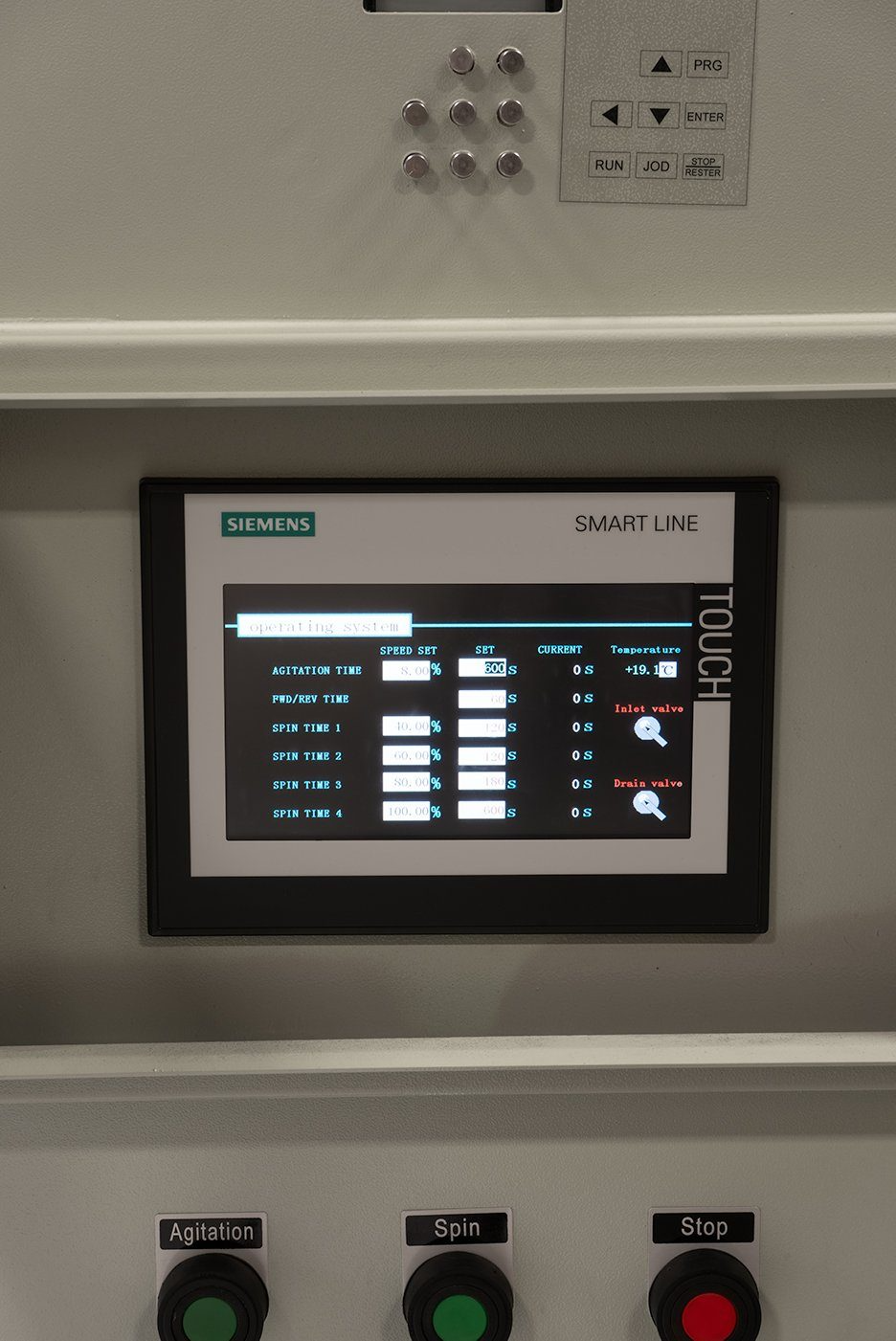
Explosion-Proof Touch Screen Centrifuge Controller by BVV
To get the most out of the retention time, commonly, thecentrifuge is spun at low RPM between 100-200 RPMs with bidirectional rotation every 15-30 seconds to ensure thebiomass is fullysaturated. After the desired agitation time is complete, thesolution is then drained from thecentrifuge, and thebiomass is spun at high rpm, applying centrifugal force to recapture the residualethanol still trapped within thebiomass. This is typically done for 5-10 minutes in the same direction at increasing rpm rates in order to recapture as muchethanol from thebiomass as possible.
After the initialsaturation andsolventrecapturing is complete and the entirety of thebotanical extract-richethanol solution has been drained into the collection vessel theethanol extraction process is now complete. The resultingsolution can either be refined through the process ofwinterization to precipitate out andfilter the plant waxes before thesolvent recovery process orwinterization can be skipped and the process ofsolvent recovery can be performed by heating thesolution to theboiling pointofethanol 173F/78C toevaporate theethanol solvent from thebotanical extractsolution. Both processes result in a crude botanical extract that can be further refined viadistillation, with a winterized or cold-extracted extract being more easily distilled. Both the process ofwinterization andsolvent recovery will be covered in-depth in the next chapters. Now that we have covered theethanol extraction process, let's go over a standardethanol extraction preparation and processing procedure.
Falling Film EvaporatorBy BVV
Preparation forethanol extraction starts with the milling of thebiomass material. Proper mill size is paramount to success during theextraction process. An improper mill size and poor packing can lead to an unbalanced load and dry spots duringextraction. An unbalanced load on thecentrifuge causes excessive harmonic vibration and potential damage to the system. Additionally, If thebiomassis milled too finely, the cellular walls may rupture, which may lead to an excessive amount of undesirable compounds being dissolved into the extractsolution. To minimize the pickup of undesirablechlorophyll and plant waxes and ensure even distribution, proper milling is key.
Biomass material can come in a variety of different types. Packing highly variablebiomass types into the samecentrifuge bag can result in an unbalanced load duringextraction. A homogenous volume ofbiomass will perform best duringextraction; buds or flowers should be coarsely milled to an ideal mill size between 1/8" -1/4". Un-milledbiomass should not be used. Full buds require longerresidence timeforextraction, and stems can cause damage to thecentrifuge bags.Biomass that is too finely milled should not be used either. Too fine of a mill can cause an uneven distribution of alcohol which can cause excessive harmonic vibration and leave dry spots. A coarse mill is best forbiomass with a recommended mill size between 1/8"-1/4".
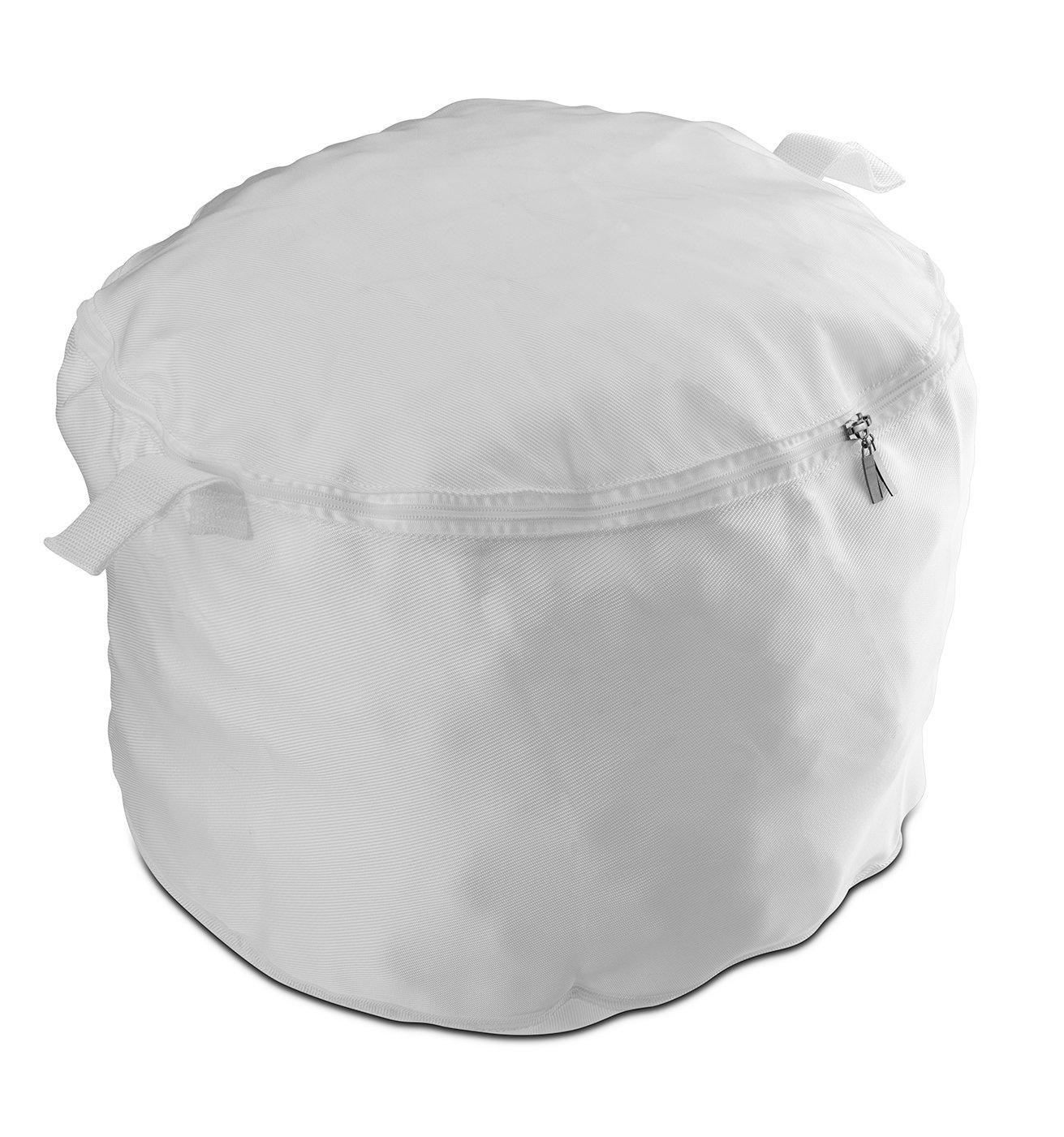
During packing of centrifuge bags it is ideal to use cylindrical support like a bucket or an appropriately sized diameter ducting to keep the bag uniform. As the biomass is loaded into the bag, ensure the biomass is evenly distributed by pushing down on the biomass every few handfuls to promote an even distribution. Always ensure centrifuge bags are filled completely and evenly to promote a balanced spin. Partially filled bags can lead to imbalance during extractionand excessive harmonic vibration.
45LCentrifuge Bag By BVV
Once thecentrifuge bag has been appropriately packed, place the bag into thecentrifuge basket and push down on the material to ensure a proper seat and even distribution ofbiomass material within thecentrifuge basket. Close the lid and lock all clamps into place. Once the lid has been secured into place, and theextraction solvent has reached the desired temperature, ensure the output of thecentrifuge is closed before proceeding to injectsolvent into the grounded centrifuge from a bonded container. Depending on thecentrifuge design, use either pressure orvacuum to injectsolvent into the system. If utilizing pressure to inject into the system, no more than 15 PSI of pressure should be utilized to inject into the system. Ensure the vent valve of thecentrifuge is open to ensure thecentrifuge does not become pressurized and begin filling thecentrifuge. As thesolvent enters the vesselsaturating the loadedbiomass, allow thecentrifuge to fill 1" to 2" above thecentrifuge bag to ensure fullsaturation without overfilling thecentrifuge.
Once thecentrifuge has been loaded with the desired amount ofethanol, close the vent valve before proceeding to agitate thesolution at 125 RPM for 3-10 minutes, changing rotational direction every 15-30 seconds to ensure thebiomass material issaturated fully. Once the agitation cycle is complete, open the vent valve located on the lid of thecentrifuge and open the drain valve allowing the system to drain into the collection vessel.
Once the system has been completely drained and only a small volume of liquid remains, proceed to spin dry thebiomass at high rpm utilizing the following procedure. Two minutes at 400 rpm, 1.5 minutes at 600 rpm, 1 minute at 800 rpm, and 2 minutes at 1200 rpm. By utilizing an incremental increase in rpm as thesolvent is evacuated from thebiomass, it ensures harmonic vibration is reduced andethanol is recovered from thebiomass with great efficiency.
Once the spin-dry sequence has completed and the rotation stops it is now safe to unlatch the lid, remove thecentrifuge bag, and discard thebiomass. Once the bag has been removed, wipe down the system of any residual particulate orbiomass using a clean rag and alcohol as a cleaning agent. Theethanol extractionprocess is now complete; the resultingbotanical extractsolution can now be winterized andfiltered if necessary, and asolvent recovery process can be initiated.
280L Jacketed Stainless SteelCentrifuge & Controller By BVV
ETHANOL EXTRACTION STANDARD OPERATING PROCEDURE
Purpose
The purpose of this procedure is to provide detailed instructions for centrifugalethanol extraction.
Scope
This procedure applies to all lab technicians tasked with centrifugalethanol extraction.
Definitions/Acronyms
Personal Protection Equipment (PPE) Items worn to protect employees from exposure to hazardous materials and prevention of injury.
Safety Data Sheet (SDS)Provides valuable information on chemicals, describing the hazards the chemical presents and giving information on handling, storage, and emergency measures in case of an accident.
Quantity- Volume of thecentrifuge capacity ofethanol or 710extraction solvent +centrifuge bag capacity of milledbiomass
Frequency- An initial volume ofsolvent is used, no more is added.
Location- Inside of a grounded explosion-proof, stainless steelextractioncentrifuge inside aC1D2 environment.
Potential Hazards and Risks
Seeethanol or 710extraction solvent SDS for detailed risks.
6. Preparation
Finely mill yourbiomass material to ¼-⅛” in diameter and evenly pack thebiomass intocentrifuge bags.
7. Procedure
Pack filledcentrifugebags into a groundedcentrifuge pressing down evenly to appropriately seat thecentrifuge bag within thecentrifugebasket.
Close thecentrifugelid and secure all clamps.
Ensure the outlet to thecentrifuge is closed and bond the centrifuge to the solvent container.
Open the vent valve to ensure the vessel does not become pressurized before opening the inlet valve to begin filling the vessel withethanol.
Once thecentrifuge has been filed 1-2" above thecentrifuge bag completely submerging thebiomass inethanol, close the inlet valve and proceed to initiate the agitation process.
Begin the agitation process at 125RPM for 3-10 minutes with directional changes every 15-30 seconds.
Once the agitation process is complete proceed to open the vent valve on thecentrifuge lid and open the drain valve of thecentrifuge allowing the vessel to drain fully.
Once the bulk of extractsolution has been completely drained proceed to initiate the spin-dry cycle to extract the remainingethanol frombiomassusing the following settings: 2 minutes at 400 rpm, 1.5 minutes a 600 rpm, 1 minute at 800 rpm, and 2 minutes at 1200 rpm.
Once the spin cycle is complete, and thecentrifuge basket is no longer spinning close the outlet of thecentrifugeand undo the lid clamps.
Proceed to remove thecentrifuge bag from the vessel and remove any particulate from the vessel with a clean rag andethanol before loading a new bag ofbiomass in preparation for the next agitation cycle.
The vessel can be loaded with a new bag ofbiomass in preparation for the next agitation cycle.
Repeat steps 1-10 continuing to re-saturate freshbiomass with the same volume ofethanol until the desiredsaturation is achieved.
Collection the extractsolution in an appropriate vessel and proceed towinterization orrotary evaporationSOP.