
Specialty Chemicals
-
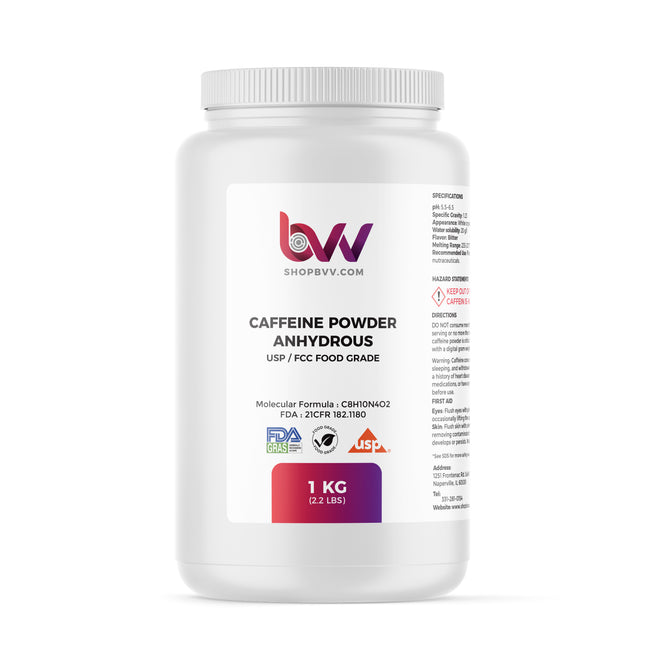

Caffeine Powder ≥99.0% USP/FCC/Food Grade
Pure Caffeine Powder USP/FCC/Food Grade - ≥99.0% Pure Our Caffeine Powder has a nice fine consistency. Similar to powdered sugar. It is an anhydrous product so it's free of any water/moisture. Synthetically derived. Chemical Formula: C8H10N4O2 Molecular Weight: 194.19 g/mol CAS Registry Number: 58-8-2 Appearance White Powdery Crystalline Odor: None Density 1.23 g/cm3 @ 20 °C Boiling Point: 178C/352F Solubility in water: Moderately Soluble GHS Pictograms: Irritant GHS Signal Word: Warning GHS Hazard Statements: H302 GHS Precautionary Statements P264, P270, P301+P317, P330, P501 What is Caffeine? Caffeine is a natural stimulant most commonly found in coffee, tea, and certain plants like cacao. It works by stimulating the brain and central nervous system, helping to reduce fatigue and enhance alertness and focus. Chemically classified as a psychoactive drug, caffeine blocks the action of adenosine, a neurotransmitter that promotes relaxation and sleepiness. In addition to its natural sources, caffeine is also added to many soft drinks, energy drinks, and over-the-counter medications. As the world's most widely consumed psychoactive substance, moderate consumption of caffeine has been linked to various health benefits, including improved cognitive function and mood. However, excessive intake can lead to side effects such as insomnia, jitteriness, and increased heart rate. How Much Caffeine is found in coffee, tea, soda, & etc? Coffee drinks Size in oz. (mL) Caffeine (mg) Brewed 8 (237) 96 Brewed, decaf 8 (237) 2 Espresso 1 (30) 64 Espresso, decaf 1 (30) 0 Instant 8 (237) 62 Instant, decaf 8 (237) 2 Teas Size in oz. (mL) Caffeine (mg) Brewed black 8 (237) 47 Brewed black, decaf 8 (237) 2 Brewed green 8 (237) 28 Ready-to-drink, bottled 8 (237) 19 Sodas Size in oz. (mL) Caffeine (mg) Citrus (most brands) 8 (237) 0 Cola 8 (237) 22 Root beer (most brands) 8 (237) 0 Energy drinks Size in oz. (mL) Caffeine (mg) Energy drink 8 (237) 71.9 Energy shot 2 (60) 215 How Much Caffeine should I take? The recommended dosage of caffeine varies based on individual tolerance, age, and health factors. For most healthy adults, a moderate daily intake of 100-200 mg of caffeine is considered safe. This equates to about 1-2 cups of brewed coffee or 2-3 cups of tea. Consuming caffeine in moderate amounts can enhance alertness, boost mood, and improve focus. However, exceeding 200 mg per day may lead to side effects like restlessness, insomnia, rapid heart rate, and headaches. For sensitive individuals or those with certain health conditions, even lower doses can cause adverse effects. It’s important to monitor caffeine intake from all sources, including coffee, tea, energy drinks, and supplements, to ensure safe consumption levels.
$74.00 - $875.00
-

Ethyl Acetate Tech Grade 99%
Ethyl Acetate Tech Grade 99.8% Ethyl acetate is a widely used solvent. Ethyl acetate is the acetate ester formed between acetic acid and ethanol. It has a role as a polar aprotic solvent. Ethyl acetate appears as a clear colorless liquid with a fruity odor. Its flash point is 24 °F and is less dense than water. It's vapors are heavier than air. Ethyl acetate is a common solvent for column and thin-layer chromatography. It is also used as a defatting agent for extraction and can be used to extract oil from organic materials. Ethyl acetate is commonly used to extract oil from coffee. Ethyl acetate is an organic solvent that is volatile and flammable. Chemical Formula: C4H8O2 Molecular Weight: 88.106 CAS Registry Number: 141-78-6 Appearance Colorless Liquid Odor: nail polish-like, fruity Density 0.902 g/cm3 Boiling Point: 77.1C/170.8F Solubility in water: 8.3 g/100 mL (at 20 °C) GHS Pictograms: GHS Signal Word: Danger GHS Hazard Statements: H225, H319, H336 GHS Precautionary Statements P210, P233, P240, P305+P351+P338, P403+P235 UN Identification Number: 1173 Proper Shipping Name: Ethyl Acetate Transport Hazard Class: 3 Packing Group: II DOT Placard: How Is Ethyl Acetate Produced? Ethyl acetate is primarily produced through the esterification reaction between ethanol (ethyl alcohol) and acetic acid. This reaction typically takes place in the presence of an acid catalyst, such as sulfuric acid or strong acidic ion exchange resins. The production process can be summarized as follows: Preparation of Ethanol: Ethanol, the primary raw material for ethyl acetate production, is typically produced through fermentation of biomass, such as grains, sugarcane, or corn, followed by distillation to obtain high-purity ethanol. Preparation of Acetic Acid: Acetic acid, another key raw material for ethyl acetate production, can be produced through various methods, including oxidation of acetaldehyde, methanol carbonylation, or direct synthesis from natural gas or biomass. Esterification Reaction: In the esterification reaction, ethanol and acetic acid are mixed together in the presence of an acid catalyst. The acid catalyst helps facilitate the reaction by providing a suitable environment for the formation of the ester bond. The esterification reaction can be represented by the following chemical equation: Ethanol + Acetic Acid ⇌ Ethyl Acetate + Water Separation and Purification: After the esterification reaction, the mixture typically undergoes separation and purification steps to isolate ethyl acetate from other reaction byproducts and unreacted starting materials. This may involve distillation, extraction, or other separation techniques to obtain pure ethyl acetate. Recovery and Recycling: Any unreacted ethanol or acetic acid, as well as other byproducts, are usually recovered from the process stream and recycled back into the production process to improve efficiency and minimize waste. The production of ethyl acetate can be carried out in batch or continuous processes, depending on the scale and requirements of the production facility. The process may also vary depending on factors such as the choice of catalyst, reaction conditions, and purification methods. Overall, ethyl acetate is a widely used solvent with applications in industries such as coatings, adhesives, pharmaceuticals, and flavorings. What Is Ethyl Acetate Used For? Ethyl acetate is a versatile solvent with a wide range of industrial, commercial, and laboratory applications. Some common uses of ethyl acetate include: Paints and Coatings: Ethyl acetate is commonly used as a solvent in the formulation of paints, varnishes, lacquers, and other coatings. It helps dissolve resins, pigments, and binders, allowing for proper application and drying of the coatings. Adhesives and Sealants: Ethyl acetate is utilized as a solvent in the production of adhesives and sealants, particularly those used in woodworking, construction, and automotive industries. Printing Inks: Ethyl acetate is a key component in the formulation of printing inks for various printing processes, including flexographic, gravure, and screen printing. It helps dissolve the ink pigments and other additives, ensuring proper printing quality and performance. Pharmaceuticals: Ethyl acetate is used in pharmaceutical manufacturing processes as a solvent for extracting and purifying natural products, synthesizing pharmaceutical compounds, and formulating dosage forms such as tablets and capsules. Flavors and Fragrances: Ethyl acetate is employed in the production of flavors and fragrances for use in food, beverages, cosmetics, and personal care products. It serves as a solvent for extracting and concentrating natural flavors and essential oils. Nail Polish and Nail Polish Removers: Ethyl acetate is a common ingredient in nail polish formulations and nail polish removers. It helps dissolve the resins and pigments in nail polish and effectively removes nail polish from nails. Cleaners and Degreasers: Ethyl acetate is used as a solvent in cleaning products, degreasers, and surface coatings for removing grease, oil, and other contaminants from surfaces and equipment. Analytical Chemistry: Ethyl acetate is frequently used as a solvent in analytical chemistry techniques such as liquid-liquid extraction, chromatography, and sample preparation for gas chromatography. Extraction of Natural Products: Ethyl acetate is used in the extraction of natural products from plants, herbs, and botanicals due to its ability to selectively dissolve certain compounds while leaving others behind. These are just a few examples of the diverse range of applications for ethyl acetate. Its versatility, low toxicity, and pleasant odor make it a popular choice for various industrial and commercial uses. However, it's important to handle ethyl acetate with care, as it is flammable and may pose health risks if not used properly. What Are The Hazards of Ethyl Acetate? While ethyl acetate is generally considered to have low toxicity compared to many other organic solvents, it still poses some hazards that should be taken into consideration, especially when handling it in industrial or laboratory settings. Some of the hazards associated with ethyl acetate include: Flammability: Ethyl acetate is highly flammable and can form explosive mixtures with air. It has a low flash point and can ignite easily in the presence of a spark, flame, or heat source. Proper precautions, such as storing ethyl acetate in tightly sealed containers away from ignition sources and ensuring adequate ventilation to prevent the buildup of flammable vapors, are necessary to minimize the risk of fire and explosions. Health Effects: While ethyl acetate is considered to have low acute toxicity, exposure to high concentrations of vapors or prolonged exposure may cause irritation to the eyes, nose, and throat. Inhaling ethyl acetate vapors in large quantities may also cause dizziness, headaches, nausea, and central nervous system depression. Skin contact with ethyl acetate may result in irritation or dermatitis. Individuals with pre-existing respiratory conditions or sensitivities may be more susceptible to the effects of ethyl acetate exposure. Environmental Impact: Ethyl acetate can have adverse effects on the environment if released into the air, water, or soil. It is volatile and can evaporate quickly from spills or during use, contributing to air pollution. Ethyl acetate may also pose a risk to aquatic organisms if it contaminates water bodies. Proper handling, storage, and disposal practices are necessary to prevent environmental contamination. Reproductive and Developmental Effects: Some studies have suggested that exposure to high concentrations of ethyl acetate may have adverse effects on reproductive health and fetal development. Pregnant women exposed to ethyl acetate vapors should take precautions to minimize exposure to protect both their health and the health of the developing fetus. Sensitization: Prolonged or repeated exposure to ethyl acetate may lead to sensitization reactions in some individuals, resulting in allergic reactions upon subsequent exposure. It's important to follow safety guidelines and regulations when handling ethyl acetate to minimize risks to human health and the environment. This includes using appropriate personal protective equipment (such as gloves, goggles, and respiratory protection), ensuring adequate ventilation in work areas, and implementing proper storage and disposal practices. Training on safe handling procedures and emergency response protocols should also be provided to personnel working with ethyl acetate. Ethyl Acetate Certificate of Analysis (COA) Ethyl Acetate Safety Data Sheet (SDS)
$20.00 - $740.00
-

Benzocaine Powder 99%
Benzocaine 99% Complies with USP Testing Specifications Our high purity benzocaine is greater than ≥99% purity. It standard testing is meets USP DMF grade It's widely used across various industries, including pharmaceuticals, cosmetics, and research. * USP DMF GRADE : refers to materials, specifically raw materials and active pharmaceutical ingredients (APIs), that meet the quality standards established by the United States Pharmacopeia (USP) and are used in the production of pharmaceutical products. Applications: Pharmaceuticals: Core ingredient in formulating topical anesthetics and pain relief solutions. Cosmetic Manufacturing: Used in skin-soothing and numbing products. Research & Development: Suitable for experimental formulations and chemical studies. Handling and Storage: Store in a cool, dry place away from direct sunlight. Ensure the container is tightly sealed after use. Important Notice: This product is intended for industrial and professional use only. Misuse or unauthorized handling may result in legal or health consequences. Benzocaine Powder 99% Certificate of Analysis (COA) Benzocaine Powder 99% Safety Data Sheet (SDS) Chemical Formula: C9H11NO2 Molecular Weight: 165.19 g/mol CAS Registry Number: 94-09-7 Appearance White Crystalline Powder Odor: Odorless Density 1.17 g/cm3 Boiling Point: 591.3°F (310.7°C) Solubility in water: Slightly Soluble GHS Pictograms: GHS Signal Word: Danger GHS Hazard Statements: H317, H370, H411 GHS Precautionary Statements P260, P261,P264, P270, P272, P273, P280, P302+P352, P308+P316, P333+P317, P362+P364, P391, P405, P501 UN Identification Number: None Proper Shipping Name: None Transport Hazard Class: None Packing Group: None DOT Placard: None
$17.00 - $600.00
-

Deionized Water (DI) - Ultrapure Water - Type 1
Deionized Water Ultrapure Water - Type 1 Deionized Water Type 1, also known as ultrapure water, is water that has been processed through ion-exchange methods to remove nearly all of its dissolved ions, such as minerals, salts, and other charged particles. This ultra-purification process results in water with a very low level of conductivity, making it ideal for high-precision applications in laboratories, pharmaceuticals, electronics manufacturing, and scientific research. As defined by the ASTM there are only 4 types of Pure Water. Type 1 being the most pure. Type 1 deionized water is the highest grade of deionized water, ensuring a high level of purity, typically with resistivity values of 18.2 MΩ·cm at 25°C. It is free from contaminants like bacteria, organic material, and particulate matter, making it suitable for critical tasks like reagent preparation, tissue culture, analytical procedures, and cleaning of sensitive equipment. Due to its lack of ions and impurities, Deionized Water Type 1 is non-reactive, ensuring it does not interfere with experiments or sensitive processes, which is essential in fields requiring the highest level of water purity. *Packaged in FDA Compliant HDPE Bottles. Each order is poured directly from the factory drum ensuring you get the freshest stock upon delivery. Deoinized Water Certificate of Analysis COA Deionized Water Safety Data Sheet SDS
$10.00 - $420.00
-
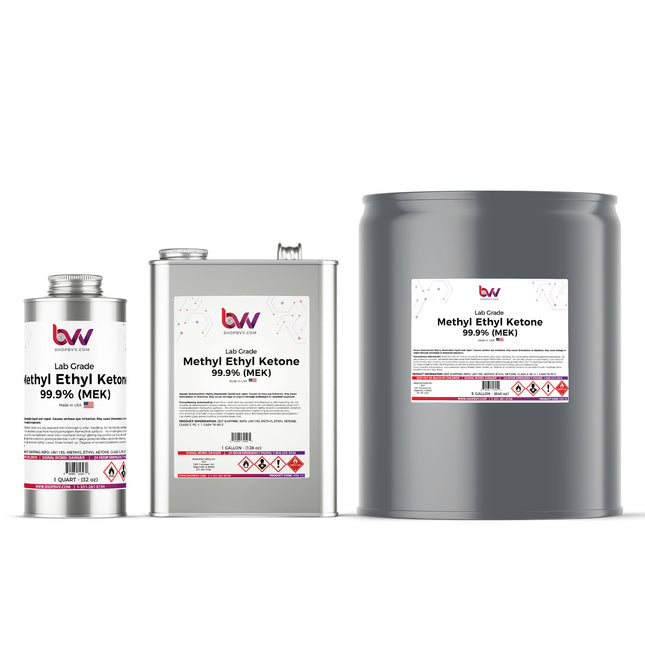

Methyl Ethyl Ketone (MEK) Lab Grade 99.9%
Methyl Ethyl Ketone (MEK) 99.9% Lab Grade - C4H8O Methyl Ethyl Ketone (MEK), also known as butanone is an organic compound. Its a colorless liquid and has a sweet order similar to acetone. MEK is a widely used in commercial applications and as a solvent, and it dissolves many substances. Our MEK is a very high purity percentage which make it appropriate for use in laboratory and analytical applications. MEK has a flash point 20 °F. Vapors heavier than air. Does not react with water. It is partially soluble in water, and soluble in most other organic solvents. It will float on water while it rapidly dissolves in it MEK goes by a couple of names: 2-Butanone, Butan-2-one, Butanone, Ethyl methyl ketone, Methylethyl ketone Chemical Formula: C4H8O Molecular Weight: 72.1057 CAS Registry Number: 78-93-3 Appearance Colorless Liquid Odor: Mint or acetone-like Density 0.8050 g/ml Boiling Point: 79.64C/175.35F Solubility in water: 27.5g/100ml GHS Pictograms: GHS Signal Word: Danger GHS Hazard Statements: H225, H319, H336 GHS Precautionary Statements P210, P233, P240, P241, P242, P243, P261, P264, P271, P280, P303+P361+P353, P304+P340, P305+P351+P338, P312, P337+P313, P370+P378, P403+P233, P403+P235, P405, P501 UN Identification Number: 1193 Proper Shipping Name: Ethyl Methyl Ketone Transport Hazard Class: 3 Packing Group: II DOT Placard: What is Methyl Ethyl Ketone? Methyl ethyl ketone (MEK), also known as butanone, is a colorless, volatile liquid organic compound with the chemical formulaC4H8O. It is classified as a ketone, characterized by the presence of a carbonyl group (C=O) bonded to two carbon atoms. How Is Methyl Ethyl Ketone Produced? While Methyl Ethyl Ketone is biosynthesized by trees and is found in small quantities in foods such as some fruits and vegetables, chicken, beans, honey, and a wide variety of cheeses, the majority of Methyl Ethyl Ketone is produced using dehydrogenation of secondary butyl alcohol (approximately 86%) and as a byproduct of butane oxidation (remaining 14%). How is Methyl Ethyl Ketone Stored and Distributed? Methyl ethyl ketone is packed in drums. It should be stored in a cool, dry, well-ventilated area that is free from the risk of ignition as it is highly flammable. For transportation purposes, methyl ethyl ketone is classified as packing group II and a hazard class 3 with a flashpoint of -9° C What is Methyly Ethyl Ketone Used For? Methyl Ethyl Ketone is used as a solvent in the manufacturing of adhesives, protective coatings, inks and magnetic tapes. It is also the preferred extraction solvent for dewaxing lube oil. Is Methyl Ethyl Ketone Banned? Methyl ethyl ketone (MEK) is not banned nationally, but it is banned in Southern California and some states with strict VOC laws. What are the dangers of Methyl Ethyl Ketone? The compound is rated a 1 for health under the NFPA 704 indicating that exposure should only cause a minor residual injury. To avoid inhalation occurring, especially for regular uses, adequate ventilation should be ensured with local exhaust ventilation and enclosures. The direct inhalation of high levels of MEK may cause dizziness, nausea, headaches, irritation of the respiratory system and chest tightness. If the individual has difficulty breathing, they should be moved to air free of the vapours and be provided oxygen until medical assistance is available. Direct eye exposure can cause sore, stinging, red eyes with tearing and vapours can also irritate the eyes. Chemical safety goggles should therefore be used when contact with the eyes is possible. Repeated or prolonged skin contact should be avoided as this can cause irritation and dryness. Therefore, gloves, aprons and appropriate boots should be worn when repeated contact with MEK is possible. Methyl Ethyl Ketone (MEK) Lab Grade Safety Data Sheet (SDS)
$17.00 - $550.00
-


Sodium Chloride (Salt) USP, Kosher Certified, Fine Grain
Our USP Sodium Chloride is a purified salt which meets United States Pharmacopeia standards. Morton is the only US supplier with multiple USP Sodium Chloride producing plants. The crystals are fine grain in form. Our USP Sodium Chloride complies with United States Pharmacopeia, Food Chemicals Codex, and federal cGMP standards. It is annually certified as Kosher. AdditivesThis Brand of USP Sodium Chloride contains no additives. Sodium Chloride Product Data Sheet (PDS) Sodium Chloride Certificate of Analysis (COA) Sodium Chloride Safety Data Sheet (SDS)
$8.00 - $60.00
-

Formaldehyde 37% Lab Grade
Formaldehyde 37% Stabilized with 11% Methanol | Laboratory Grade Our Formaldehyde is a clear colorless liquid with a strong odor. Formaldehyde is used in a variety of industrial applications. It can be used as a preservative, disinfectant, and as an additive in production of adhesives, plastics, and textiles. Formaldehyde 37% M 11% Certificate of Analysis (COA) Formaldehyde 37% M 11% Safety Data Sheet (SDS) Chemical Formula: CH2O Molecular Weight: 30.026 g/mol CAS Registry Number: 50-00-0, 67-56-1 Appearance: Colorless Liquid Odor: Pungent Density 1.08 g/ml Boiling Point: 122.58 °F (50.32 °C) estimated Solubility in water: Completely Soluble GHS Pictograms: GHS Signal Word: Danger GHS Hazard Statements: H226, H301 + H311, H314, H317,H330, H335, H341, H350, H370, H401 GHS Precautionary Statements P201, P202, P210, P233, P240, P241, P242, P243, P260, P264, P270, P271, P272, P273, P280, P284, P301 + P310 + P330, P301 + P330 + P331, P303 + P361 + P353, P304 + P340 + P310, P305 + P351 + P338 + P310, P308 + P313, P361 + P364,P370 + P378, P403 + P233, P403 + P235, P405, P501 UN Identification Number: 2209 Proper Shipping Name: Formaldehyde Solution Transport Hazard Class: 8 Packing Group: III DOT Placard:
$18.00 - $500.00
-
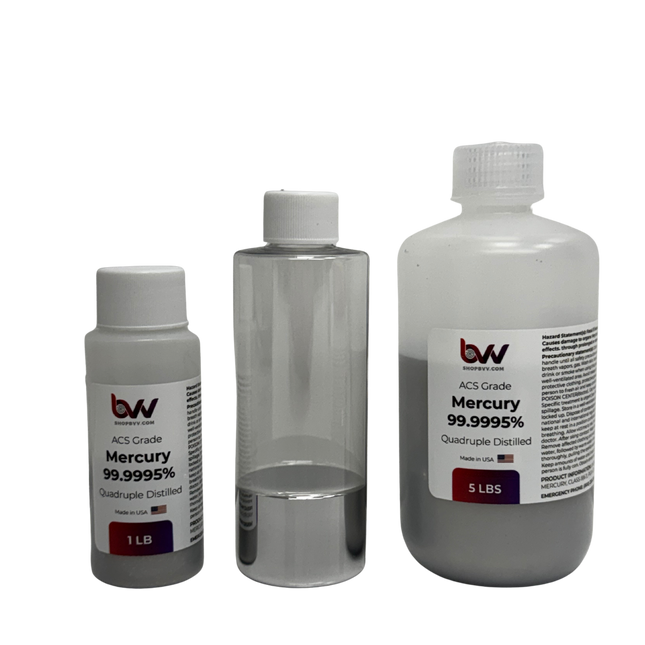
Mercury 99.99995%
Our mercury is virgin quadruple distilled. Its purity is 99.99995%. This product ships as Hazardous material in any quantity, even small vial is required to ship as a regulated hazardous material and carries all the additional handling fees associated. ACS Grade MCT Grade (crystal growth) Dental Grade Reagent Grade Instrument Grade Made in USA Product Shipping and packaging detail. 1lb size ships in a 2oz HDPE bottle 5LB size ships in a 8oz bottle not entirely filled 10lb ships as 2x 5oz bottles. Mercury Certificate of Analysis COA
$75.00 - $1,380.00
-


Sodium Metabisulfite NSF-Certified
Sodium Metabisulfite has many major and niche uses. It is widely used for preserving food and beverages, and as a laboratory reagent. It is a white crystalline powder. Our Sodium Metabisulfite is NSF® Certified. NSF-certified means a product was independently verified for safety, sanitation, and quality by NSF. NSF certification is recognized by health departments, government agencies, and industry associations. Sodium Metabisulfite NSF Certified - Certificate of Analysis (COA) Sodium Metabisulfite NSF Certified - Safety Data Sheet (SDS)
$16.00 - $61.00
-


Oxone PS-16 Monopersulfate (Non-Chlorine Shock)
OxoneTM PS-16 Monopersulfate | Non-Chlorine Shock Oxone PS-16 Compound is used as an active ingredient in disinfectant formulations (not registered as a biocide in USA), and as an oxidizing agent in other formulations, such as pool & spa non-chlorine shock oxidizers, denture cleansers and laundry bleaches. The grade is also used as a wet strength resin paper repulping aid, metal surface treatment agent, selective oxidizer in chemical synthesis, wool shrink-proofing treatment, waste water treatment and odor control agent. Applications: Water Treatment: It can be used to treat water, including drinking water and pool & spa water, due to its ability to kill bacteria and neutralize contaminants. Cleaning and Sanitization: It's used in various industrial cleaning products, especially for disinfecting surfaces or purifying air and water. Oxidation Reactions: In chemical processes, Oxone PS-16 can be used as a strong oxidizing agent to break down pollutants or aid in chemical synthesis. Active Ingredients: Potassium Peroxymonosulfate (KHSO₅) - 45% Other Ingredients - 55% Total -100% Bag Dimensions: 21"x14"x4" (55.1lbs) Chemical Formula: KHSO₅·KHSO₄·K₂SO₄ Molecular Weight: 614.8 g/mol CAS Registry Number: 70693-62-8, 7646-93-7, 7727-21-1 Appearance White Granules Odor: Odorless Density 2.35 g/cm3 (68 °F / 20 °C) Boiling Point: None Solubility in water: Highly and Readily Soluble at 297–357 g/L at 22°C (72°F) GHS Pictograms: GHS Signal Word: Danger GHS Hazard Statements: H302, H314 GHS Precautionary Statements P260, P264, P270, P280, P301 + P312 + P330, P301 + P330 + P331, P303 + P361 + P353, P304 + P340 + P310, P305 + P351 + P338 + P310, P363, P405, P501 UN Identification Number: 3260 Proper Shipping Name: Corrosive solid, acidic, inorganic, n.o.s. (Monopersulfate Compound) Transport Hazard Class: 8 Packing Group: II DOT Placard: Oxone PS-16 Monopersulfate (SDS) Oxone PS-16 Monopersulfate Certificate of Analysis (COA)
$8.00 - $276.00
-


Oxone Monopersulfate Compound REDI-DRI® free flowing
Oxone Monopersulfate Compound REDI-DRI® is a potassium triple salt mainly used as a stable, easy to handle and nontoxic oxidant. REDI-DRI® is a process that allows the salts to be a free flowing material for months of storage. This eliminates clumping and the need for complicated procedures to keep your salts free-flowing. When the salts are kept dry this makes your measurements easier and more accurate. The material is easier-to-handle and will help avoid drying your salts in an oven or desiccator or breaking them apart by hand. Oxone Monopersulfate Compound REDI-DRI Certificate of Analysis COA
$15.00 - $595.00


