
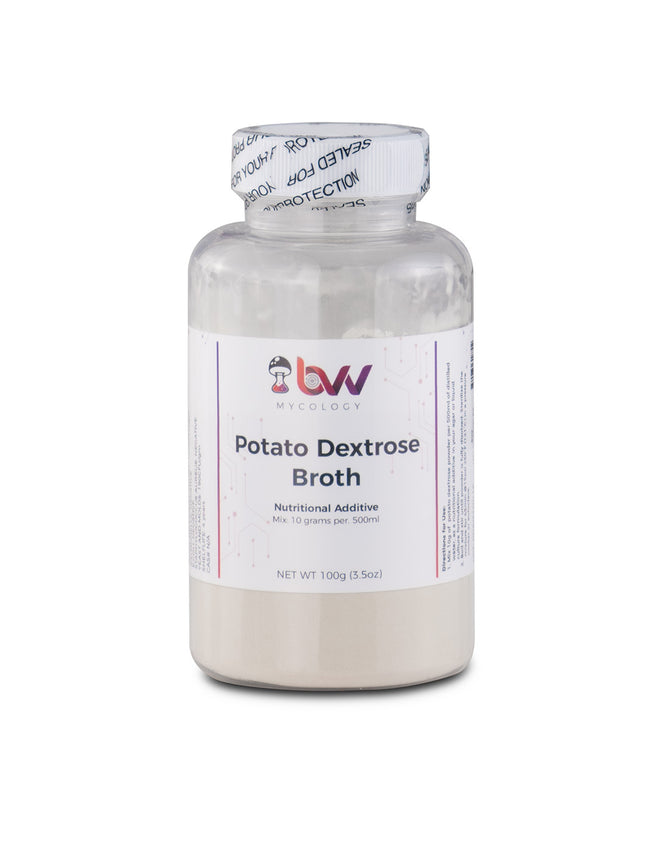
The Potato Dextrose collection at BVV features high-purity media components designed for the specialized cultivation of yeasts, molds, and various fungal species. As a foundational ingredient in Potato Dextrose Agar (PDA) and Potato Dextrose Broth (PDB), this starch-rich nutrient source provides the ideal environment for observing distinct fungal morphology and encouraging sporulation.
Widely utilized in plant pathology research and commercial mycology, Potato Dextrose is prized for its ability to support the growth of fastidious organisms while maintaining the clarity needed for microscopic analysis. Whether you are identifying pathogens or isolating elite mycological strains, BVV’s Potato Dextrose ensures the consistent nutrient profile required for repeatable laboratory results.
What is Potato Dextrose used for in microbiology?
Potato Dextrose is a foundational nutrient medium used primarily for the cultivation and enumeration of yeasts and molds. The potato starch provides a rich carbon source, while dextrose serves as the primary energy source for rapid fungal growth.
What is the difference between PDA and PDB?
PDA (Potato Dextrose Agar) includes a gelling agent to create a solid surface for colony isolation. PDB (Potato Dextrose Broth) is the liquid version used for deep-layer culture expansion and biomass production.
Why is Potato Dextrose preferred for sporulation?
The specific nutrient balance and starch content in Potato Dextrose stimulate many fungi to produce spores (sporulation) more effectively than other media like Malt Extract, making it essential for identification and long-term storage.
Can I use Potato Dextrose for Mushroom Mycology?
Absolutely. PDA is a classic choice for mushroom tissue expansion and spore germination. It is particularly useful when you want to observe the distinct "rhizomorphic" growth patterns of certain mycelium strains.
How do I prepare Potato Dextrose Agar (PDA)?
BVV Recommends 20 grams of Potato Dextrose per liter of water for agar and liquid culture recipies. The mixture should be heated to dissolve and then sterilized in an autoclave or pressure cooker.
Is Potato Dextrose suitable for plant pathology research?
Yes. It is one of the most widely used media for isolating and identifying plant pathogens. It provides the necessary nutrients for many phytopathogenic fungi to express their typical diagnostic characteristics.
Does Potato Dextrose require pH adjustment?
Potato Dextrose media is naturally slightly acidic (pH ~5.1 to 5.6), which is ideal for most fungi. However, it can be further acidified with tartaric acid to inhibit bacterial growth if you are isolating from a contaminated sample.
How should dry Potato Dextrose be stored?
It is highly hygroscopic. Store in a cool, dry area in an airtight container. If exposed to moisture, the powder will clump and the dextrose may begin to degrade, affecting its performance in the lab.
Is Potato Dextrose autoclave-stable?
Yes. It is designed to be sterilized at 121°C (15 PSI) for 15-20 minutes. Avoid over-sterilization, as excessive heat can lead to the caramelization of the dextrose, which may inhibit sensitive growth.