Shop Chemicals

181 products

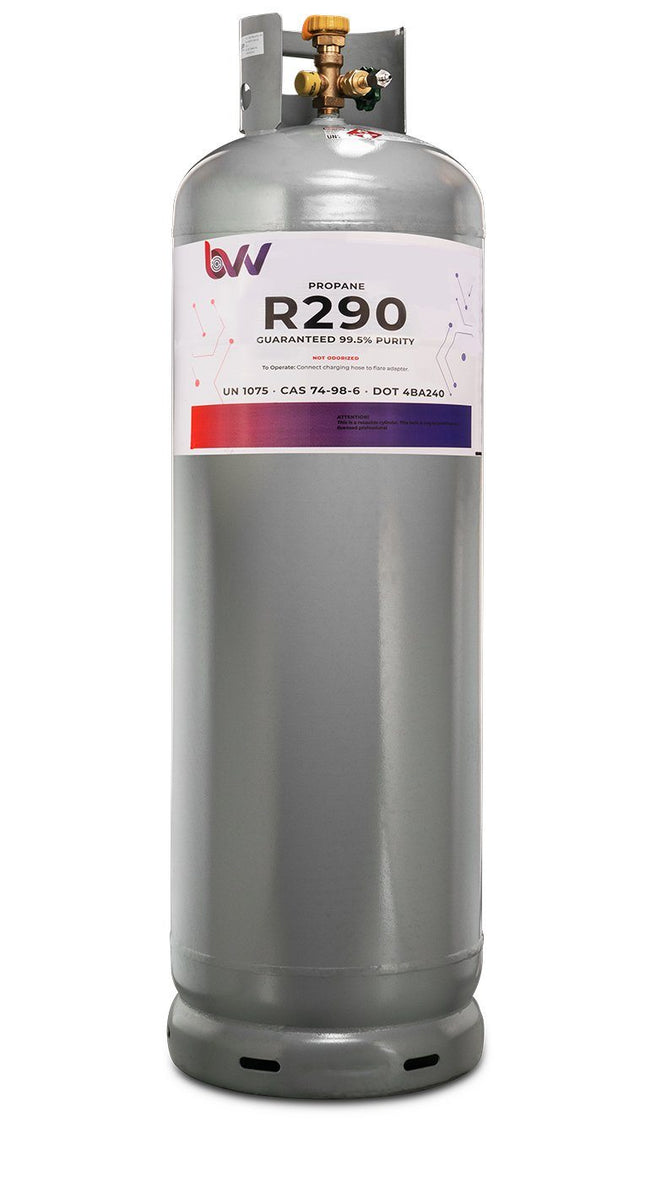
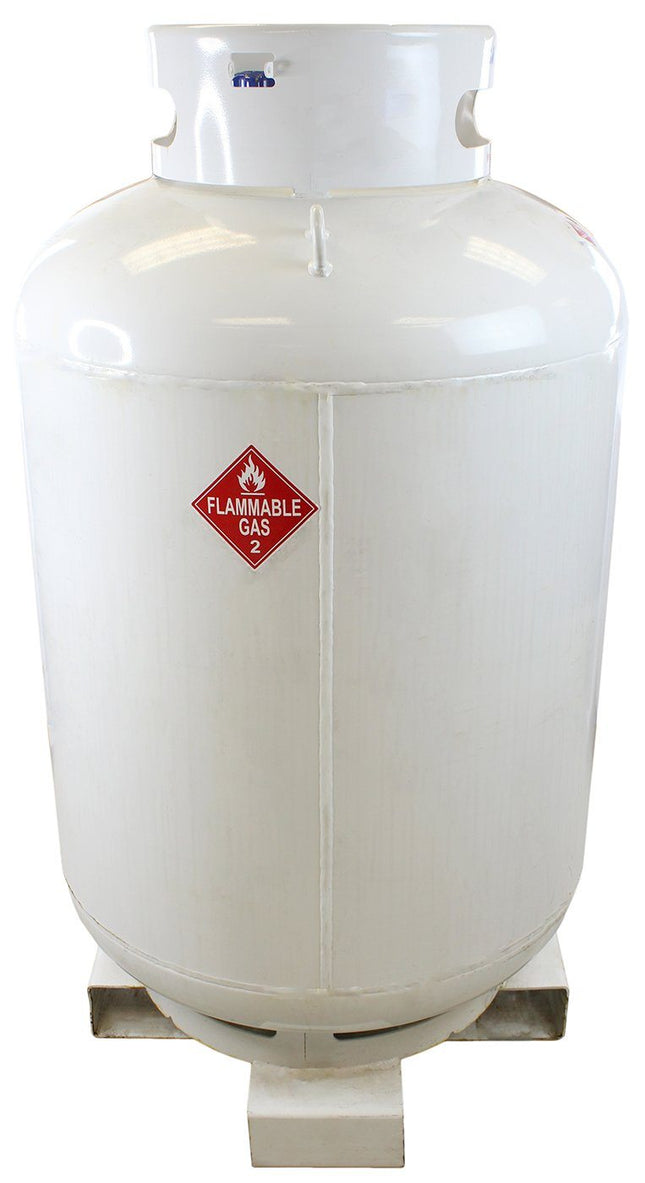
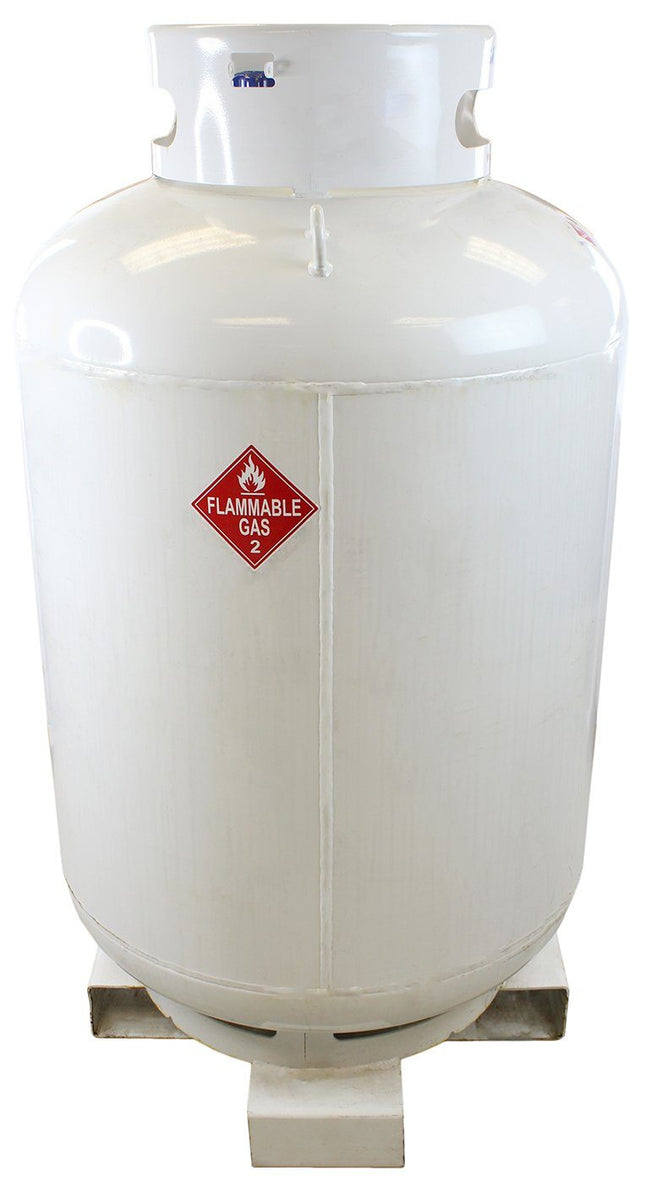
  • Sale -11% 120LB DIPTUBE Tank High Purity USA PROPANE R290 - 99.5% Guaranteed 120LB DIPTUBE Tank High Purity USA PROPANE R290 - 99.5% Guaranteed

    120LB DIPTUBE Tank High Purity USA PROPANE R290 - 99.5% Guaranteed

    R290 PROPANE - Buy 2 Get 1 Free (Add 3 To Cart) The 20LB High Purity Propane is USA-sourced with 99.5% guaranteed purity. This instrument-grade solvent helps produce a higher quality extract by reducing mystery oils and contaminants. Not to mention the propane gas is clean, colorless, and odorless. Additionally, solvent comes in a DOT refillable LP tank with an adapter to 1/4" SAE. This gas cylinder doesn’t contain a dip tube. KEY BENEFITS: Free of any hydrogen Sulphide based Ethyl Mercaptan Odorants. This product is clean, colorless, and odorless. Tank contains no diptube. Actual Propane liquid weight is 20LB DISCLAIMER(S): This unit is intended for LEGAL purposes only, to be used in accordance with local laws and ordinances. Use only in WELL VENTILATED AREAS! Notice: This item will ship via Ground ONLY. Quantities bought in 3 or more will ship via freight unboxed BVV™ always recommends distillation of every solvent before use. Tank contains no diptube. Tank does not include CGA 510 fitting. Must be added through dropdown or bought separately. Actual liquid weight is 20LB California now prohibits the retail sale of any Non-Odorized butane in quantities larger than 150ml. If you are not a retail purchaser, you can call in to place an order. Permitted Sales Include the Following:  Persons licensed to perform volatile solvent extraction activity under CA Bus & Prof Code Division 10 Manufacturers, wholesalers, resellers, or retailers solely for resale  How To Buy 2 Get 1 Free Simply add 3X of 20LB Tanks to your cart and you will automatically be discounted the third tank. Need one with a CGA fitting two without? Simply add one tank with your desired CGA fitting and add two of the same item selecting "None" for the "CGA fitting" and "Connection Size" options. Want 2 Butane Tanks and 1 Propane Tank? No problem, just add 3 of ANY of our 20LB LPG tanks to your cart and enjoy the third tank free! Due to FAA regulations, solvent tanks cannot be safely transported via means other than ground. Any order that has solvent will not be shipped in an expedited fashion. If an order with solvent is combined with any other items and chosen to be expedited, that entire order will ship via UPS Ground/Freight. We will not split up any orders and ship them separately. If a customer wants to expedite specific items and order solvent, 2 separate orders (1 for the solvent and 1 for the expedited items) will need to be placed to do so. Solvents do not ship to Hawaii, Puerto Rico, or any other US Territory outside of the contiguous 48 States. Shipping Solvent to Alaska may ONLY ship via freight and will be required to travel through Canada. Chemical Formula: C3H8 Molecular Weight: 44.10 g/mol CAS Registry Number: 74‐98‐6 Appearance Colorless Odor: Gasoline  Density 0.116 Boiling Point: ‐40 F Solubility in water: Slightly Soluble GHS Pictograms: GHS Signal Word: Danger GHS Hazard Statements: H220 GHS Precautionary Statements P203, P210, P222, P280, P377, P381, and P403 UN Identification Number: 1075 Proper Shipping Name: Petroleum Gases, liquefied Transport Hazard Class: 2.1 Packing Group: None DOT Placard: Propane Certificate of Analysis (COA) Propane Safety Data Sheet (SDS)

    $1,002.80 - $1,016.92

  • Apiezon N Cryogenic Vacuum Grease

    Apiezon Apiezon N Cryogenic Vacuum Grease

    Apiezon N Cryogenic Vacuum Grease Apiezon N Grease is silicone-free and widely recognized and recommended as the cryogenic vacuum grease of choice. This cryogenic grease is specially formulated to exhibit craze-free performance characteristics at low temperatures and withstand frequent cycling between cryogenic temperatures as low as -273°C and +30°C. Safety Data Sheet Thermal Conductance Sheet Technical Data Sheet Apiezon N Grease: Cryogenic High Vacuum Grease Properties Apiezon N Grease is a silicone- and halogen-free cryogenic high vacuum grease which: can withstand frequent cycling between cryogenic temperatures as low as -273°C and +30°C is craze-free at cryogenic temperatures has the ability to fill the micropores of adjoining surfaces, so improve thermal contact does not suffer from contamination problems associated with silicone based greases such as 'creep' or 'carry over' exhibits a vapour pressure of 6 x 10⁻¹⁰ Torr at 20°C has powerful 'gettering' action, meaning it absorbs potentially harmful grease and chemical impurities on metal and glass surfaces is easy to clean, use and remove as it is soluble in hydrocarbon solvents Please click the links for typical properties and vapour pressure graphs of Apiezon N Grease. Cryogenic Applications of Apiezon N Grease Cryogenic Vacuum Seal Apiezon N Grease exhibits extremely low vapour pressures at ambient temperatures, 6 x 10⁻¹⁰ torr at 20°C, which are further improved by reductions in temperature to the cryogenic region. Its ability to resist cracking at extremely low temperatures makes it particularly useful as a vacuum seal for cryosystems. Apiezon N Grease can be relied upon to form and maintain a vacuum seal for long periods, even when subjected to frequent thermal cycling, withstanding cycling between temperatures as extreme as -273°C and +30°C. Its unique properties mean N Grease is widely used to create a reliable vacuum and pressure-tight seals in, amongst others: vacuum lines; Schlenk lines; cold traps; liquid helium hoses and electron microscopes. Thermal Coupling Apiezon N Grease has a proven track record in improving thermal contact under cryogenic conditions. This is important for the coupling of cooling systems to superconducting magnets, cryostats, temperature sensors or any system that is required to reach cryogenic temperatures as quickly as possible. Low levels of magnetic susceptibility also make it ideal for superconductor manufacturing applications. Sensor Mounting Apiezon N Grease is ideal for use in cryogenic sensor mounting. It is pliable at room temperature and solidifies at cryogenic temperatures to allow for easy mounting and removal of sensors without causing damage. Sample Mounting Important in low-temperature testing of semiconductor chips, laser diodes and crystals, etc., Apiezon N Grease is used to improve thermal contact between the sample boat and cold finger of a cryotstat. This cryogenic thermal contact grease ensures that samples are at the lowest possible temperatures to improve test sensitivities. Ambient Temperature Applications - Added Cushioning Apiezon N Grease can be used in a variety of applications at ambient temperatures such as when added cushioning is required. N Grease has a special additive which gives it a tenacious, rubbery consistency which absorbs vibrations in equipment, making N Grease invaluable in fragile glass to glass joints, like burette taps, which continually risk fracture.

    $385.58

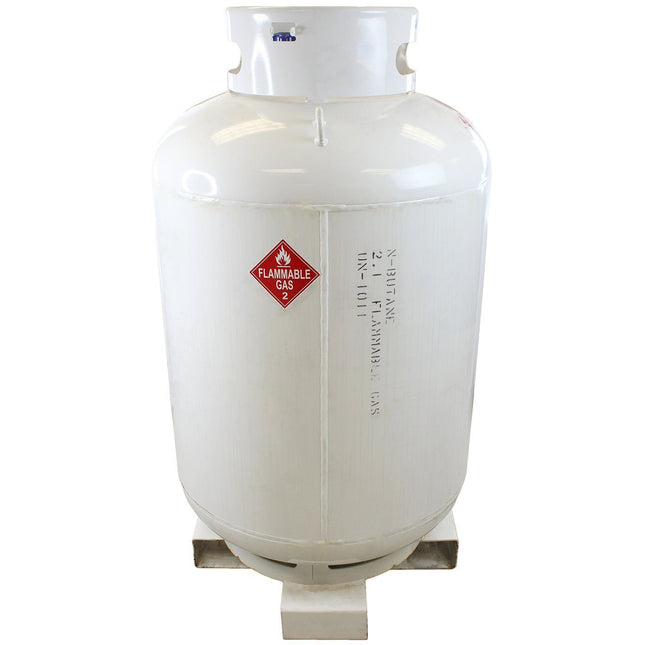
  • Half Ton - High Purity USA N-BUTANE - 99.5% Guaranteed

    Half Ton - High Purity USA N-BUTANE - 99.5% Guaranteed

    DISCLAIMER(S): This unit is intended for LEGAL purposes only, to be used in accordance with local laws and ordinances. Use only in WELL VENTILATED AREAS! Notice: This item will ship via Freight ONLY This tank requires a CGA 510 fitting - Sold Separately BVV™ always recommends distillation of every solvent before use. *Actual liquid weight is 510LBs California now prohibits the retail sale of any Non-Odorized butane in quantities larger than 150ml. If you are not a retail purchaser you can call in to place an order. Permitted Sales Include the Following: Medical Collectives or Cooperatives operating under CA Health & Safety Code Section 11362.775 Persons licensed to perform volatile solvent extraction activity under CA Bus & Prof Code Division 10 Manufacturers, wholesalers, resellers, or retailers solely for the purpose of resale Sourced right here in the USA, this high-quality butane is guaranteed to be 99.5% pure. This is a solvent that is instrument-grade and helps produce a higher quality extract through the reduction of mystery oils and contaminants. This butane is clean, colorless, odorless, and free of any hydrogen sulfide-based ethyl mercaptan odorants. Because of this, a finer, higher quality extract is consistently available to our customers. The solvent comes in a DOT transpiration approved tank with liquid withdrawal valve (Diptube). Lot Analysis: Isobutane: <1500ppm Methane: <1ppm Ethane: <10ppm n-Butane: 99.5% + Propane: <500ppm Isopentane: <20ppm Water: <3ppm CO+CO2: <5ppm Oxygen: <3ppm Nitrogen: <10ppm Sulfer: Non-Detected *Free of any hydrogen Sulphide based Ethyl Mercaptan Odorants. *Holds the equivalent of (65) 10oz cans of butane. *This product is clean, colorless and odorless. *Actual N-butane liquid weight is 510LB Due to FAA regulations, solvent tanks cannot be safely transported via means other than ground. Any order that has solvent will not be shipped in an expedited fashion. If an order with solvent is combined with any other items and chosen to be expedited, that entire order will ship via UPS Ground/Freight. We will not split up any orders and ship them separately. If a customer is wanting to expedite specific items and order solvent, 2 separate orders (1 for the solvent and 1 for the expedited items) will need to be placed in order to do so. Solvents do not ship to Hawaii, Puerto Rico, or any other US Territory outside of the contiguous 48 States. Shipping Solvent to Alaska may ONLY ship via freight and will be required to travel through Canada. We have this policy in place to ensure safety when transporting solvents, and to prevent any issue with shipping times for our customers. Chemical Formula: C₄H₁₀ Molecular Weight: 58.12 g/mol CAS Registry Number: 106-97-8 Appearance Colorless Odor: Faint Petroleum Density 2.6 kg/m³ (or 2.6 g/L) Boiling Point: 30.2 F (-1C) Solubility in water: Low Solubility  GHS Pictograms: GHS Signal Word: Danger GHS Hazard Statements: H220 GHS Precautionary Statements P203, P210, P222, P280, P377, P381, and P403 UN Identification Number: 1011 Proper Shipping Name: Butane, liquefied Transport Hazard Class: 2.1 Packing Group: None DOT Placard: n-Butane Certificate of Analysis (COA) N-Butane Safety Data Sheet (SDS)

    $4,378.42

  • Ms Cream 8g Food Grade Nitrous Oxide Charger 99.5% Pure Triple Filtered Ms Cream 8g Food Grade Nitrous Oxide Charger 99.5% Pure Triple Filtered

    Ms Cream 8g Food Grade Nitrous Oxide Charger 99.5% Pure Triple Filtered

    Ms. Cream 8g Nitrous Oxide Cream Chargers 99.5% Purity - Food Grade Made in Europe, Triple Filtered Mr. Cream® is a true culinary gas.  Trusted for it high purity and known for not adding any strange or unknown flavors to your cream that other lesser quality import gasses my leave behind.  The blue body painted charger goes back to the 1930's the original brand that made its place in kitchens across the world. 8g Charger - 4.04 Gas Liters of N2O (Do not heat over 120F) SUPERIOR GAS QUALITY - Each cream whipper is filled with the purest, and highest quality E942 food grade gas. That is why you will not have a hard time making chocolate or vanilla, mint, or Bailey's flavored cream whipper. Cocktail foams, airy sauce, mousse, and hot or cold foam can be made easily, too. FOOD-GRADE & LONG SHELF LIFE - Ms Cream chargers are made with food-grade compliance and production standards. Each cream charger has a long shelf life of 5 years so you can use them over a period of time.  ANTI-LEAKAGE DESIGN - Ms Cream charger canister conforms with Manufacturing International Standards such as ISO 9001, and ISO 9002. Any cream dispenser can be used with this cylinder. UNIVERSAL COMPATIBILITY - Compatible with all professional whipped cream makers in the market. From now on, you can easily finish making whipped cream in a few seconds and without leaving odors or contaminants in the dispenser. RECYCLEABLE CONTAINER - Recycle empty cartridge with other metal recycling. The cartridge is considered empty if the top is punctured and a hole is present.  What Is Nitrous Oxide? Nitrous Oxide is a chemical compound with the formula N2O. It is a colorless, non-flammable gas with a slightly sweet odor and taste. Nitrous oxide is often used for various purposes due to its unique properties and effects. What is Nitrous Oxide Used For? Nitrous oxide (N2O) is most commonly used in the culinary world for various purposes, primarily for creating foams, whipped creams, and infusions. Outside the culinary world nitrous oxide is also commonly utilized as a propellant, a cryogenic refrigerant, and as a performance-enhancing additive for internal combustion engines. Here's how nitrous oxide is most commonly used in culinary applications: Whipped Cream: Nitrous oxide is perhaps most well-known in the culinary field for its use in making whipped cream. In this application, heavy cream and sweeteners are combined in a whipped cream dispenser or siphon, and nitrous oxide cartridges are used to pressurize the dispenser. When the cream is released from the dispenser, the sudden release of pressure causes the nitrous oxide to expand and whip the cream into a light and fluffy texture. This method allows for the creation of stable whipped cream that retains its texture for an extended period. Foams: Chefs use nitrous oxide to create foams from various liquids, such as fruit juices, sauces, and purees. To make a foam, the desired liquid is mixed with a gelling agent, strained, and loaded into a whipped cream dispenser along with nitrous oxide. When dispensed, the nitrous oxide aerates the liquid, resulting in a light and airy foam that can be used as a garnish or flavor enhancer. Infusions: Nitrous oxide can be used to infuse liquids with the flavors of herbs, spices, fruits, or other aromatic ingredients. For example, herbs like basil or spices like cinnamon can be placed in a whipped cream dispenser along with a liquid (e.g., oil or alcohol) and nitrous oxide. The pressurized nitrous oxide infuses the liquid with the flavors and aromas of the added ingredients quickly. Cocktails: Some bartenders use nitrous oxide to create foam or froth on cocktails, adding a unique visual and textural element to drinks. This technique is especially popular in molecular mixology. Sauces and Dressings: Nitrous oxide can be used to create light and airy sauces or dressings. By adding nitrous oxide to a mixture of liquids and ingredients, chefs can achieve a desired texture and consistency. Desserts: Nitrous oxide can be used to create innovative desserts, such as foamy fruit purees, mousse-like textures, and light, airy soufflés. It's essential to use food-grade nitrous oxide and follow proper safety precautions when using it in culinary applications. The use of nitrous oxide cartridges and whipped cream dispensers is common in professional kitchens and home cooking to achieve these culinary effects. What Are The Hazards Of Nitrous Oxide? Nitrous oxide (N2O), while commonly used in various applications can pose certain hazards if not used properly. Here are some potential hazards associated with nitrous oxide: Asphyxiation: The most significant hazard of nitrous oxide in culinary use is the risk of asphyxiation. Nitrous oxide can displace oxygen in an enclosed space, leading to oxygen deprivation if inhaled in high concentrations. This can result in dizziness, loss of consciousness, and even death. Frostbite: Nitrous oxide is stored as a compressed liquid and is extremely cold when released. Contact with liquid nitrous oxide can cause frostbite or cold burns to the skin. Care should be taken when handling nitrous oxide cartridges or dispensers. Is Nitrous Oxide Flammable? Nitrous oxide (N2O) is not flammable in the typical sense because it does not support combustion. However, it can contribute to the combustion of other substances. Here's a more detailed explanation: Non-Flammable: Nitrous oxide itself does not burn or catch fire. It is an oxidizer, meaning it can support the combustion of other substances by providing oxygen. When nitrous oxide is used in applications like rocket propulsion or automotive nitrous systems, it does not ignite by itself. Enhancing Combustion: Nitrous oxide is sometimes used in combination with fuel in internal combustion engines to increase power output. In this context, it is often referred to as "nitrous" or "NOS." When nitrous oxide is injected into the engine's intake, it provides additional oxygen, allowing more fuel to burn, resulting in increased engine power. However, it's important to note that this process is controlled and safe when used as intended in automotive applications. Safety Precautions: While nitrous oxide is generally considered safe when used according to manufacturer guidelines, improper handling or misuse can be hazardous. Nitrous oxide should not be exposed to open flames, sparks, or high temperatures, as it can decompose at elevated temperatures and pressure, potentially leading to the release of oxygen and nitrogen gases. In summary, nitrous oxide is not flammable by itself, but it can enhance the combustion of other materials when used in controlled and purposeful applications. When using nitrous oxide, it's essential to follow safety guidelines and avoid exposing it to conditions that could lead to its decomposition or unintended ignition. How Do I Use Nitrous Oxide Safely? Using nitrous oxide (N2O) safely is crucial to prevent accidents and health risks.  Here are some general guidelines for using nitrous oxide safely: Follow Manufacturer's Instructions: Always follow the manufacturer's instructions for any equipment or cartridges containing nitrous oxide. Different devices or cartridges may have specific usage guidelines. Ventilation: Ensure that you use nitrous oxide in a well-ventilated area. Adequate ventilation helps disperse any gas leaks and prevents the buildup of nitrous oxide in confined spaces, reducing the risk of asphyxiation. Avoid Direct Inhalation: Never inhale nitrous oxide directly from cartridges, whipped cream dispensers, or any other source. Inhaling nitrous oxide for recreational purposes can be dangerous and is not recommended. Protective Gear: When handling nitrous oxide cartridges or equipment, especially if they contain liquid nitrous oxide, wear appropriate protective gear, such as gloves and safety glasses, to prevent frostbite or cold burns. Store Safely: Store nitrous oxide cartridges and equipment in a cool, dry place away from direct sunlight and heat sources. Keep them out of the reach of children and unauthorized individuals. No Smoking: Avoid smoking or open flames near nitrous oxide, while nitrous oxide is not flammable, it will support combustion to the same extent as oxygen. Training and Education: Ensure that individuals using nitrous oxide equipment are trained in its safe handling and usage.  Leak Detection: Regularly check for leaks in nitrous oxide equipment and connections. Use a leak detection solution (soapy water) to identify leaks by observing bubbles at the connections. Proper Disposal: Dispose of used nitrous oxide cartridges and equipment according to local regulations and guidelines. Do not puncture or incinerate cartridges. Emergency Preparedness: Be prepared for emergencies by having safety equipment, such as fire extinguishers and first-aid kits, readily available in areas where nitrous oxide is used or stored. Follow Legal Regulations: Abide by local laws and regulations regarding the sale, purchase, and use of nitrous oxide. In some areas, nitrous oxide may be subject to restrictions due to its potential for misuse. Always exercise caution and prioritize safety when using nitrous oxide, whether it's for culinary, automotive, medical, or other legitimate purposes. If you have specific concerns or questions about the safe use of nitrous oxide in a particular context, consult with experts or regulatory authorities in your area. Chemical Formula: N2O Molecular Weight: 44.013 g/mol CAS Registry Number: 10024-97-2 Appearance Colorless Odor: Characteristic  Density 0.115 lb/ft3 Boiling Point: -88.5C (-127.3F) Solubility in water: Completely Soluble GHS Pictograms: GHS Signal Word: Danger GHS Hazard Statements: H270, H280, H281, H336 GHS Precautionary Statements P220, P244, P261, P271, P282, P304+P340, P319, P336+P317, P370+P376, P403, P403+P233, P405, P410+P403, P501 UN Identification Number: 1070 Proper Shipping Name: Nitrous Oxide Transport Hazard Class: 2.2, 5.1 Packing Group: None DOT Placard: Nitrous Oxide Safety Data Sheet (SDS)  

    $15.18 - $30.37

  • Duratherm G Thermal Fluid - High Temp Rated 260°C (500°F) Duratherm G Thermal Fluid - High Temp Rated 260°C (500°F)

    Duratherm Duratherm G Thermal Fluid - High Temp Rated 260°C (500°F)

    DURATHERM G Duratherm G is a glycol based thermal fluid rated to 260°C (500°F), a proprietary additive system that not only helps the fluid last longer and run cleaner, it makes it the ideal choice for extreme oxidation environments including demanding, open bath applications. 260°C (500°F) maximum operating temperature High flash point of 249°C (480°F) Ideal for use in extreme oxidation environments like open baths Polyalkylene glycol based thermal fluid with enhanced performance TEMPERATURE RATINGS Max Bulk/Use Temp 260°C Max Film Temp. 288°C Pour Point ASTM D97 -40°C SAFETY DATA Flash Point ASTM D92 249°C Fire Point ASTM D92 263°C Autoignition ASTM E-659-78 366°C THERMAL PROPERTIES Thermal Expansion Coefficient 0.0679 %/°C Thermal Conductivity W/m·K 38°C 0.182 100°C 0.175 204°C 0.165 204°C 0.164 260°C 0.159 Heat Capacity kJ/kg·K 38°C 1.976 100°C 2.043 204°C 2.153 204°C 2.152 260°C 2.211 PHYSICAL PROPERTIES Viscosity ASTM D445 cSt 40°C 42.16 100°C 7.43 204°C 1.88 204°C 1.87 260°C 1.23 Density ASTM D1298 kg/l 38°C 0.92 100°C 0.90 204°C 0.87 204°C 0.87 260°C 0.86 Vapor Pressure ASTM D2879 kPa 38°C 0.28 100°C 0.88 204°C 2.40 204°C 2.41 260°C 3.52 Distillation Range ASTM D2887 10% 368°C 90% 514°C Specific Gravity @ 16°C 0.963 Note: The values quoted in the table above are typical of normal production.They do not constitute a specification

    $105.93 - $3,460.36

  • M11x1.0 Regulator for Compressed Gas M11x1.0 Regulator for Compressed Gas

    M11x1.0 Regulator for Compressed Gas

    Regulator for Compressed Gas Bare Regulator No output Fitting This regulator is designed to fit our compressed gas tanks.  Nitrogen, Argon, Helium, Nitrogen & Hydrogen Blend, and Best Whip Nitrous Oxide cylinders.  Adjustment knob Is turned on to start gas flow and set desired pressure.  Turn clockwise to engages the pin and start the flow of gas.  Counterclockwise will retract the pin and stop the flow of gas.  Tank Connection: M11x1.0 Output Thread: 1/8" BSPP Made in Italy Regulator Max Pressure Output: 80 PSI Gauges Measure in BAR. Compatible with CO2, Nitrogen, Argon, Nitrogen-Hydrogen mix, Nitrous Oxide and Helium. *The regulator in this listing does not come with hoses, or cylinders or fitting for the output.    

    $152.54

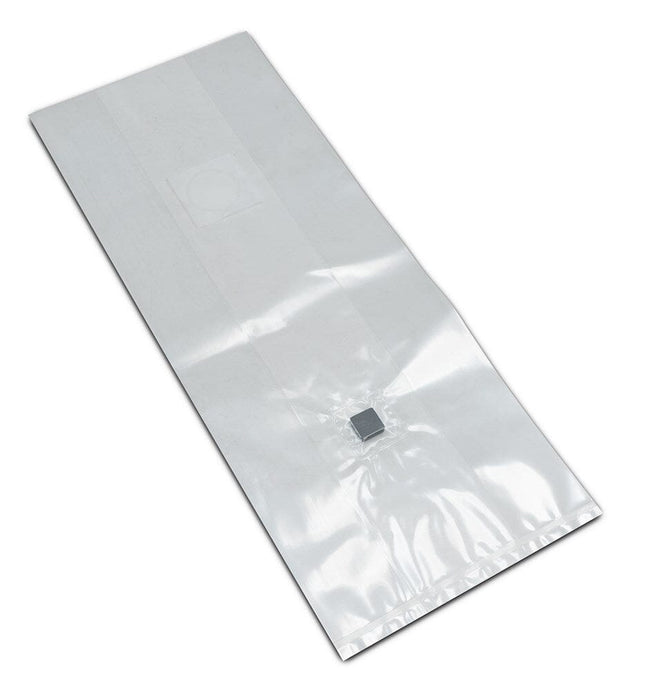
  • Sale -60% Mushroom Grow / Spawn Bag Sealable w/ Injection Port Large 8" X 5" X 19" " - 0.5 Micron Filter 3 Mil Polypropylene Autoclavable

    Mushroom Grow / Spawn Bag Sealable w/ Injection Port Large 8" X 5" X 19" " - 0.5 Micron Filter 3 Mil Polypropylene Autoclavable

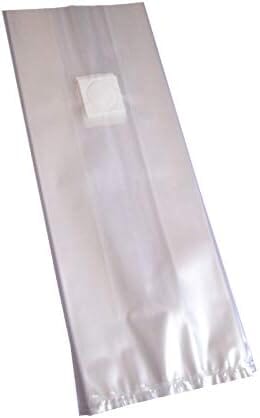
    Mushroom Grow / Spawn Bag 0.5 Micron Filter | 3mil Polypropylene | Autoclavable | with Injection Port 8" X 5" X 19" (20cmx12cmx50cm) Our mycology bags are 8" wide, have a 5" gusset, and are 19" long.  They are made of strong and durable polypropylene (3mil heavy duty).  The bags are sealable with an impulse sealer.  The bags are autoclavable and have a 0.5micron respiratory membrane filter.  The breathable filter is a 1.5" diameter and is a microporous barrier which allows the passage of air but not contaminates.  These bags are suitable for making sterile grain or sterile substrate.  Suitable for Autoclave temperatures up to 250°F (121°C)

    $0.71 - $35.31

  • High Purity Paraffin Lamp Oil - Smokeless, Clean Burning- Kosher - 99.5% Pure High Purity Paraffin Lamp Oil - Smokeless, Clean Burning- Kosher - 99.5% Pure

    High Purity Paraffin Lamp Oil - Smokeless, Clean Burning- Kosher - 99.5% Pure

    Paraffin Lamp Oil 99.5% Pure - Kosher BVV's 99.5% High Purity Lamp oil is great for indoor and outdoor use. It is a clear, water-white, oily liquid with a low viscosity, and will not thicken with age. Our lamp oil has an extremely low sulfur and nitrogen content.  It's a highly refined mineral oil that comes from petroleum and is stripped of its odors.  The shelf-life of paraffin lamp oil will last indefinitely if stored in a sealed container.  Paraffin oil is a fuel source used to power oil lamps, providing light in a situation where electricity is unavailable, making it a valuable item to stockpile for emergency situations due to its ability to provide light without needing batteries or power. If you're a prepper looking for a fuel source that won't sour with age, we recommended our paraffin lamp oil.   BVV® Paraffin Lamp Oil Certificate of Analysis COA BVV® Parafin Lamp Oil Safety Data Sheet

    $20.15 - $4,956.09

  • Yeast Extract Powder for Mushrooms Mycology

    Yeast Extract Powder for Mushrooms Mycology

    Yeast Extract Powder Bacteriological GradeBest for Vigorous Mycelia Growth BVV® Yeast Extract Powder is a highly nutritious, water-soluble ingredient used to enhance growth media for mushroom mycelium cultivation and microbial culture work. Rich in amino acids, peptides, vitamins, and trace minerals, it supports rapid and healthy mycelial development. Features & Benefits: 🍄 High-nutrient supplement for agar and liquid media formulations 🧫 Provides essential B-vitamins, nitrogen compounds, and growth factors for robust mycelial growth ⚗️ Highly soluble—mixes easily in water for precise media preparation 🔬 Ideal for pairing with Malt Extract or Dextrose in agar or liquid culture recipes 💪 Promotes dense mycelial networks, faster colonization, and reliable fruiting performance STORAGE: Cool dry conditions, sealed original package Mix: Mix: 1 gram per. 500ml pH: 6.35 ODOR: Characteristic of Yeast. CLARITY: Clear. SOLUBILITY: Soluble in water. TOTAL NITROGEN: 10.59% W/W SODIUM CHLORIDE: 4.80% W/W TOTAL PLATE COUNT: 2110 CFU/gm YEAST AND MOLDS:: 200CFU/gm E.COLI: NEGATIVE SALMONELLA: NEGATIVE STAPHYLOCOCCUS AUREUS: NEGATIVE PSEUDOMONAS AERUGINOSA: NEGATIVE SHELFLIFE: 4 years CAS# 8013-01-2 Directions for Use: 1. Mix 1g of yeast extract powder per 500ml of liquid culture or agar recipe for vigorous mycelia growth. 2. Boil and stir until powder is fully dissolved. Sterilize the mixture for 45min @15psi 250°F (121°C) in a pressure cooker or autoclave.

    $16.95 - $74.86

  • Sale -19% Scratch and Dent 20LB 99.5% High Purity Gas Tanks Scratch and Dent 20LB 99.5% High Purity Gas Tanks

    Scratch and Dent 20LB 99.5% High Purity Gas Tanks

    Disclaimer: Tanks are discolored, scratched or dented on some portions of the tank, but is still operable and safe to use. However, the 99.5% high purity gas inside is unaffected by the exterior blemishes. (Note: Website pictures of tanks are not the actual representation/condition of the tank you may be sent.) DISCLAIMER(S): This unit is intended for LEGAL purposes only, to be used in accordance with local laws and ordinances. Use only in WELL VENTILATED AREAS! Notice: This item will ship via Ground ONLY. Quantities bought in 3 or more will ship via freight unboxed BVV™ always recommends distillation of every solvent before use. Tank contains no dip tube. Tank does not include CGA 510 fitting. Must be added through dropdown or bought separately. *Actual liquid weight is 20LB California now prohibits the retail sale of any Non-Odorized butane in quantities larger than 150ml. If you are not a retail purchaser you can call in to place an order. Permitted Sales Include the Following: Persons licensed to perform volatile solvent extraction activity under CA Bus & Prof Code Division 10 Manufacturers, wholesalers, resellers, or retailers solely for the purpose of resale  

    $374.28 $303.66

  • Huber DW-Therm M90.200.02, Heat transfer fluid -90 to 170 °

    Huber Huber DW-Therm M90.200.02, Heat transfer fluid -90 to 170 °

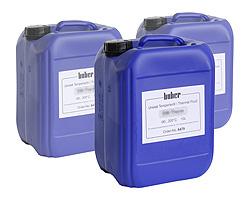
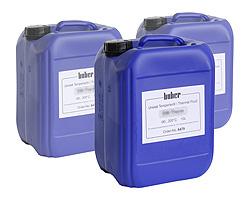
    Huber DW-Therm M90.200.02, Heat transfer fluid -90 to 170 ° *7.5% Huber Tariff Fee Added at Checkout* DW-Therm is a mixture of isomeric triethoxysilanes and has been developed for hydraulically sealed systems.   We recommend the heat transfer fluid DW-Therm for Unistats. DWTherm has a high specific heat capacity and so contributes towards an optimum heat transfer. In addition, DW-Therm covers a large temperature range, and has an impressively long service life.   Advantages: Valid only for Unistats Size 10L Broad working range from -90 °C to 200 °C (hydraulically sealed systems) excellent thermooxidative stability at high temperatures Low viscosity at low temperatures Low volatility and pleasant odour Easy handling (no creeping like silicone oils) Good compatibility with silicone oils Insolubile in water and good environmental compability   Safety Data Sheet     Properties Working temperature °C -90 to 200 Flash Point °C 101 Fire Point °C 112 Viscosity mm2/s (kinematic at 25 °C) 2 Density g/cm3(at 20 °C) 0,879 Pour Point °C -137 Ignition temperature °C 265 Colour yellowish, clear Thermal expansion coefficient 10-5/K 96,98 Heat conductivity W/(m·K) at 25 °C 0,116 Material incompatibility copper, aluminum,non-ferrous metals

    $2,923.65

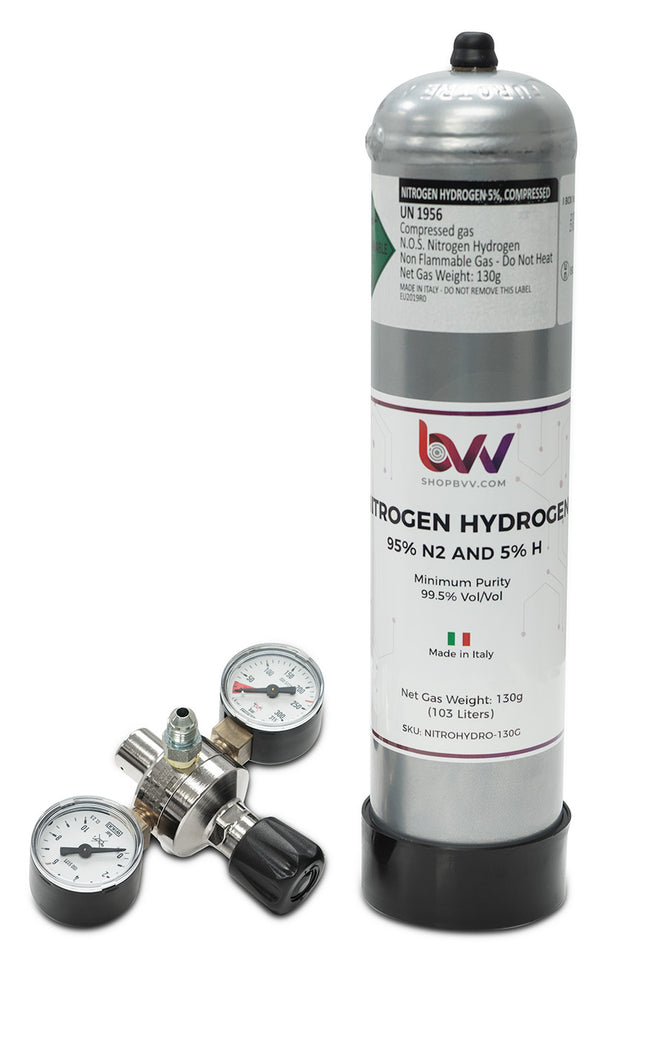
  • Nitrogen Hydrogen 95% N2 and 5% H Nitrogen Hydrogen 95% N2 and 5% H

    Nitrogen Hydrogen 95% N2 and 5% H

    Nitrogen Hydrogen 95% N2 and 5% H 99.5% Purity, Filled, Compressed Gas Made in Italy This 3"x12" compressed gas tank is filled with a high purity blend of nitrogen and hydrogen.  95% Nitrogen and 5% Hydrogen.  The gas can be removed using our regulator or valve dispenser that attaches to the top of the tank.  This tank will produce a continuous ~56 Seconds of Nitrogen Hydrogen @ 80PSI.  *Note Tank Pressure is 1624 PSI *At end of use, completely empty the tank for recycling. Tank Volume of Gas Product SKU: 130g / 103 Liters / 27 Gallons NITROHYDRO-130G   Regulator/Dispenser Details (not included with tank only purchase) Regulator - Adjustable via. needle valve, regulated to 29 PSI. Made in Italy. Thread: M11x1 (tank connection).  Output: 1/4" JIC to connect to any of our 1/4" extractor hoses or vacuum hoses.  Gauges read in BAR. M11 Valve Dispenser Kit - Includes adjustable pushpin style valve dispenser. Output: 1/4" JIC Flare, NO GAUGE.  Connects to any 1/4" JIC Hose.

    $53.67 - $218.92

  • Ultra Clear M - Granular High Performance Bentonite for Bleaching & Decolorizing Edible Oils Ultra Clear M - Granular High Performance Bentonite for Bleaching & Decolorizing Edible Oils

    Ultra Clear M - Granular High Performance Bentonite for Bleaching & Decolorizing Edible Oils

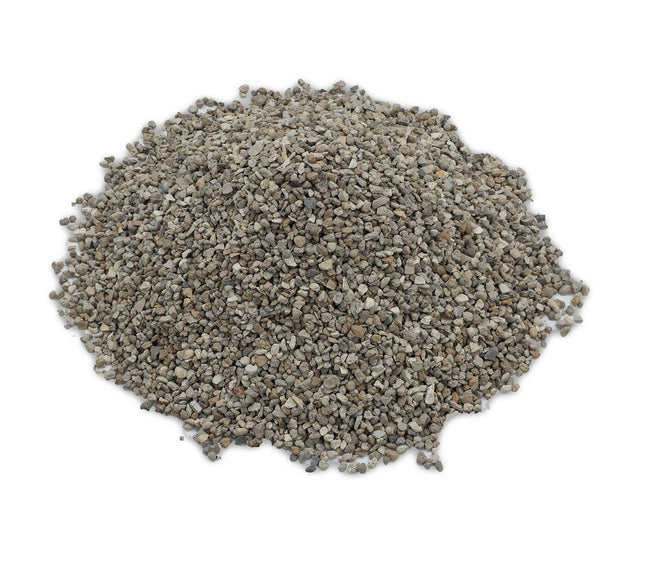
    Ultra:Clear® M 16/30 Mesh Made in USA, Food Grade Certified Ultra-Clear® M effectively removes color bodies, surfactants, water, free fatty acids, organic oxides, and other polar contaminants from a wide range of oils, liquids, and waxes.  It is the Second Largest particle size in the Ultra-Clear product line. UltraClear® M is a unique, naturally occurring attapulgite that has been thermally processed to provide hard, durable granules that won’t swell or breakdown in the presence of water.  All Ultra-Clear products are classified as processing aids andhave Generally Recognized As Safe (GRAS) status from theFood and Drug Administration (FDA). At BVV™ we recommend 150g per lb. of biomass.  We also use this media with layering techniques & can be used with BVV™ Silica Gel and BVV™ Neutral Activated Alumina for a sugar in the oven finish!   Ultra-Clear® is manufactured in 4 granule sizes, 8/16, 16/30, 30/60 & 60/90 mesh sizes.  See the technical data sheet for more information from the manufacturer.  Ultra:Clear® M Food Grade Certificate Ultra:Clear® M Technical Data Sheet Ultra:Clear® M Safety Data Sheet    

    $21.19 - $3,036.64

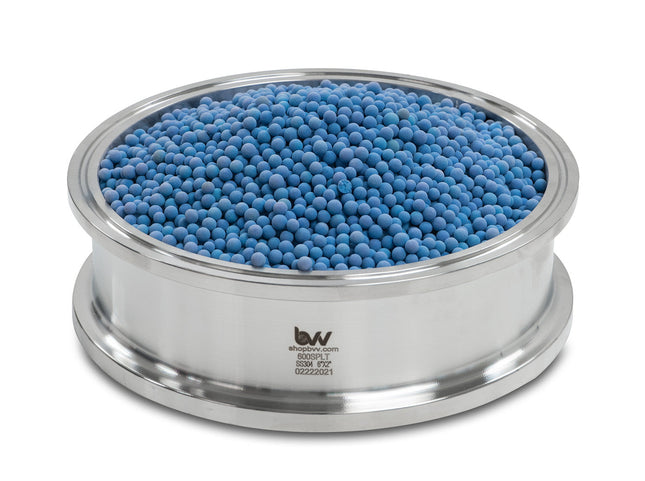
  • Indicating Molecular Sieve Beads Type 4A Indicating Molecular Sieve Beads Type 4A

    Indicating Molecular Sieve Beads Type 4A

    Indicating Molecular Sieve Beads TYPE 4A (Blue) Description: 4A Blue Indicating Molecular Sieve is a porous, high capacity alkali metal aluminosilicate compound. Like non-indicating 4A molecular sieve, our blue indicating 4A molecular sieve has 4 Angstrom-sized pore openings that allow to adsorb all molecules adsorbed by 3A,  molecular sieve, plus larger molecules like aromatic and branched-chain hydrocarbons. Handling & Storage Recommendations: Store in a dry location to prevent unintentional water adsorption. Reseal packages after opening to prevent contamination and unintentional water adsorption. We recommend that you rotate stock so the oldest material is used first. Please read the safety data sheet to ensure proper handling and always wear personal protection equipment when handling molecular sieve.  Molecular Sieve 4A Indicating Technical Data Sheet  Molecular Sieve 4A Indicating Technical Data Sheet

    $22.60 - $1,377.08

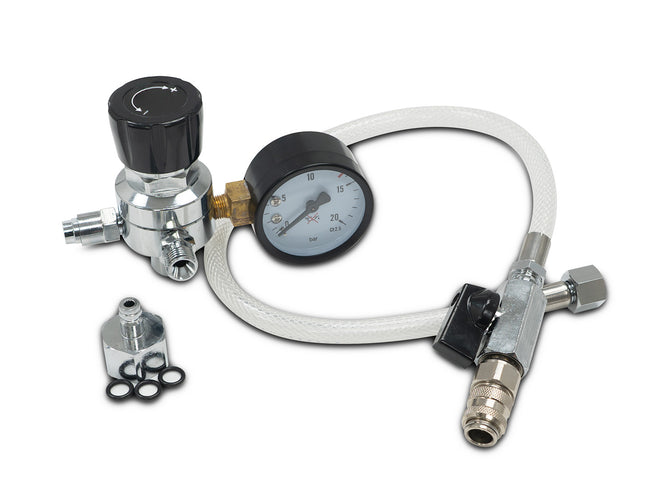
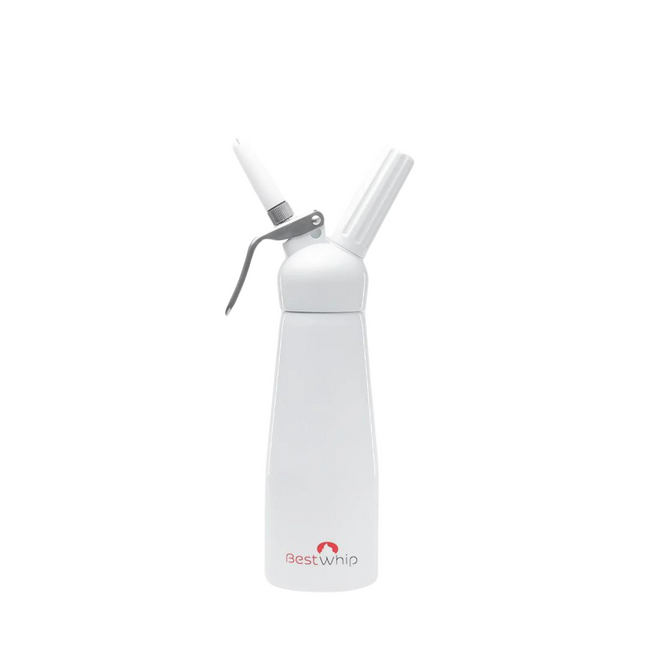
  • Nitrous Oxide Tank Pressure Regulator made by Best Whip

    Nitrous Oxide Tank Pressure Regulator made by Best Whip

    Nitrous Oxide Tank Regulator for Whip Cream Dispensers This specifically designed quick charge adapter makes connecting and disconnecting your dispenser to the regulator quick and easy.  Start infusing today using this regulator to connect to your 635g N2O charger.  Nitrous tanks with an M11 fitting with connect to this regulator.  M11 fitting (connects to tank) Whip Cream Adapter Fitting M22x2.0 (fits whip cream dispenser) Quick Disconnect Hose (self-sealing when removed) The Best Whip N2O regulator requires specific working pressure levels depending on your recipe and the desired texture and intensity. The result is perfect consistency across different recipes with just the right amount of gas.  Fats, proteins, and ingredients / flavorings are the key factors when determining the required pressure for your recipe. Nitrous Oxide Foam Pressure Table: Recipe Type and Foam Density Level Dispenser Contents Recommended Pressure (Bar) Light foam (airy whipped cream) 300-450ml 6-9 Thick foam (cold foam) 300-450ml 9-11 Cocktail foam 200-400ml 8-11 Liquid foam (sauces and soup) 300-450ml 5-7 Firm foam (deserts i.e., cakes, merengue) 200-250ml 15-16 Cocktails and Infusion Table: Intensity Level Dispenser Contents  Recommended Pressure (Bar) Recommended Infusion Time Low 10-150ml 5-7 15 minutes Medium 150-250ml 7-16 30 minutes High 250-500ml 8-17 2 Hours

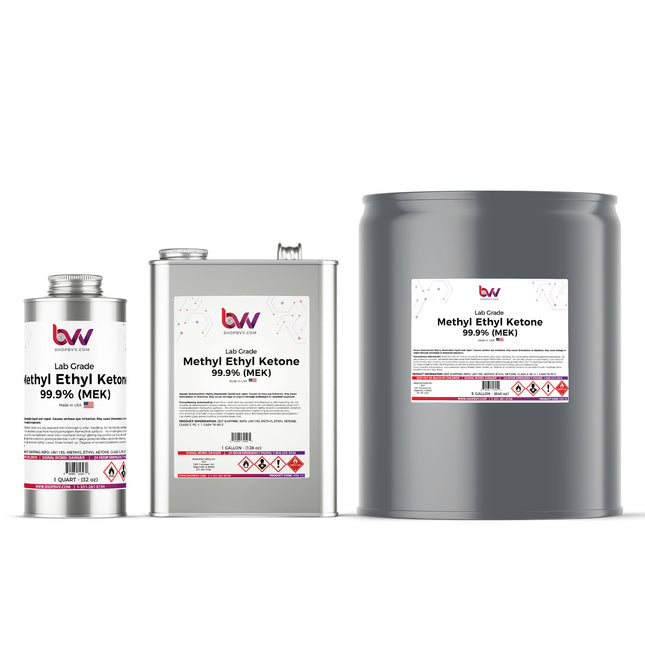
  • Methyl Ethyl Ketone (MEK), High Purity 99.9%, Lab Grade Methyl Ethyl Ketone (MEK), High Purity 99.9%, Lab Grade

    Methyl Ethyl Ketone (MEK) Lab Grade 99.9%

    Methyl Ethyl Ketone (MEK) 99.9% Lab Grade - C4H8O Methyl Ethyl Ketone (MEK), also known as butanone is an organic compound.  Its a colorless liquid and has a sweet order similar to acetone.  MEK is a widely used in commercial applications and as a solvent, and it dissolves many substances.  Our MEK is a very high purity percentage which make it appropriate for use in laboratory and analytical applications. MEK has a flash point 20 °F. Vapors heavier than air. Does not react with water.  It is partially soluble in water, and soluble in most other organic solvents. It will float on water while it rapidly dissolves in it MEK goes by a couple of names: 2-Butanone, Butan-2-one, Butanone, Ethyl methyl ketone, Methylethyl ketone Chemical Formula: C4H8O Molecular Weight: 72.1057 CAS Registry Number: 78-93-3 Appearance Colorless Liquid Odor: Mint or acetone-like Density 0.8050 g/ml Boiling Point: 79.64C/175.35F Solubility in water: 27.5g/100ml GHS Pictograms: GHS Signal Word: Danger GHS Hazard Statements: H225, H319, H336 GHS Precautionary Statements P210, P233, P240, P241, P242, P243, P261, P264, P271, P280, P303+P361+P353, P304+P340, P305+P351+P338, P312, P337+P313, P370+P378, P403+P233, P403+P235, P405, P501 UN Identification Number: 1193 Proper Shipping Name: Ethyl Methyl Ketone Transport Hazard Class: 3 Packing Group: II DOT Placard: What is Methyl Ethyl Ketone? Methyl ethyl ketone (MEK), also known as butanone, is a colorless, volatile liquid organic compound with the chemical formulaC4H8O. It is classified as a ketone, characterized by the presence of a carbonyl group (C=O) bonded to two carbon atoms. How Is Methyl Ethyl Ketone Produced? While Methyl Ethyl Ketone is biosynthesized by trees and is found in small quantities in foods such as some fruits and vegetables, chicken, beans, honey, and a wide variety of cheeses, the majority of Methyl Ethyl Ketone is produced using dehydrogenation of secondary butyl alcohol (approximately 86%) and as a byproduct of butane oxidation (remaining 14%). How is Methyl Ethyl Ketone Stored and Distributed? Methyl ethyl ketone is packed in drums. It should be stored in a cool, dry, well-ventilated area that is free from the risk of ignition as it is highly flammable. For transportation purposes, methyl ethyl ketone is classified as packing group II and a hazard class 3 with a flashpoint of -9° C What is Methyly Ethyl Ketone Used For? Methyl Ethyl Ketone is used as a solvent in the manufacturing of adhesives, protective coatings, inks and magnetic tapes. It is also the preferred extraction solvent for dewaxing lube oil. Is Methyl Ethyl Ketone Banned? Methyl ethyl ketone (MEK) is not banned nationally, but it is banned in Southern California and some states with strict VOC laws. What are the dangers of Methyl Ethyl Ketone? The compound is rated a 1 for health under the NFPA 704 indicating that exposure should only cause a minor residual injury. To avoid inhalation occurring, especially for regular uses, adequate ventilation should be ensured with local exhaust ventilation and enclosures. The direct inhalation of high levels of MEK may cause dizziness, nausea, headaches, irritation of the respiratory system and chest tightness. If the individual has difficulty breathing, they should be moved to air free of the vapours and be provided oxygen until medical assistance is available. Direct eye exposure can cause sore, stinging, red eyes with tearing and vapours can also irritate the eyes. Chemical safety goggles should therefore be used when contact with the eyes is possible. Repeated or prolonged skin contact should be avoided as this can cause irritation and dryness. Therefore, gloves, aprons and appropriate boots should be worn when repeated contact with MEK is possible. Methyl Ethyl Ketone (MEK) Lab Grade Safety Data Sheet (SDS)

    $24.01 - $776.82

  • Gellan Gum Powder for Mushrooms Mycology

    Gellan Gum Powder for Mushrooms Mycology

    Gellan Gum Powder Low Acyl  |  99.5% Purity Gellan Gum is a high- molecular weight polysaccharide gum that is a product of fermentation of carbohydrates by pseudomonas Elodea which is purified, dried and powdered. Gellan gum is ideal for most microbial and plant tissue culture applications. It’s gelling property makes it a viable ingredient of jellies, beverages, dairy products etc.. This superfine gellan gum dissolves quickly and has a high gel strength making it an excellent choice for a variety of applications an petri dishes.  STORAGE: Cool dry conditions, sealed original package Mix: 10gram per. 500ml GELLANGUM CONTENT: 99.5% PARTICLE SIZE 60MESH: 99.0% TRANSPARENCY: 86.3% GEL STREGNTH: 980gm/cm^2 pH: 6.5 TURBIDITY: 8.0NTU HEAVY METAL: <20 ppm. TOTAL PLATE COUNT: <1000CFU/gm SALMONELLA: NEGATIVE E.COLI: NEGATIVE YEAST AND MOLDS: <200CFU/gm SHELFLIFE: 4 years CAS#71010-52-1 Directions for Use: Mix 10g of powder per 500ml of distilled water. Boil and stir until powder is fully dissolved. Sterilize the mixture for 45min @15psi 250°F (121°C) in a pressure cooker or autoclave. Allow mixture to cool to approximately 140°F (60°C) *To avoid excessive condensation. Fill dishes with 15ml of mixture, approximately ~30-35 dishes.

    $18.36 - $90.39

  • Carbon Chemistry ZeoClear™ Y Carbon Chemistry ZeoClear™ Y

    Carbon Chemistry LTD Carbon Chemistry APG Granular (ZeoClear Y)

    Carbon Chemistry APG Granular (ZeoClear Y) A selective zeolitic clay adsorbent designed for precise separation control. This thermally activated attapulgite-zeolite composite features a unique alkaline surface chemistry that provides measured adsorption rates, making it ideal for gentle refinement processes. Its carefully engineered pore structure and granular stability allow for controlled removal of specific compounds while preserving desired characteristics of the process stream. Key Features: Micron Size 250-595um Attapulgite granular media, alkaline medium Easy handling, fast flow, color improvement General product improvement with high contaminant absorptivity Color Remediation In-Line Filtration Hot Scrub Recirculate Granular Media FAQ: How do I use granular media? Zeolite adsorbents can be used inline during extraction with LPG solvents or in a hot scrub with non-polar solvents of higher BP like Heptane Is this a replacement for powders? The answer depends on what your processing goals are e.g. color removal, pesticide remediation, etc. Each adsorbent for filtration media will have its own unique set of properties including pH, pore size, polarity, surface area that make certain adsorbents more suitable to certain uses. Can I mix granular media and powders? Yes, you can either mix powders with granular media or place the granular media on top a bed of powdered media. This will however result in a more restricted flow which will require additional pressure to pass your solution through your filter cake. Do I need to bake the media? Media does not need to be baked prior to use but can be only superficial water will be removed which may improve performance. To remove superficial moisture, bake for 8hrs at 200C (392F) How do I know how much media to use? This will depend on a few variables such as the amount of your starting material, the age of your starting material, and desired color of your final product.  How does the media need to be stored? before and after use. Before use; Keep container tightly closed and dry; store in a cool place. After use; Store in a well-ventilated area, this media is saturated with flammable/explosive solvent and can self-ignite if not not handled properly. Is the media safe to handle without PPE (Personal Protective Equipment)? Breathing must be protected when large quantities are decanted without local exhaust ventilation. When workers face exposure to dust exceeding the occupational exposure limits they must use appropriate certified respirators. Wear a NIOSH-certified (or equivalent) particulate respirator. What micron size filters are required? / The media is larger but are there fines? The media might be large but there are fine dust particles (about 5 million per lb.) that can get carried away in your solution and require separation. We suggest stacking a 5-micron filter on top of a 1-micron filter which will help keep your flow slow as well as filtering out any fine dust particles. The media didn't work, what did I do wrong? There is an exceptionally good chance you did not restrict your solvent flow enough. Try again with a much slower flow through your filter. Another variable you might consider adjusting is solvent temperature. Colder solvent will pull less lipids and waxes which can impede the efficiency of the adsorbent.   Note:  Bulk Bags and Bulk sizes are non-stocked items and will be ordered as needed and carry a several week lead time and require a forklift or pallet jack

    $56.50 - $11,299.14

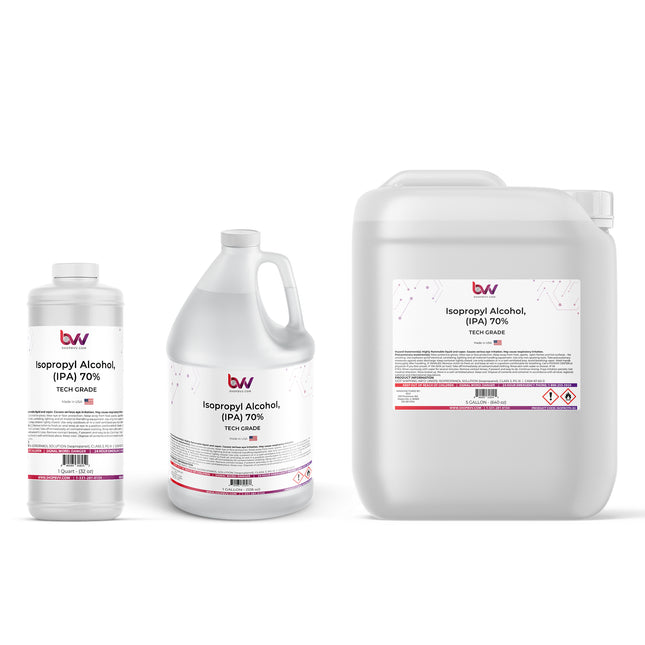
  • Isopropyl Alcohol 70% Tech Grade Isopropyl Alcohol 70% Tech Grade

    Isopropyl Alcohol 70% Tech Grade

    Isopropyl Alcohol 70% Technical Grade Isopropyl alcohol is a fast-evaporating solvent and industrial cleaning agent, intended for industrial or professional use only. It can be used as a solvent for gums, shellac, and essential oils. Can be used as a fuel additive.   Isopropyl Alcohol (liquid) - 70% Purity / 30% De-Ionized Water Shelf Life - 5 years Chemical Formula: C3H8O Molecular Weight: 60.096 g/mol CAS Registry Number: 67-63-0 Appearance Colorless Liquid Odor: Pungent Alcoholic odor Density 0.858 g/cm3 @ 20 - 25 °C (68 - 77 °F) Boiling Point:  80.9 - 83.2 °C (177.6 - 181.8 °F) Solubility in water: Completely Soluble  GHS Pictograms:    GHS Signal Word: Danger GHS Hazard Statements: H225, H319, H336  GHS Precautionary Statements P210, P233, P240, P241, P242, P243, P261, P264+P265, P271, P280, P303+P361+P353, P304+P340, P305+P351+P338, P319, P337+P317, P370+P378, P403+P233, P403+P235, P405, and P501 UN Identification Number: 1219 Proper Shipping Name: Isopropanol Transport Hazard Class: 3 Packing Group: II DOT Placard: Isopropyl Alcohol 70% Tech Safety Data Sheet (SDS) Isopropyl Alcohol 70% Tech Certificate of Analysis (COA)

    $26.84 - $3,389.74

  • Malt Extract Powder for Mushrooms Mycology

    Malt Extract Powder for Mushrooms Mycology

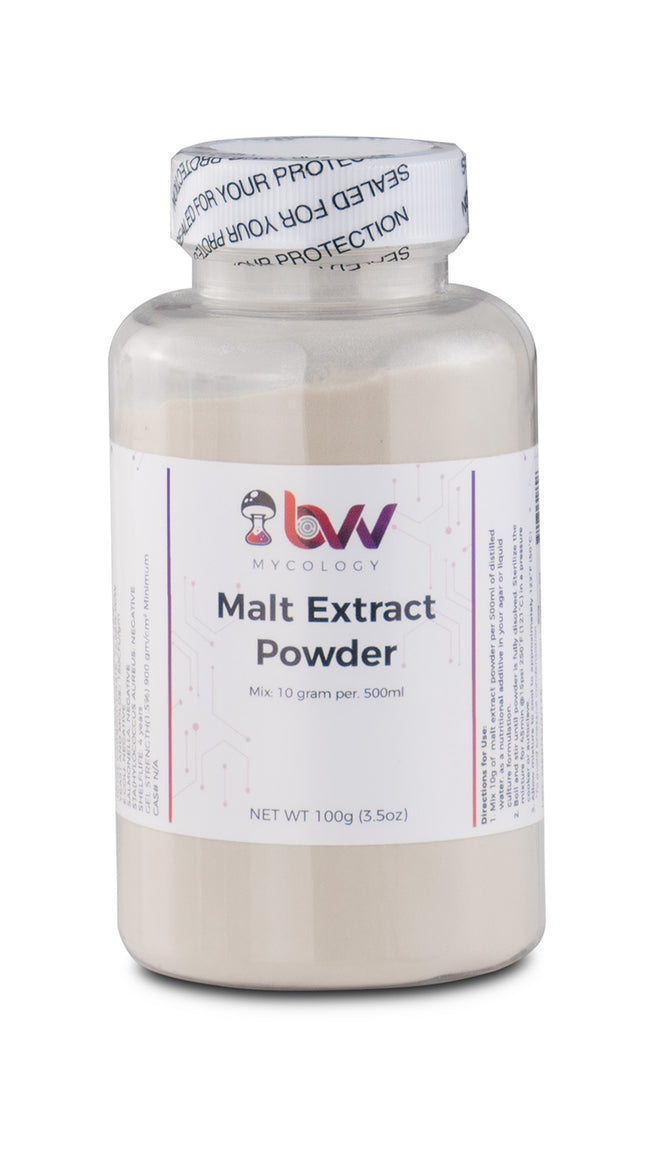
    Malt Extract Powder BVV® Malt Extract Powder is a premium carbohydrate source designed for cultivating mycelium and preparing nutrient-rich growth media such as Malt Extract Agar (MEA). It provides essential sugars, amino acids, and minerals that support strong, vigorous mycelial development. Features & Benefits: 🌾 High-quality maltose source for consistent, rapid growth 🍄 Ideal for preparing Malt Extract Agar, liquid culture media, and spawn hydration solutions ⚗️ Highly soluble—dissolves easily in water for precise media formulation 🧫 Supports robust mycelial structure, uniform colonization, and reliable fruiting 🧪 Compatible with other nutrients such as peptone or yeast extract STORAGE: Cool dry conditions, sealed original package Mix: Mix: 10 gram per. 500ml Directions for Use: Mix 10g of malt extract powder per 500ml of distilled water, as a nutritional additive in your agar or liquid culture formulation. Boil and stir until powder is fully dissolved. Sterilize the mixture for 45min @15psi 250°F (121°C) in a pressure cooker or autoclave. Allow mixture to cool to approximately 122°F (50°C) *To avoid excessive condensation

    $18.36 - $88.98

  • Formaldehyde 37% Lab Grade Formaldehyde 37% Lab Grade

    Formaldehyde 37% Lab Grade

    Formaldehyde 37% Stabilized with 11% Methanol | Laboratory Grade Our Formaldehyde is a clear colorless liquid with a strong odor.  Formaldehyde is used in a variety of industrial applications.  It can be used as a preservative, disinfectant, and as an additive in production of adhesives, plastics, and textiles.  Formaldehyde 37% M 11% Certificate of Analysis (COA) Formaldehyde 37% M 11% Safety Data Sheet (SDS) Chemical Formula: CH2O Molecular Weight: 30.026 g/mol   CAS Registry Number: 50-00-0, 67-56-1  Appearance: Colorless Liquid Odor: Pungent Density 1.08 g/ml Boiling Point:  122.58 °F (50.32 °C) estimated  Solubility in water: Completely Soluble GHS Pictograms:   GHS Signal Word: Danger GHS Hazard Statements: H226, H301 + H311, H314, H317,H330, H335, H341, H350, H370, H401 GHS Precautionary Statements P201, P202, P210, P233, P240, P241, P242, P243, P260, P264, P270, P271, P272, P273, P280, P284, P301 + P310 + P330, P301 + P330 + P331, P303 + P361 + P353, P304 + P340 + P310, P305 + P351 + P338 + P310, P308 + P313, P361 + P364,P370 + P378, P403 + P233, P403 + P235, P405, P501  UN Identification Number: 2209 Proper Shipping Name: Formaldehyde Solution Transport Hazard Class: 8 Packing Group: III DOT Placard:

    $25.42 - $706.20

  • Sale -17% AFS Economy CRC Botanical Extraction Filter AFS Economy CRC Botanical Extraction Filter

    AFS Economy CRC Botanical Extraction Filter

    AFS Economy CRC Botanical Extraction Filter When to use Economy Filtration AFS's 2.5" Economy Botanical Extraction Filter is our best-valued extraction product. These filters are ideal when you are looking for CRC filtration without significant cost. Reformulated by eliminating some of the higher-end media this filter is a great economical alternative. Seamlessly fitting into our 2.5" housing products, this filter handles standard extraction filtration with ease. Contact us if you need advice on which filter is best for you. Perfect for: Low-cost filtering When higher-end filtering media is not required General filtration Why Choose AFS Filters? AFS Filters are the first and only disposable color remediation filter cartridges for the botanical extraction industry.  Our patent-pending design allows for an easy-to-use solution implemented into existing extraction systems and is now available as a standard integration from many equipment manufacturers. AFS Filters are a simple solution that allows for the use of prepackaged filters. With the integrated 2.5 µm paper filter molded and sealed into the cup, there is no media leak through. Prepacked means there's no need to be an expert in remediation filter media or how to construct filters. In addition, it eliminates the messy process of building/packing filters yourself. Disposable means no need for cleaning the filter housings afterward or trying to unclog stainless filter screens. Less R&D investment, less mess, and less downtime allow for higher throughput and more profit.  

    $42.37 - $466.09

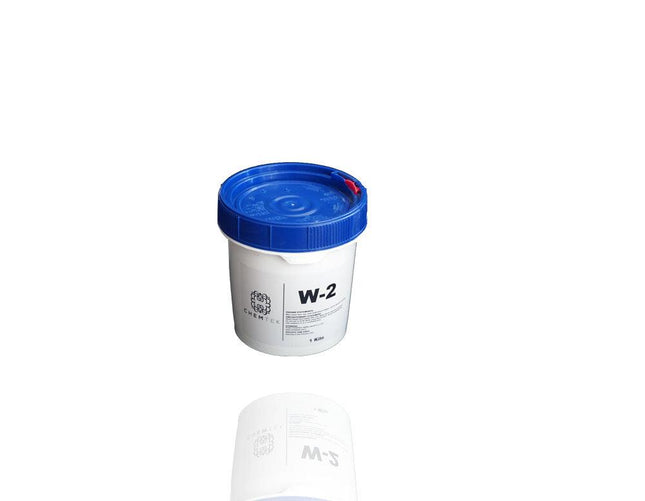
  • CHEMTEK W2 Heat Activated Natural Bleaching Clay CHEMTEK W2 Heat Activated Natural Bleaching Clay

    ChemTek W2 Heat Activated Natural Bleaching Clay

    CHEMTEK W2 Heat Activated Natural Bleaching Clay W2 is a natural bleaching clay offering mild yet efficient results. It is heat activated to increase its adsorptive power without the use of any acids. The lack of acid prevents terpene isomerization and keeps the terpene profile the same while also slowing the oxidation rate of the oil thus increasing its shelf life. W2 is heavier in bulk density giving it lower oil retention. W2 SDS W2 Technical Data Sheet

    $70.62 - $3,177.88

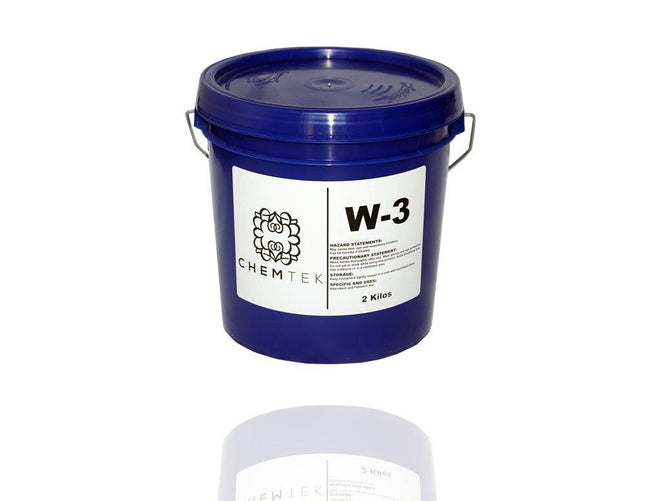
  • CHEMTEK W3 Acid Activated Bleaching Clay CHEMTEK W3 Acid Activated Bleaching Clay

    ChemTek CHEMTEK W3 Acid Activated Bleaching Clay

    CHEMTEK W3 Acid Activated Bleaching Clay W3 is a highly active adsorptive clay designed for difficult to bleach oils. It has a high cation exchange capacity paired with high moisture content making it ideal for adsorption of impurities such as chlorophyll, carotenes, heavy metals, phospholipids, soaps, and other impurities. W3 SDS W3 Technical Data Sheet

    $70.62 - $3,177.88

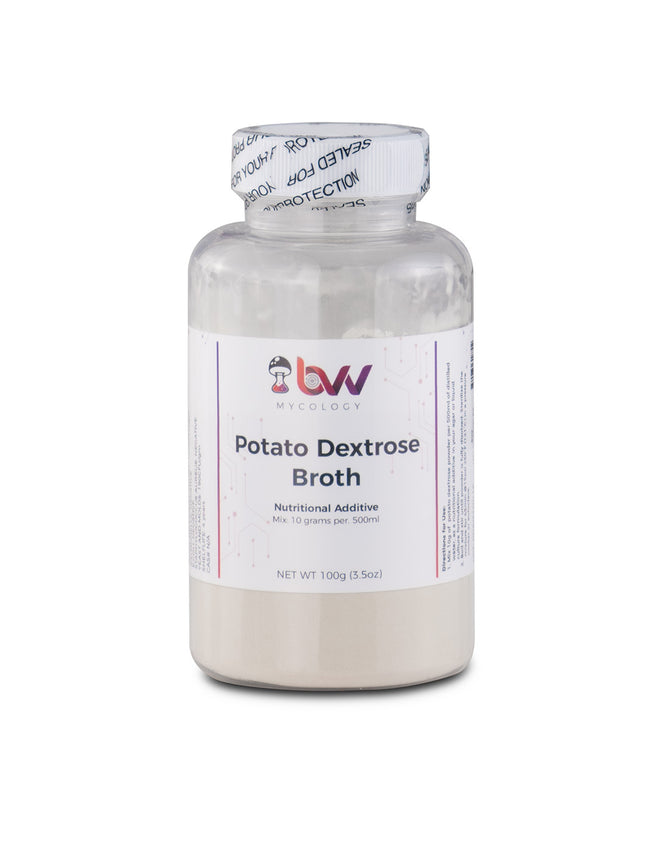
  • Potato Dextrose Broth for Mushrooms Mycology

    Potato Dextrose Broth for Mushrooms Mycology

    Potato Dextrose Broth For Mushroom Mycology Bacteriological GradeBest for Vigorous Mycelia Growth Potato Dextrose Broth (PDB) is a liquid microbiological growth medium made from potato infusion and dextrose, used to cultivate and isolate yeasts and molds from food products and other samples. Its low pH inhibits bacterial growth, while the rich potato and dextrose components provide nutrients for fungal sporulation and pigment production. STORAGE: Cool dry conditions, sealed original package Mix: Mix: 1 gram per. 500ml Directions for Use: 1. Mix 10g of Potato Dextrose Broth per 500ml of liquid culture or agar recipe for vigorous mycelia growth. 2. Boil and stir until powder is fully dissolved. Sterilize the mixture for 45min @15psi 250°F (121°C) in a pressure cooker or autoclave.

    $16.95 - $74.86

  • Sale -56% Mushroom Grow / Spawn Bag Sealable Large 8" X 5" X 19" - 0.5 Micron Filter 3 Mil Polypropylene Autoclavable Mushroom Grow / Spawn Bag Sealable Large 8" X 5" X 19" - 0.5 Micron Filter 3 Mil Polypropylene Autoclavable

    Mushroom Grow / Spawn Bag Sealable Large 8" X 5" X 19" - 0.5 Micron Filter 3 Mil Polypropylene Autoclavable

    Mushroom Grow / Spawn Bag 0.5 Micron Filter | 3mil Polypropylene | Autoclavable 8" X 5" X 19" (20cmx12cmx50cm) Our mycology bags are 8" wide, have a 5" gusset, and are 19" long.  They are made of strong and durable polypropylene (3mil heavy duty).  The bags are sealable with an impulse sealer.  The bags are autoclavable and have a 0.5micron respiratory membrane filter.  The breathable filter is a 1.5" diameter and is a microporous barrier which allows the passage of air but not contaminates.  These bags are suitable for making sterile grain or sterile substrate.  Suitable for Autoclave temperatures up to 250°F (121°C)

    $0.28 - $14.12

  • Sale -27% AFS Ultra Clear Cartridge AFS Ultra Clear Cartridge

    AFS Ultra Clear Cartridge

    AFS Disposable Ultra Clear Cartridge     Note: Stainless Steel filter housing sold separately.  (Click Here for Housing) AFS Instruction Manual Download Here AFS Filters are the first and only disposable color remediation filter cartridges for the botanical extraction industry.  The Patent Pending design allows for an easy to use solution implemented into existing extraction systems; and is now available as a standard integration from many equipment manufacturers. AFS Filters are a simple solution that allows for the use of prepackaged filters, which are available in different recipes depending on the application.  With the integrated 2.5µm paper filter molded and sealed into the cup there is no media leak through.  Pre-packed means there's no need to be an expert in remediation filter media and how to construct filters; as well as eliminates the messy process of building/packing filters yourself.  Disposable offers no need for cleaning the filter housings afterwards and trying to un-clog stainless filter screens.  Less R&D investment, less mess, and less down time allows for higher throughput and more profit. The media contained in the BVV™ Ultraclear filter cartridge is Ultra-clear is a high-performance granular attapulgite that is effective in removing a wide range of polar impurities including color bodies, surfactants, water, and free fatty acids while maintaining target compounds.  As a granular media Ultraclear is easy to use, safe to handle, and does not require baking or wetting before use. Using only made in the USA materials that are FDA-GRAS. Technical Specifications: Life Span: 1 Time use,  Good for 5-7 lbs. of dry material. Temperature Rating: -40°C-70°C Top Seal: Induction Sealed (No glue is used) Filter: Cellulose Paper Pressure Rating: Recommended 60psi, Paper will hold 80-90 psi Max. Media: USA Made High-performance granular attapulgite  Shell Material: Polypropylene Excellent compatability and Safe for chemicals in our industry (Butane, Propane, Ethanol). Pressure Method: Nitrogen Assist, unless you open blast CRC. Then you can assist with an air compressor. AFS Cup weight: 48g Media Fill Volume: 110-120g Recommend Minimum Biomass: 1lb (lesser biomass will see drastic yield losses) AFS Safety Data Sheets   *Please recycle your spent Cartridges. *Yield losses under refinement are to be expected but overall potency will be retained and will proportionally increase. 

    $77.68 $56.50

  • Huber SilOil M20.195/235.20, Heat transfer fluid -20 to 235 °C

    Huber Huber SilOil M20.195/235.20, Heat transfer fluid -20 to 235 °C

    Huber SilOil M20.195/235.20, Heat transfer fluid -20 to 235 °C *7.5% Huber Tariff Fee Added at Checkout* SilOil M20.195/235.20 is a low-viscosity silicone fluid which, as a result of its special property profile, is particularly suitable for use as a cold and heat transfer medium in cryostats, thermostats and heat transfer installations.   SilOil M20.195/235.20 can be used in the range from -20 °C to 195 °C (for open systems) and to 235 °C in externally sealed systems (Unistats). It should be borne in mind that, at high temperatures, SilOil M20.195/235.20 can be chemically altered by oxidising media, such as air, or substances with a catalytic effect, such as acids, lyes and various metal compounds. An increase in viscosity, and possibly even gelling of the fluid owing to crosslinking reactions, must be expected in the presence of oxidising agents, while contact with products having a catalytic effect usually induces a process of depolymerisation, resulting in a drop in viscosity. Advantages:  Virtually insolubile in water Non-corrosive Low setting points and vapour pressures high flash points low toxicity odourless no coking tendency under thermal stress high thermal stability resistance to ageing   Safety Data Sheet    Heat transfer fluid M20.195/235.20 Working temperature °C -20 to 195/235 open/closed systems: -20°C…195°C Unistats (only closed): -20°C…235°C Material: silicon oil Viscosity at 25°C: 20 mm²/s Colour colourless, clear Material incompatibility Silicone rubber

    $1,264.09 - $2,259.83

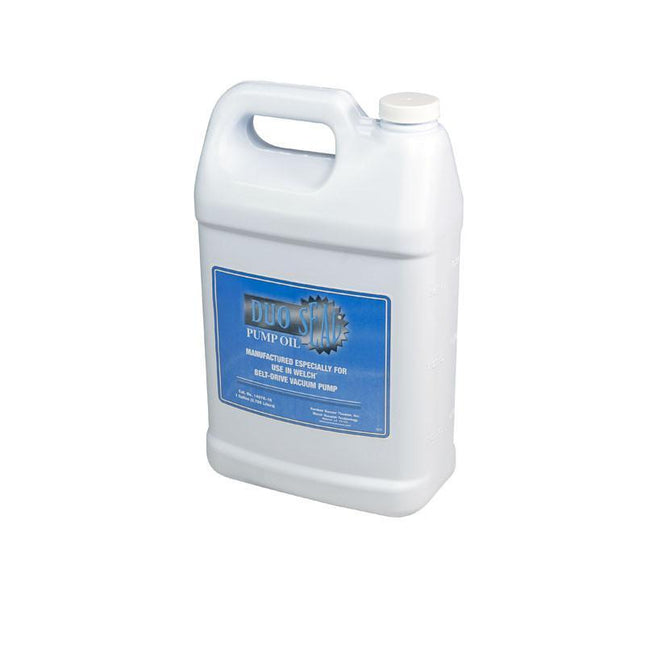
  • Welch DuoSeal Vacuum Pump Oil, Gallon 1407K-15

    Welch Vacuum - Gardner Denver Welch DuoSeal Vacuum Pump Oil, Gallon 1407K-15

    Welch DuoSeal Vacuum Pump Oil, Gallon 1407K-15 ***Note: This item has a possible 1-2 week lead time depending on stock availability*** Welch fractionated oil for DuoSeal belt-driven pumps to ensure the highest vacuum performance. DuoSeal Oil performs to rigid standards for vapor pressure, vacuum level stability, and viscosity -the lubrication that helps enable renowned DuoSeal pump durability.

    $148.30

  • Huber SilOil M60.115/200.05, Heat transfer fluid -60 to 200 °C

    Huber Huber SilOil M60.115/200.05, Heat transfer fluid -60 to 200 °C

    Huber SilOil M60.115/200.05, Heat transfer fluid -60 to 200 °C *7.5% Huber Tariff Fee Added at Checkout* SilOil M60.115/200.05 is a low-viscosity silicone fluid which, as a result of its special property profile, is particularly suitable for use as a cold and heat transfer medium in cryostats, thermostats and heat transfer installations.   SilOil M60.115/200.05 can be used in the range from -60 °C to 115 °C (for open systems) and to 200 °C in externally sealed systems (Unistats). It should be borne in mind that, at high temperatures, SilOil M60.115/200.05 can be chemically altered by oxidising media, such as air, or substances with a catalytic effect, such as acids, lyes and various metal compounds. An increase in viscosity, and possibly even gelling of the fluid owing to crosslinking reactions, must be expected in the presence of oxidising agents, while contact with products having a catalytic effect usually induces a process of depolymerisation, resulting in a drop in viscosity Advantages: virtually insolubile in water non-corrosive low setting points and vapour pressures high flash points low toxicit odourless no coking tendency under thermal stress high thermal stability resistance to ageing chlorine free   Safety Data Sheet   Heat transfer fluid M60.115/200.05 Working temperature °C 60 to 115/200 open/closed systems: -60°C…115°C Unistats (only closed): -60°C…200°C Material: silicon oil Viscosity at 25°C: 5 mm²/s Colour colourless, clear Material incompatibility Silicone rubber

    $1,264.09 - $2,259.83

  • CGA 326 Nitrous Oxide Tank Regulator CGA 326 Nitrous Oxide Tank Regulator

    CGA 326 Nitrous Oxide Tank Regulator

    This tank regulator will control the rate of fluid or gas flow using a butterfly valve.  Our BVV butterfly valve is rated to 1000 psi, and is made of 304 stainless steel and features a PTFE valve seat making it compatible with N2O.  The output will connect to a 1/4" barb for tubing.  (seen here BVV 1/4" Tubing). 

    $197.73

  • Duratherm XLT-2 Thermal Fluid Duratherm XLT-2 Thermal Fluid

    Duratherm Duratherm XLT-2 Thermal Fluid

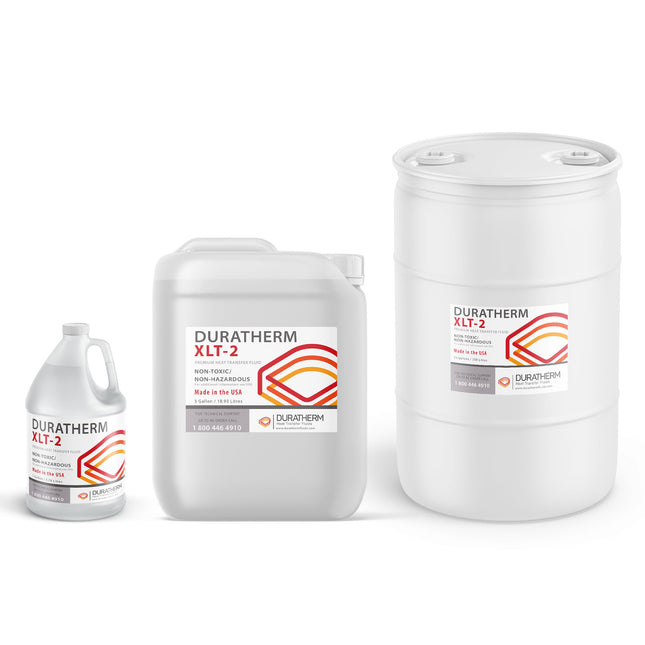
    DURATHERM XLT-2 Engineered for long-term operation in heat transfer applications requiring precise temperature control ranging from -84°C (-120°F) up to 177°C (350°F). Ideal for near-cryogenic applications Duratherm XLT-2’s economical cost and wide operating temperature also makes it well-suited for heating and cooling applications found in the food processing, pharmaceutical, chemical and botanical extraction industries. Maximum temperature: 177ºC/350°F Minimum temperature: -84ºC/-120°F Flash point 63ºC/145°F Extreme low-temperature capabilities Stable and non-corrosive Properties remain consistent over temperature range Includes free fluid analysis and tech support Standard Metric TEMPERATURE RATINGS Max Bulk/Use Temp 177°C Max Film Temp. 204°C Pour Point ASTM D97 -90°C SAFETY DATA Flash Point ASTM D92 63°C Fire Point ASTM D92 70°C Autoignition ASTM E-659-78 275°C THERMAL PROPERTIES Thermal Expansion Coefficient Thermal Conductivity W/m·K -40°C 0.119 -18°C 0.116 38°C 0.107 Heat Capacity kJ/kg·K -40°C 1.863 -18°C 1.947 38°C 2.169 PHYSICAL PROPERTIES Viscosity ASTM D445 cSt -40°C 8.68 -18°C 3.78 Density ASTM D1298 kg/l -40°C 0.81 -18°C 0.80 38°C 0.76 Vapor Pressure ASTM D2879 kPa -40°C 0.00 -18°C 0.00 38°C 0.22 Distillation Range ASTM D2887 10% -18°C 90% -18°C Note: The values quoted in the table above are typical of normal production.They do not constitute a specification.

    $105.93 - $2,754.17

  • Ultra Clear L - Granular High Performance Bentonite for Bleaching & Decolorizing Edible Oils Ultra Clear L - Granular High Performance Bentonite for Bleaching & Decolorizing Edible Oils

    Ultra Clear L - Granular High Performance Bentonite for Bleaching & Decolorizing Edible Oils

    Ultra:Clear® L 8/16 Mesh Made in USA, Food Grade Certified Ultra-Clear® L effectively removes color bodies, surfactants, water, free fatty acids, organic oxides, and other polar contaminants from a wide range of oils, liquids, and waxes.  It is the Largest particle size in the Ultra-Clear product line. UltraClear® L is a unique, naturally occurring attapulgite that has been thermally processed to provide hard, durable granules that won’t swell or breakdown in the presence of water.  All Ultra-Clear products are classified as processing aids andhave Generally Recognized As Safe (GRAS) status from theFood and Drug Administration (FDA). At BVV™ we recommend 200g per lb. of biomass.  We also use this media with layering techniques & can be used with BVV™ Silica Gel and BVV™ Neutral Activated Alumina for a sugar in the oven finish!   Ultra-Clear® is manufactured in 4 granule sizes, 8/16, 16/30, 30/60 & 60/90 mesh sizes.  See the technical data sheet for more information from the manufacturer.  Ultra:Clear® L Food Grade Certificate Ultra:Clear® L Technical Data Sheet Ultra:Clear® L Safety Data Sheet    

    $21.19 - $3,036.64

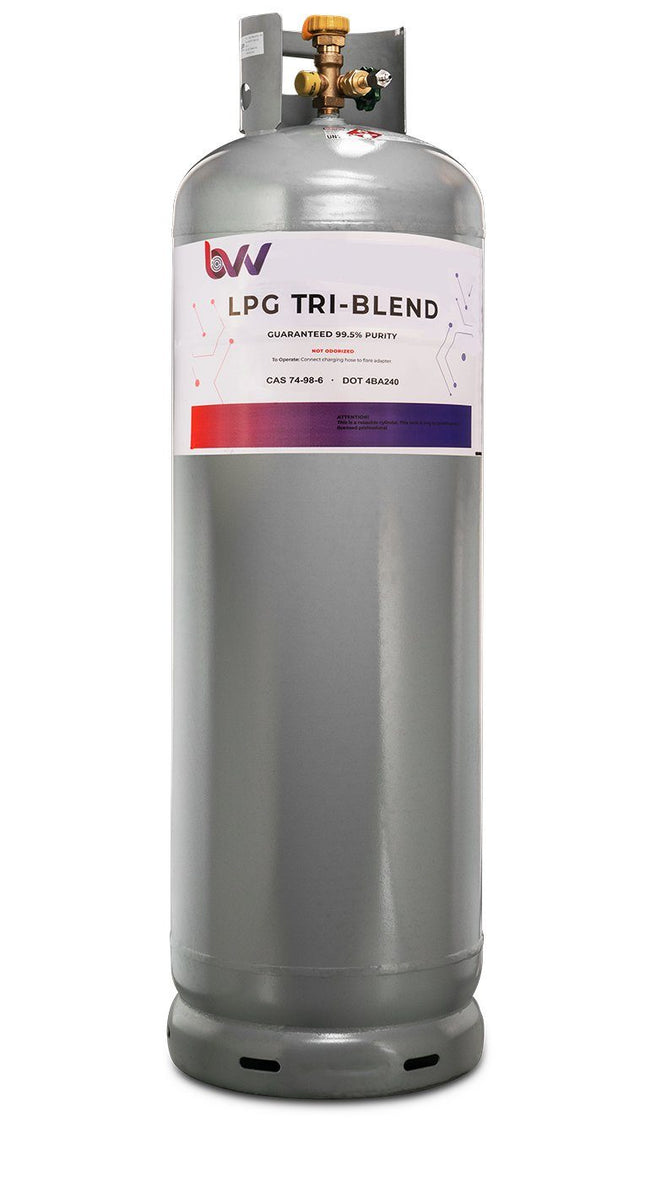
  • Half Ton - High Purity USA 50/25/25% N-Butane/Iso-Butane/Propane TRI-Blend - 99.5% Guaranteed

    Half Ton - High Purity USA 50/25/25% N-Butane/Iso-Butane/Propane TRI-Blend - 99.5% Guaranteed

    Half Ton - High Purity USA 50/25/25% N-Butane/Iso-Butane/Propane TRI-Blend - 99.5% Guaranteed DISCLAIMER(S): This unit is intended for LEGAL purposes only, to be used in accordance with local laws and ordinances. Use only in WELL VENTILATED AREAS! Notice: This item will ship via Freight ONLY. This tank requires a CGA 510 fitting - Sold Separately BVV™ always recommends distillation of every solvent before use. *Actual liquid weight is 482LB California now prohibits the retail sale of any Non-Odorized butane in quantities larger than 150ml. If you are not a retail purchaser you can call in to place an order. Permitted Sales Include the Following: Medical Collectives or Cooperatives operating under CA Health & Safety Code Section 11362.775 Persons licensed to perform volatile solvent extraction activity under CA Bus & Prof Code Division 10 Manufacturers, wholesalers, resellers, or retailers solely for the purpose of resale High purity 50/25/25% N-Butane/Iso-Butane/Propane TRI-Blend is USA sourced, and guaranteed to be 99.5% pure. This instrument grade solvent helps to produce a higher quality extract by reducing mystery oils and contaminants. Solvent comes in a DOT refillable LP tank with liquid withdrawal valve (Diptube). This product is clean, colorless and odorless. *Actual liquid weight is 482LB Due to FAA regulations, solvent tanks cannot be safely transported via means other than ground. Any order that has solvent will not be shipped in an expedited fashion. If an order with solvent is combined with any other items and chosen to be expedited, that entire order will ship via UPS Ground/Freight. We will not split up any orders and ship them separately. If a customer is wanting to expedite specific items and order solvent, 2 separate orders (1 for the solvent and 1 for the expedited items) will need to be placed in order to do so. Solvents do not ship to Hawaii, Puerto Rico, or any other US Territory outside of the contiguous 48 States. Shipping Solvent to Alaska may ONLY ship via freight and will be required to travel through Canada. We have this policy in place to ensure safety when transporting solvents, and to prevent any issue with shipping times for our customers. Chemical Formula: C₄H₁₀ + C3H8 Molecular Weight: 58.12 g/mol & 44.10 g/mol CAS Registry Number: 106-97-8 & 74-98-6 & 75-28-5 Appearance Colorless Odor: Faint Petroleum Density N/A Boiling Point: N/A Solubility in water: Low Solubility  GHS Pictograms: GHS Signal Word: Danger GHS Hazard Statements: H220, H280 GHS Precautionary Statements P210, P377, P381, P403, P410+P403 UN Identification Number: 1965 Proper Shipping Name: Hydrocarbon Gas Mixture, liquefied, n.o.s. Transport Hazard Class: 2.1 Packing Group: None DOT Placard:   Tri-Blend Certificate of Conformance (COC) and Certificates of Analysis (COA's)  Tri-Blend Safety Data Sheet (SDS)

    $4,378.42

  • Half Ton - High Purity USA 70/30% N-Butane/Propane Blend - 99.5% Guaranteed

    Half Ton - High Purity USA 70/30% N-Butane/Propane Blend - 99.5% Guaranteed

    Half Ton - High Purity USA 70/30% N-Butane/Propane Blend - 99.5% Guaranteed DISCLAIMER(S): This unit is intended for LEGAL purposes only, to be used in accordance with local laws and ordinances. Use only in WELL VENTILATED AREAS! Notice: This item will ship via Freight ONLY. This tank requires a CGA 510 fitting - Sold Separately BVV™ always recommends distillation of every solvent before use. *Actual liquid weight is 483LB California now prohibits the retail sale of any Non-Odorized butane in quantities larger than 150ml. If you are not a retail purchaser you can call in to place an order. Permitted Sales Include the Following: Medical Collectives or Cooperatives operating under CA Health & Safety Code Section 11362.775 Persons licensed to perform volatile solvent extraction activity under CA Bus & Prof Code Division 10 Manufacturers, wholesalers, resellers, or retailers solely for the purpose of resale High purity 70/30% N-Butane/Propane is USA sourced, and guaranteed to be 99.5% pure. This instrument grade solvent helps to produce a higher quality extract by reducing mystery oils and contaminants. Solvent comes in a DOT refillable LP tank with liquid withdrawal valve (Diptube). This product is clean, colorless and odorless. *Actual liquid weight is 483LB Due to FAA regulations, solvent tanks cannot be safely transported via means other than ground. Any order that has solvent will not be shipped in an expedited fashion. If an order with solvent is combined with any other items and chosen to be expedited, that entire order will ship via UPS Ground/Freight. We will not split up any orders and ship them separately. If a customer is wanting to expedite specific items and order solvent, 2 separate orders (1 for the solvent and 1 for the expedited items) will need to be placed in order to do so. Solvents do not ship to Hawaii, Puerto Rico, or any other US Territory outside of the contiguous 48 States. Shipping Solvent to Alaska may ONLY ship via freight and will be required to travel through Canada. We have this policy in place to ensure safety when transporting solvents, and to prevent any issue with shipping times for our customers. Chemical Formula: C₄H₁₀ + C3H8 Molecular Weight: 58.12 g/mol & 44.10 g/mol CAS Registry Number: 106-97-8 & 74-98-6 Appearance Colorless Odor: Faint Petroleum Density N/A Boiling Point: N/A Solubility in water: Low Solubility  GHS Pictograms: GHS Signal Word: Danger GHS Hazard Statements: H220, H280 GHS Precautionary Statements P210, P377, P381, P403, P410+P403 UN Identification Number: 1965 Proper Shipping Name: Hydrocarbon Gas Mixture, (Butane/Propane) liquefied, n.o.s. Transport Hazard Class: 2.1 Packing Group: None DOT Placard:   Dual Blend Certificate of Analysis (COA) Dual Blend Safety Data Sheet (SDS)

    $4,378.42

  • Sale -27% AFS Empty 2.5" CRC Botanical Extraction Filter Cup AFS Empty 2.5" CRC Botanical Extraction Filter Cup

    $21.17 $15.54

  • CHEMTEK Granular Activated Alumina

    ChemTek CHEMTEK Granular Activated Alumina

    Granular activated alumina is neutral pH adsorbent used to remove moisture, free fatty acids, and phospholipids to speed up crystallization and to improve the end products’ oxidative stability.

    $105.93 - $1,129.91

  • Huber SilOil M80.055.03, Heat transfer fluid -80 to 55 °C

    Huber Huber SilOil M80.055.03, Heat transfer fluid -80 to 55 °C

    Huber SilOil M80.055.03, Heat transfer fluid -80 to 55 °C *7.5% Huber Tariff Fee Added at Checkout* SilOil M80.055.03 is a low-viscosity silicone fluid which, as a result of its special property profile, is particularly suitable for use as a cold and heat transfer medium in cryostats, thermostats and heat transfer installations. The fluid can be used in the range from -80  °C to 55  °C. It should be borne in mind that, at high temperatures, SilOil M80.055.03 can be chemically altered by oxidising media, such as air, or substances with a catalytic effect, such as acids, lyes and various metal compounds. An increase in viscosity, and possibly even gelling of the fluid owing to crosslinking reactions, must be expected in the presence of oxidising agents, while contact with products having a catalytic effect usually induces a process of depolymerisation, resulting in a drop in viscosity   Advantages: virtually insolubile in water non-corrosive low setting points and vapour pressures high flash points low toxicity odourless no coking tendency under thermal stress high thermal stability resistance to ageing chlorine free   Safety Data Sheet      Heat transfer fluid M80.055.03 Working temperature °C -80 to 55 open/closed systems: -80°C…55°C Material: silicon oil Viscosity at 25°C: 3 mm²/s Colour colourless, clear Material incompatibility Silicone rubber

    $1,362.96 - $2,358.70

  • CHEMTEK Alumina 150

    ChemTek CHEMTEK Alumina 150

    Alumina 150 is a neutral pH adsorbent used to remove moisture, free fatty acids, and phospholipids to speed up crystallization and to improve the end products’ oxidative stability. Alumina 150 SDS

    $42.37 - $1,412.39

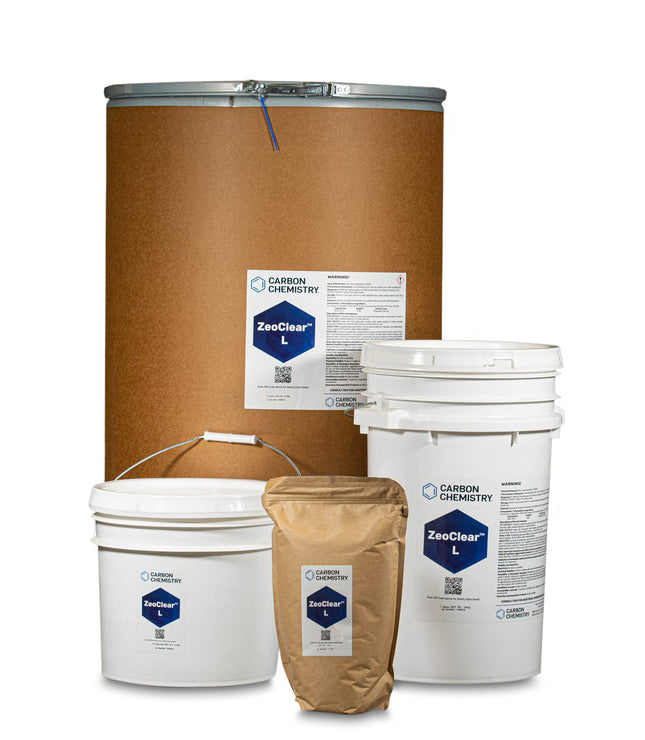
  • Carbon Chemistry ZeoClear™ L Carbon Chemistry ZeoClear™ L

    Carbon Chemistry LTD Carbon Chemistry APG Granular (ZeoClear L)

    Carbon Chemistry APG Granular (ZeoClear L) An acidic powder media designed for powerful polar adsorption and separation processes. This finely-milled activated alumina provides superior removal of basic compounds and color bodies, making it ideal for precise purification and filtration applications. Its optimized acidic surface chemistry enhances control in separations of basic compounds and targeted impurity removal.   Download SDS 

    $56.50 - $10,169.23

  • CHEMTEK W4 Pesticide Remdiation Bleaching Clay CHEMTEK W4 Pesticide Remdiation Bleaching Clay

    ChemTek CHEMTEK W4 Pesticide Remediation Bleaching Clay

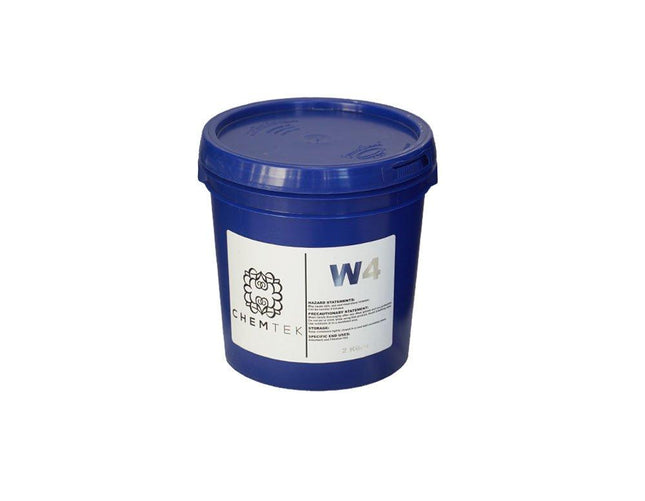
    CHEMTEK W4 Pesticide Remediation Bleaching Clay W4 is an alkaline bleaching clay specialized for the removal of pesticides, chlorophyll, free fatty acids, and oxidized compounds. It removes pesticides through adsorption and hydrolysis. Pesticides undergo alkaline hydrolysis, in which a pH greater than 7 causes chemical degradation of certain pesticides in the presence of ions. W4 SDS W4 Technical Data Sheet  

    $70.62 - $3,177.88

  • Inland FF-10 Flushing Fluid Inland FF-10 Flushing Fluid

    Inland Vacuum Inland FF-10 Flushing Fluid

    Inland FF-10 Flushing Fluid Inland FF-10 is a solvent free hydrocarbon flushing fluid designed to be used as part of a preventive maintenance program. Periodic use of FF-10 will enable the user to remove contaminants and particulates from within all areas of the pump without the worry of contaminating the pump with an expensive solvent Specifications FF-10 Vapor Pressure at 25ºC (torr) 2x10⁻⁴ Viscosity at 40ºC (cSt) 28 Viscosity at 100ºC (cSt) 4.5 Flash Point (ºC) 199 Fire Point (ºC) 221 Density at 25ºC (g/ml) 0.85   Inland FF-10 Flushing Fluid Safety Data Sheet SDS

    $19.77 - $1,440.64

  • Media Bros CRY™ MEDIUM FLOW Media Bros CRY™ MEDIUM FLOW

    Media Bros Media Bros CRY™ MEDIUM FLOW

    CRY™ MEDIUM FLOW (CRY-M™) FILTER MEDIA FOR BHO EXTRACTION (NON-REACTIVE) This medium flow non-reactive variant of CRY allows operators to increase operating pressures and surface area for a more fine-tuned process. PH 7   DESCRIPTION   CRY™ Medium Flow (CRY-M™) is a finer version of CRY™ designed for systems operating at slightly higher PSIs that still need non-reactive high flow outputs and a little extra selectivity. It is not quite powder, but a much finer grain than CRY. The smaller granule size helps prevent channeling that can sometimes occur at higher PSIs. We recommend CRY-M™ for operators who want the same effect as CRY™ but are running at higher pressures or systems with size limitations. For extracts that require additional remediation beyond CRX-M™, CRY-M™ offers a superior polish, effectively addressing color, fats, and lipids. Opt for CRY-M when aiming for effortlessly reproducible results with older biomass. Suggested use: 150–250g per lb. of biomass Packaged in: 1.5 kg pouch, 5 gallon bucket, and 100 kg drum                                             TECHNICAL SPECS Solvent Type Hydrocarbon Color Remediation Level Moderately Heavy/High Pesticide Remediation Level Medium Selectivity/Polarity Level Moderately Selective/Medium Polarity Heavy Metal Remediation Yes Moisture Remediation Level Moderate Fats/Lipids/Waxes Level Medium Crystal Growth Fast Depth Filtration No Flow Rate Moderate Flow pH Level Neutral (pH 7) Best For Slightly Aged Biomass, Medium Quality Suitable for Reruns Yes Distillation Clean-up Moderate Scrub   SDS

    $42.37 - $2,259.83

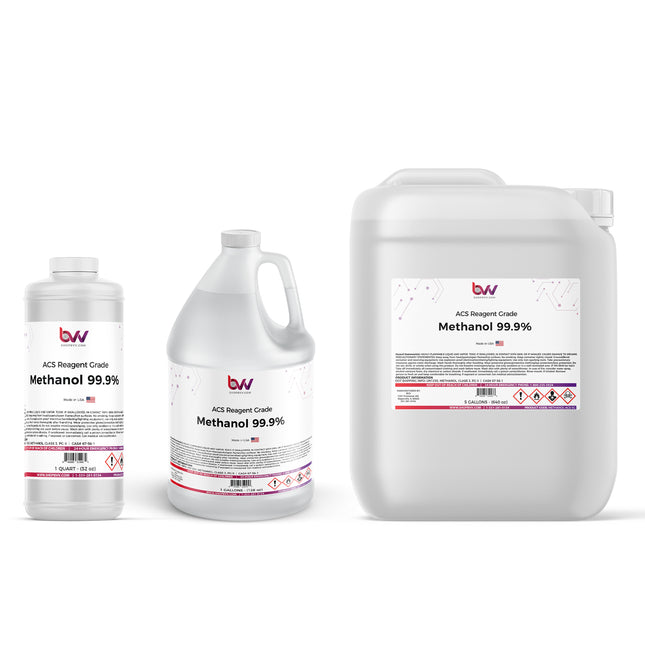
  • Methanol 99.9% ACS Grade Methanol 99.9% ACS Grade

    Methanol 99.9% ACS Grade

    Methanol 99.9% ACS Grade  BVV™ High ACS Reagent Grade Methanol is the highest grade. ACS Reagent stands out for its exceptional purity and meets the strictest standards used by the American Chemical Society (ACS).   This is an excellent solvent for uses in laboratory and analytical applications.   Methanol ACS Reagent Grade meets rigorous ACS specifications, ensuring reliability and reproducibility in analytical and research applications. Methanol is a high purity solvent used to manufacture botanical solutions and is easily evaporated.  Methanol is used in research and testing laboratories for phytochemical study, phytochemical analysis and chemical synthesis. Methanol is used to prepare methanol/water/acetic acid mixtures, and is completely soluble in water.  Chemical Formula: CH3OH Molecular Weight: 32.042 g·mol−1 CAS Registry Number: 67-56-1 Appearance Colorless Liquid Odor: Faint and similar to ethanol Density 0.792 g/cm3 Boiling Point: 64.7 °C /148.5 °F Solubility in water: Completely Soluble GHS Pictograms: GHS Signal Word: Danger GHS Hazard Statements: H225, H301, H302, H305, H311, H331, H370 GHS Precautionary Statements P210, P233, P235, P240, P241, P242, P243, P260, P264, P270, P271, P280, P301+P330+P331, P302+P352, P303+P361+P353, P304+P340, P305+P351+P338, P307+P311, P310, P311, P312, P337+P313, P361, P363, P370+P378, P403+P233, P405, P501 UN Identification Number: 1230 Proper Shipping Name: Methanol Transport Hazard Class: 3 Packing Group: II DOT Placard: What Is Methanol? Methanol, also known as methyl alcohol or wood alcohol, is a type of alcohol with the chemical formula CH3OH. It is the simplest alcohol, consisting of a methyl group (CH3) linked to a hydroxyl group (OH). Methanol is a colorless, flammable liquid with a slightly sweet odor. It is commonly used as an industrial solvent, antifreeze, fuel, and as a feedstock in the production of chemicals, plastics, and synthetic materials. Methanol can be synthesized from various sources, including natural gas, carbon monoxide, and biomass. It is considered a hazardous substance due to its toxicity when ingested, inhaled, or absorbed through the skin. Methanol is also used as an industrial and laboratory solvent and as a fuel in some types of racing cars and model engines. One important thing to note is that methanol is highly toxic when consumed, and even small amounts can be lethal. It should never be ingested, and safety precautions should be taken when handling this substance. What Is Methanol Used For? Methanol is used for a wide range of industrial, commercial, and laboratory applications. Some of its common uses include: Fuel: Methanol is used as an alternative fuel in some types of vehicles, particularly racing cars and model engines. It is also used in the production of biodiesel and as a fuel additive. Solvent: Methanol is a versatile solvent that can dissolve a variety of substances, making it useful in industries such as paint, varnish, and ink production. It is also used as a cleaning agent in laboratories and industrial settings. Antifreeze: Methanol is an essential component of some antifreeze formulations, where it helps prevent the freezing of engine coolant in cold temperatures. Chemical Intermediate: Methanol serves as a key building block in the production of various chemicals and materials, including formaldehyde, acetic acid, methyl methacrylate (used in plastics and coatings), and more. Fuel Cell Feedstock: Methanol can be used as a feedstock for the production of hydrogen, which can be used in fuel cells for electricity generation and other applications. Preservative: In the pharmaceutical and personal care industries, methanol is used as a preservative in some products. Denaturant: Methanol is added to industrial ethanol to make it unfit for consumption (denatured). This ensures that the ethanol cannot be used for drinking purposes and is used for industrial applications. Laboratory Reagent: Methanol is commonly used in laboratories as a reagent and solvent for various chemical experiments and analyses. Extraction: It is used in some extraction processes, such as the extraction of essential oils from plants. Energy Storage: Methanol is being explored as a potential energy carrier for energy storage and transportation, particularly in the form of methanol fuel cells. It's important to note that methanol is toxic to humans and should be handled with care. Ingesting or inhaling methanol vapors can be extremely dangerous and potentially fatal. Proper safety precautions and handling procedures are necessary when working with methanol. What Is The Structure of Methanol? Methanol, also known as methyl alcohol, has a simple chemical structure. Its molecular formula is CH3OH, which represents one carbon (C) atom, four hydrogen (H) atoms, and one oxygen (O) atom bonded together. Here's the structural formula of methanol: In this structure: The central carbon atom (C) is bonded to three hydrogen atoms (H) and one oxygen atom (O). The oxygen atom is bonded to the carbon atom through a single covalent bond (C-O). The remaining three hydrogen atoms are bonded to the carbon atom, completing its four covalent bonds. Methanol is a polar molecule due to the electronegativity difference between oxygen and hydrogen atoms, which results in a partial positive charge on the hydrogen atoms and a partial negative charge on the oxygen atom. This polarity gives methanol its unique chemical properties and makes it a versatile solvent in various applications. What are the Hazards of Methanol? Methanol, while commonly used in various industrial and laboratory applications, poses several hazards, primarily due to its toxic and flammable nature. Here are some of the hazards associated with methanol: Toxicity: Methanol is highly toxic to humans when ingested, inhaled, or absorbed through the skin. The toxic effects are primarily due to its metabolites, formaldehyde, and formic acid. Methanol poisoning can lead to symptoms such as headache, dizziness, nausea, vomiting, abdominal pain, and in severe cases, it can cause blindness, organ failure, and death. Flammability: Methanol is flammable and can form explosive mixtures in the air when its vapor concentration is within certain limits. It has a relatively low flashpoint, making it susceptible to ignition by heat, sparks, or open flames. Proper storage and handling precautions are essential to prevent fire hazards. Irritant: Methanol can be irritating to the eyes, skin, and respiratory tract. Contact with methanol vapor or liquid can lead to skin irritation, redness, and chemical burns. Inhaling methanol vapor can irritate the respiratory system and cause coughing and throat irritation. Environmental Impact: Methanol is harmful to the environment. Spills or releases of methanol can contaminate soil and water, posing a risk to aquatic life and ecosystems. It is important to handle and dispose of methanol responsibly to minimize its environmental impact. Incompatibility: Methanol should not be stored or transported in containers or systems that have previously held incompatible materials, as it can react with some substances and form hazardous compounds. Cumulative Exposure: Prolonged or repeated exposure to methanol vapor or mist over time can result in cumulative health effects, particularly on the central nervous system and the optic nerve. Ingestion Risk: Methanol has a sweet taste and is sometimes mistaken for ethanol (the alcohol found in alcoholic beverages). Accidental ingestion of methanol can occur, especially if it is stored in containers that are not clearly labeled. To safely handle methanol and mitigate these hazards, it is crucial to follow strict safety protocols, use appropriate personal protective equipment (PPE), store methanol in well-ventilated areas away from open flames, and provide proper training to personnel working with methanol. Emergency response plans and first-aid measures for methanol exposure should also be in place in case of accidents or spills. How Do I Use Methanol Safely? Using methanol safely is essential due to its toxic and flammable nature. Whether you're working with methanol in a laboratory, industrial setting, or other applications, here are some guidelines for safe handling: Personal Protective Equipment (PPE): Always wear appropriate PPE, including safety goggles, chemical-resistant gloves, a lab coat or chemical-resistant apron, and closed-toe shoes. Consider additional protective gear, such as a face shield, when handling large quantities or performing high-risk operations. Storage: Store methanol in well-ventilated areas away from heat sources, open flames, and direct sunlight. Use containers made of materials compatible with methanol, such as glass or approved plastic containers. Label containers clearly with the contents. Ensure proper labeling and hazard signage in storage areas. Handling: Handle methanol in a fume hood or well-ventilated workspace to minimize inhalation exposure. Do not use methanol near open flames, sparks, or heat sources. Avoid skin contact; wear gloves and lab coats to prevent skin exposure. Use a face shield or safety goggles to protect your eyes. Spill Response: Have spill kits and absorbent materials (e.g., spill pads, spill pillows) available for immediate use. In the event of a spill, ventilate the area, and contain the spill to prevent it from spreading. Wear appropriate PPE when cleaning up spills. Follow your workplace's spill response procedures and dispose of contaminated materials properly. Storage and Dispensing: Use safety containers designed for methanol when dispensing or transferring the liquid. Never use glassware or containers that have been used for other chemicals without thorough cleaning. Ensure proper grounding and bonding when transferring methanol to prevent static electricity buildup. Inhalation Exposure: Minimize inhalation exposure by working in a well-ventilated area or under a fume hood. If you suspect inhalation exposure, move to an area with fresh air and seek medical attention if symptoms persist. Ingestion Prevention: Do not eat, drink, or smoke in areas where methanol is handled. Avoid using containers or equipment that may be contaminated with methanol for food or beverage storage. Fire Safety: Methanol is flammable; keep it away from open flames, sparks, and heat sources. Use explosion-proof electrical equipment in areas where methanol vapors may be present. Emergency Response: Familiarize yourself with the location of safety showers, eyewash stations, fire extinguishers, and emergency exits. Know the location of first-aid supplies and procedures for methanol exposure. Training and Education: Ensure that personnel handling methanol are properly trained in its safe handling, storage, and emergency response procedures. Waste Disposal: Dispose of methanol waste in accordance with local, state, and federal regulations for hazardous waste disposal. Always follow your workplace's safety protocols and consult with safety officers or supervisors for specific safety procedures related to methanol handling in your environment. Regular safety training and awareness are essential to prevent accidents and protect your health when working with methanol. Methanol ACS (Reagent Grade) Safety Data Sheet SDS Methanol ACS (Reagent Grade) Certificate of Analysis COA

    $28.25 - $847.44

  • CDA 12A w/ Toluene High Purity Extraction Solvent CDA 12A w/ Toluene High Purity Extraction Solvent

    CDA 12A w/ Toluene High Purity Extraction Solvent

    CDA 12A w/ Toluene HAZMAT ITEMS ARE NON-REFUNDABLE. ALL SALES ARE FINAL (Note: Container style and color may vary) BVV's Ultra High Purity Toluene Denatured Ethanol (CDA 12A) is distinguished by its exceptional purity, Our CDA 12A formulation combines 95% Food Grade/USP/ACS 200 Proof Ethanol, derived from corn, with ~5% high-purity Toluene. Adhering to stringent industry standards, ensuring it meets the precise requirements of our customers, our Ultra High Purity Toluene Denatured Ethanol excels across diverse applications widely adopted as an effective botanical extraction solvent. Being that our Ultra High Purity Denatured Ethanol is made unfit for consumption when denatured with Toluene it is not subject to the Federal Excise Tax on alcohol saving you a huge cost without compromising on it suitability for top-tier extractions.  Primarily utilized as pure ethanol in extraction processes, this solvent is favored for its cost-effectiveness and extraction efficiency.  Reduce manufacturing costs and increase extraction efficiency with BVV's Ultra High Purity Toluene Denatured Ethanol. Disclaimer: Prices may vary due to market value and for orders of 4 totes or more and a tanker there could be up to a 2 week lead time. Call in for more accurate lead times. Key Features: Significantly Reduced Cost due to the absence of Federal Tax Produces Exceptional Quality Extractions Leaves No Residuals or Tastes Evaporates Completely in a Rotary Evaporator Vapor Pressure: 40.9mmHg at 20°C UN Number 1170 Density: 0.7905g/cm³ Specific Gravity 0.7905 Flash Point: 13.9°C (57°F) Boiling Point: 78.5°C (173°F) Melting Point: -90.0°C (-130°F) Chemical Formula: Ethanol C2H6OToluene  C7H8 CAS#(s) Ethanol 64-17-5Toluene  108-88-3 Molecular Weight: 72.1057 Appearance Colorless Liquid Odor: Mint or acetone-like Density  0.7905g/cm³ Boiling Point: 78.5c/173.3F Solubility in water: Miscible GHS Pictograms: GHS Signal Word: Danger GHS Hazard Statements: H225, H319 GHS Precautionary Statements P210, P233, P240, P241, P242, P243, P261, P264, P271, P280, P303+P361+P353, P304+P340, P305+P351+P338, P312, P337+P313, P370+P378, P403+P233, P403+P235, P405, P501 UN Identification Number: 1987 Proper Shipping Name: Alcohols Transport Hazard Class: 3 Packing Group: I DOT Placard: What is Denatured Ethanol? Denatured ethanol, also known as denatured alcohol, is ethanol (ethyl alcohol) that has been rendered unfit for human consumption by the addition of denaturants. Denaturants are typically chemicals that make the ethanol taste bad or have toxic effects, and they are added to discourage people from drinking the substance. The denaturation process is done to avoid the high taxes and regulations associated with beverage alcohol, as denatured ethanol is intended for industrial, pharmaceutical, or cosmetic uses rather than for consumption. Common denaturants include toluene, heptane, methanol, isopropyl alcohol, acetone, and other chemicals. Denatured ethanol is widely used in various industries, such as in the production of paints, solvents, cleaning products, and as a fuel for alcohol burners. Why is Ethanol Denatured? Ethanol is denatured, or rendered undrinkable, for several reasons: Tax Purposes: Denaturing ethanol allows for the imposition of lower taxes on industrial or non-beverage alcohol compared to potable alcohol. Governments often place higher excise taxes on alcohol intended for human consumption. Regulatory Compliance: Denaturing ethanol is a regulatory requirement to discourage the illegal diversion of tax-free industrial alcohol for beverage use. The addition of denaturants makes it unpalatable and unsafe for consumption. Public Safety: Making ethanol undrinkable helps prevent accidental or intentional ingestion of industrial alcohol, which can be toxic. Denaturing agents are chosen to deter people from attempting to use denatured alcohol as a substitute for beverage alcohol. Industrial Use: Denatured ethanol is widely used in various industries, including pharmaceuticals, cosmetics, and manufacturing. It serves as a solvent, fuel, or raw material in these applications. Common denaturants include substances like heptane, toluene, methanol, isopropanol, and various chemicals that make the alcohol unsuitable for human consumption while maintaining its usability in industrial processes. The specific denaturing formulations, such as CDA 12-A mentioned earlier, are defined by regulatory agencies to ensure compliance with safety and tax regulations. What is denatured ethanol used for? Denatured ethanol is used for various industrial and commercial purposes where the alcohol is needed for its properties but should not be consumed. Here are some common applications: Industrial Solvent: Denatured ethanol is widely used as a solvent in industries such as pharmaceuticals, cosmetics, and manufacturing. It is effective in dissolving a variety of substances. Cleaning Agent: Due to its solvent properties, denatured ethanol is used as a cleaning agent for surfaces, equipment, and machinery in industrial and commercial settings. Fuel Additive: Denatured ethanol is sometimes used as a fuel additive, especially in the blending of gasoline. It can improve combustion efficiency and reduce emissions. Paint and Coating Industry: It is used as a solvent in the formulation of paints, varnishes, and coatings. Pharmaceuticals: Denatured ethanol is used in the pharmaceutical industry for various purposes, including the extraction of medicinal compounds. Laboratory Use: In laboratories, denatured ethanol is often used for tasks like sterilization and as a solvent for experiments. Inks and Dyes: It is employed in the production of inks and dyes due to its ability to dissolve pigments. Adhesives and Sealants: Denatured ethanol is used in the formulation of adhesives and sealants. Window Cleaning: It is used in commercial window cleaning solutions. Automotive Industry: In the automotive industry, denatured ethanol is used for cleaning and degreasing. What can be used to denature ethanol? Here are examples of common Completely Denatured Alcohol (CDA) formulations used to denature ethanol: CDA 12-A  To every 100 gallons of alcohol, add either: Five gallons of n-heptane or 5 gallons of toluene. CDA-19  To every 100 gallons of ethyl alcohol (not less than 160 proof), add: 4.0 gallons of either methyl isobutyl ketone, mixed isomers of nitro propane, or methyln-butyl ketone 1.0 gallon of either kerosene, deodorized kerosene, gasoline, unleaded gasoline, rubber hydrocarbon solvent, or heptane. CDA-20 To every 100 gallons of ethyl alcohol (not less than 195 proof), add a total of: 2.0 gallons of either unleaded gasoline, rubber hydrocarbon solvent, kerosene, or deodorized kerosene, or any combination of these. What does CDA mean? Completely Denatured Alcohol (CDA) is a type of denatured alcohol that has been rendered unfit for human consumption by the addition of denaturing agents. Denatured alcohol is ethanol (ethyl alcohol) that has been intentionally adulterated to make it toxic, foul-tasting, or otherwise undrinkable. This denaturing process is done to exempt the alcohol from excise duty and other taxes, as it's not intended for use in beverages. The denaturing agents used in CDA can vary, but they often include chemicals such as methanol, isopropanol, or other substances that make the alcohol unpalatable and potentially harmful if ingested. The specific formulation of denatured alcohol may be regulated by government authorities to ensure it meets safety standards and legal requirements. CDA is commonly used in industrial applications, as a solvent, fuel, or as a cleaning agent. It's important to note that due to the addition of denaturing agents, CDA should not be used for purposes that involve contact with the human body or ingestion. Safety precautions, including proper ventilation, should be followed when working with denatured alcohol. What is CDA 12A? CDA 12-A is a formulation specified by the Alcohol and Tobacco Tax and Trade Bureau (TTB) for Completely Denatured Alcohol (CDA). The formula is defined under §21.26 as Formula No. 12-A. The composition of CDA 12-A is as follows: For every 100 gallons of alcohol, add either: 5 gallons of n-heptane or 5 gallons of toluene. This denaturing process renders the ethanol unfit for consumption while meeting regulatory requirements for various industrial applications. CDA formulations, including CDA 12-A, are used to denature ethanol for purposes such as industrial solvents, cleaning agents, and manufacturing processes. Can you remove Toluene from CDA 12A? When toluene is added to ethanol it creates an azeotrope between the ethanol and n-heptane. An azeotrope is defined as a mixture of two liquids that have a constant boiling point and composition through distillation. This azeotrope results in the ethanol and n-heptane evaporating at the same temperature, making it extremely difficult to separate the two through distillation. While these azeotropic solvents are still easily recovered from a botanical extract at a relatively low boiling point around 78C/173F using a rotary evaporator or falling film evaporator, it is near impossible to separate the two via distillation. What is an Azeotrope? An azeotrope is a mixture characterized by having identical concentrations in both its vapor and liquid phases. This stands in contrast to ideal solutions, where one component is usually more volatile than the other, allowing for separation through distillation. When an azeotrope forms, the concentrations in both phases remain the same, hindering separation through traditional distillation methods. Azeotropes consist of a blend of at least two different liquids, and this mixture can exhibit either a higher or lower boiling point than either of its individual components. Azeotropes become relevant when certain liquid fractions resist alteration through distillation processes. In typical mixtures, components can be extracted using Fractional Distillation, a process involving repeated distillation stages. The more volatile component vaporizes and is collected separately, while the less volatile component remains in the distillation container, resulting in two distinct, pure solutions.

    $14.12 - $282.48

  • Superfine Agar Powder for Mushrooms Mycology Petri Dishes Superfine Agar Powder for Mushrooms Mycology Petri Dishes

    Superfine Agar Powder for Mushrooms Mycology Petri Dishes

    Superfine Agar Powder Bacteriological, Food Grade, USP-NF Our Agar Powder is extracted from Red Seaweed.  Our agar is a complex polysaccharide and is a top choice for mycology cultures. This superfine agar dissolves quickly and has a high gel strength making it an excellent choice for a variety of applications an petri dishes.  Gel Strength (1.5%) : 1020 gm/cm²   Gel Temperature: 38-40°C (100-104°F) CAS# 9002-18-0 Gluten Free Allergen Free Vegan & Vegetarian approved Non-GMO Shelf Life: 2 years pH: 5.5-8.5  Superfine Agar Powder Certificate of Analysis Directions for Use: Mix 10g of superfine agar powder per 500ml of distilled water. Boil and stir until powder is fully dissolved. Sterilize the mixture for 45min @15psi 250°F (121°C) in a pressure cooker or autoclave. Allow mixture to cool to approximately 140°F (60°C) *To avoid excessive condensation. Fill dishes with 15ml of mixture, approximately ~30-35 dishes.

    $29.66 - $211.86

  • Julabo C2 Thermal Bath Fluid - 10 Liters

    Julabo Julabo C2 Thermal Bath Fluid - 10 Liters

    Julabo C2 Thermal Bath Fluid JULABO Thermal bath fluids are ideally suited for all of your temperature control applications and guarantee safe and reliable operation. Choosing the proper bath fluid is critical for best results in temperature control. Viscosity, oxidation characteristics and heat transfer of Thermal fluids are specifically matched with each JULABO temperature control unit.   C2 Thermal Bath Fluid Product Data Sheet C2 Thermal Bath Fluid SDS     JULABO Thermal bath fluids have been carefully selected and are optimized for maximum performance with JULABO instruments. Benefits Low toxicity Low viscosity High stability Minimum odor Good heat conductivity Low corrosion tendency Wide temperature ranges   Technical Data Order no. 10 liters 8891400 Working temperature (°C) -90...+60 Flash point (°C) > +75 Fire point (°C) > +430 Viscosity (kinematic at 20 °C in mm²/s) 2 Density (at 20 °C in g/cm³) 0.873 Pour point (°C) -120 Boiling point (°C) 229 Ignition temperature (°C) 430 Color clear

    $2,355.87

  • 30% Food Grade Distilled White Vinegar (Acetic Acid) - Non GMO 30% Food Grade Distilled White Vinegar (Acetic Acid) - Non GMO

    30% Food Grade Distilled White Vinegar (Acetic Acid) - Non GMO

    30% Distilled White Vinegar Food Grade - Kosher - Non GMO This is 300 grain White Distilled Vinegar.  This vinegar is the result of the natural acetous fermentation of dilute ethyl alcohol from agricultural origin. The alcohol is converted to acetic acid by the microorganism Acetobacter aceti in vinegar generators or acetators. The product is prepared in accordance with the best commercial practice under strict sanitary conditions and the Federal guidelines for Good Manufacturing Practices. It is free of clarifiers, preservatives or other impurities and is Kosher certified.  Ships in HDPE FDA Compliant Bottles.  Chemical Formula: CH3COOH Molecular Weight: 60.05 g/mol CAS Registry Number: 64-19-7 Appearance Colorless Liquid Odor: Vinegar Density 1.01 to 1.04 (water = 1) Boiling Point: 215F @ 760 mm Hg and 100 grain Solubility in water: Completely Soluble GHS Pictograms:    GHS Signal Word: Warning GHS Hazard Statements: H320, H315, H332, H402 GHS Precautionary Statements P261, P264, P280, P304+P340,P305+P351+P338, P273 UN Identification Number: 2790 Proper Shipping Name: Acetic Acid Solution Transport Hazard Class: 8 Packing Group: III DOT Placard: 30% Vinegar Food Grade - Certificate of Analysis (COA) 30% Vinegar Safety Data Sheet (SDS)

    $25.42 - $1,285.28


You have seen 144 out of 181 products

High Purity Solvents, Ultra Refined Gases, Premium Filter Media

Our Chemicals collection features only the highest-grade materials for your processing and extraction needs. Choose from a wide range of high purity solvents formulated specifically for botanical extraction, ensuring clean, repeatable results. Our ultra refined gases, including high-purity butane and propane, meet stringent purity standards for safe, compliant processing.

To refine your extracts further, we offer premium filter media designed to enhance clarity, remove impurities, and fine-tune the final product. We're your trusted source for the essential supplies that keep your lab running clean, efficient, and compliant.

Login

Forgot your password?

Don't have an account yet?
Create account