Chapter 1: Intro to Botanical Extraction & Refinement
,
by Avery Benitez
45 min reading time
INTRODUCTION TO BOTANICAL EXTRACTION
Botanicalextraction is a fascinating process used widely to create some of the modern products used daily. From medicine to cleaning agents, powerful botanical compounds can be extracted from a wide variety of different plants. In this section, we will introduce the different methods ofsolvent-based botanicalextraction along with some of the most common post-processingmethods of refinement used to createbotanical extracts.
Currently, there are several popularized methods of botanicalextraction in today'sextraction landscape, all of which have their own use cases and unique benefits. Most botanicalextraction methods can be categorized into two different methodologies, eithersolvent-basedextraction or solventless-basedextraction. Asolvent-based botanicalextraction method utilizes organicsolvents to dissolve target compounds from thebiomass material. Among thesolvent-basedextraction methods,hydrocarbonsandethanolare the most commonly used for botanicalextraction and will be the focus of this course.
Hydrocarbon extractionis a widely used botanicalextraction method that utilizes lighthydrocarbon solvents likebutaneandpropane to extract botanical compounds.Hydrocarbon extraction is preferred by many botanicalextractorsdue to its high yields and lowsolvent recovery temperatures. These highly versatileextraction solvents lend themselves to producing a high purity botanical concentrate with little to nopost-processing.Hydrocarbons are a classification of organic compounds made from carbon and hydrogen. Thesehydrocarbons are formed due to the compression of animal and plant remains over long periods and are pulled from porous rocks where they pool and concentrate. These alkane molecules have an even distribution of electrons, making themnonpolar and well suited for extractingnonpolar botanical compounds.
The most commonly usedhydrocarbons for botanicalextraction includebutaneandpropane. Thesehydrocarbons can be utilized on their own to perform botanicalextraction, or they can be combined into a blend ofhydrocarbon solvents and utilized to extract afull spectrumof botanical compounds frombiomass material. Typicallya blend of n-butane, Isobutane, andpropaneis utilized to create anextraction solvent with greater affinity to extract a wider variety of compounds found within thebiomass material resulting in a more full-spectrum extract.
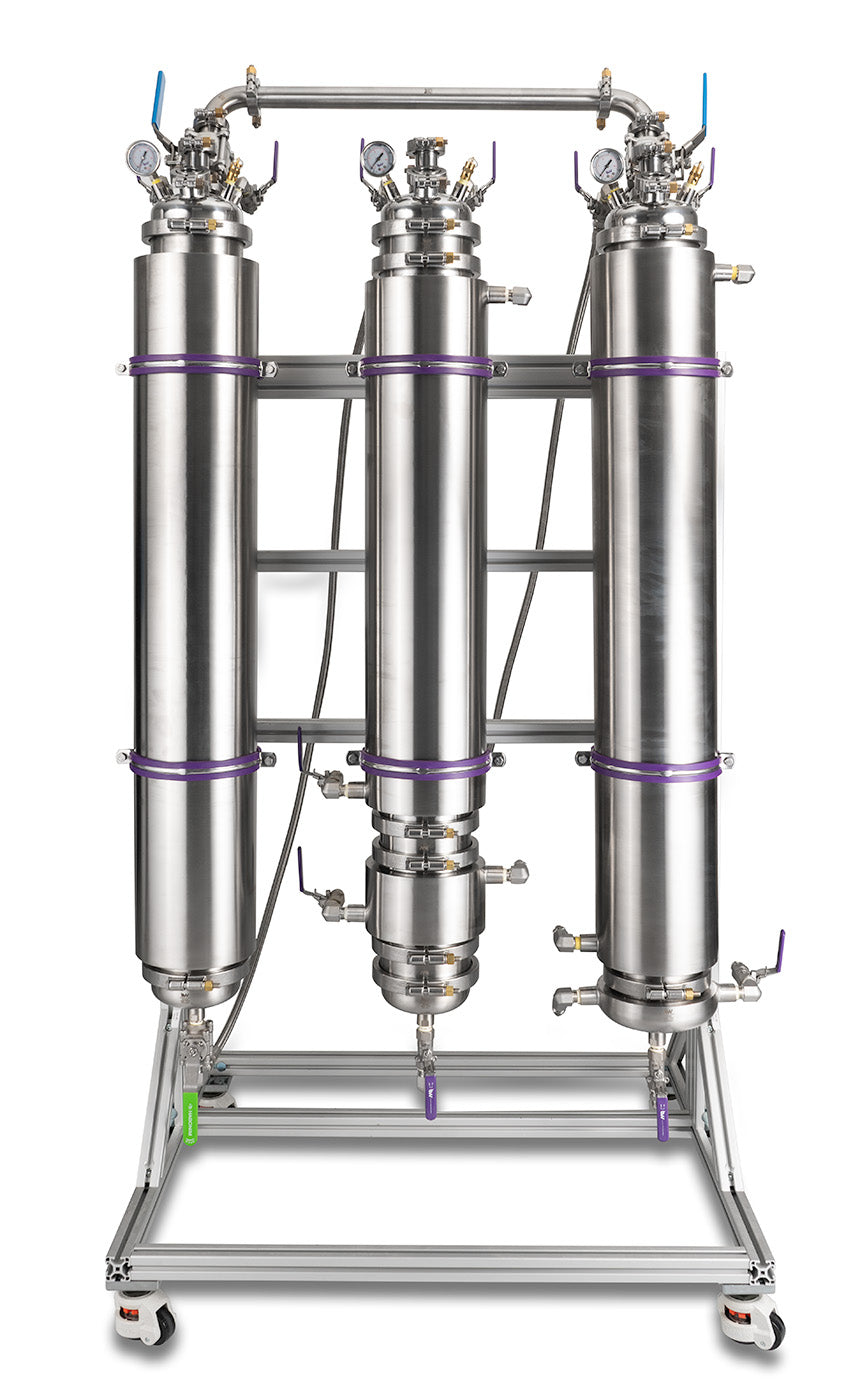
20LB High Purity N-Butane By BVV
Bothbutaneandpropaneare class 1 group D flammable liquifiedgasesthat the Food and Drug Administration (FDA) have generally recognized as safe (GRAS). These lighthydrocarbons aregaseousat room temperature and ambient pressure, where they are denser than air and tend to pool near the floor. When pressurized or placed under reduced temperature, they become liquified and can be utilized to extractnonpolar botanical compounds frombiomass material.
Hydrocarbons are the preferredextraction solvent of manyextractors looking to preserve highly volatile aromatic compounds due to their lowboiling point-1C/30.2F forbutaneand -42C/-43.6F forpropane. Since thesesolvents boil off at a lower temperature than most aromatic compounds, they can be recovered with minimal heat preserving more aromatic compounds in comparison to other highboiling pointextraction solventslikeethanol. While butaneandpropane's lowboiling points lend themselves to volatile compound preservation, it also makeshydrocarbons highly volatile and more hazardous to work with, requiring greater safety requirements.
Althoughbutaneis generally recognized as safe by the FDA and can be consumed by humans in trace amounts, utilizing these highly volatile and flammablehydrocarbons as organicsolvents under extreme temperatures and pressures can be dangerous. While it is highly unlikely thathydrocarbon extraction will result in an explosion when performed properly, when utilizing these highly flammablegases, there is always an inherent potential for ignition. For this reason, any and all potential sources of heat or flame should be kept far away from areas in whichhydrocarbon gasesare present. To further mitigate the potential for ignition,hydrocarbon solventextractionshould be performed inside a C1D1 explosion-proof enclosurewith high air exchange rates and all the proper safety and protective equipment.
ETHANOL EXTRACTION
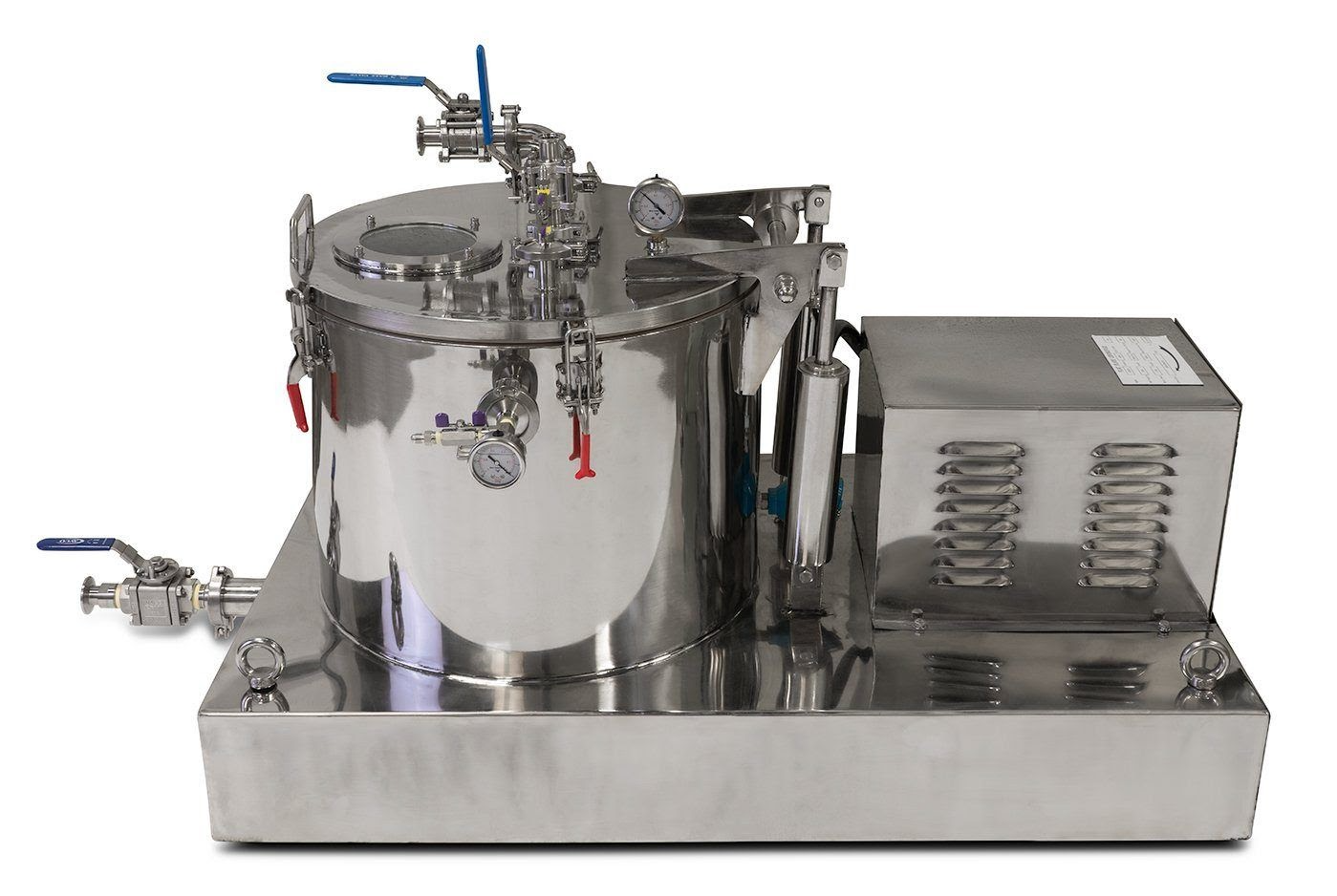
45L Jacketed Stainless Steel centrifuge By BVV
Ethanolextraction is an excellent method of botanicalextraction valued for its high throughput potential and reduced flammability compared to more volatilesolvent-basedextraction methods likehydrocarbon extraction.Ethanol is classified as alcohol made from starch-based plant materials through a complex fermentation anddistillation process.Ethanol (EtOH), commonly known as ethyl alcohol or grain alcohol, is a colorless flammable liquid with an incredible number of uses beyond botanicalextraction, including fuel and a cleaning agent.
As anextraction solvent,ethanol is unique due to its amphiphilic nature, meaning it has bothpolarandnonpolar properties.Ethanol has a hydrotropicpolar head (water-loving) that can bind to water-soluble compounds, and anonpolar tail that can dissolve hydrophobic or oil-soluble compounds typically found in botanicalbiomass. As the plant matter issaturated withethanol, it dissolves bothpolar andnonpolar compounds from thebiomass material, extracting them.Ethanol's amphiphilic nature can be ideal when seeking to create a full-spectrum product, but it can be less than ideal for those looking to create a more concentrated extract.
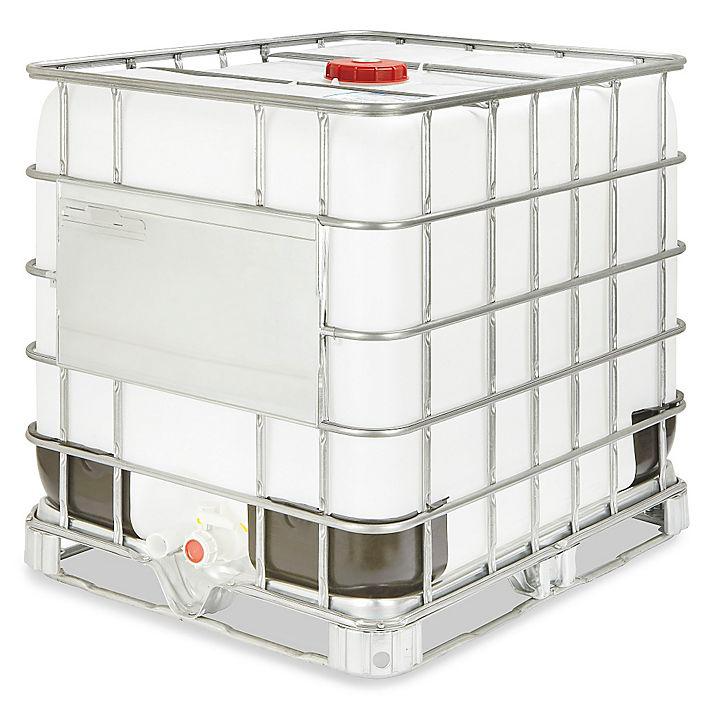
270 Gallon Tote of 200 Proof Food & Lab Grade Corn-based Ethanol By BVV
Due toethanols'polar andnonpolar nature, it has an increased propensity to co-extract undesirable plant waxes andchlorophyll during theextraction process. This typically results in a less pure end product requiring morepost-processingto reach high levels of purity. Whileethanol’s selectivityfor undesirable plant waxes andchlorophyll can be altered by chilling theethanolprior toextraction, reducing thesolubility of undesirable plant waxes and color pigments, it results in reducedsolubility of target compounds as well.
Beyond itspolarity,ethanol has a highsaturation capacity and only requires a shortretention timeto dissolve target compounds lending itself to short runtimes and high throughput potential.Ethanol is particularly well suited for bulk processing, with available systems that can extract thousands of pounds ofbiomass within a single working shift. This makesethanol a great option for those makingbotanical extracts at larger scales.
INTRODUCTION TO POST-PROCESSING METHODS
During the botanicalextractionprocess, it is common that some undesirable plant compounds will be co-extracted alongside the target compounds. These compounds typically include plant waxes, fats, lipids, and color compounds, includingchlorophyll, anthocyanins, and flavonoids. The co-extraction of these undesirable compounds produces an extract that is typically lower in the concentration of target compounds and visually unappealing.
Luckily severalpost-processingprocedures can remove these undesirable compounds and create a highly refined and purebotanical extract. These processes after the initialextraction are classified aspost-processingmethods. Typically to produce a high-quality refinedbotanical extractfromsolvent-basedextraction methods, mostcrudebotanical extracts will be refined by removing excess undesirables throughwinterization and color remediation,purgingof residualsolvent from theextraction process, thedevolatilization anddistillation of the extract, and finally, the isolation of target compounds from the refineddistillate. These individual processes encompass the entirety ofbotanical extractrefinement and will be covered in depth in the post-processingchapters of this course.
WINTERIZATION
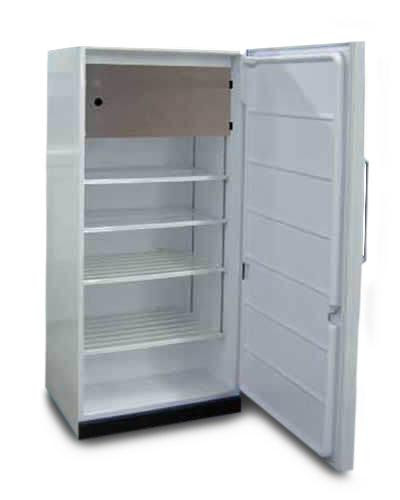
Explosion Proof Dual Temp Freezer By So-Low
Winterization is a widely used refinement technique to remove plant waxes, fats, andlipids from abotanical extract.Winterization is often seen as a requiredpost-processingprocedure for mostsolvent-basedextractions as these plantlipids are typically dissolved to some extent during asolvent-basedextraction. While the pickup of plant waxes can be limited by altering the temperature andsaturation time of the initialextraction, it is commonly unavoidable to co-extract a small amount of these compounds during asolvent-basedextraction. The process of removing these plant waxes from abotanical extractis most efficiently performed throughwinterization.Winterization creates a more refinedbotanical extractresulting in greater purity and transparency.
Winterization utilizes the principle ofsolubility to precipitate plant fats, waxes, andlipids from abotanical extractsolution. In order to performwinterization first, abotanical extractwill need to be dissolved in asolvent that the plant waxes aresoluble in when heated but have lowsolubility in that samesolvent when chilled. This difference in plant waxsolubility at high and low temperatures allows us to completely dissolve the plant waxes into thesolution at high temperatures and precipitate the plant waxes from thesolution at low temperatures. Once the fats andlipidshave consolidated, they are cold-filtered, removing fats, waxes,lipids from crude oilbefore further refinement. When this process is complete, the result is a refined extract referred to as a winterized extract.
COLOR REMEDIATION
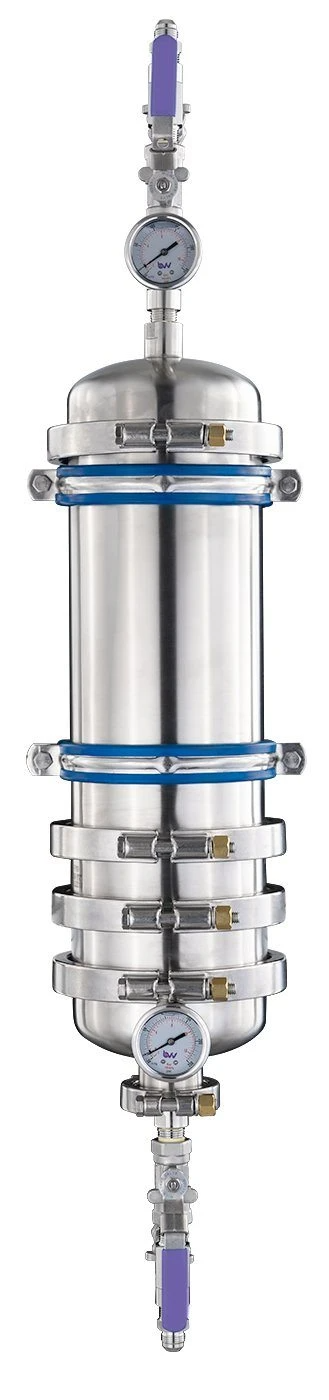
6" Color Remediation Column By BVV
Color remediation is a powerful refinement process that is most commonly achieved through inline adsorbent filtration. Adsorbent filtration involves the use of adsorbent media to separate the compounds of a chemical mixture based on the interaction of theadsorbate with the adsorbent. In this case, theadsorbates are the color compounds being adsorbed, and the adsorbent is the filtration media adsorbing the color compounds.Adsorption is not to be confused withabsorption, which is when fluid is dissolved by or permeates a liquid or solid.Adsorption refers to the adhesion of atoms, ions, or molecules from agas, liquid, or dissolved solid to a surface.
In this process, anonpolar botanical extractsolution passes through a bed of adsorbent filtration media. Depending on the type of media used, certain compounds are adsorbed from thesolution. Theadsorption process creates a film of theadsorbateon the surface of the adsorbent, holding theadsorbate back while allowing the rest of thesolution to flow through the media. Adsorbents are generally porous in nature, with a high surface area to adsorb substances to their surface. Color remediation greatly increases the purity of the resulting botanicalextraction, providing a visually more appealing and purebotanical extract.
SOLVENT RECOVERY
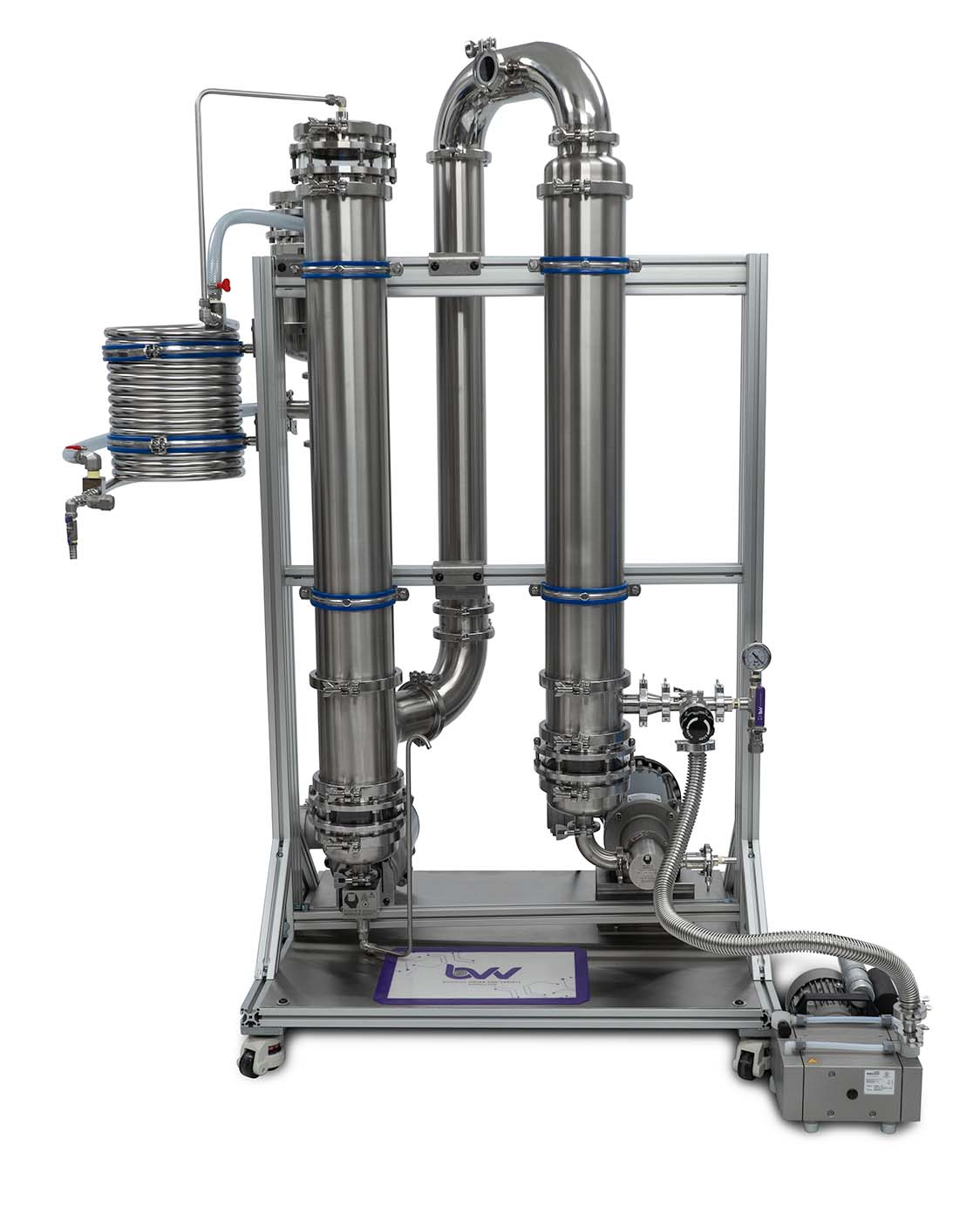
Falling Film EvaporatorBy BVV
After an initialsolvent-basedextraction and optional refinement procedures, the process ofsolvent recovery is necessary to removesolvent from thebotanical extractsolution.Solventrecovery is by far the most crucial step in creating anysolvent-extracted botanical product. Failure to properly recover anextraction solvent from abotanical extractcan result in an extract unsafe for consumption. For this reason, the process ofsolvent recovery should always be performed extensively and validated by a third-party testing lab to ensure no detectable levels of thesolvent remain within the finished extract.
Evaporation is the basic principle behind thesolventrecovery process. Heat must be applied to trigger theevaporative process from a botanical extract.Evaporation occurs when a compound, in this case, thesolvent within abotanical extract, is heated to itsboiling point. Once sufficient heat is applied during this process, thebotanical extractsolution will be observed to boil as thesolventevaporates from the botanical extractsolution. Once thesolvent has beenevaporated from thesolution, it is typically recondensed back into a liquid separate from thebotanical extractallowing thesolventto be reused in most cases.
The process of removingsolvent from abotanical extractcan be performed in a variety of different apparatuses ranging from a simpledistillation mantle and boiling flasks to more complexrotary evaporatorsand falling film evaporators. Regardless of the apparatus, thesolventrecovery process is most efficiently performed by applying both heat andvacuum. When asolvent recovery apparatus is pulled undervacuum, it reduces the ambient pressure within the vessel, reducing the amount of pressure a compound must overcome toevaporate. By applyingvacuum to thesolvent recovery procedure, the resistance toevaporation can be greatly reduced, drastically increasing the overall efficiency of the process. This course will cover the most common forms ofsolvent recovery for a botanical extract,rotary evaporation, andvacuum purging utilizing avacuum oven.
ROTARY EVAPORATION
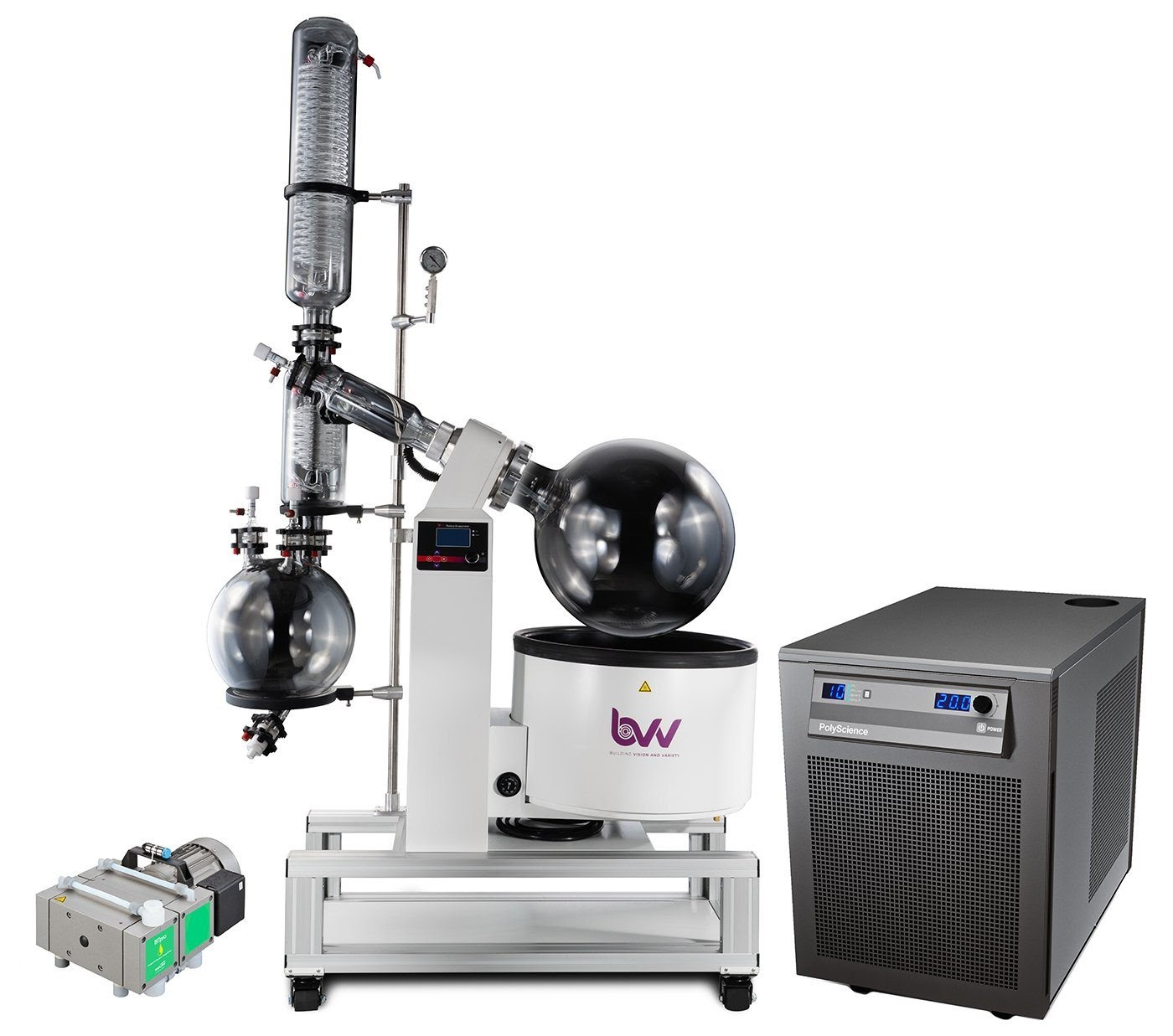
50L NeocisionRotary EvaporatorTurnkey System By BVV
Rotary evaporators are effectivesolvent recovery apparatuses that apply basic principles ofvacuum distillation to recoversolventfrom abotanical extract.Rotary Evaporatorsare used to distillsolvents frombotanical extractsolutions with preciseevaporation. Rotary evaporatorsare especially useful when separating organic compounds fromethanol or any other nonvolatile lowboiling pointsolvents.Rotary evaporatorsprovide increased efficiency over standard mantle-basedvacuum distillation apparatuses due to the constant rotation of the boiling flask as it is partially submerged in the heated bath. The constant rotation of the boiling flask creates a thin layer of thesolution over the inner surface while evenly heating the outside surface of the boiling flask resulting in increasedevaporation rates compared to standard mantle-baseddistillation apparatuses.
VACUUM PURGING
1.9CF NeocisionVacuum Oven By BVV
Vacuum purging is an essentialpost-processingprocedure that removes the residualsolvent from the botanicalextraction process.Vacuum purging is typically performed as the finalpost-processingstep for abotanical extractto remove any residualsolvent remaining in the concentrate.Vacuumpurging is most effectively achieved utilizing avacuum oven.Vacuum ovens are vessels specifically designed to operate under reduced pressure orvacuum and apply sufficient heat to fully recoversolvent from abotanical extract.Vacuum ovens apply the same basic principles ofvacuum distillation toevaporate residualsolvent remaining in abotanical extract.
Bothsolvent recovery &vacuum purging are essential in creating abotanical extractfree of residualsolvent. When it comes tosolvent recovery, you should always aim to remove any or all thesolvent from theextraction process to non-detectable levels. An extract should never be assumed to be free of residualsolvent. An independent third-party testing lab should always validate each batch to ensure a botanical is free of residualsolvent. If the testing results show there are still detectable levels ofsolvent remaining in the extract, thesolvent recovery orvacuumpurging process should be continued at a slightly higher temperature or a longer duration until testing confirms the extract is free of residualsolvent.
DEVOLATILIZATION
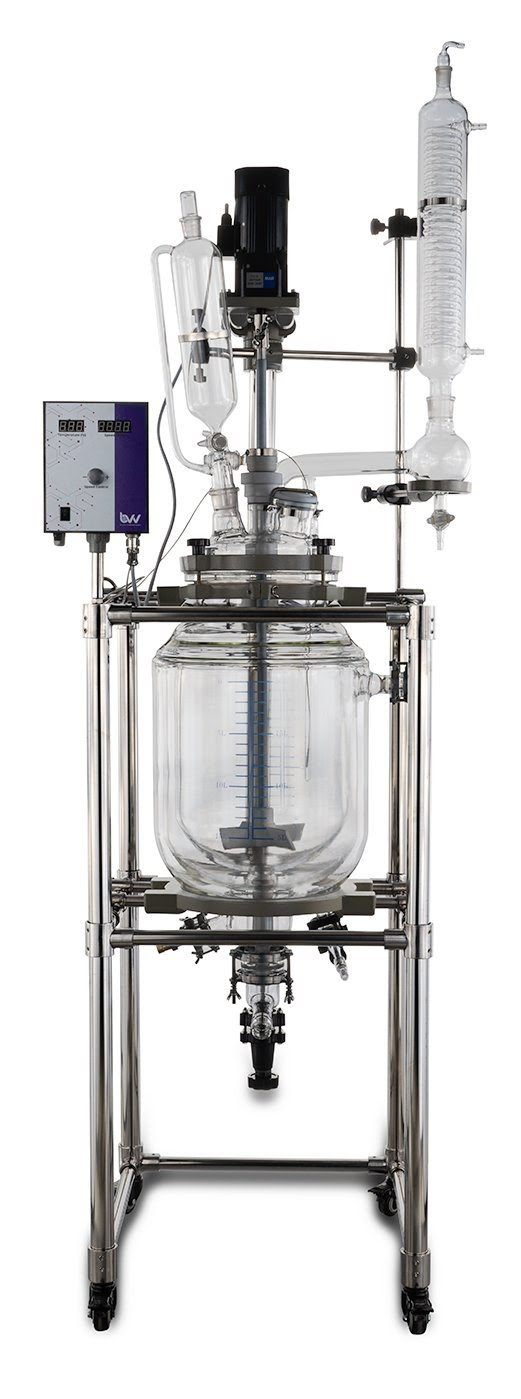
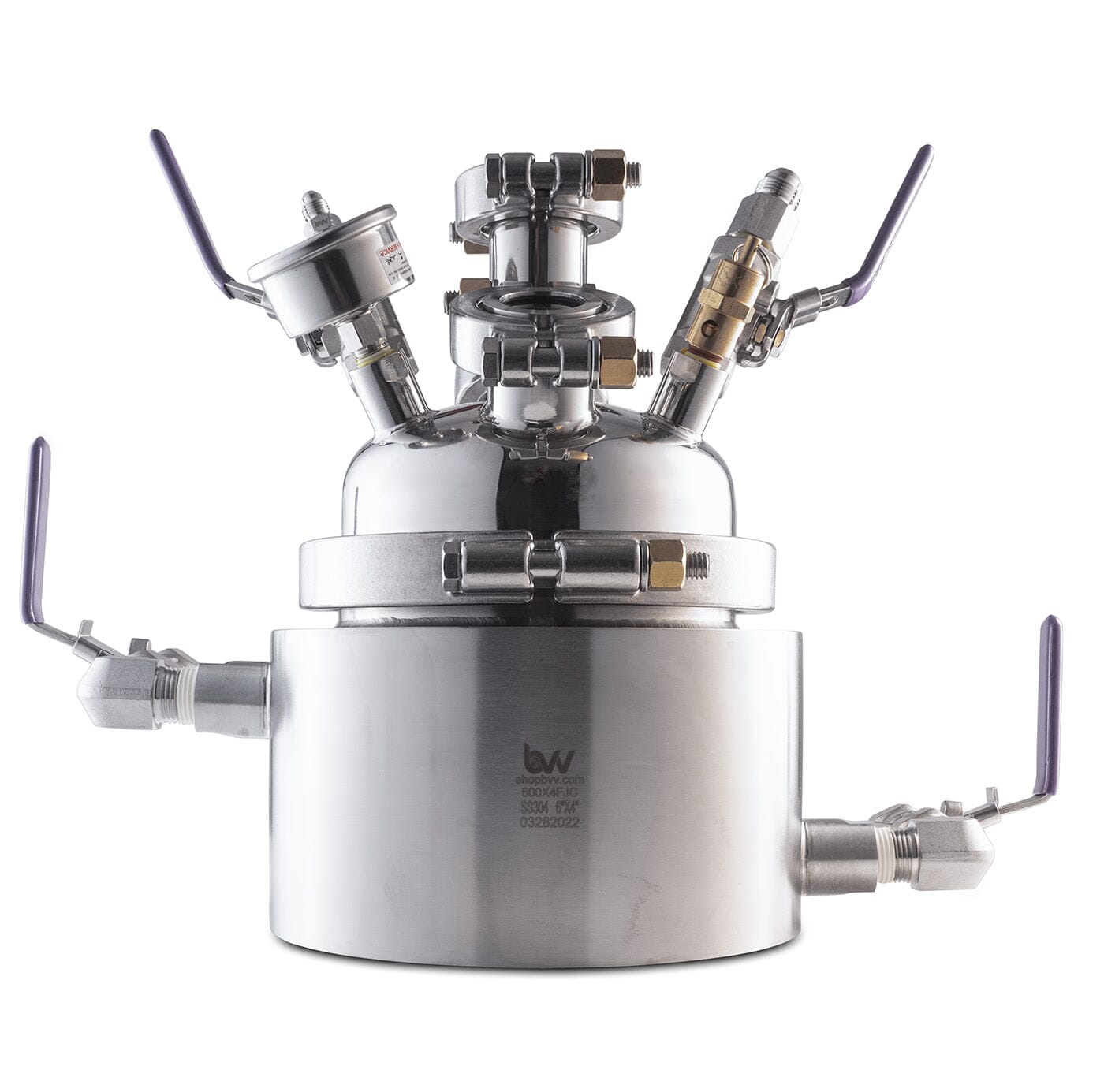
20L Double Jacket GlassReactor By BVV
Devolatilization is often defined as the removal of volatile compounds within a substance. This is often necessary to further refine abotanical extractviadistillation.Devolatilization is anevaporative process that drives volatiles from abotanical extractwhen heat is applied. Typically this is a separate process performed beforedistillation to ensure the protection and performance of mechanical systems duringdistillation.
One of the more common forms ofdevolatilizationof abotanical extractisdecarboxylation.Decarboxylation is a chemical reaction that removes a carboxyl group from an organic compound releasing carbon dioxide. Typicallydecarboxylation is performed to remove loosely bonded carboxylic acids from the atomic chain of a botanical compound, converting it into a more stable, easily distilled form.Decarboxylation is commonly used to convert acidic phytocannabinoids into their non-acidic active forms byevaporating the loosely bonded carboxyl group from the compound, releasing CO2.Decarboxylation of phytocannabinoids should always be performed beforedistillation as the release of CO2 negatively affectsvacuum pump performance.
Devolatilization as a process is used to remove volatile compounds from a botanical extract, convert compounds into a more distillable form, and ensure an extract is effectivelypurged of residualsolvent prior to performingdistillation. When abotanical extractis properly devolatilized, it results in a smoother, more efficientdistillation of abotanical extract.
DISTILLATION
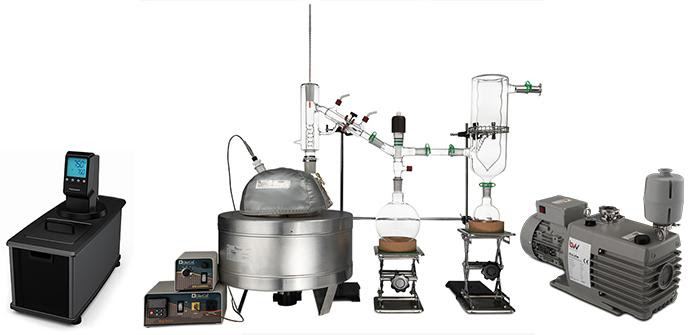
5L Neocision Short Path DistillationTurnkey Kit By BVV
Distillation is a powerful purification technique that can drastically increase the purity of abotanical extract.Distillation can be simplified as the act of purifying a liquid by using selectiveevaporation and condensation. This purification process is implemented by heating the input material until target compounds areevaporated and then pulling the resultingvapor through a chilled condenser where it is condensed back into liquid form and collected.Distillation carries excellent utility in separating compounds in a mixture when there is a significant enough difference between theirboiling points and or theirvapor pressure.
Distillation works by applying a gradual temperature increase to refinedbotanical extractwhile undervacuum toevaporate the target compounds from thecrude oil. As theboiling points of the target compounds have been reached, they areevaporated and carried viavacuum to a cooled condenser to recondense the target compounds into a separate vessel. This process ofevaporation and condensation creates an extremely pure botanical concentrate referred to asdistillate.
ISOLATION
Certified Jacketed Diamond Miner By BVV
Isolation represents the final refinement step forbotanical extractresulting in a highly refined concentrate of the target compound reaching upwards of 99% purity. While Isolation of target compounds can be achieved viafractionaldistillation or chromatography, the focus of this section will be oncrystallization as means of Isolation.Crystallization is a purification technique used to isolate crystalline compounds from asolution. This is achieved by manipulating thesolubility of the target compound when dissolved in acrystallization solvent.Crystallization is most commonly achieved through theevaporation ofsolvent or the cooling of thesolution to achievesupersaturation of the target compound within thesolution.
Crystallization utilizes the concept that different compounds have differentsolubilities within the samesolvent and that only molecules of the same crystalline compound will align into the lattice structure of the crystal formation. Duringcrystallization, impurities can only stick to the outside of the crystal lattice or remain within thesolution. In practice,crystallization of a target compound is performed by achievingsupersaturation throughevaporation of thesolvent from thesolution or cooling of asolution to reduce itssolubility to the point ofsupersaturation. When asolution becomessupersaturated, it contains more of thesolute than thesolvent can hold. Crystalline compound clusters align within thesolution resulting in a crystalline structure precipitating out of thesolution. This process of precipitating a crystalline compound out of asolution is referred to ascrystallization.
Botanical Extraction & Refinement Glossary
The following glossary compiles words and terminology used throughout this course. These definitions are meant to provide the reader a quick definition of terms without being too exhaustive. Refer back to this section if you need further clarification of a used term.
Absorption:The process or action by which one thing absorbs or is absorbed by another. Adsorption: The process by which a solid holds molecules of a gas or liquid as a thin film.
Adsorbate: A substance that is adsorbed. Azeotrope: A mixture of 2 or more liquids, which has a constant shared boiling point and vapor composition through distillation. Biomass: Generic plant matter used in extraction. Composed of flowers, leaves, and other plant parts. Boiling Point: The boiling point of a substance is the temperature at which the vapor pressure of the liquid equals or exceeds the pressure surrounding the liquid causing the liquid to vaporize, observed as boiling. Botanical Extract: An extract created from botanical biomass material.
Buchner Funnel: Laboratory equipment used for filtration. Butane: An organic compound with four-carbon atoms classified as an alkane that is used for extraction.
Centrifuge: A device that uses centrifugal force to separate various compounds within a fluid.
Chlorophyll: A green pigment, present in all green plants that absorb light energy. Closed Loop System: Extraction equipment that contains the solvent within a closed system without exposure to open-air. Crude oil: The yield from an extraction before refinement.
Crystallization: The alignment or organization of atoms or molecules into a structure known as a crystal. Decarboxylation: A reaction that removes a carboxyl group. Devolatilization: The removal of volatile contaminants from a substance. Distillate: The condensed vapor product of distillation.
Distillation: The action of purifying a liquid by a process of heating and cooling. Ethanol: An alcohol made from starch-based plant materials through a complex fermentation and distillation process. Evaporation: The process of turning a liquid into a vapor. Extraction: The process of separating compounds via force or solvents. Extractor: The person, machine, or piece of equipment used for extraction. Falling Film Evaporator: A device used to separate compounds, specifically solvents from a solution.
Filter: To pass a liquid through a device to remove unwanted material. Flashpoint: The lowest temperature at which vapors of the material will ignite when given an ignition source. Fractional Distillation: Separation of a mixture into fractions differing in boiling points. Freezer: A refrigerated compartment, cabinet, or room used for the preservation of goods in a cooled atmosphere. Full Spectrum: Containing all the compounds extracted from the original biomass. Gas: An expanded substance or matter having no fixed shape or volume. Gas Ballast: A controller that allows gas and air to be introduced into a vacuum pump.
Glassware: A variety of scientific equipment made of glass.
GRAS: Generally Recognized as Safe a designation of a substance by the Food and Drug Administration. Heptane: A nonpolar alkane hydrocarbon consisting of seven carbon atoms. Hot Plate: A Flat heated surface used for conduction. Hydrocarbon: A compound consisting of hydrogen and Carbon. Insoluble: (of a substance) incapable of being dissolved.
Isolate: A person, group, or thing that has been isolated. Keck Clip: Fastening devices used to hold ground glass joints. Lipids: Organic compounds such as epicuticular wax, fatty acids that can be removed through winterization. Micron (vacuum): A unit of measurement referring to a total absolute pressure within a vacuum. Micron (pore size): A measurement used to describe the sizes of very small objects (μm Micrometer). Miscible: Forming a homogenous mixture when added together.
Nonpolar: A molecule without positive or negative poles. Phase Change: The physical process of transition between the basic states of matter.
Polar: having electrical or magnetic polarity. Polarity: The separation of an electric charge which leads the molecule to have a positive and negative end. Post-Processing: The process of further refining extracted resin or tinctures. Propane: A three-carbon alkane used for extraction. PTFE: A synthetic fluoropolymer used for adhesion of threaded pipes or joints. Purge: The act or instance of eliminating contamination from a substance. Reactor: A glass or metal device used to mix a solution in a contained atmosphere.
Retention time: The amount of time a substance spends in contact with another substance.
Residence time: The average length of time during which a substance or an object is given in a location or condition. Rotary Evaporator: A device used for the separation of solvents from samples via evaporation through the rotation of the boiling flask. Saturation: The degree or extent to which something is dissolved or absorbed compared with the maximum possible. Saturation Limit: The maximum amount of a substance that can be dissolved within a solvent. Selectivity (solvent): The preferential dissolving of one component of a liquid or solid from a mixture than of another. Short Path Distillation: A glass apparatus used to separate compounds by boiling point by evaporation and condensation.
Soluble: (of a substance) able to be dissolved. Solubility: The ability of a given substance, the solute, to dissolve in a solvent. Solute: The minor component in a solution, dissolved in the solvent. Solution: A mixture in which the minor component is uniformly distributed into the major component to form a homogeneous mixture. Solvent: A material able to dissolve other substances. Solvent Recovery: The process of extracting useful materials from waste or by-product solvents generated during manufacturing. SOP (Standard Operating Procedure): A documented process set in place to ensure services or products are delivered consistently.
Supersaturation: Containing an amount of a substance greater than that required for saturation. Terpenes: Aromatic compounds present in most plants. Tri-Clamp: A quick-release mechanical joint for pipes, valves, or fittings in sanitary installations.
Vacuum: A space devoid of matter Vacuum Distillation: A method of distillation performed under reduced pressure. Vacuum Grease: Lubricant used on glass joints to create a vacuum-tight seal. Vacuum Oven: A heated low-pressure environment used for delicate drying processes. Vapor: A substance in the gas phase. Vapor Pressure: The pressure exerted by a vapor in thermodynamic equilibrium with its condensed phase at a given temperature in a closed system. Viscosity: The thickness of a fluid. Winterization: The process of removing the lipids from a botanical extract by cooling and filtering.
BOTANICAL EXTRACTION SAFETY
When performing botanicalextraction, safety should always be the number one concern. The key to safely performing botanicalextraction lies in handling hazards appropriately by operating within a controlled environment, wearing the proper personal protective equipment, and utilizing clearly defined operating procedures.
When dealing with flammablesolvents during the botanicalextraction and refinement process, there is always an inherent hazard level. While varying degrees of hazard are ever-present during the botanicalextraction process, when these hazards are properly managed and controlled, the botanicalextraction process can be performed with minimal risk to the operator or the surrounding areas.
During the botanicalextraction process, hazards can range from flammablesolvents, toxic chemicals, inhalation hazards, and equipment under pressure,vacuum, or extreme temperatures. A hazard is defined as a potential source of harm. Substances, events, or circumstances can constitute hazards when their nature would allow them, even just theoretically, to cause damage to health, life, property, or any other interest of value.
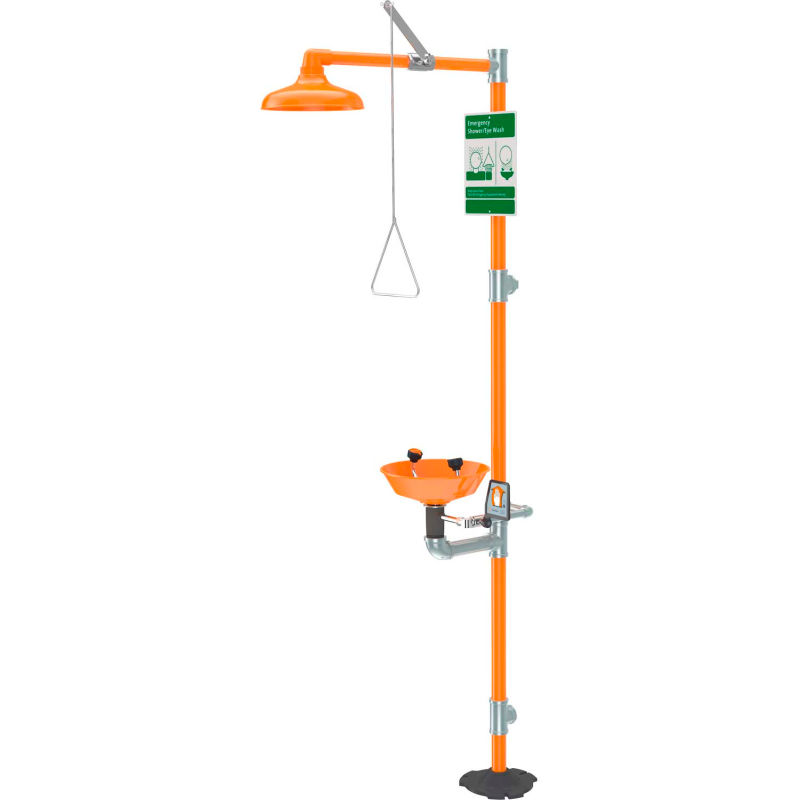
Potential hazards are commonly ever-present during the botanicalextraction process. While we can limit potential hazards through environmental control, clearly definedstandard operating procedures, employee training, and personal protective equipment, accidents happen. Before accidents happen within a botanicalextraction, lab it is crucial to be prepared by ensuring the botanicalextraction lab has easily accessible emergency eyewash stations, chemical showers, appropriately rated fire extinguishers, and safety data sheets for all used hazardous materials available and easily accessible at all times.
Combination Shower & Eyewash Station By Guardian Equipment
Theextraction solvent often presents the greatest chemical hazard in many botanicalextraction facilities. Withhydrocarbons and alcohols being highly flammable, it is important to store allsolvents in an approved fire-safesolvent cabinet and operatesolvent-based extraction techniques enclosed within an appropriately rated hazardous location based on the local, state, and federal requirements.
When storing any type of hazardous materials the safety data sheets (SDSs shall be readily accessible during each work shift to employees when they are in their work areas. Containers and/or packages related to hazardous materials must be properly labeled and warning signage should be properly displayed and easily visible. Ensure that all primary containers (i.e. original container in which a chemical arrives from the supplier) and secondary containers (beaker, bottle, etc.) are affixed with an OSHA-compliant/GHS label. All personnel should be properly trained on OSHA's hazard communication (Right to Know) standard including, but not limited to: operations in their work area where hazardous chemicals are present; methods that may be used to detect the presence or release of a hazardous chemical in the work area: measures employees can take to protect themselves from these hazards: details of the hazard communication program; chemical labeling: and location of SDSs and trained on what to do in the event of an emergency involving any of the hazardous material on the property. Staff monitoring theextraction process must be trained on theextraction process, the transfer ofsolvents, and all emergency procedures. Record of staff training must be maintained on-site and made available to the authority having jurisdiction upon request.
The first step in safely performing botanicalextraction is operating within the proper environment. While processing botanical extracts, it is not uncommon to be working with flammablesolvents, toxicvapors, and vessels under pressure orvacuum. While there is always an inherent risk when dealing with these hazards, the level of risk can be greatly mitigated by handling these hazards within a controlled environment.
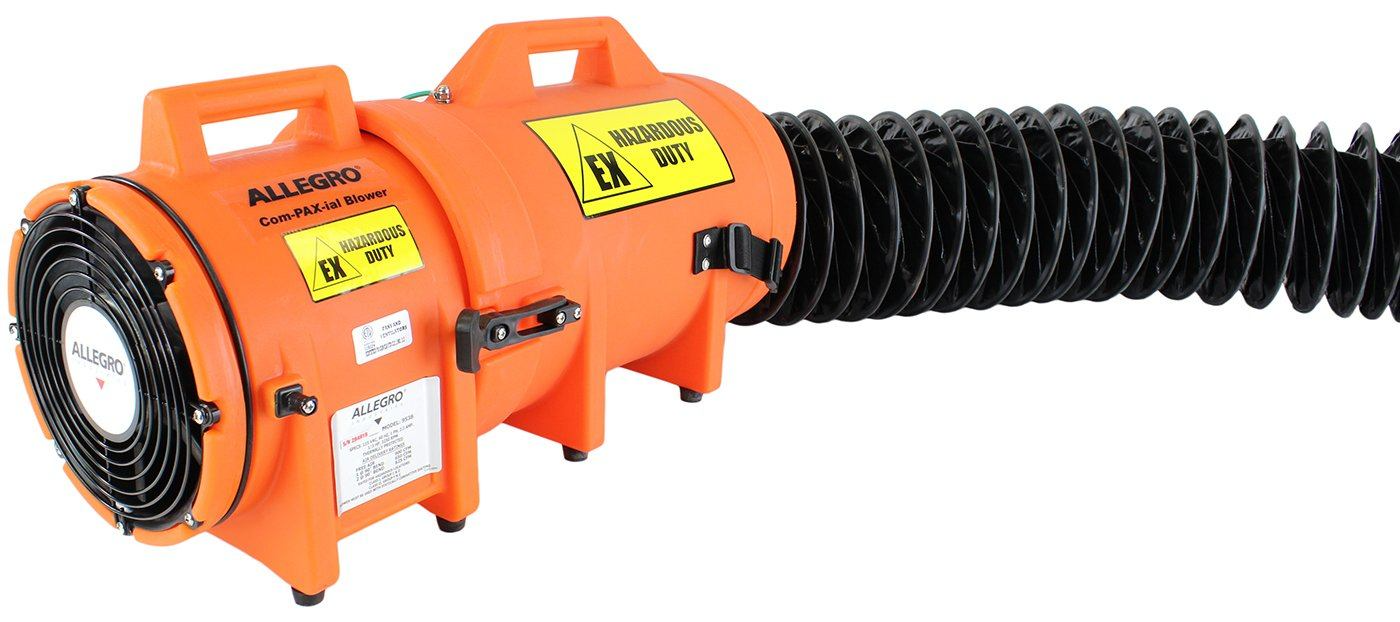
In order to maintain a controlled environment during the botanicalextraction process, it is paramount to control the temperature, humidity, and airflow of theextraction andsolvent storage areas. While some hazards will require operation in an appropriately rated hazardous location, it is important to maintain control of all areas of a botanicalextraction lab to ensure the level of hazard is reduced as much as possible. For this reason, all botanicalextraction andpost-processingareas should be kept at a controlled temperature and humidity with appropriate exhaust ventilation.
16" Explosion-proof Ventilation Fan By Allegro Industries
While the temperature and humidity of the botanicalextraction lab should be kept at a constant temperature between 60-73F/15.5C-23C with a relatively low humidity of around 20%, the level of ventilation within the botanicalextraction lab will vary depending on the hazards being handled. While exhaust ventilation in a botanicalextraction lab should always provide a high air exchange rate, it is best to regulate exhaust ventilation of a botanical extraction lab based on the level of flammablevapor within the surrounding area by utilizing a lower explosive limit detector.
Lower Explosive Limit Gas Detector By Honeywell
A lower explosive limit detector measures the level ofgas orvapor within a given area and should be mounted 6" above the floor and set up to provide an auditory and visual alert when high concentrations of flammablevapors exist. A lower explosive limit detector should be used to trigger an increased rate of exhaust ventilation to keepvapors well below their lower explosive limit. When extracting with flammablesolvents, it is best to keep the total percentage ofsolvent vapors below 25% of thesolventslower explosive limit of thesolvent. The lower explosive limit of thesolvents outlined in this course are as follows:Butane 1.86%,propane 2.1%,ethanol 3.3%,heptane 1.1%.
Portable Butane Leak Detector By BVV
Explosion mitigation is extremely important when performingsolvent-basedextraction. While the majority of the risk can be mitigated by performingextraction within an appropriately ratedextraction boothor working withsolvents under an appropriately ratedfume hood, great care also needs to be taken in the storage of thesesolventsin an appropriately rated fire safe storage cabinet or within an appropriately rated hazardous location based on thesolvents safety data sheet.
Hazardous locations are areas where the possibility of fire or explosion hazards may exist under normal or abnormal conditions because of the presence of flammable, combustible, or ignitablegases,vapors, liquids, dust, or fibers/flyings. These areas are classified solely to ensure proper specification and safe electrical/electronic equipment installation.
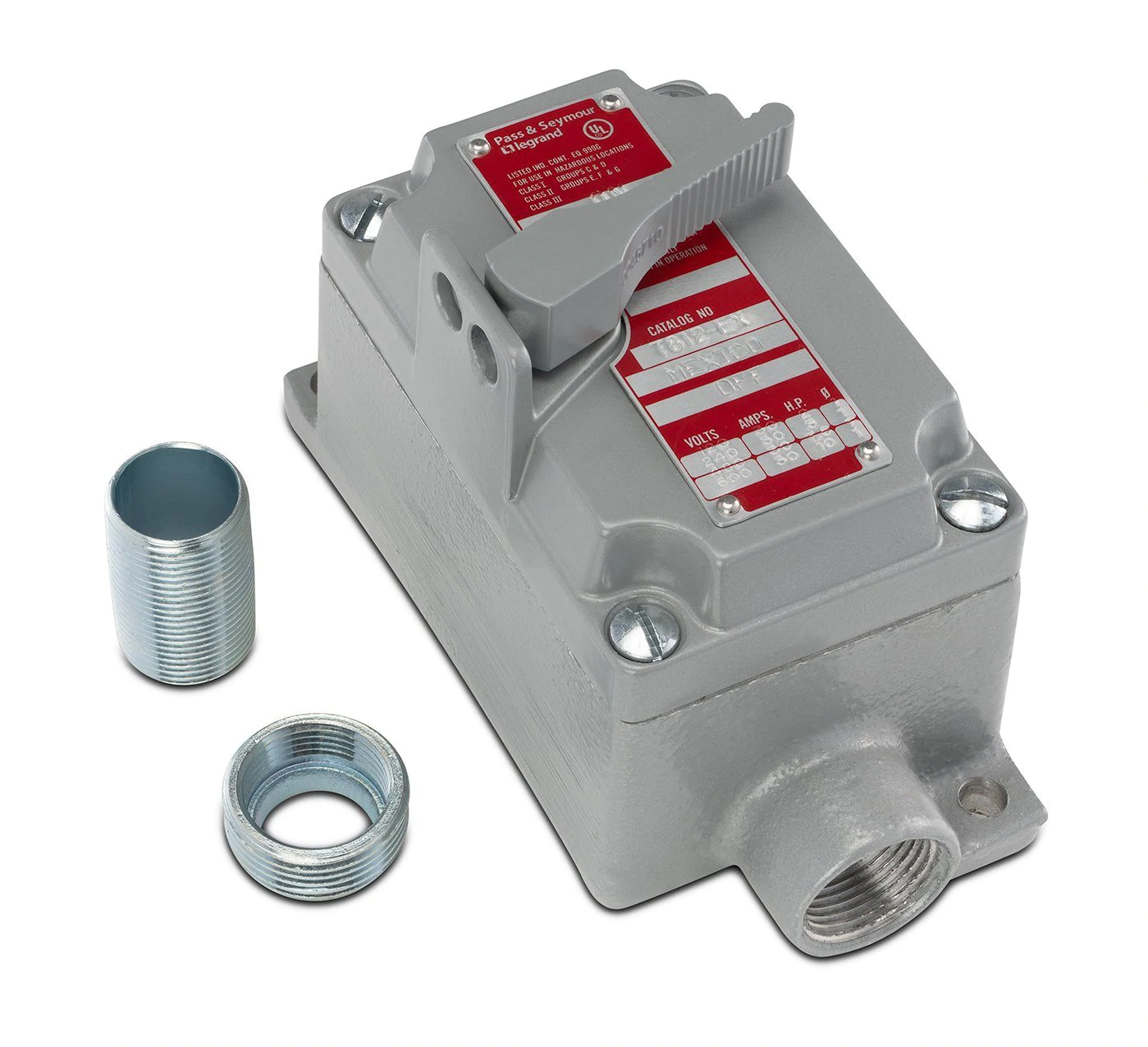
Hazardous-Location Enclosed Motor Switch By BVV
Hazardous locations fall under three classifications with two separate divisions. Class 1 locations are those in which flammablevapors may be present, Class 2 locations are those in which combustible dust may be found, and class 3 locations are those in which easily ignitable fibers or flyings may be present. Mostsolvent-based botanical extract processing techniques fall under the first classification due to the possibility of flammablevapors being present.
Depending on the specific botanical extract processing technique, it may be classified as division 1 or division 2; these divisions define the likelihood of hazardous materials in a flammable concentration. In a division 1 environment, ignitable concentrations of hazards exist under normal operating conditions or where a hazard is caused by frequent maintenance, repair work, or equipment failure. Division 2 environments are defined as environments where ignitable concentrations of hazards are handled, processed, or used, while normally in closed containers or closed systems from which they can only escape through accidental rupture or breakdown of such containers or systems.
C1D1 Extraction Booth By Advanced Extraction Labs
Hazardous locations require all electrical/electronics equipment to be designed, tested, and labeled as acceptable for use in the areas where it is installed. Beyond utilizing appropriately rated electrical/electronic components, mostextraction areas will come equipped with an explosion-proof exhaust fan providing a high air exchange rate, along with a lower explosive limitgas detector to alert high levels ofgas and trigger an increased rate of exhaust ventilation.
While the use of appropriately rated electrical components within anextraction area drastically lowers the potential of a flammable substance being ignited, one of the more critical functions of anextraction area is to reduce the risk of an explosion by regulating the airflow of the enclosed space to keep the levels ofgases below the lower explosive limit of the usedgas.
An appropriately ratedextraction booth is a must-have to safely and compliantly performsolvent-basedextraction. It is also required by most local municipalities and should be worked into the budget of everysolvent-basedextraction lab build. Depending on a specific municipality, fire inspectors may require said explosion-proof booths to have a fireproof burn rating typically required when dealing with larger volumes ofsolvent within the enclosed area. For this reason, it is always important to meet with the local fire inspector to determine the exact requirements that must be met to perform botanicalextraction and storesolvents compliantly.
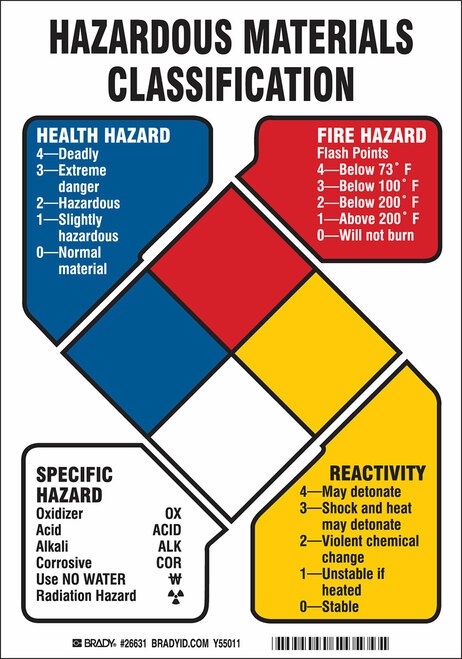
Signage is an important factor in compliance, The NFPA requires a hazard rating diamond sign and no smoking signs shall be displayed in front of theextraction room door. While safety data sheets are an excellent standardized way to pass along this information. NFPA hazard diamonds provide are a quick reference for emergency responders so that they know what hazards they can expect when they arrive at the scene and can prepare appropriately.
The National Fire Association has developed a color-coded number system called NFPA 704. This system uses a color-coded diamond with four quadrants in which numbers are used in the upper three quadrants to signal the degree of health hazard (blue), flammability hazard (red), and reactivity hazard (yellow). The bottom quadrant is used to indicate special hazards. The NFPA system is good for alerting personally of the degree of hazard of the chemical and helpful in drawing attention to storage needs and the necessary emergency equipment needed.
While the local fire marshall will determine the exact specifications a botanicalextraction lab needs to meet,hydrocarbon extraction will typically require operation within an explosion-proof enclosure meeting C1D1 specifications, andethanol extraction will typically require operation within an explosion-proof enclosure meeting C1D2 specifications.
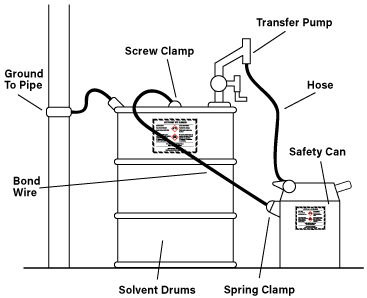
Keep in mind, all non-appropriately rated electrical equipment should be kept outside of hazardous locations. All equipment that can be grounded should be, and when transferring flammablesolvents from metal containers the containers should be bonded to limit static electricity. Metal containers can be easily bonded by securely attaching a metal bonding strap to both containers to prevent the build-up of static electricity.
All metal objects must be grounded to NEC code. Metal objects that are not grounded can create a dangerous spark that could cause a fire or explosion in the presence of flammablesolvents. When a metal object is grounded, the excess charge is balanced by transferring electrical energy between the ground and the charged object the result is a safe return path for the charge between an object to the earth. When transferring flammablesolventfrom one container to another it is always best to bond the two containers together to limit the transfer of static electricity.
Bonding is the act of joining two or more electrical conductors together, Bonding must occur to the areas of equipment that are not intended to carry any current during normal operation. Bonding itself does not protect anything. However, if one of those pieces of equipment is grounded there can be no electrical energy build-up.
Grounding is connecting parts that carry current under normal conditions to the earth. Normally done for the protection of power system equipment and to provide an effective return path from the machine to the power source
Additionally, equipment should always be maintained by replacing gaskets and high-pressure clamp brass nuts regularly and always pressure testing pressure vessels. Before each use, always inspect nuts and bolts for wear and tear. Check the threads to ensure they have crisp edges. Inspect nuts for wear on the outside and that no cracking has occurred.THIS IS ESPECIALLY IMPORTANT ON CLAMPS THAT ARE REMOVED FREQUENTLY. If any wear and tear on the nuts occur, replace them immediately. Nuts will wear faster than bolts. It is recommended to change nuts every 2-4 weeks depending on the frequency of use.
Equipment is only as strong as its weakest link. When a gasket, nut, bolt, or clamp shows wear and tear it should be replaced immediately. It is also best practice to replace gaskets, nuts, bolts, and clamps regularly. Even valve seals and connections can deteriorate over time it is important to visually inspect all components prior to operation to ensure that pressure can be maintained duringextraction. Change bolts every three months if being used daily. Evenly tighten on both sides not one at a time.
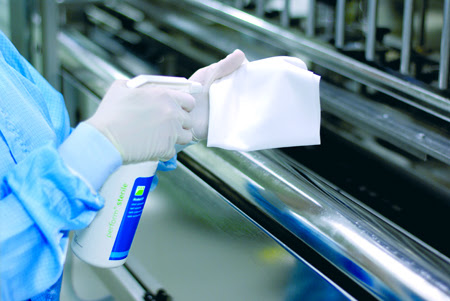
While it is of the utmost importance to maintain a controlled environment regarding temperature, humidity, and airflow of theextraction andsolvent storage areas, keep in mind that botanical extracts are typically meant for consumption, and the appropriate steps should be taken to limit contamination from bacteria, and debris by maintaining a clean and sterile environment. To maintain a clean and sterile environment, all areas where botanical extracts are made should be cleaned and sanitized daily to limit any sources of contamination.
Maintaining a clean and organized lab should be a daily practice to ensure the manufactured products are safe from contamination. Lab design should be implemented to promote a streamlined process, increase productivity, and reduce the risk of potential hazards. All unnecessary items, cardboard, and powders should be kept outside the botanicalextractionlab, and daily cleaning in the form of sweeping, mopping, and sterilization are great practices to maintain a sufficiently sterile operation ensuring the products made are free from contamination.
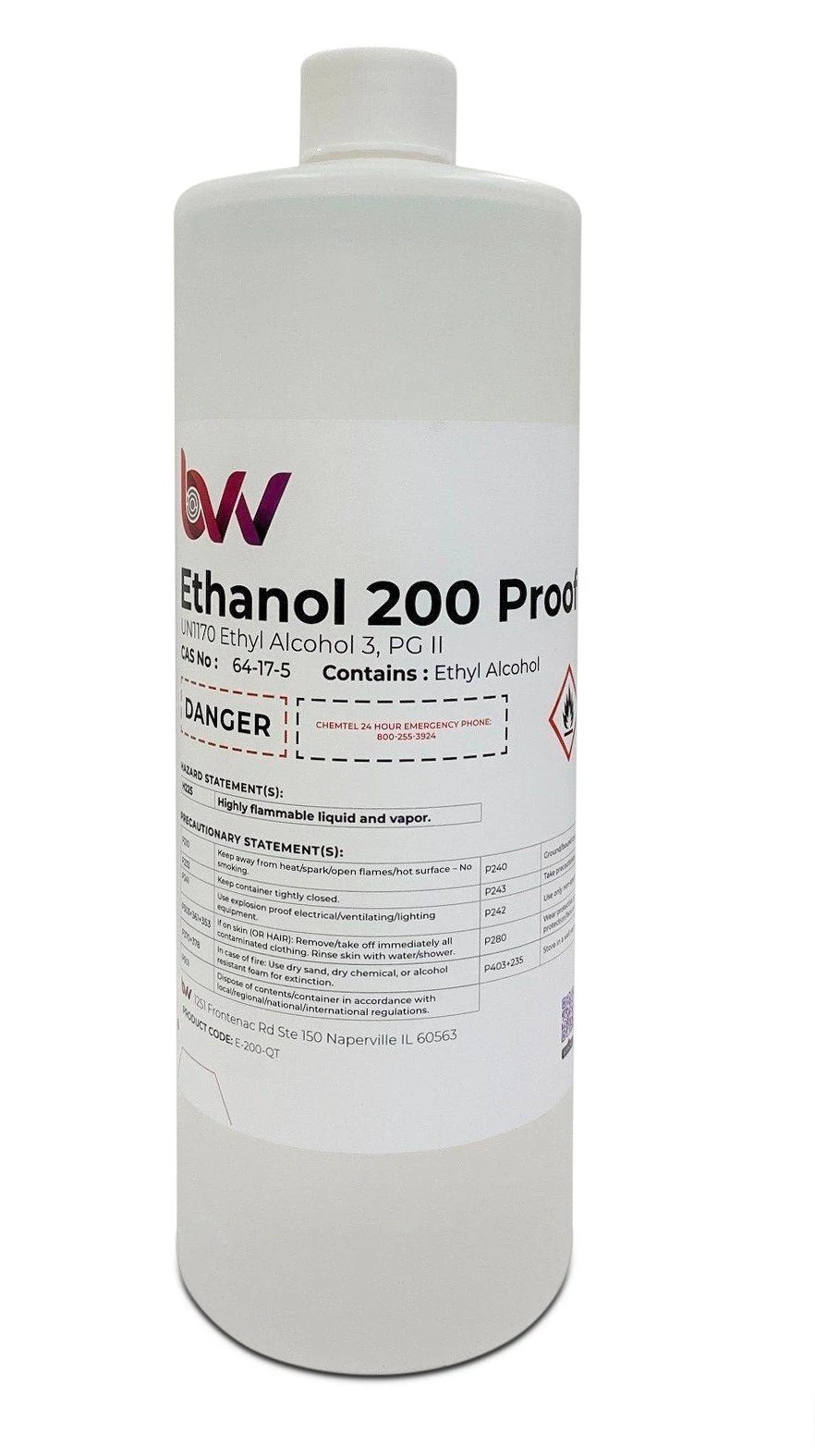
When cleaning, it is always best to start at the highest and farthest point from the door, and then work from left to right, and back to front to avoid cross-contamination. 200 proofethanolor D-Limonene are a great cleaning agent for sterilizing metal utensils, glassware, and stainless steel apparatuses. Ethanol also works great to clean up any nonpolar oil that may have been spilled. For caked-on compounds that do not wash away with ethanol, hot water can be utilized to remove water-soluble organic compounds from boiling flasks and other glassware. Generally, a bleach solution can be utilized to clean workspaces and floors at the end of each day.
Food & Lab grade 200 Proof Ethanol By BVV
While the cleanliness of the botanicalextraction area dramatically reduces the potential for contamination of a botanical extract, it is also paramount to utilize the proper personal protective equipment to limit contamination of the botanical extract and ensure the safety of the operator. The proper personal protective equipment should always be worn at all times when performing botanicalextraction to protect those performing botanicalextraction.
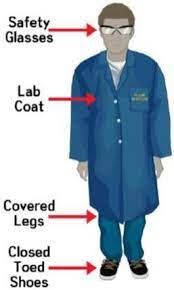
The use ofpersonal protective equipmentor PPE is paramount in protecting the health and safety of both theextractor and consumer. Before carrying out processes and tasks, proper protective equipment must always be worn upon entering the botanicalextraction lab. The following protective equipment is ALWAYS recommended for personal safety as well as the customer’s safety.
Hairnets prevent contamination of the product. Safety goggles orface shieldsprevent anything from entering the eyes. Static-resistant lab coats to prevent burns, static electricity, or contamination. Nitrile glovesor temperature-resistant gloves are needed to prevent contamination and burns, and a face mask orrespiratoris needed to prevent inhalation of toxicgas,vapor, or airborne contaminants. Additionally, OSHA requires training on proper use when utilizing respirators and even eye protection
Beyond maintaining environmental control over the botanicalextractionlab and wearing the proper personal protective equipment, maintaining process control is just as important to ensure the process is carried out consistently and safely limiting the level of hazard and potential for contamination of the botanical extract being created. Definingstandard operating proceduresfor every process carried out in the lab is paramount in producing safe and consistent results while reducing potential hazards or sources of contamination.
While the standard operating procedurescovered in the course are great starting points for performing botanicalextraction,standard operating proceduresshould be developed for every process performed within the facility, from sanitizing equipment to taking out the trash. A procedure should be developed and implemented strictly for every process within the botanicalextraction lab. Each employee should be trained how to perform each process to a T, and these procedures should be kept readily available within the lab for employees to review in order to perform the botanicalextraction process safely and efficiently. While this section serves as an in-depth introduction to botanicalextraction safety, we highly recommend an in-depth study of OSHA guidelines, Chapter 38 of theNational Fire Protection Agency Fire Code. andNFPA 36 Standards for SoventExtraction plants.
MANUFACTURING BEST PRACTICES FOR BOTANICAL EXTRACTS
From foot scrubs to supplements,botanical extracts can be utilized across many industries providing increased effectiveness to a product in many use cases. Manufacturing products withbotanical extracts inherently presents unique challenges that need to be appropriately addressed to manufacture products with consistency. This section will define some of the more important principles of manufacturing a product to maintain a level of repeatability and traceability based onCurrent Good Manufacturing Practices.
Manufacturing is turning raw materials into a component or finished product. Currently, in the US, The Food and Drug Administration regulates the standard for manufacturing drugs and supplements under the authority of the Federal Food, Drug, and Cosmetic Act. These regulations known as Current Good Manufacturing Practices or cGMP require that manufacturers, processors, and packagers of drugs & supplements (includingbotanical extracts) take proactive action to ensure that their products are safe, pure, and effective.
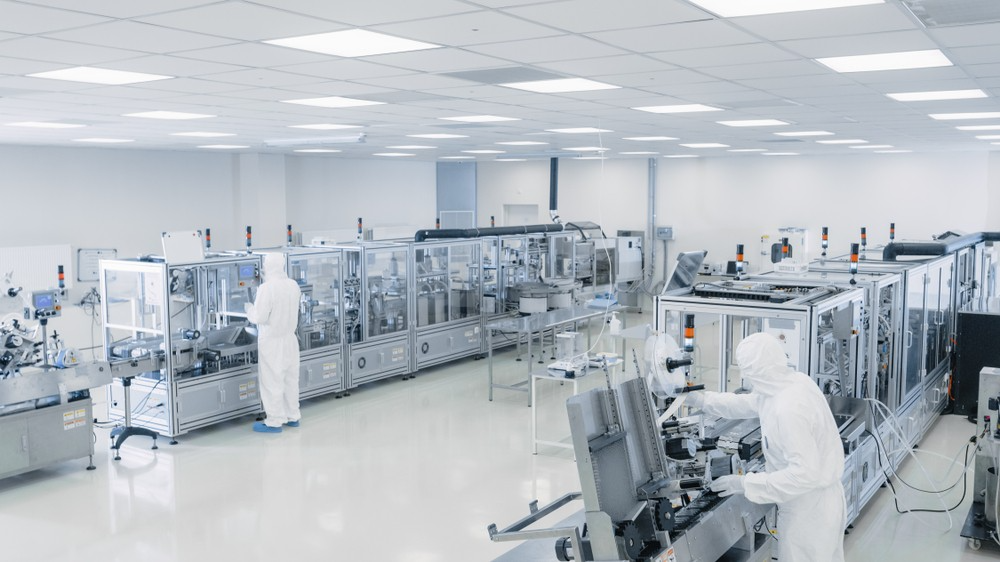
Good manufacturing practices start with the overall design of the building products will be manufactured in. A building used in the manufacturing, processing, packing, or holding of a drug product should be of suitable size, construction, and location to facilitate cleaning, maintenance, and proper operations. Any such building is required to have adequate space for the orderly placement of equipment and materials to prevent mix-ups between different components, drug product containers, closures, labeling, in-process material, or drug products to prevent contamination.
The building’s flow components, drug product containers, closures, labeling, in-process materials, and drug products should be designed to prevent contamination, and operations shall be performed within specifically defined areas of adequate size. There should be separate or defined areas or other control systems for the firm's operations as necessary to prevent contamination or mix-ups during manufacturing. On top of these more general building requirements, Good Manufacturing Practices have specific facility requirements covering lighting, ventilation, air filtration, air heating & cooling, plumbing, sewage, wash & toilet facilities, sanitation, maintenance, and equipment requirements.
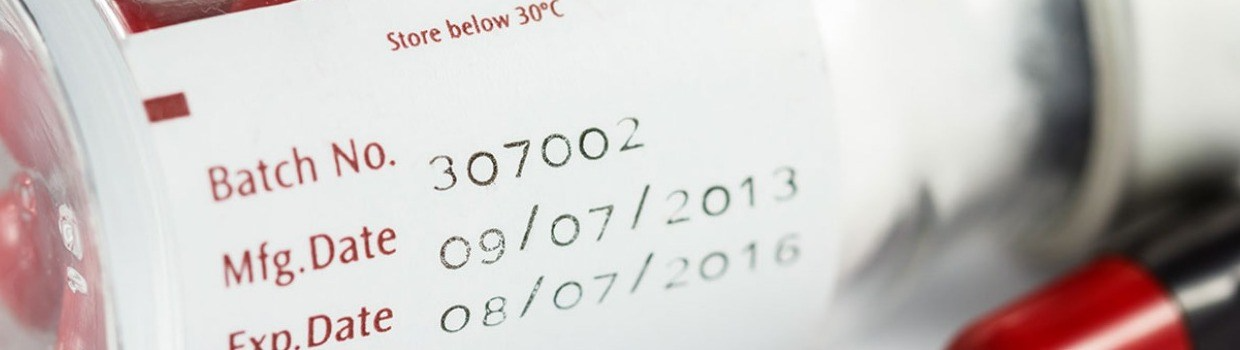
Once these Building, Facility, & equipment requirements are met, the general focus of Good Manufacturing Practices is maintaining control and traceability of the manufacturing process. To maintain control and traceability over the manufacturing process, the implementation ofStandard Operating Procedures(SOPs), batch recording, and internal tracking numbers are paramount.
SOP's are documents that outline every step in the manufacturing process.SOPs control the manufacturing process by ensuring that each manufacturing batch is manufactured in the same way providing consistency between batches.SOPs should be clearly defined for every step in the manufacturing process, starting with the initial receipt ofbiomass material to be extracted, all the way through the final distribution of the finished product, to ensure consistency.
Depending on the specific process,SOPs can vary in format & structure. The following are some of the key elements of an effectiveSOP. These key elements should be addressed in great detail and should include all the necessary information to complete the process from start to finish.
1.Purpose: a general overview of the process with a clearly defined desired outcome (EX. The purpose of this procedure is to provide detailed instructions forhydrocarbon extractionof botanical plant matter)
2.Scope: Defines to whom or what the particular set of procedures applies (EX. this procedure applies to all lab technicians tasked withhydrocarbon extraction).
3.Definitions: Clearly define any terms or acronyms used within theSOP (EX.Butane:Butane is a flammablenonpolar hydrocarbon solvent with aboiling pointof -1C/30.2F
4.Safety & Hazard Identification: Define any potential hazards and safety protocols that are paramount to safely perform the process (EX.Butane is a highly flammablesolvent,Butane extraction should be performed in an explosion-proof enclosure meeting C1D1 specifications.)
5.Preparation: A detailed step-by-step preparation procedure necessary to carry out thestandard operating procedure. (EX. Beforeextraction, assemble and pressure test theextractionsystem with nitrogen to ensure no leaks.)
6.Procedure: A detailed step-by-step procedure clearly defining the exact process the operator should follow to obtain the desired outcome (EX. Step 4 -Open the material column'ssolvent injection valve located atop the material column injecting 5lbs ofbutane for every 1lb ofbiomass material loaded within the column.)
7.Revision History: A place to record the changes made to said procedure along with a justification or the reason why the procedure was edited
Along with Clearly defined and optimizedSOPs, the entirety of the manufacturing process should be painstakingly recorded within a log of batch records. Batch records should be designed to log all the key data about the manufacturing process. Keeping intensive batch records and logging each specific detail of the manufacturing process associated with every batch made helps improve consistency between batches and reduce manufacturing errors.
Batch logs can ensure that manufacturing standards are maintained and provide in-depth information on each batch in the event of a defective product or recall. The key to successful batch recording is recording the proper metrics. While the relevant metrics and data to be recorded in batch records will vary from product to product, below are some ideas of relevant data worth capturing.
Where was each ingredient sourced from?
When was each ingredient sourced?
What is the internal batch number for this ingredient?
What was the quality or characteristics of the ingredient?
What equipment was used to manufacture the product?
What steps were performed?
How much of each component was added?
How long was the duration of the process?
When was the process performed?
Who performed the process?
A description of the final product
The exact number of units produced
Documentation of quality testing
In consideration of maintaining comprehensive batch records during the manufacturing process, each input and byproduct of the manufacturing process should be assigned an internal tracking number so each batch of the finished product can be associated with the specific ingredients that were used to make it so one can provide batch traceability in the event of a defective product or recall.
When batch recording is done correctly, one should be able to look back at any manufactured product and know the exact time it was made, who made it, what ingredients were used, where the ingredients were sourced, what batches were made with those ingredients, and where the remaining products from that batch were sold in the case of a recall. This level of recording allows for complete chain traceability of a manufactured good, from sourcing the raw ingredients to the sale of the final product.
By implementing these manufacturing guidelines, strong quality management systems, and analytical testing standards, consistent and traceable products can be produced. While this section serves as an introduction to Good Manufacturing Practices, it still only scratches the surface. For more information on Good Manufacturing Practices, refer toTitle 21 of the Code of Federal Regulations Part 111.