
New Products
-
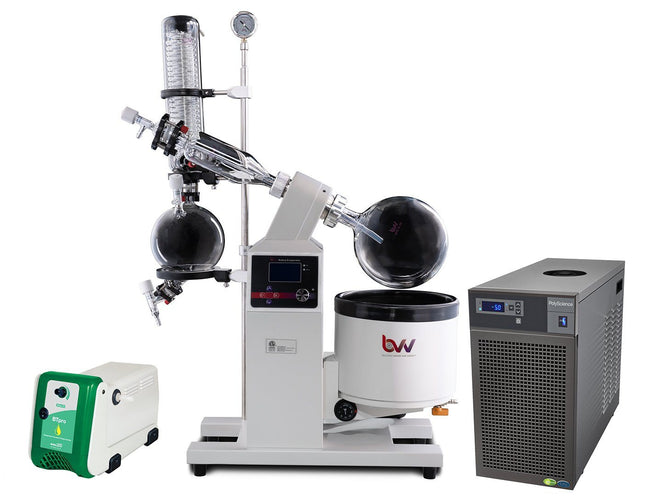

5L Neocision ETL Lab Certified Rotary Evaporator Turnkey System
5L Neocision ETL Lab Certified Rotary Evaporator Turnkey System The 5L Neocision ETL Lab Certified Rotary Evaporator is a full-scale system meant to fulfill the needs of large volume production and meet the requirements of a certified laboratory with its ETL certification standards. Featuring an electric lift bath and all PTFE valves for extreme chemical resistance, the 5L Neocision gives users the ability to recover large amounts of solvent in a smaller footprint with highly improved functionality. All Neocision rotovaps feature high-efficiency valves and drain ports making it easy to directly inject solution continuously without the need to stop the system or release vacuum to drain. The temperature and rotation speed are easily controlled from a single digital interface. Our rotovaps are a fraction of the price of more costly systems with the same functionality and evaporation efficiency. 5L NEO Rotary Evaporator Turnkey System setup includes: 5L Neocision ETL Lab Certified Rotary Evaporator Polyscience LS -20C to 40C 1/2HP Chiller w/ Turbine Pump 1/4" Gum Rubber - 100ft 1/4" Silicone Tubing - 25ft Welch BTpro70 Adjustable Stainless Steel Hose Clamps Features: ETL Certified for Lab use. Digital temperature and speed control with simple user interface Electric Bath Lift Teflon Coated Bath for corrosion resistance High-efficiency drain port and injection valves Smaller footprint for improved workspace allocation Mobility with locking casters Shorter vapor path for faster evaporation and condensation Direct injection capability for continuous feeding of solution Continuous draining capability without the need to release vacuum or stop the system 1-year warranty on all mechanical parts. Does not include glassware. Specifications: Model 5L Solvent Pro Series Rotary Evaporator Optimum Ambient Temperature 5~25C / 41~105.8F Glass Material GG-17 High Borosilicate Power (V/Hz) 110V 50/60Hz Single Phase Speed Regulation Digital Step-less Regulation Rotation Speed 20-130 RPM Set Temperature RT+5 - 99C Temperature Control Digital Temperature Control Maximum Vacuum Pressure -29.8 inHg Evaporating Flask Capacity 5L (5000ml) Receiving Flask Capacity 5L (5000ml) Condenser Style Main + Auxiliary Vertical Double Helix Heater Max Current Draw (Amps) 25 Water Bath Material 304 Stainless Steel Water Bath Size 17.7 x 9.8 in. Lifting Function Electric Lifting Stroke 190mm / 7.5 in. Total Power Consumption (kW) 1800w Dimensions 45 x 32 x 15in Weight 155 lbs Vacuum Connection 14mm / .55 in. Barb Condenser Connection 18mm / .70 in. Barb Warranty 1 Year excluding glass parts Certifications ETL Rotovap Quick Start Guide This guide gives basic quick start instructions for rotovaps. It is intended to provide a starting point for learning the process. Parameters should be adjusted to suit specific needs. Clean and assemble unit. Make sure all pieces are cleaned and sterilized using an alcohol solution. Connect chiller to condenser and set to 0C (32F). Always fill a rotovap condenser from the top down (chiller output to top of condenser, chiller input to bottom of condenser). Connect vacuum pump to cold trap and connect cold trap to vacuum port on rotovap. Turn on heat bath and set to 40C (113F). Once heat bath, chiller and cold trap have reached desired temperatures, turn on rotovap motor and set speed to approximately 100 RPM (does not have to be precise). Keep in mind, higher RPM’s will increase evaporation power but also increase heat load. Start vacuum pump and allow vacuum to pull down for a few minutes before injection. Once vacuum has been pulled to a sufficient level (does not have to be precise but should be below 100 Torr), using the injection valve, very slowly inject approximately 500 mL of solution into evaporating flask and then close the valve. Allow this small amount to begin evaporating. You may see the chiller begin to rise in temperature, this is called “priming” the rotovap. Once the temperature stops rising or all liquid is almost completely evaporated, open the injection valve again very slowly so that a small amount of liquid begins to enter the evaporating flask. Do not close injection valve this time but continue to allow solution to enter the evaporating flask. At this point you must try to match the input speed to the output speed. What this means is that you should be injecting the same amount of liquid into the rotovap that is equal to the amount of liquid dripping from the condenser into the receiving flask. You will know that the input speed and output speed are matched because the chiller will remain at a stable temperature. If the chiller begins to rise, then you are injecting too much liquid. Dial back the valve until the chiller stabilizes. Once everything is stabilized, you may walk away from the rotovap if necessary. Check every so often to make sure temperatures remain stable and evaporation continues efficiently. ***Note: All units are inspected for broken glass or parts before unit is shipped. If unit arrives damaged or glass is broken (this does not include minor imperfections or scuffs in glassware), Customer MUST contact BVV™ within 3 days of delivery to file a claim and receive a replacement part. If customer DOES NOT contact BVV™ within 3 days of delivery responsibility for replacement parts falls on the customer and they must pay for replacement pieces.*** ***Note: This item will ship by freight only.*** ***Glassware Safety Disclaimer: BVV™ is not responsible for failure of glassware which must be inspected before and after every use because it may eventually develop imperfections or damage through normal usage, mishandling, and stress caused by temperature variations. If an imperfection or damage is noted while inspecting the glassware DO NOT use the glassware because it can fail causing bodily harm or damage to the surrounding area.***
$15,762.12 - $17,633.42
-
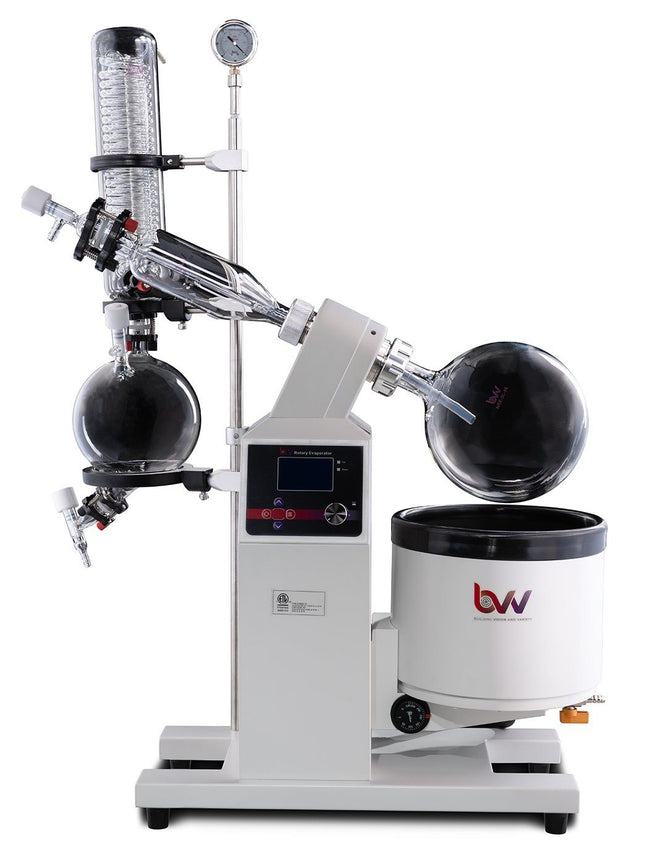
5L Neocision ETL Lab Certified Rotary Evaporator
5L Neocision ETL Lab Certified Rotary Evaporator The 5L Neocision ETL Lab Certified Rotary Evaporator is a full-scale system meant to fulfill the needs of large volume production and meet the requirements of a certified laboratory with its ETL certification standards. Featuring an electric lift bath and all PTFE valves for extreme chemical resistance, the 5L Neocision gives users the ability to recover large amounts of solvent in a smaller footprint with highly improved functionality. All Neocision rotovaps feature high-efficiency valves and drain ports making it easy to directly inject solution continuously without the need to stop the system or release vacuum to drain. The temperature and rotation speed are easily controlled from a single digital interface. Our rotovaps are a fraction of the price of more costly systems with the same functionality and evaporation efficiency. Features: ETL Certified for Lab use. Digital temperature and speed control with simple user interface Electric Bath Lift Teflon Coated Bath for corrosion resistance High-efficiency drain port and injection valves Smaller footprint for improved workspace allocation Mobility with locking casters Shorter vapor path for faster evaporation and condensation Direct injection capability for continuous feeding of solution Continuous draining capability without the need to release vacuum or stop the system 1-year warranty on all mechanical parts. Does not include glassware. Specifications: Model 5L Solvent Pro Series Rotary Evaporator Optimum Ambient Temperature 5~25C / 41~105.8F Glass Material GG-17 High Borosilicate Power (V/Hz) 110V 50/60Hz Single Phase Speed Regulation Digital Step-less Regulation Rotation Speed 20-130 RPM Set Temperature RT+5 - 99C Temperature Control Digital Temperature Control Maximum Vacuum Pressure -29.8 inHg Evaporating Flask Capacity 5L (5000ml) Receiving Flask Capacity 5L (5000ml) Condenser Style Main + Auxiliary Vertical Double Helix Heater Max Current Draw (Amps) 25 Water Bath Material 304 Stainless Steel Water Bath Size 17.7 x 9.8 in. Lifting Function Electric Lifting Stroke 190mm / 7.5 in. Total Power Consumption (kW) 1800w Dimensions 45 x 32 x 15in Weight 155 lbs Vacuum Connection 14mm / .55 in. Barb Condenser Connection 18mm / .70 in. Barb Warranty 1 Year Excluding: Moving Parts Glassware Certifications ETL Rotovap Quick Start Guide This guide gives basic quick start instructions for rotovaps. It is intended to provide a starting point for learning the process. Parameters should be adjusted to suit specific needs. Clean and assemble unit. Make sure all pieces are cleaned and sterilized using an alcohol solution. Connect chiller to condenser and set to 0C (32F). Always fill a rotovap condenser from the top down (chiller output to top of condenser, chiller input to bottom of condenser). Connect vacuum pump to cold trap and connect cold trap to vacuum port on rotovap. Turn on heat bath and set to 40C (113F). Once heat bath, chiller and cold trap have reached desired temperatures, turn on rotovap motor and set speed to approximately 100 RPM (does not have to be precise). Keep in mind, higher RPM’s will increase evaporation power but also increase heat load. Start vacuum pump and allow vacuum to pull down for a few minutes before injection. Once vacuum has been pulled to a sufficient level (does not have to be precise but should be below 100 Torr), using the injection valve, very slowly inject approximately 500 mL of solution into evaporating flask and then close the valve. Allow this small amount to begin evaporating. You may see the chiller begin to rise in temperature, this is called “priming” the rotovap. Once the temperature stops rising or all liquid is almost completely evaporated, open the injection valve again very slowly so that a small amount of liquid begins to enter the evaporating flask. Do not close injection valve this time but continue to allow solution to enter the evaporating flask. At this point you must try to match the input speed to the output speed. What this means is that you should be injecting the same amount of liquid into the rotovap that is equal to the amount of liquid dripping from the condenser into the receiving flask. You will know that the input speed and output speed are matched because the chiller will remain at a stable temperature. If the chiller begins to rise, then you are injecting too much liquid. Dial back the valve until the chiller stabilizes. Once everything is stabilized, you may walk away from the rotovap if necessary. Check every so often to make sure temperatures remain stable and evaporation continues efficiently. ***Note: All units are inspected for broken glass or parts before unit is shipped. If unit arrives damaged or glass is broken (this does not include minor imperfections or scuffs in glassware), Customer MUST contact BVV™ within 3 days of delivery to file a claim and receive a replacement part. If customer DOES NOT contact BVV™ within 3 days of delivery responsibility for replacement parts falls on the customer and they must pay for replacement pieces.*** ***Note: This item will ship by freight only.*** ***Glassware Safety Disclaimer: BVV™ is not responsible for failure of glassware which must be inspected before and after every use because it may eventually develop imperfections or damage through normal usage, mishandling, and stress caused by temperature variations. If an imperfection or damage is noted while inspecting the glassware DO NOT use the glassware because it can fail causing bodily harm or damage to the surrounding area.***
$5,757.85
-
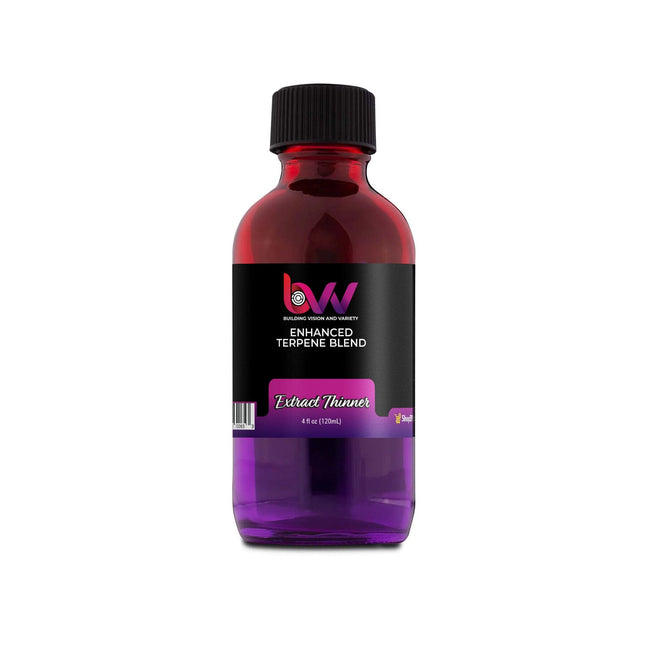

Extract Thinner *Compare to True Terpenes Viscosity
BVV Extract Thinner All sales are final. Orders can be refunded prior to fulfillment and shipping but once the order has been fulfilled and/or shipped, no refunds will be issued. Due to the hazardous nature of our product, we are unable to accept returns. BVV™ Extract Thinner is a diluent made from natural terpenes. It does not contain PG, VG, PEG, MCT, Squalane, Squalene, Coconut oil, Triethyl Citrate, or Vitamin E Acetate. Our Extract Thinner will combine with your terpenes and oil and is formulated to minimize flavor and aroma impact. Oure Extract Thinner is not a thickening nor cutting agent and not recommended to be used with CBD. This product is designed to be used with winterized extracts. It is a clear liquid with a faint, odor that will minimally contribute to the aroma and flavor. In order to provide complete transparency and illicit customer confidence, all ingredients are disclosed. INGREDIENTS: Phytol, Beta-Caryophyllene, D-Limonene, Farnesol and Nerolidol Dilution Use Instructions: First infuse your terpene strain or flavor into your winterized extract. Typically 1-5% by volume. Then to use the Extract thinner add 1-3% by Total Volume to thin the extract. Made in the USA by cGMP facilities ISO 9001:2015 Shelf Life: 3 Years Storage Requirements: Keep in the original container, lid securely tightened and away from heat, open flames, sunlight, combustible materials, and hot surfaces. Store in a cool dry place. Improper storage can cause terpenes to degrade.
$17.27 - $287.89
-
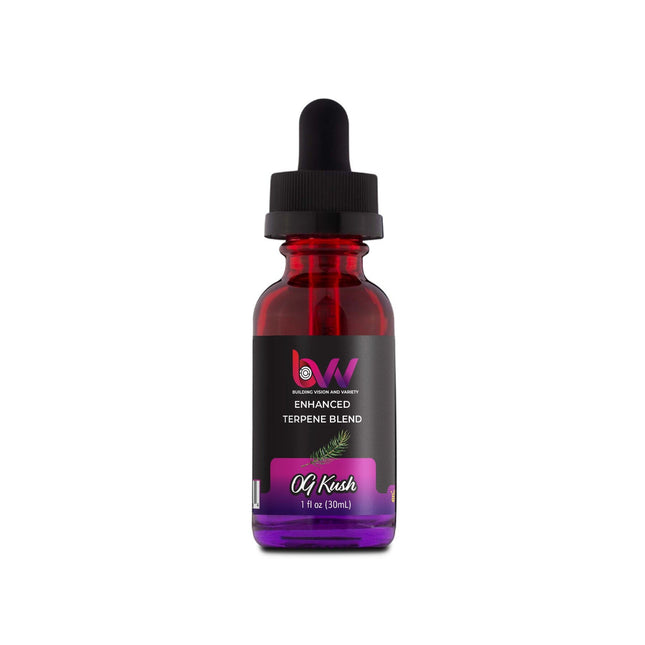
Terpenes OG Kush
BVV Terpenes OG Kush All sales are final. Orders can be refunded prior to fulfillment and shipping but once the order has been fulfilled and/or shipped, no refunds will be issued. Due to the hazardous nature of our product, we are unable to accept returns. BVV™ Terpenes are botanically derived terpenes enhanced with "nature-identical" artificial flavors. These flavors boost the natural flavor profile of the terpenes, providing the user with a more pleasant vaping experience. In order to provide complete transparency and elicit customer confidence, all ingredients are disclosed in the technical data sheet. BVV™ OG Kush Safety Data Sheet BVV™ OG Kush Technical Data Sheet OG Kush a hybrid strain with a distinctive earthy, pine, woody aroma, is well-known for soothing, euphoric effects. This strain has spawned several varieties Fragrance Earth, pine, wood Effect Attention, motivation, drive, and improves focus Storage Requirements: Keep in the original container, lid securely tightened and away from heat, open flames, sunlight, combustible materials, and hot surfaces. Store below 15℃ (60℉). Improper storage can cause terpenes to degrade. Dilution: Terpenes must be diluted prior to use for flavor and effect (1-5% by total volume). Terpenes are oil soluble and mix well with plant extracts, coconut oil, and more. Handle With Care: Can cause skin irritation, do not ingest PRIOR to dilution.
$15.83 - $237.51
-
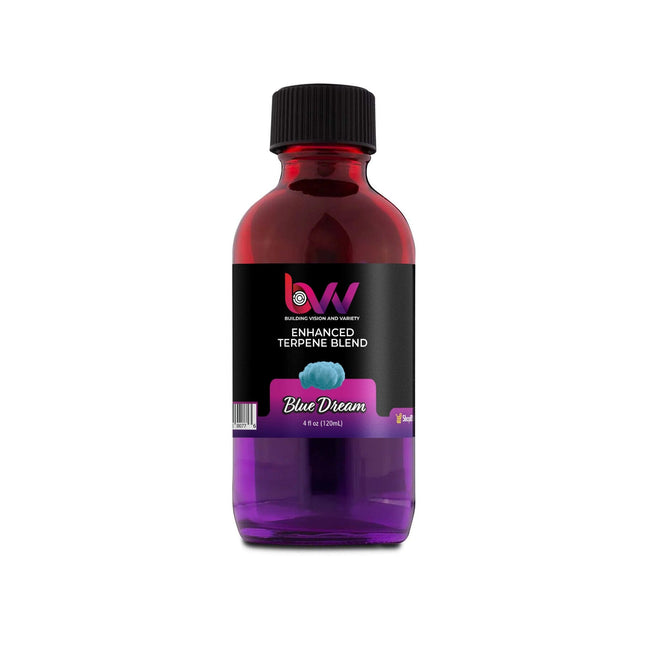
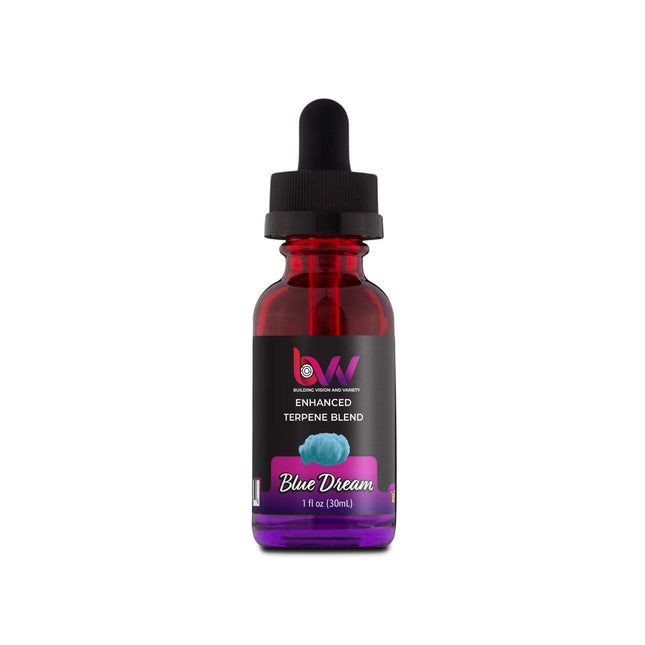
Terpenes Blue Dream
BVV™ Terpenes Blue Dream All sales are final. Orders can be refunded prior to fulfillment and shipping but once the order has been fulfilled and/or shipped, no refunds will be issued. Due to the hazardous nature of our product, we are unable to accept returns. BVV™ Terpenes are botanically derived terpenes enhanced with "nature-identical" artificial flavors. These flavors boost the natural flavor profile of the terpenes, providing the user with a more pleasant vaping experience. In order to provide complete transparency and elicit customer confidence, all ingredients are disclosed in the technical data sheet. BVV™ Blue Dream Safety Data Sheet BVV™ Blue Dream Technical Data Sheet BVV™ Food Grade Certificate Blue Dream is a crossed strain to create a hybrid that is popular for daytime use. Blue Dream delivers a soothing, creative euphoria but without a resting effect. Fragrance Sweet, berry, earth Effect Euphoric, energizing, the most popular strain for elevating one's feelings Storage Requirements: Keep in the original container, lid securely tightened and away from heat, open flames, sunlight, combustible materials, and hot surfaces. Store below 15℃ (60℉). Improper storage can cause terpenes to degrade. Dilution: Terpenes must be diluted prior to use for flavor and effect (1-5% by total volume). Terpenes are oil soluble and mix well with plant extracts, coconut oil, and more. Handle With Care: Can cause skin irritation, do not ingest PRIOR to dilution.
$15.83 - $237.51
-
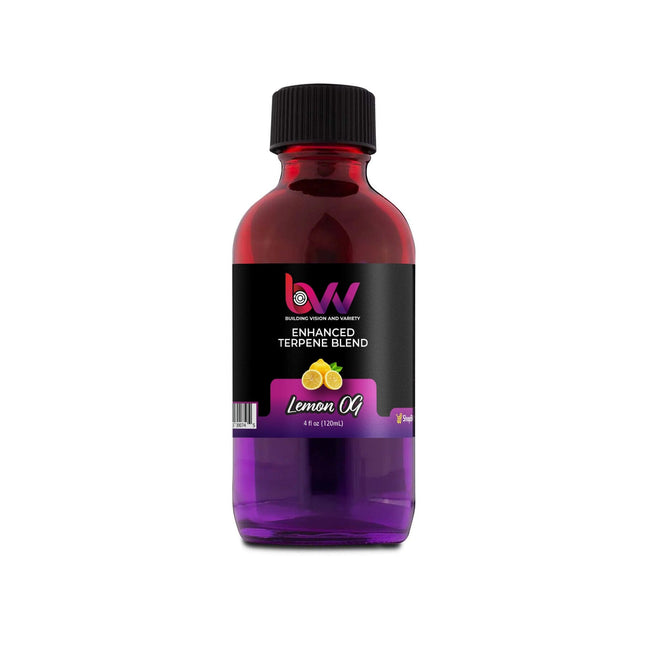

Terpenes Lemon OG
BVV™ Terpenes Lemon OG All sales are final. Orders can be refunded prior to fulfillment and shipping but once the order has been fulfilled and/or shipped, no refunds will be issued. Due to the hazardous nature of our product, we are unable to accept returns. BVV™ Terpenes are botanically derived terpenes enhanced with "nature-identical" artificial flavors. These flavors boost the natural flavor profile of the terpenes, providing the user with a more pleasant vaping experience. In order to provide complete transparency and elicit customer confidence, all ingredients are disclosed in the technical data sheet. BVV™ Lemon OG Safety Data Sheet BVV™ Lemon OG Technical Data Sheet Lemon OG is a strain with a citrus flavor profile with sweet and sour notes. It has an effect of elevating mood, relaxation, and improving focus. Storage Requirements: Keep in the original container, lid securely tightened and away from heat, open flames, sunlight, combustible materials, and hot surfaces. Store below 15℃ (60℉). Improper storage can cause terpenes to degrade. Dilution: Terpenes must be diluted prior to use for flavor and effect (1-5% by total volume). Terpenes are oil soluble and mix well with plant extracts, coconut oil, and more. Handle With Care: Can cause skin irritation, do not ingest PRIOR to dilution.
$15.83 - $237.51
-
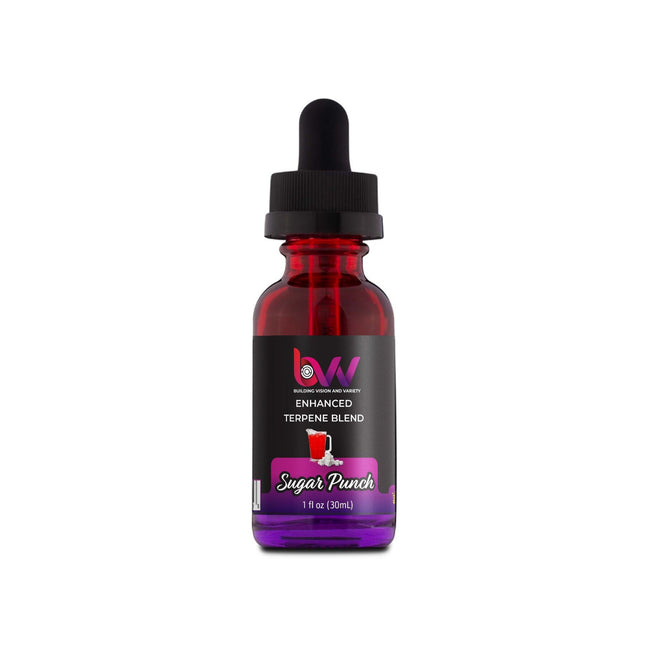
Terpenes Sugar Punch
BVV™ Terpenes Sugar Punch All sales are final. Orders can be refunded prior to fulfillment and shipping but once the order has been fulfilled and/or shipped, no refunds will be issued. Due to the hazardous nature of our product, we are unable to accept returns. BVV™ Terpenes are botanically derived terpenes enhanced with "nature-identical" artificial flavors. These flavors boost the natural flavor profile of the terpenes, providing the user with a more pleasant vaping experience. In order to provide complete transparency and elicit customer confidence, all ingredients are disclosed in the technical datasheet. BVV™ Sugar Punch Safety Data Sheet BVV™ Sugar Punch Technical Data Sheet Sugar Punch is a skunky and sweet profile with hints of berry. This profile has an effect of elevating mood, energizing effects and improves focus. Storage Requirements: Keep in the original container, lid securely tightened and away from heat, open flames, sunlight, combustible materials, and hot surfaces. Store below 15℃ (60℉). Improper storage can cause terpenes to degrade. Dilution: Terpenes must be diluted prior to use for flavor and effect (1-5% by total volume). Terpenes are oil soluble and mix well with plant extracts, coconut oil, and more. Handle With Care: Can cause skin irritation, do not ingest PRIOR to dilution.
$15.83 - $237.51
-
10L Neocision ETL Lab Certified Rotary Evaporator
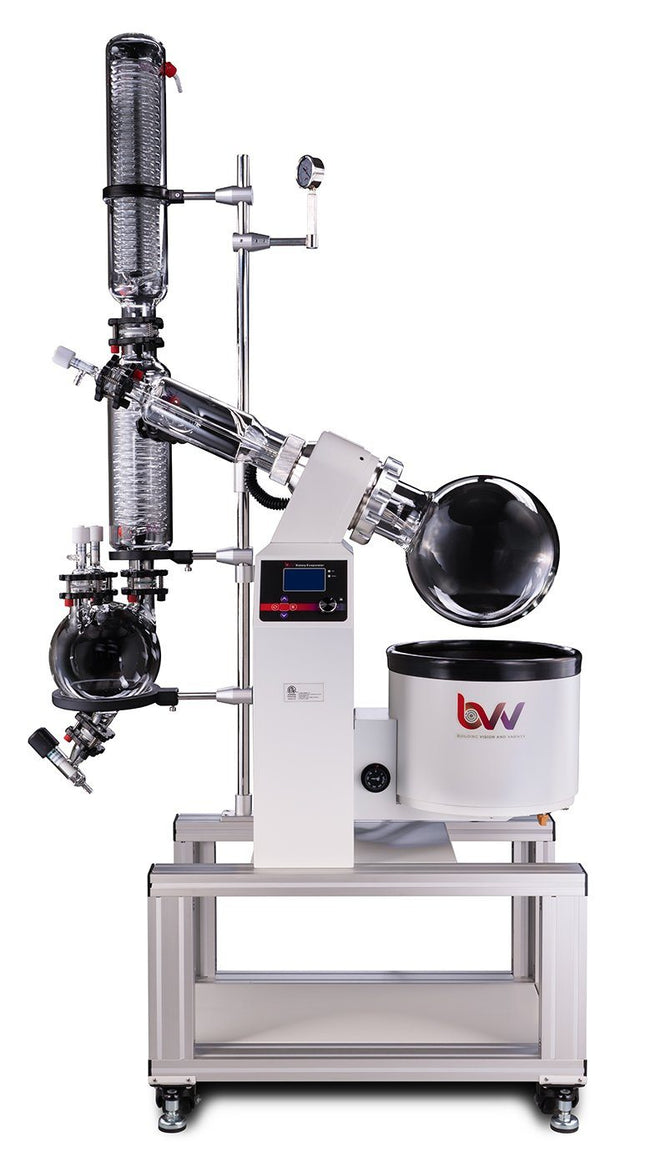
10L Neocision ETL Lab Certified Rotary Evaporator The 10L Neocision ETL Lab Certified Rotary Evaporator is a full-scale system meant to fulfill the needs of large volume production and meet the requirements of a certified laboratory with its ETL certification standards. Featuring an electric lift bath and all PTFE valves for extreme chemical resistance, the 10L Neocision gives users the ability to recover large amounts of solvent in a smaller footprint with highly improved functionality. All Neocision rotovaps feature high-efficiency valves and drain ports making it easy to directly inject solution continuously without the need to stop the system or release vacuum to drain. The temperature and rotation speed are easily controlled from a single digital interface. Our rotovaps are a fraction of the price of more costly systems with the same functionality and evaporation efficiency. To keep your bath heating properly, this unit should only be used with RO or DI water. 10-50L NEO and ECO Rotary Evaporator Diagram Features: ETL Certified for Lab use. Digital temperature and speed control with simple user interface Electric Bath Lift Teflon Coated Bath for corrosion resistance High-efficiency drain port and injection valves Smaller footprint for improved workspace allocation Mobility with locking casters Shorter vapor path for faster evaporation and condensation Direct injection capability for continuous feeding of solution Continuous draining capability without the need to release vacuum or stop the system 1-year warranty on all mechanical parts. Does not include glassware. Specifications: Model 10L Solvent Pro Series Rotary Evaporator Optimum Ambient Temperature 5~25C / 41~105.8F Glass Material GG-17 High Borosilicate Power (V/Hz) 220-240V 60Hz Single Phase Speed Regulation Digital Step-less Regulation Rotation Speed 20-130 RPM Set Temperature RT+5-99C Temperature Control Digital Temperature Control Maximum Vacuum Pressure -29.8 inHg Evaporating Flask Capacity 10L (10000ml) Receiving Flask Capacity 10L (10000ml) Condenser Style Main + Auxiliary Vertical Double Helix Heater Max Current Draw (Amps) 25 Water Bath Material 304 Stainless Steel Water Bath Size 17.7 x 9.8 in. Lifting Function Electric Lifting Stroke 190mm / 7.5 in. Total Power Consumption (kW) 3300w Dimensions 81 x 44 x 20 in. Weight 155 lbs Vacuum Connection 14mm / .55 in. Barb Condenser Connection 18mm / .70 in. Barb Warranty 90 days excluding glass parts Certifications ETL Rotovap Quick Start Guide This guide gives basic quick start instructions for rotovaps. It is intended to provide a starting point for learning the process. Parameters should be adjusted to suit specific needs. Clean and assemble unit. Make sure all pieces are cleaned and sterilized using an alcohol solution. Connect chiller to condenser and set to 0C (32F). Always fill a rotovap condenser from the top down (chiller output to top of condenser, chiller input to bottom of condenser). Connect vacuum pump to cold trap and connect cold trap to vacuum port on rotovap. Turn on heat bath and set to 40C (113F). Once heat bath, chiller and cold trap have reached desired temperatures, turn on rotovap motor and set speed to approximately 100 RPM (does not have to be precise). Keep in mind, higher RPM’s will increase evaporation power but also increase heat load. Start vacuum pump and allow vacuum to pull down for a few minutes before injection. Once vacuum has been pulled to a sufficient level (does not have to be precise but should be below 100 Torr), using the injection valve, very slowly inject approximately 500 mL of solution into evaporating flask and then close the valve. Allow this small amount to begin evaporating. You may see the chiller begin to rise in temperature, this is called “priming” the rotovap. Once the temperature stops rising or all liquid is almost completely evaporated, open the injection valve again very slowly so that a small amount of liquid begins to enter the evaporating flask. Do not close injection valve this time but continue to allow solution to enter the evaporating flask. At this point you must try to match the input speed to the output speed. What this means is that you should be injecting the same amount of liquid into the rotovap that is equal to the amount of liquid dripping from the condenser into the receiving flask. You will know that the input speed and output speed are matched because the chiller will remain at a stable temperature. If the chiller begins to rise, then you are injecting too much liquid. Dial back the valve until the chiller stabilizes. Once everything is stabilized, you may walk away from the rotovap if necessary. Check every so often to make sure temperatures remain stable and evaporation continues efficiently. ***Note: All units are inspected for broken glass or parts before unit is shipped. If unit arrives damaged or glass is broken (this does not include minor imperfections or scuffs in glassware), Customer MUST contact BVV™ within 3 days of delivery to file a claim and receive a replacement part. If customer DOES NOT contact BVV™ within 3 days of delivery responsibility for replacement parts falls on the customer and they must pay for replacement pieces.*** ***Note: This item will ship by freight only.*** ***Glassware Safety Disclaimer: BVV™ is not responsible for failure of glassware which must be inspected before and after every use because it may eventually develop imperfections or damage through normal usage, mishandling, and stress caused by temperature variations. If an imperfection or damage is noted while inspecting the glassware DO NOT use the glassware because it can fail causing bodily harm or damage to the surrounding area.***
$6,477.58 $2,878.93
-
300L 304SS Jacketed Collection and Storage Vessel with 12" Tri-Clamp Port and Locking Casters
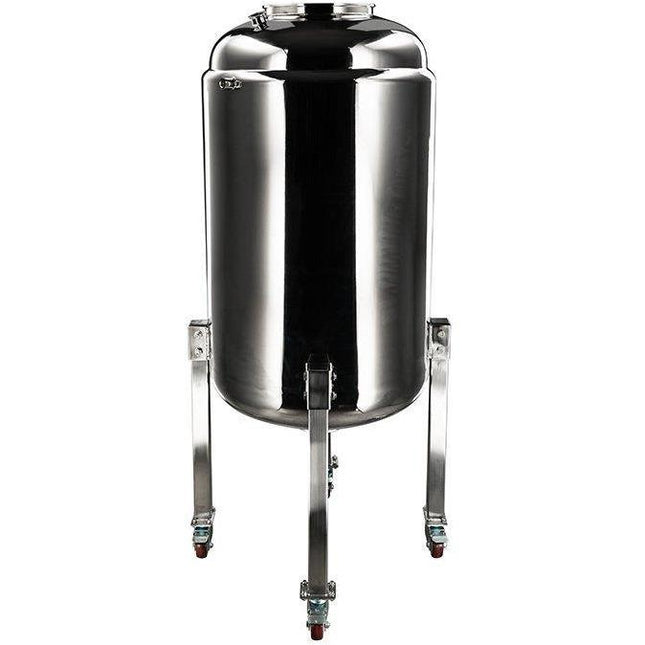
300L 304SS Jacketed Collection and Storage Vessel with 12" Tri-Clamp/ Tri Clover Port and Locking Casters This massive 304 Stainless Steel Jacketed vessel can hold up to 300L of water (~80 gallons) and has a 12" Tri-Clamp port, (2) 1.5" Tri-Clamp ports, and (1) 1/2" FNPT port on the top and a 6" Tri-Clamp port on the bottom of the vessel. The outer jacket has 2x 1/2" FNPT ports to allow the circulation of heat transfer fluids and can also be used a vacuum jacket and can hold 43L or 11.5 gallons of fluid in the outer jacket. This unit also features 4 stainless steel legs with locking casters to allow the vessel to be moved around easily. (Note: this unit comes bare and does not include any fittings besides the legs with casters.) Specifications Material 304 Stainless Steel Overall Dimensions 65" Tall x 30" Wide Pressure Rating 100 PSI MAX Connection Type(s): (1) 12" Tri-Clamp Top Port (2) 1.5" Tri-Clamp Top Ports (1) 6" Tri-Clamp Bottom Port (2) 1/2" FNPT Outer Jacket Ports ***Note: This item will ship via freight ONLY.
$6,621.53
-
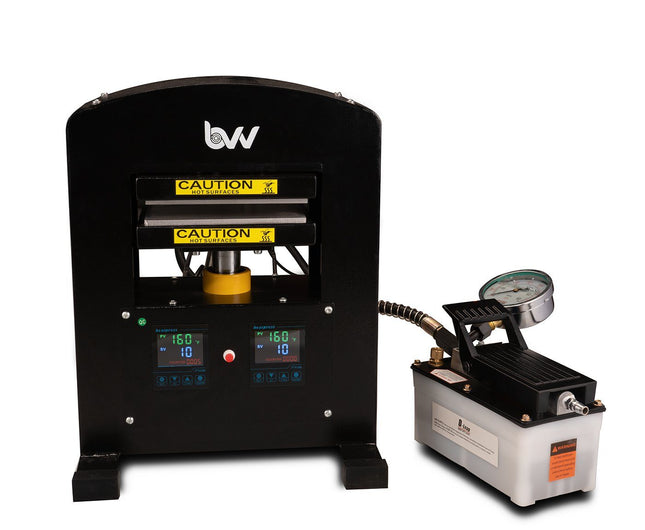
30 Ton Rosin Press V3
BVV™ 30 Ton Rosin Press V3 This is the new and improved BVV™ brand 30 Ton Rosin pro Rosin press. It features a pneumatically-driven hydraulic cylinder. The large 8 x 6 plates offer the most surface area for pressing and are made out of polished aluminum. This press also features 2 touchscreen PID controllers capable of keeping the heated plates within 1 degree of the set point. There is a manually operated timer with a built-in counter to keep track of usage. This press requires compressed air to function. Specification Dimensions 27”H, 21.5”W, 18”D Unit Weight 111 lbs. Electrical Requirements 120VAC / 60Hz / 15a max. Temperature Range Ambient – 480F (250C) Timer Range 1 – 999s Heating Power 1200W, 600W per plate Plate Size 8”W x 6”D Max. Plate Gap 1.15” Plate Material Polished Aluminum Air Requirements 120psi maximum Air Connection ¼” ARO (quick-connect fitting) Contains User Manual, Power Cable, Fuse
$1,835.32
-
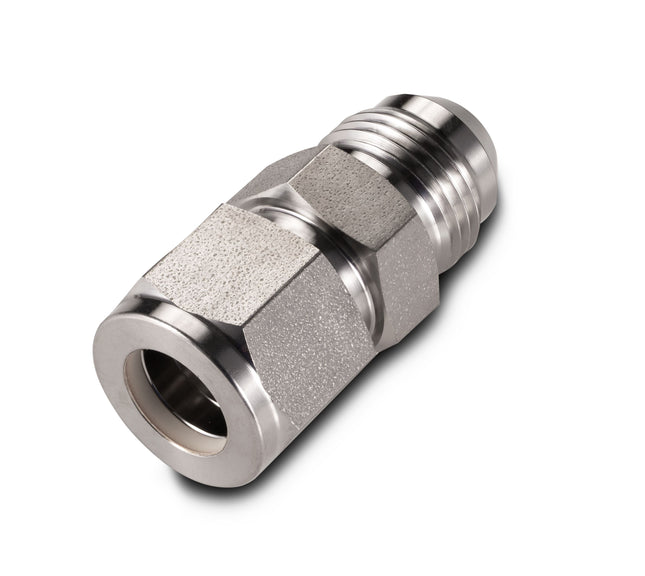
Bore Through 1/2" Compression Fitting x 1/2" MJIC
Bore Through 1/2" Compression Fitting x 1/2" MJIC made out of 304 stainless steel.
$25.91
-
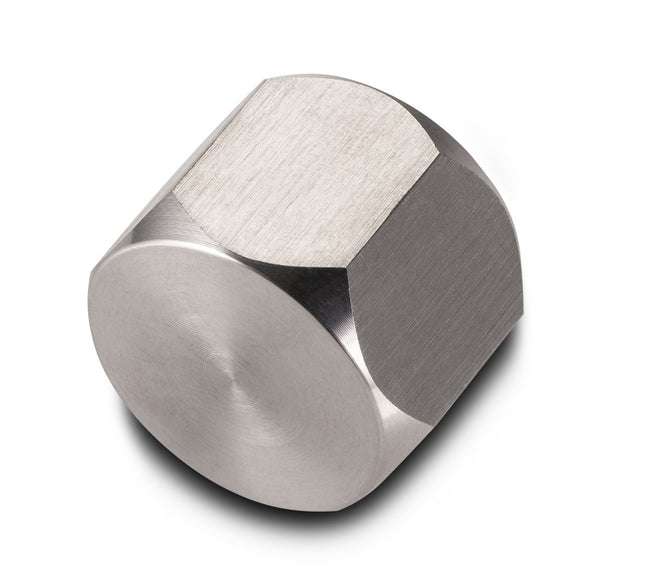

37 Degree FJIC Cap
BVV - FJIC Cap BVV brand stainless steel parts are made with precision 304 Grade Stainless Steel and are clean and free from burrs or debris. JIC connections do not require thread sealant because they seal off the flared surface of the fitting JIC Fittings are also not the same size as NPT fittings but do have the same size nomenclature. When connecting JIC fittings to one another it is recommended by Best Value Vacs to use 2 wrenches - 1 to tighten the fitting and 1 to hold back against the force applied to create resistance and ensure a better seal. Female JIC caps are designed for capping off male JIC threaded connections on extraction system BVV™ FJIC Cap - Data Sheet Specifications Material 304 Stainless Steel Sizes Available: 1/4" 3/8" 1/2"
$8.64
-
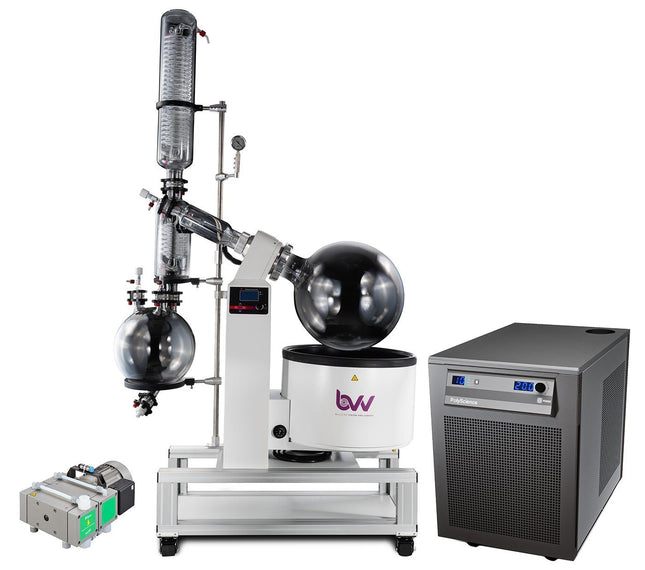

50L Neocision ETL Lab Certified Rotary Evaporator Turnkey System
50L Neocision ETL Lab Certified Rotary Evaporator Turnkey System 50L NEO Rotary Evaporator Turnkey System setup includes all the necessary components to successfully perform solvent recovery via rotary evaporation. A cold trap should always be used inline between your vacuum system and application to protect the pump from volatile vapors. 10-50L NEO and ECO Rotary Evaporator Diagram 50L NEO Rotary Evaporator Turnkey System setup includes: 50L Neocision ETL Lab Certified Rotary Evaporator Polyscience DuraChill 1.5HP Chiller w/ Turbine Pump 3/8" Gum Rubber - 100ft 3/8" Silicone Tubing - 25ft Welch BTpro100 Diaphragm Pump Adjustable Stainless Steel Hose Clamps This guide gives basic quick start instructions for rotovaps. It is intended to provide a starting point for learning the process. Parameters should be adjusted to suit specific needs. Clean and assemble unit. Make sure all pieces are cleaned and sterilized using an alcohol solution. Connect chiller to condenser and set to 0C (32F). Always fill a rotovap condenser from the top down (chiller output to top of condenser, chiller input to bottom of condenser). Connect vacuum pump to cold trap and connect cold trap to vacuum port on rotovap. Turn on heat bath and set to 40C (113F). Once heat bath, chiller and cold trap have reached desired temperatures, turn on rotovap motor and set speed to approximately 100 RPM (does not have to be precise). Keep in mind, higher RPM’s will increase evaporation power but also increase heat load. Start vacuum pump and allow vacuum to pull down for a few minutes before injection. Once vacuum has been pulled to a sufficient level (does not have to be precise but should be below 100 Torr), using the injection valve, very slowly inject approximately 500 mL of solution into evaporating flask and then close the valve. Allow this small amount to begin evaporating. You may see the chiller begin to rise in temperature, this is called “priming” the rotovap. Once the temperature stops rising or all liquid is almost completely evaporated, open the injection valve again very slowly so that a small amount of liquid begins to enter the evaporating flask. Do not close injection valve this time but continue to allow solution to enter the evaporating flask. At this point you must try to match the input speed to the output speed. What this means is that you should be injecting the same amount of liquid into the rotovap that is equal to the amount of liquid dripping from the condenser into the receiving flask. You will know that the input speed and output speed are matched because the chiller will remain at a stable temperature. If the chiller begins to rise, then you are injecting too much liquid. Dial back the valve until the chiller stabilizes. Once everything is stabilized, you may walk away from the rotovap if necessary. Check every so often to make sure temperatures remain stable and evaporation continues efficiently.
$34,086.48 - $37,735.52
-
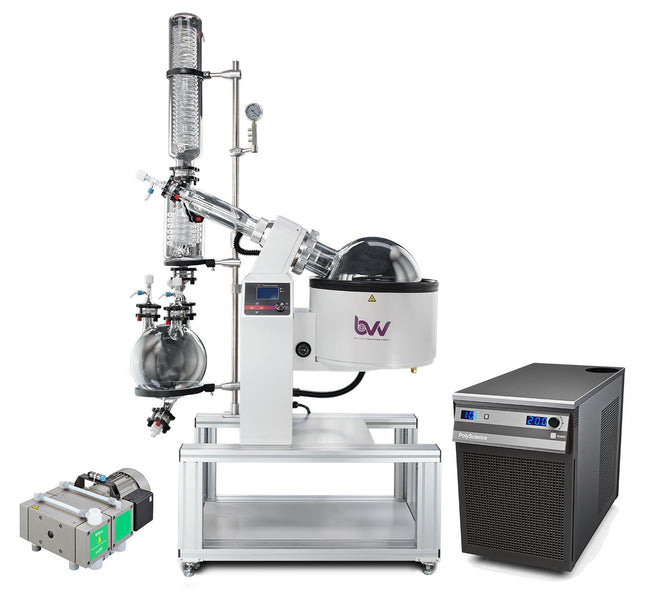

20L Neocision ETL Lab Certified Rotary Evaporator Turnkey System
20L Neocision ETL Lab Certified Rotary Evaporator Turnkey System 20L NEO Rotary Evaporator Turnkey System setup includes all the necessary components to successfully perform solvent recovery via rotary evaporation. A cold trap should always be used inline between your vacuum system and application to protect the pump from volatile vapors. To keep your bath heating properly, this unit should only be used with RO or DI water. 10-50L NEO and ECO Rotary Evaporator Diagram 20L NEO Rotary Evaporator Turnkey System setup includes: 20L Neocision ETL Lab Certified Rotary Evaporator Polyscience 6160T 1HP Chiller 3/8" Gum Rubber - 25ft 3/8" Tubing - 25ft Welch BTpro100 Diaphragm Pump Adjustable Stainless Steel Hose Clamps Rotovap Quick Start Guide This guide gives basic quick start instructions for rotovaps. It is intended to provide a starting point for learning the process. Parameters should be adjusted to suit specific needs. Clean and assemble unit. Make sure all pieces are cleaned and sterilized using an alcohol solution. Connect chiller to condenser and set to 0C (32F). Always fill a rotovap condenser from the top down (chiller output to top of condenser, chiller input to bottom of condenser). Connect vacuum pump to cold trap and connect cold trap to vacuum port on rotovap. Turn on heat bath and set to 40C (113F). Once heat bath, chiller and cold trap have reached desired temperatures, turn on rotovap motor and set speed to approximately 100 RPM (does not have to be precise). Keep in mind, higher RPM’s will increase evaporation power but also increase heat load. Start vacuum pump and allow vacuum to pull down for a few minutes before injection. Once vacuum has been pulled to a sufficient level (does not have to be precise but should be below 100 Torr), using the injection valve, very slowly inject approximately 500 mL of solution into evaporating flask and then close the valve. Allow this small amount to begin evaporating. You may see the chiller begin to rise in temperature, this is called “priming” the rotovap. Once the temperature stops rising or all liquid is almost completely evaporated, open the injection valve again very slowly so that a small amount of liquid begins to enter the evaporating flask. Do not close injection valve this time but continue to allow solution to enter the evaporating flask. At this point you must try to match the input speed to the output speed. What this means is that you should be injecting the same amount of liquid into the rotovap that is equal to the amount of liquid dripping from the condenser into the receiving flask. You will know that the input speed and output speed are matched because the chiller will remain at a stable temperature. If the chiller begins to rise, then you are injecting too much liquid. Dial back the valve until the chiller stabilizes. Once everything is stabilized, you may walk away from the rotovap if necessary. Check every so often to make sure temperatures remain stable and evaporation continues efficiently. ***Note: All units are inspected for broken glass or parts before unit is shipped. If unit arrives damaged or glass is broken (this does not include minor imperfections or scuffs in glassware), Customer MUST contact BVV™ within 3 days of delivery to file a claim and receive a replacement part. If customer DOES NOT contact BVV™ within 3 days of delivery responsibility for replacement parts falls on the customer and they must pay for replacement pieces.*** ***Note: This item will ship by freight only.*** ***Glassware Safety Disclaimer: BVV™ is not responsible for failure of glassware which must be inspected before and after every use because it may eventually develop imperfections or damage through normal usage, mishandling, and stress caused by temperature variations. If an imperfection or damage is noted while inspecting the glassware DO NOT use the glassware because it can fail causing bodily harm or damage to the surrounding area.***
$22,455.62 - $27,925.58
-
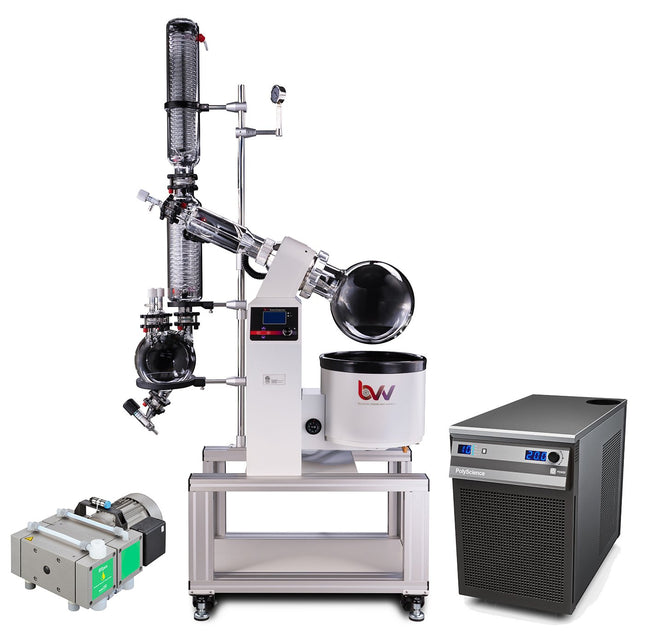

10L Neocision ETL Lab Certified Rotary Evaporator Turnkey System
10L NEO Rotary Evaporator Turnkey System 10L NEO Rotary Evaporator Turnkey System setup includes all the necessary components to successfully perform solvent recovery via rotary evaporation. A cold trap should always be used inline between your vacuum system and application to protect the pump from volatile vapors. To keep your bath heating properly, this unit should only be used with RO or DI water. 10-50L NEO and ECO Rotary Evaporator Diagram 10L NEO Rotary Evaporator Turnkey System setup includes: 10L Neocision ETL Lab Certified Rotary Evaporator Polyscience 6160T 1HP Chiller 3/8" Gum Rubber - 100ft 3/8" Silicone Tubing - 25ft Welch BTpro100 Diaphragm Pump Adjustable Stainless Steel Hose Clamps This guide gives basic quick start instructions for rotovaps. It is intended to provide a starting point for learning the process. Parameters should be adjusted to suit specific needs. Clean and assemble unit. Make sure all pieces are cleaned and sterilized using an alcohol solution. Connect chiller to condenser and set to 0C (32F). Always fill a rotovap condenser from the top down (chiller output to top of condenser, chiller input to bottom of condenser). Connect vacuum pump to cold trap and connect cold trap to vacuum port on rotovap. Turn on heat bath and set to 40C (113F). Once heat bath, chiller and cold trap have reached desired temperatures, turn on rotovap motor and set speed to approximately 100 RPM (does not have to be precise). Keep in mind, higher RPM’s will increase evaporation power but also increase heat load. Start vacuum pump and allow vacuum to pull down for a few minutes before injection. Once vacuum has been pulled to a sufficient level (does not have to be precise but should be below 100 Torr), using the injection valve, very slowly inject approximately 500 mL of solution into evaporating flask and then close the valve. Allow this small amount to begin evaporating. You may see the chiller begin to rise in temperature, this is called “priming” the rotovap. Once the temperature stops rising or all liquid is almost completely evaporated, open the injection valve again very slowly so that a small amount of liquid begins to enter the evaporating flask. Do not close injection valve this time but continue to allow solution to enter the evaporating flask. At this point you must try to match the input speed to the output speed. What this means is that you should be injecting the same amount of liquid into the rotovap that is equal to the amount of liquid dripping from the condenser into the receiving flask. You will know that the input speed and output speed are matched because the chiller will remain at a stable temperature. If the chiller begins to rise, then you are injecting too much liquid. Dial back the valve until the chiller stabilizes. Once everything is stabilized, you may walk away from the rotovap if necessary. Check every so often to make sure temperatures remain stable and evaporation continues efficiently. **Note: All units are inspected for broken glass or parts before unit is shipped. If unit arrives damaged or glass is broken (this does not include minor imperfections or scuffs in glassware), Customer MUST contact BVV™ within 3 days of delivery to file a claim and receive a replacement part. If customer DOES NOT contact BVV™ within 3 days of delivery responsibility for replacement parts falls on the customer and they must pay for replacement pieces.*** ***Note: This item will ship by freight only.*** ***Glassware Safety Disclaimer: BVV™ is not responsible for failure of glassware which must be inspected before and after every use because it may eventually develop imperfections or damage through normal usage, mishandling, and stress caused by temperature variations. If an imperfection or damage is noted while inspecting the glassware DO NOT use the glassware because it can fail causing bodily harm or damage to the surrounding area.***
$16,121.98 - $20,282.03
-
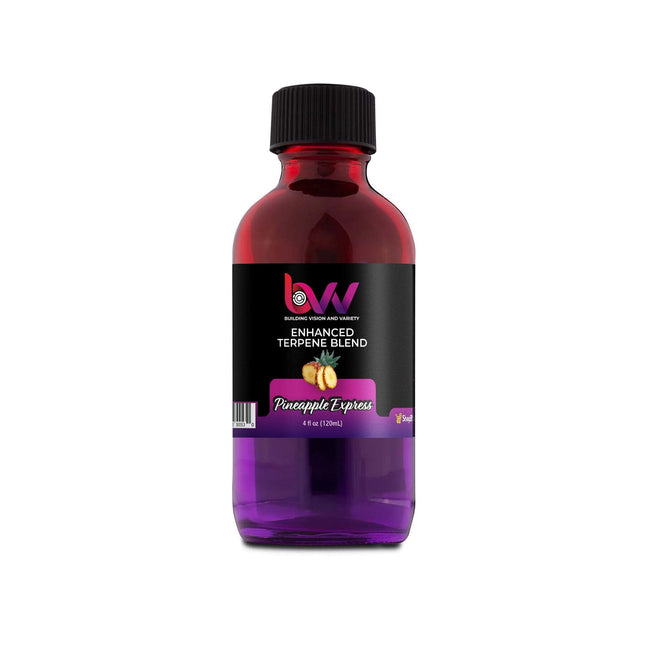

Terpenes Pineapple Express
BVV™ Terpenes Pineapple Express All sales are final. Orders can be refunded prior to fulfillment and shipping but once the order has been fulfilled and/or shipped, no refunds will be issued. Due to the hazardous nature of our product, we are unable to accept returns. BVV™ Terpenes are botanically derived terpenes enhanced with "nature-identical" artificial flavors. These flavors boost the natural flavor profile of the terpenes, providing the user with a more pleasant vaping experience. In order to provide complete transparency and elicit customer confidence, all ingredients are disclosed in the technical datasheet. BVV™ Pineapple Express Safety Data Sheet BVV™ Pineapple Express Technical Data Sheet Pineapple Express is a Sativa strain crossing Trainwreck and Hawaiian. It is potent, flavorful, and long-lasting. The sweet, tropical, cedar flavored strain has uplifting, euphoric, energy-boosting effects. FRAGRANCE: Sweet, tropical, cedar, citrus EFFECT: Uplifting, euphoric, energetic accompanied by a soothing sensation Storage Requirements: Keep in the original container, lid securely tightened and away from heat, open flames, sunlight, combustible materials, and hot surfaces. Store below 15℃ (60℉). Improper storage can cause terpenes to degrade. Dilution: Terpenes must be diluted prior to use for flavor and effect (1-5% by total volume). Terpenes are oil soluble and mix well with plant extracts, coconut oil, and more. Handle With Care: Can cause skin irritation, do not ingest PRIOR to dilution.
$15.83 - $237.51
-
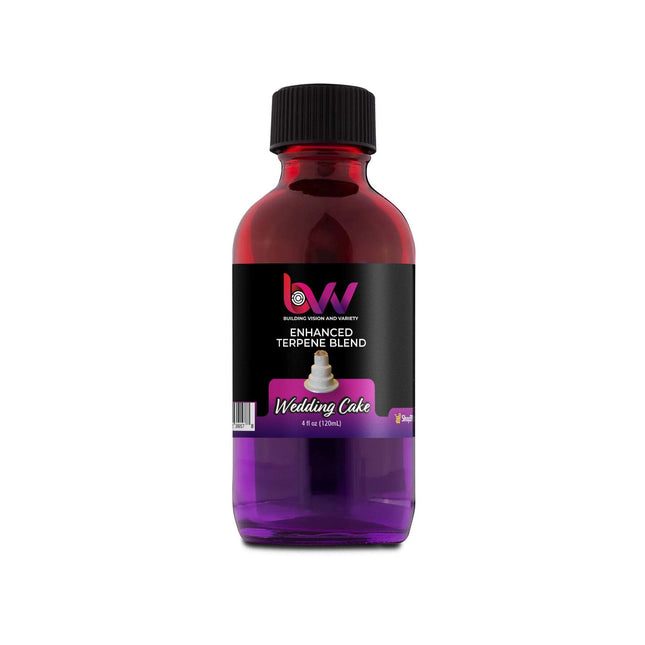

Terpenes Wedding Cake
BVV™ Terpenes Wedding Cake All sales are final. Orders can be refunded prior to fulfillment and shipping but once the order has been fulfilled and/or shipped, no refunds will be issued. Due to the hazardous nature of our product, we are unable to accept returns. BVV™ Terpenes are botanically derived terpenes enhanced with "nature-identical" artificial flavors. These flavors boost the natural flavor profile of the terpenes, providing the user with a more pleasant vaping experience. In order to provide complete transparency and elicit customer confidence, all ingredients are disclosed in the technical data sheet. BVV™ Wedding Cake Safety Data Sheet BVV™ Wedding Cake Technical Data Sheet BVV™ Food Grade Certificate Wedding Cake is a mash-up of sweet, pastry-named varieties to create a profile good enough for any special day. FRAGRANCE: Cherry Pie and Girl Scout Cookies blend to form a tasty flavor with lemon and mango highlights along with creamy lavender notes. A complex variety; the exhale holds the citrus cream flavor. EFFECT: Great for unwinding at the end of the day or just removing the discomfort of the day. Great for lifting your spirits. Storage Requirements: Keep in the original container, lid securely tightened and away from heat, open flames, sunlight, combustible materials, and hot surfaces. Store below 15℃ (60℉). Improper storage can cause terpenes to degrade. Dilution: Terpenes must be diluted prior to use for flavor and effect (1-5% by total volume). Terpenes are oil soluble and mix well with plant extracts, coconut oil, and more. Handle With Care: Can cause skin irritation, do not ingest PRIOR to dilution.
$15.83 - $237.51
-
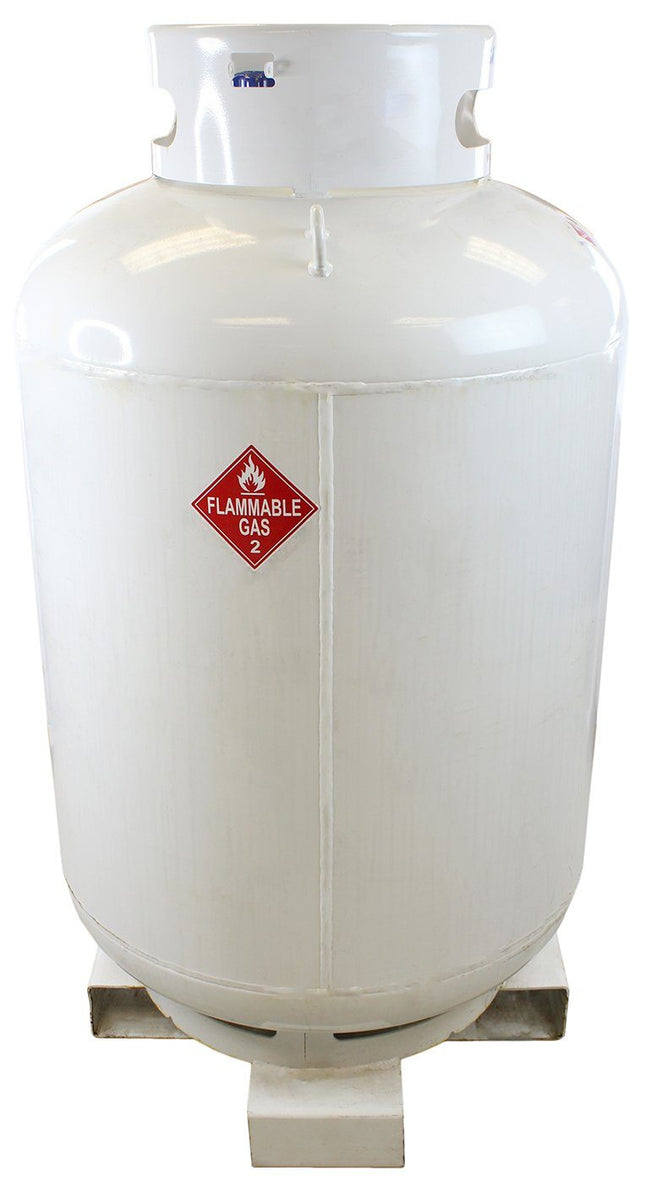
Half Ton - High Purity USA 50/25/25% N-Butane/Iso-Butane/Propane TRI-Blend - 99.5% Guaranteed
Half Ton - High Purity USA 50/25/25% N-Butane/Iso-Butane/Propane TRI-Blend - 99.5% Guaranteed Ultra-high purity 50/25/25% N-Butane/Iso-Butane/Propane TRI-Blend is USA-sourced and guaranteed to be 99.5% pure. This instrument grade solvent helps to produce a higher quality extract by reducing mystery oils and contaminants. The solvent comes in a DOT refillable LP tank. KEY BENEFITS: Free of any hydrogen Sulphide based Ethyl Mercaptan Odorants. This product is clean, colorless, and odorless. Tank has a diptube liquid withdraw. Sourced and Refined in USA. Actual Isobutane liquid weight is 482LB DISCLAIMER(S): This unit is intended for LEGAL purposes only, to be used in accordance with local laws and ordinances. Use only in WELL VENTILATED AREAS! Notice: This item will ship via Ground Freight ONLY. BVV™ always recommends distillation of every solvent before use. Tank does not include CGA 510 fitting. Must be added through dropdown or bought separately. Actual liquid weight is 482LB California now prohibits the retail sale of any Non-Odorized butane in quantities larger than 150ml. If you are not a retail purchaser, you can call in to place an order. Permitted Sales Include the Following: Persons licensed to perform volatile solvent extraction activity under CA Bus & Prof Code Division 10 Manufacturers, wholesalers, resellers, or retailers solely for resale. ***Shipping Notes: Due to FAA regulations, solvent tanks cannot be safely transported via means other than ground freight. Any order that has solvent will not be shipped in an expedited fashion. If an order with solvent is combined with any other items and chosen to be expedited, that entire order will ship via UPS Ground Freight. We will not split up any orders and ship them separately. If a customer is wanting to expedite specific items and order solvent, 2 separate orders (1 for the solvent and 1 for the expedited items) will need to be placed in order to do so. Solvents do not ship to Hawaii, Puerto Rico, or any other US Territory outside of the contiguous 48 States. Shipping Solvent to Alaska may ONLY ship via freight and will be required to travel through Canada. We have this policy in place to ensure safety when transporting solvents, and to prevent any issue with shipping times for our customers. Chemical Formula: C₄H₁₀ + C3H8 Molecular Weight: 58.12 g/mol & 44.10 g/mol CAS Registry Number: 106-97-8 & 74-98-6 & 75-28-5 Appearance Colorless Odor: Faint Petroleum Density N/A Boiling Point: N/A Solubility in water: Low Solubility GHS Pictograms: GHS Signal Word: Danger GHS Hazard Statements: H220, H280 GHS Precautionary Statements P210, P377, P381, P403, P410+P403 UN Identification Number: 1965 Proper Shipping Name: Hydrocarbon Gas Mixture, liquefied, n.o.s. Transport Hazard Class: 2.1 Packing Group: None DOT Placard: Tri-Blend Certificate of Conformance (COC) and Certificates of Analysis (COA's) Tri-Blend Safety Data Sheet (SDS)
$4,462.33
-
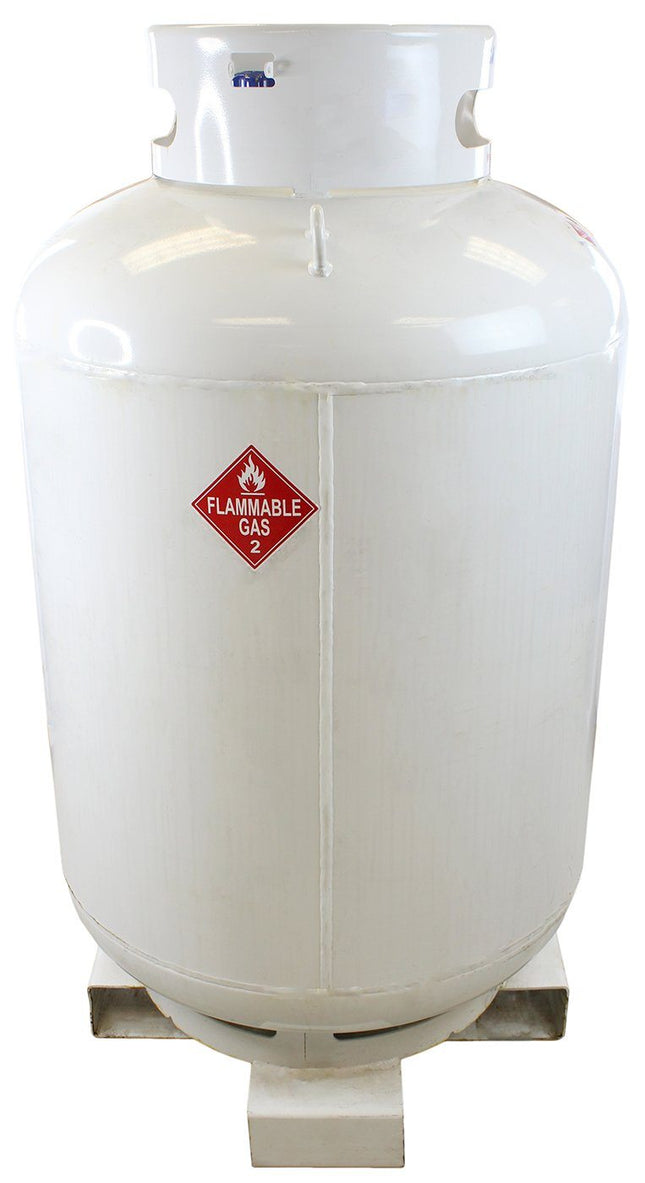
Half Ton - High Purity USA 70/30% N-Butane/Propane Blend - 99.5% Guaranteed
Half Ton - High Purity USA 70/30% N-Butane/Propane Blend - 99.5% Guaranteed Ultra high purity 70/30% N-Butane/Propane is USA sourced, and guaranteed to be 99.5% pure. This instrument grade solvent helps to produce a higher quality extract by reducing mystery oils and contaminants. Solvent comes in a DOT refillable LP tank. KEY BENEFITS: Free of any hydrogen Sulphide based Ethyl Mercaptan Odorants. This product is clean, colorless, and odorless. Tank has a diptube liquid withdraw. Sourced and Refined in USA. Actual Isobutane liquid weight is 483LB DISCLAIMER(S): This unit is intended for LEGAL purposes only, to be used in accordance with local laws and ordinances. Use only in WELL VENTILATED AREAS! Notice: This item will ship via Ground Freight ONLY. BVV™ always recommends distillation of every solvent before use. Tank does not include CGA 510 fitting. Must be added through dropdown or bought separately. Actual liquid weight is 483LB California now prohibits the retail sale of any Non-Odorized butane in quantities larger than 150ml. If you are not a retail purchaser, you can call in to place an order. Permitted Sales Include the Following: Persons licensed to perform volatile solvent extraction activity under CA Bus & Prof Code Division 10 Manufacturers, wholesalers, resellers, or retailers solely for resale. ***Shipping Notes: Due to FAA regulations, solvent tanks cannot be safely transported via means other than ground freight. Any order that has solvent will not be shipped in an expedited fashion. If an order with solvent is combined with any other items and chosen to be expedited, that entire order will ship via UPS Ground Freight. We will not split up any orders and ship them separately. If a customer is wanting to expedite specific items and order solvent, 2 separate orders (1 for the solvent and 1 for the expedited items) will need to be placed in order to do so. Solvents do not ship to Hawaii, Puerto Rico, or any other US Territory outside of the contiguous 48 States. Shipping Solvent to Alaska may ONLY ship via freight and will be required to travel through Canada. We have this policy in place to ensure safety when transporting solvents, and to prevent any issue with shipping times for our customers. Chemical Formula: C₄H₁₀ + C3H8 Molecular Weight: 58.12 g/mol & 44.10 g/mol CAS Registry Number: 106-97-8 & 74-98-6 Appearance Colorless Odor: Faint Petroleum Density N/A Boiling Point: N/A Solubility in water: Low Solubility GHS Pictograms: GHS Signal Word: Danger GHS Hazard Statements: H220, H280 GHS Precautionary Statements P210, P377, P381, P403, P410+P403 UN Identification Number: 1965 Proper Shipping Name: Hydrocarbon Gas Mixture, (Butane/Propane) liquefied, n.o.s. Transport Hazard Class: 2.1 Packing Group: None DOT Placard: Dual Blend Certificate of Analysis (COA) Dual Blend Safety Data Sheet (SDS)
$4,462.33
-
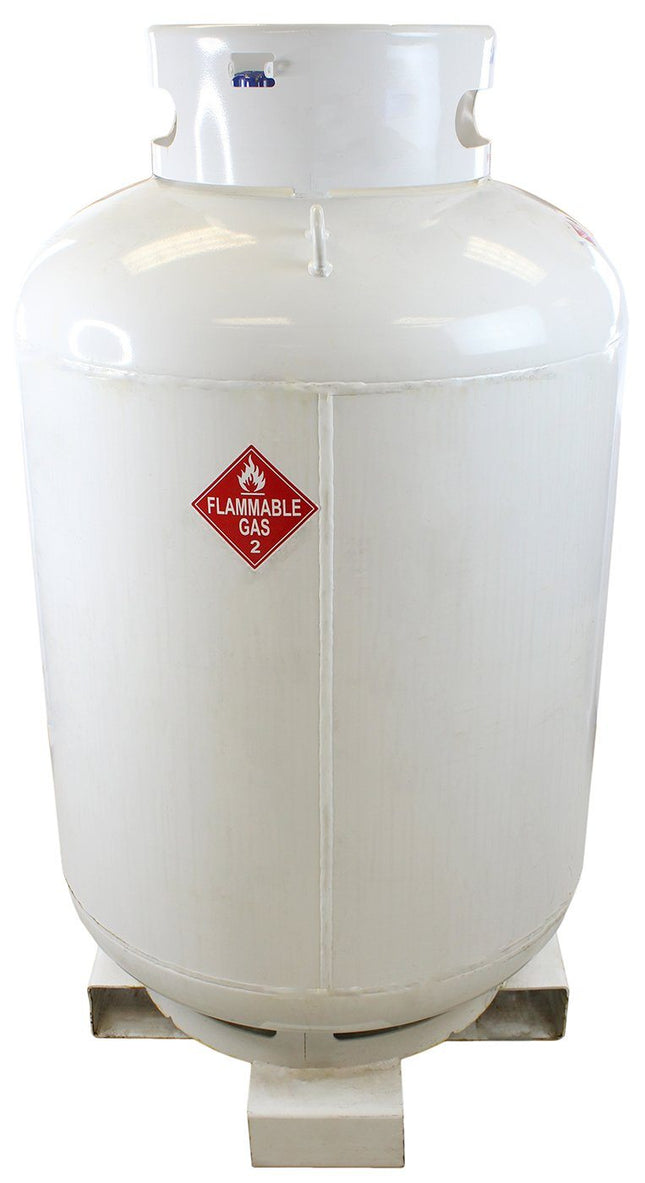
Half Ton - High Purity USA Propane - 99.5% Guaranteed
Half Ton Liquid Withdraw Tank High Purity USA PROPANE R290 This solvent is instrument-grade and helps produce a higher quality extract through the reduction of mystery oils and contaminants. This solvent is clean, odorless, and colorless, meaning there are zero hydrogen sulfide-based Ethyl Mercaptan odorants. It’ll arrive in a DOT refillable LP tank. KEY BENEFITS: Free of any hydrogen Sulphide based Ethyl Mercaptan Odorants. This product is clean, colorless, and odorless. Tank has a diptube liquid withdraw. Sourced and Refined in USA. Actual Isobutane liquid weight is 420LB DISCLAIMER(S): This unit is intended for LEGAL purposes only, to be used in accordance with local laws and ordinances. Use only in WELL VENTILATED AREAS! Notice: This item will ship via Ground Freight ONLY. BVV™ always recommends distillation of every solvent before use. Tank does not include CGA 510 fitting. Must be added through dropdown or bought separately. Actual liquid weight is 420LB California now prohibits the retail sale of any Non-Odorized butane in quantities larger than 150ml. If you are not a retail purchaser, you can call in to place an order. Permitted Sales Include the Following: Persons licensed to perform volatile solvent extraction activity under CA Bus & Prof Code Division 10 Manufacturers, wholesalers, resellers, or retailers solely for resale. ***Shipping Notes: Due to FAA regulations, solvent tanks cannot be safely transported via means other than ground freight. Any order that has solvent will not be shipped in an expedited fashion. If an order with solvent is combined with any other items and chosen to be expedited, that entire order will ship via UPS Ground Freight. We will not split up any orders and ship them separately. If a customer is wanting to expedite specific items and order solvent, 2 separate orders (1 for the solvent and 1 for the expedited items) will need to be placed in order to do so. Solvents do not ship to Hawaii, Puerto Rico, or any other US Territory outside of the contiguous 48 States. Shipping Solvent to Alaska may ONLY ship via freight and will be required to travel through Canada. We have this policy in place to ensure safety when transporting solvents, and to prevent any issue with shipping times for our customers. Typical Lot Analysis: Propane: 99.5% + Methane: <1ppm Ethane: 3ppm Isobutane: 2380ppm n-Butane: 251ppm Propylene: <5ppm Isopentane: <1ppm Water: <3ppm Sulfer: <1ppm Chemical Formula: C3H8 Molecular Weight: 44.10 g/mol CAS Registry Number: 74‐98‐6 Appearance Colorless Odor: Gasoline Density 0.116 Boiling Point: ‐40 F Solubility in water: Slightly Soluble GHS Pictograms: GHS Signal Word: Danger GHS Hazard Statements: H220 GHS Precautionary Statements P203, P210, P222, P280, P377, P381, and P403 UN Identification Number: 1075 Proper Shipping Name: Petroleum Gases, liquefied Transport Hazard Class: 2.1 Packing Group: None DOT Placard: Propane Certificate of Analysis (COA) Propane Safety Data Sheet (SDS)
$4,462.33
-
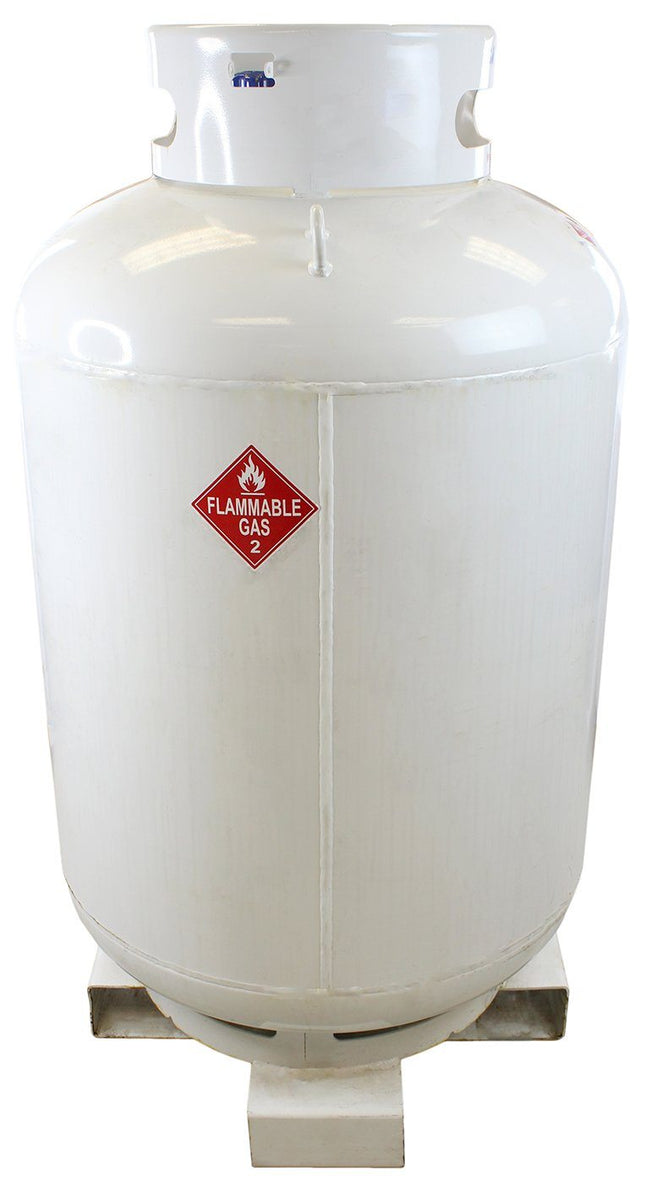
Half Ton - High Purity USA ISO-BUTANE - 99.5% Guaranteed
Half Ton Liquid Withdraw Tank High Purity USA ISO-BUTANE R600A - 99.5% Guaranteed This solvent is instrument-grade and helps produce a higher quality extract through the reduction of mystery oils and contaminants. This solvent is clean, odorless, and colorless, meaning there are zero hydrogen sulfide-based Ethyl Mercaptan odorants. It’ll arrive in a DOT refillable LP tank. KEY BENEFITS: Free of any hydrogen Sulphide based Ethyl Mercaptan Odorants. This product is clean, colorless, and odorless. Tank has a diptube liquid withdraw Sourced and Refined in USA. Actual Isobutane liquid weight is 490LB DISCLAIMER(S): This unit is intended for LEGAL purposes only, to be used in accordance with local laws and ordinances. Use only in WELL VENTILATED AREAS! Notice: This item will ship via Ground Freight ONLY. BVV™ always recommends distillation of every solvent before use. Tank does not include CGA 510 fitting. Must be added through dropdown or bought separately. Actual liquid weight is 490LB California now prohibits the retail sale of any Non-Odorized butane in quantities larger than 150ml. If you are not a retail purchaser, you can call in to place an order. Permitted Sales Include the Following: Persons licensed to perform volatile solvent extraction activity under CA Bus & Prof Code Division 10 Manufacturers, wholesalers, resellers, or retailers solely for resale Typical Analysis: ISO-Butane >99.8% Methane <1 ppm Ethane <1ppm N-Butane <2000 ppm Propane <250ppm Isopentane <2 ppm Water <3 ppm CO+CO2 <5ppm Oxygen <5 ppm Nitrogen <10 ppm Sulfur Non-Detected ***Shipping Notes: Due to FAA regulations, solvent tanks cannot be safely transported via means other than ground freight. Any order that has solvent will not be shipped in an expedited fashion. If an order with solvent is combined with any other items and chosen to be expedited, that entire order will ship via UPS Ground Freight. We will not split up any orders and ship them separately. If a customer is wanting to expedite specific items and order solvent, 2 separate orders (1 for the solvent and 1 for the expedited items) will need to be placed in order to do so. Solvents do not ship to Hawaii, Puerto Rico, or any other US Territory outside of the contiguous 48 States. Shipping Solvent to Alaska may ONLY ship via freight and will be required to travel through Canada. We have this policy in place to ensure safety when transporting solvents, and to prevent any issue with shipping times for our customers. Chemical Formula: C₄H₁₀ Molecular Weight: 58.12 g/mol CAS Registry Number: 75-28-5 Appearance Colorless Odor: Faint Petroleum Density 563 kg/m³ (or 0.563 g/mL) Boiling Point: 10°F (-12°C) Solubility in water: Low Solubility GHS Pictograms: GHS Signal Word: Danger GHS Hazard Statements: H220 GHS Precautionary Statements P203, P210, P222, P280, P377, P381, and P403 UN Identification Number: 1969 Proper Shipping Name: Isobutane, liquefied Transport Hazard Class: 2.1 Packing Group: None DOT Placard: Isobutane Certificate of Analysis (COA) Isobutane Safety Data Sheet (SDS)
$4,462.33
-


Methanol 99.9% Lab Grade
Methanol 99.9% Lab Grade BVV™ High Purity Lab Grade Methanol is used to remove and extract terpenes, tannins, alkaloids, glycosides, lignans, and terpinoids from plants. It is used to extract bio-active, phenolic and polar compounds from medicinal plants. Methanol is a high purity solvent used to manufacture botanical solutions and is easily evaporated. Methanol is used in research and testing laboratories for phytochemical study, phytochemical analysis and chemical synthesis. Methanol is used to prepare methanol/water/acetic acid mixtures. Chemical Formula: CH3OH Molecular Weight: 32.042 g·mol−1 CAS Registry Number: 67-56-1 Appearance Colorless Liquid Odor: Faint and similar to ethanol Density 0.792 g/cm3 Boiling Point: 64.7 °C /148.5 °F Solubility in water: Completely Soluble GHS Pictograms: GHS Signal Word: Danger GHS Hazard Statements: H225, H301, H302, H305, H311, H331, H370 GHS Precautionary Statements P210, P233, P235, P240, P241, P242, P243, P260, P264, P270, P271, P280, P301+P330+P331, P302+P352, P303+P361+P353, P304+P340, P305+P351+P338, P307+P311, P310, P311, P312, P337+P313, P361, P363, P370+P378, P403+P233, P405, P501 UN Identification Number: 1230 Proper Shipping Name: Methanol Transport Hazard Class: 3 Packing Group: II DOT Placard: What Is Methanol? Methanol, also known as methyl alcohol or wood alcohol, is a type of alcohol with the chemical formula CH3OH. It is the simplest alcohol, consisting of a methyl group (CH3) linked to a hydroxyl group (OH). Methanol is a colorless, flammable liquid with a slightly sweet odor. It is commonly used as an industrial solvent, antifreeze, fuel, and as a feedstock in the production of chemicals, plastics, and synthetic materials. Methanol can be synthesized from various sources, including natural gas, carbon monoxide, and biomass. It is considered a hazardous substance due to its toxicity when ingested, inhaled, or absorbed through the skin. Methanol is also used as an industrial and laboratory solvent and as a fuel in some types of racing cars and model engines. One important thing to note is that methanol is highly toxic when consumed, and even small amounts can be lethal. It should never be ingested, and safety precautions should be taken when handling this substance. What Is Methanol Used For? Methanol is used for a wide range of industrial, commercial, and laboratory applications. Some of its common uses include: Fuel: Methanol is used as an alternative fuel in some types of vehicles, particularly racing cars and model engines. It is also used in the production of biodiesel and as a fuel additive. Solvent: Methanol is a versatile solvent that can dissolve a variety of substances, making it useful in industries such as paint, varnish, and ink production. It is also used as a cleaning agent in laboratories and industrial settings. Antifreeze: Methanol is an essential component of some antifreeze formulations, where it helps prevent the freezing of engine coolant in cold temperatures. Chemical Intermediate: Methanol serves as a key building block in the production of various chemicals and materials, including formaldehyde, acetic acid, methyl methacrylate (used in plastics and coatings), and more. Fuel Cell Feedstock: Methanol can be used as a feedstock for the production of hydrogen, which can be used in fuel cells for electricity generation and other applications. Preservative: In the pharmaceutical and personal care industries, methanol is used as a preservative in some products. Denaturant: Methanol is added to industrial ethanol to make it unfit for consumption (denatured). This ensures that the ethanol cannot be used for drinking purposes and is used for industrial applications. Laboratory Reagent: Methanol is commonly used in laboratories as a reagent and solvent for various chemical experiments and analyses. Extraction: It is used in some extraction processes, such as the extraction of essential oils from plants. Energy Storage: Methanol is being explored as a potential energy carrier for energy storage and transportation, particularly in the form of methanol fuel cells. It's important to note that methanol is toxic to humans and should be handled with care. Ingesting or inhaling methanol vapors can be extremely dangerous and potentially fatal. Proper safety precautions and handling procedures are necessary when working with methanol. What Is The Structure of Methanol? Methanol, also known as methyl alcohol, has a simple chemical structure. Its molecular formula is CH3OH, which represents one carbon (C) atom, four hydrogen (H) atoms, and one oxygen (O) atom bonded together. Here's the structural formula of methanol: In this structure: The central carbon atom (C) is bonded to three hydrogen atoms (H) and one oxygen atom (O). The oxygen atom is bonded to the carbon atom through a single covalent bond (C-O). The remaining three hydrogen atoms are bonded to the carbon atom, completing its four covalent bonds. Methanol is a polar molecule due to the electronegativity difference between oxygen and hydrogen atoms, which results in a partial positive charge on the hydrogen atoms and a partial negative charge on the oxygen atom. This polarity gives methanol its unique chemical properties and makes it a versatile solvent in various applications. What are the Hazards of Methanol? Methanol, while commonly used in various industrial and laboratory applications, poses several hazards, primarily due to its toxic and flammable nature. Here are some of the hazards associated with methanol: Toxicity: Methanol is highly toxic to humans when ingested, inhaled, or absorbed through the skin. The toxic effects are primarily due to its metabolites, formaldehyde, and formic acid. Methanol poisoning can lead to symptoms such as headache, dizziness, nausea, vomiting, abdominal pain, and in severe cases, it can cause blindness, organ failure, and death. Flammability: Methanol is flammable and can form explosive mixtures in the air when its vapor concentration is within certain limits. It has a relatively low flashpoint, making it susceptible to ignition by heat, sparks, or open flames. Proper storage and handling precautions are essential to prevent fire hazards. Irritant: Methanol can be irritating to the eyes, skin, and respiratory tract. Contact with methanol vapor or liquid can lead to skin irritation, redness, and chemical burns. Inhaling methanol vapor can irritate the respiratory system and cause coughing and throat irritation. Environmental Impact: Methanol is harmful to the environment. Spills or releases of methanol can contaminate soil and water, posing a risk to aquatic life and ecosystems. It is important to handle and dispose of methanol responsibly to minimize its environmental impact. Incompatibility: Methanol should not be stored or transported in containers or systems that have previously held incompatible materials, as it can react with some substances and form hazardous compounds. Cumulative Exposure: Prolonged or repeated exposure to methanol vapor or mist over time can result in cumulative health effects, particularly on the central nervous system and the optic nerve. Ingestion Risk: Methanol has a sweet taste and is sometimes mistaken for ethanol (the alcohol found in alcoholic beverages). Accidental ingestion of methanol can occur, especially if it is stored in containers that are not clearly labeled. To safely handle methanol and mitigate these hazards, it is crucial to follow strict safety protocols, use appropriate personal protective equipment (PPE), store methanol in well-ventilated areas away from open flames, and provide proper training to personnel working with methanol. Emergency response plans and first-aid measures for methanol exposure should also be in place in case of accidents or spills. How Do I Use Methanol Safely? Using methanol safely is essential due to its toxic and flammable nature. Whether you're working with methanol in a laboratory, industrial setting, or other applications, here are some guidelines for safe handling: Personal Protective Equipment (PPE): Always wear appropriate PPE, including safety goggles, chemical-resistant gloves, a lab coat or chemical-resistant apron, and closed-toe shoes. Consider additional protective gear, such as a face shield, when handling large quantities or performing high-risk operations. Storage: Store methanol in well-ventilated areas away from heat sources, open flames, and direct sunlight. Use containers made of materials compatible with methanol, such as glass or approved plastic containers. Label containers clearly with the contents. Ensure proper labeling and hazard signage in storage areas. Handling: Handle methanol in a fume hood or well-ventilated workspace to minimize inhalation exposure. Do not use methanol near open flames, sparks, or heat sources. Avoid skin contact; wear gloves and lab coats to prevent skin exposure. Use a face shield or safety goggles to protect your eyes. Spill Response: Have spill kits and absorbent materials (e.g., spill pads, spill pillows) available for immediate use. In the event of a spill, ventilate the area, and contain the spill to prevent it from spreading. Wear appropriate PPE when cleaning up spills. Follow your workplace's spill response procedures and dispose of contaminated materials properly. Storage and Dispensing: Use safety containers designed for methanol when dispensing or transferring the liquid. Never use glassware or containers that have been used for other chemicals without thorough cleaning. Ensure proper grounding and bonding when transferring methanol to prevent static electricity buildup. Inhalation Exposure: Minimize inhalation exposure by working in a well-ventilated area or under a fume hood. If you suspect inhalation exposure, move to an area with fresh air and seek medical attention if symptoms persist. Ingestion Prevention: Do not eat, drink, or smoke in areas where methanol is handled. Avoid using containers or equipment that may be contaminated with methanol for food or beverage storage. Fire Safety: Methanol is flammable; keep it away from open flames, sparks, and heat sources. Use explosion-proof electrical equipment in areas where methanol vapors may be present. Emergency Response: Familiarize yourself with the location of safety showers, eyewash stations, fire extinguishers, and emergency exits. Know the location of first-aid supplies and procedures for methanol exposure. Training and Education: Ensure that personnel handling methanol are properly trained in its safe handling, storage, and emergency response procedures. Waste Disposal: Dispose of methanol waste in accordance with local, state, and federal regulations for hazardous waste disposal. Always follow your workplace's safety protocols and consult with safety officers or supervisors for specific safety procedures related to methanol handling in your environment. Regular safety training and awareness are essential to prevent accidents and protect your health when working with methanol. Methanol Safety Data Sheet (SDS) Methanol Certificate of Analysis (COA)
$15.83 - $2,663.01
-


N-Pentane 99% Lab Grade
High Purity Lab Grade N-Pentane 99% (Note: Container style and color may vary) BVV™ High Purity Lab Grade n-Pentane 99% is a hydrocarbon that has properties that are similar to butanes and hexanes. Pentane is a non-polar solvent and refrigerant. Pentane is used for the extraction and eluting of distillates, concentrates, volatiles, and essential oils from plant materials. Pentane can be used with hydrocarbon extraction systems that extract herbal oils, botanical compounds and oils from plants. It is a colorless liquid and has a petroleum-like odor. Chemical Formula: C5H12 Molecular Weight: 72.151 g·mol−1 CAS Registry Number: 109-66-0 Appearance Colorless Liquid Odor: Gasoline-like Density 0.6262 g/mL (20 °C) Boiling Point: 35.9°C /96.5 °F Solubility in water: 40 mg/L (20 °C) GHS Pictograms: GHS Signal Word: Danger GHS Hazard Statements: H225, H304, H336, H411 GHS Precautionary Statements P210, P261, P273, P301+P310, P331 UN Identification Number: 1265 Proper Shipping Name: Pentanes Transport Hazard Class: 3 Packing Group: II DOT Placard: What Is N-Pentane? N-Pentane, also known as normal pentane, is a straight-chain alkane hydrocarbon with the molecular formula C5H12. It is one of the isomers of pentane, a hydrocarbon that consists of five carbon atoms bonded together in a linear, unbranched chain. n-Pentane is called "normal" because its carbon atoms are arranged in a continuous, straight chain, without any branching. What Are The Properties Of N-Pentane? Here are some of the key properties of n-pentane: Physical State: At room temperature and standard atmospheric pressure, n-pentane is a colorless, clear, and highly flammable liquid. Odor: It has a gasoline-like or organic solvent-like odor. Boiling Point: The boiling point of n-pentane is approximately 36.1 degrees Celsius (97 degrees Fahrenheit). This relatively low boiling point makes it useful in various applications. Density: The density of n-pentane at room temperature is about 0.626 grams per milliliter (g/mL). It is less dense than water, which has a density of 1 g/mL. Solubility: n-Pentane is sparingly soluble in water, which means it does not readily mix with water. This is because it is a nonpolar compound, and water is a polar solvent. However, it is highly soluble in nonpolar solvents and organic compounds. Flammability: n-Pentane is highly flammable and poses a fire hazard. It has a low flash point and can easily ignite when exposed to an open flame or heat source. Vapor Pressure: It has a relatively high vapor pressure at room temperature, meaning it readily evaporates into the air. Chemical Structure: As a straight-chain alkane, n-pentane consists of five carbon atoms bonded together in a linear fashion, with 12 hydrogen atoms bonded to these carbons. Molar Mass: The molar mass of n-pentane is approximately 72.15 grams per mole (g/mol). Reactivity: n-Pentane is relatively unreactive under normal conditions and does not readily undergo chemical reactions with common reagents. Uses: It is used as a laboratory solvent, industrial solvent, component in fuel blends, foam blowing agent, and as a chemical reagent in various applications. Safety Precautions: Due to its high flammability, proper safety precautions should be taken when handling n-pentane. It should be stored away from open flames, sparks, and heat sources. Environmental Impact: Like other hydrocarbons, the combustion of n-pentane releases carbon dioxide and other greenhouse gases into the atmosphere, contributing to climate change. n-Pentane is commonly employed in laboratory and industrial settings as a solvent, and its physical and chemical properties make it suitable for various applications. However, its flammability requires careful handling and storage to prevent accidents. What Is The Difference between N-Pentane and ISO-Pentane? n-Pentane and isopentane are two different structural isomers of pentane, each with distinct molecular arrangements. Here are the key differences between n-pentane and isopentane: Structural Arrangement: n-Pentane (Normal Pentane): n-Pentane has a linear, straight-chain structure with five carbon atoms connected in a continuous, unbranched chain. It is sometimes referred to as "normal" pentane due to its unbranched structure. Isopentane (2-Methylbutane): Isopentane has a branched-chain structure with one methyl (CH3) group branching off from the second carbon atom (C2) of the main carbon chain. This branching gives it its common name, "isopentane." Physical Properties: n-Pentane: n-Pentane is a clear, colorless liquid at room temperature and atmospheric pressure. It has a higher boiling point than isopentane and is less volatile. Isopentane: Isopentane is also a clear, colorless liquid at room temperature, but it has a lower boiling point compared to n-pentane. It is more volatile and evaporates more easily. Boiling Points: n-Pentane: The boiling point of n-pentane is approximately 36.1 degrees Celsius (97 degrees Fahrenheit). Isopentane: The boiling point of isopentane is lower, at approximately -11.7 degrees Celsius (11 degrees Fahrenheit). This lower boiling point makes it more suitable for certain applications. Applications: n-Pentane: n-Pentane is used as a laboratory solvent, in the formulation of industrial solvents, and as a component in gasoline and other fuels. Its relatively higher boiling point makes it less volatile and suitable for some applications where slow evaporation is desired. Isopentane: Isopentane is commonly used as a refrigerant and as a component in aerosol propellants, blowing agents for foam production, and as a solvent. Its lower boiling point and greater volatility make it useful in these applications. In summary, n-pentane and isopentane differ in their molecular structures, physical properties, boiling points, and applications. The choice between the two depends on the specific requirements of a given application, with n-pentane being less volatile and isopentane being more volatile. What Is The Structure Of N-Pentane? Pentane is an alkane with the chemical formula C5H12. It is a colorless, flammable liquid that is commonly used as a solvent and a fuel. The structure of pentane is a straight chain of five carbon atoms, with each carbon atom bonded to four hydrogen atoms. The carbon atoms in pentane are arranged in a tetrahedral geometry, with each carbon atom forming four bonds with other atoms. The hydrogen atoms are bonded to the carbon atoms in a single bond. What Is Pentane Used For? Pentane, both in its various isomeric forms (n-pentane and isopentane), has several industrial and commercial applications due to its properties as a hydrocarbon solvent and fuel component. Here are some common uses of pentane: Solvent: Pentane is used as a nonpolar solvent in various laboratory and industrial applications. It is particularly useful for dissolving oils, fats, waxes, and some organic compounds. Its low boiling point and relatively low toxicity make it suitable for these purposes. Foam Blowing Agent: Isopentane (also known as 2-methylbutane) is often used as a blowing agent in the production of polyurethane foams. When mixed with other chemicals, isopentane vaporizes and creates bubbles within the foam, leading to its expansion and formation. Fuel Component: Pentane, primarily in the form of isopentane, is used as a component in gasoline and other fuel blends. It enhances the octane rating of gasoline and helps reduce engine knocking, improving engine performance. Chemical Reagent: Pentane can serve as a chemical reagent in organic synthesis and research. It may be used as a reactant in some chemical reactions or as a medium for certain processes. Extraction: In laboratories, pentane is utilized for liquid-liquid extractions to separate compounds from mixtures based on differences in solubility. It is a common choice for extracting natural products and essential oils. Cleaning Agent: Pentane is employed for cleaning and degreasing purposes in industrial settings. It can effectively remove residues, contaminants, and oils from various surfaces and equipment. Refrigeration: Pentane has been used as a refrigerant in some applications, particularly in the form of isopentane. However, due to environmental concerns and regulations related to ozone depletion, its use as a refrigerant has diminished. Analytical Chemistry: In gas chromatography (GC), pentane is sometimes used as a carrier gas to transport samples through the GC column for analysis. Adhesives and Sealants: Some adhesive and sealant formulations may contain pentane as a solvent or propellant. Aerosol Propellants: Pentane, particularly isopentane, has been used as a propellant in aerosol spray products. Energy Production: In certain regions, pentane may be used as a fuel for heating and electricity generation, although this application is less common. It's important to note that while pentane has various industrial and commercial uses, safety precautions should be taken when handling it due to its flammable nature. Proper storage, ventilation, and safety measures are essential to minimize the risk of accidents. Additionally, environmental regulations and concerns have led to the exploration of alternative substances in some applications where pentane was traditionally used as a refrigerant or propellant. How Is Pentane Produced? Pentane is typically produced from petroleum through refining processes. It is a natural component of crude oil, and the separation and purification of pentane from crude oil involve various refining techniques. Here's an overview of how pentane is produced: Fractional Distillation: Crude oil is first subjected to fractional distillation in an oil refinery. This process separates the crude oil into different fractions based on their boiling points. Pentane, along with other hydrocarbons of similar boiling points, is separated from the crude oil in this initial distillation step. Fraction Separation: The fraction obtained in the distillation containing pentane and similar hydrocarbons is further separated in subsequent distillation columns. These columns are designed to separate hydrocarbons with similar boiling points, and pentane is separated from other hydrocarbons through a series of distillation steps. Purification: After the initial separation, the pentane fraction may still contain impurities and other hydrocarbons. To obtain high-purity pentane, additional purification steps are often employed. One common method is solvent extraction, where selective solvents are used to remove impurities. Adsorption and molecular sieves may also be used for purification. Final Processing: The purified pentane may undergo additional processing steps to meet specific product specifications or requirements. For example, it may be dried to remove any remaining water content. Packaging and Distribution: Once purified and processed, pentane is typically packaged into containers suitable for transportation and distribution. It may be distributed to various industries where it is used for its specific applications. Overall, the production of pentane is part of the larger petroleum refining process, and its availability depends on the composition of the crude oil and the specific refining techniques employed by the refinery. What Are The Hazards Of Pentane? Pentane, like other hydrocarbon compounds, poses certain hazards, especially when handled and used in industrial or laboratory settings. It's essential to be aware of these hazards and take appropriate safety precautions when working with pentane. Here are some of the hazards associated with pentane: Flammable: Pentane is highly flammable and can form explosive mixtures with air when its vapor concentration is within a specific range (approximately 1.5% to 7.8% by volume). This means that even a small spark or open flame can ignite pentane vapors, leading to fires or explosions. Health Hazards: Inhalation of pentane vapor can cause respiratory irritation, dizziness, headache, nausea, and, in severe cases, central nervous system depression. Prolonged exposure to pentane may lead to adverse health effects, including drowsiness, unconsciousness, and even asphyxiation. Irritant: Pentane can be a skin and eye irritant. Contact with the skin may cause irritation, redness, and dermatitis, particularly with prolonged or repeated exposure. Eye contact with pentane can result in irritation, redness, and discomfort. Environmental Impact: Pentane is a volatile organic compound (VOC) that can contribute to air pollution. When released into the atmosphere, it can react with other pollutants and contribute to the formation of ground-level ozone, which is harmful to human health and the environment. Asphyxiation Hazard: Pentane vapors can displace oxygen in poorly ventilated areas, creating an oxygen-deficient atmosphere. This can lead to asphyxiation if pentane is released in a confined space without proper ventilation. To use pentane safely, consider the following precautions: Work in well-ventilated areas or use exhaust systems to prevent the buildup of pentane vapors. Avoid open flames, sparks, and hot surfaces when working with pentane, and ensure that electrical equipment and wiring are explosion-proof in areas where pentane is used. Store pentane in approved containers away from heat, ignition sources, and incompatible materials. Use appropriate personal protective equipment (PPE), including safety goggles, gloves, and lab coats, when handling pentane. Have emergency response measures in place, including fire extinguishers and eyewash stations, when working with pentane. Follow safety data sheet (SDS) guidelines and procedures provided by the manufacturer or supplier of pentane. Educate and train personnel on the safe handling and storage of pentane. It's crucial to have a thorough understanding of the potential hazards associated with pentane and to implement appropriate safety measures to mitigate these risks. Always follow safety guidelines and regulations specific to your workplace or laboratory when working with pentane or any other hazardous chemicals. How Do I Use Pentane Safely? Using pentane safely is essential due to its flammable nature and associated hazards. Whether you're working with pentane in a laboratory, industrial setting, or any other environment, following proper safety procedures is crucial. Here are some steps to use pentane safely: Work in a Well-Ventilated Area: Always work in a properly ventilated area. Ensure that fumes and vapors can be effectively removed to prevent the buildup of pentane in the air. No Open Flames or Sparks: Avoid working near open flames, sparks, or other potential ignition sources. Pentane is highly flammable and can ignite easily. Use Appropriate Containers: Store pentane in approved containers designed for flammable liquids. These containers are typically designed to prevent leaks and resist fire. Keep Away from Heat Sources: Store pentane away from heat sources, including direct sunlight, radiators, and hot surfaces. Static Electricity: Ground yourself and any equipment that could generate static electricity. This helps prevent static sparks that could ignite pentane vapors. Wear Protective Gear: Use appropriate personal protective equipment (PPE), including safety goggles, gloves, and lab coats, to protect your eyes, skin, and clothing from contact with pentane. No Smoking or Eating: Do not smoke or eat while working with pentane. Keep food and beverages away from the work area. Emergency Equipment: Have safety equipment on hand, such as fire extinguishers, eyewash stations, and safety showers, in case of accidents or emergencies. Avoid Confined Spaces: Do not use pentane in confined spaces without proper ventilation. Pentane vapors can displace oxygen, leading to an oxygen-deficient atmosphere. Secure Containers: Ensure that containers are tightly sealed when not in use. Prevent spills and leaks. Safety Data Sheet (SDS): Familiarize yourself with the safety data sheet (SDS) provided by the manufacturer or supplier of pentane. SDS contains important information about the chemical's properties, hazards, and safe handling procedures. Training and Education: Train all personnel working with pentane on its safe handling, storage, and disposal. Ensure that they understand the hazards and know how to respond to emergencies. Labeling and Signage: Clearly label containers of pentane with appropriate warnings and hazard symbols. Use warning signs in areas where pentane is stored or used. Emergency Response: Develop and communicate emergency response plans, including evacuation procedures and fire safety protocols. Conduct regular drills to ensure that personnel are prepared. Proper Disposal: Dispose of pentane and any contaminated materials according to local, state, and federal regulations. Do not pour pentane down drains or dispose of it improperly. Regular Inspections: Periodically inspect equipment, storage areas, and containers for signs of damage or deterioration. Replace damaged equipment or containers promptly. By following these safety guidelines and practices, you can minimize the risks associated with pentane use and create a safer working environment. Always prioritize safety and be prepared to respond to potential emergencies involving pentane or other flammable chemicals. N-Pentane Safety Data Sheet (SDS) N-Pentane Certificate of Analysis (COA)
$41.74 - $1,727.36
-
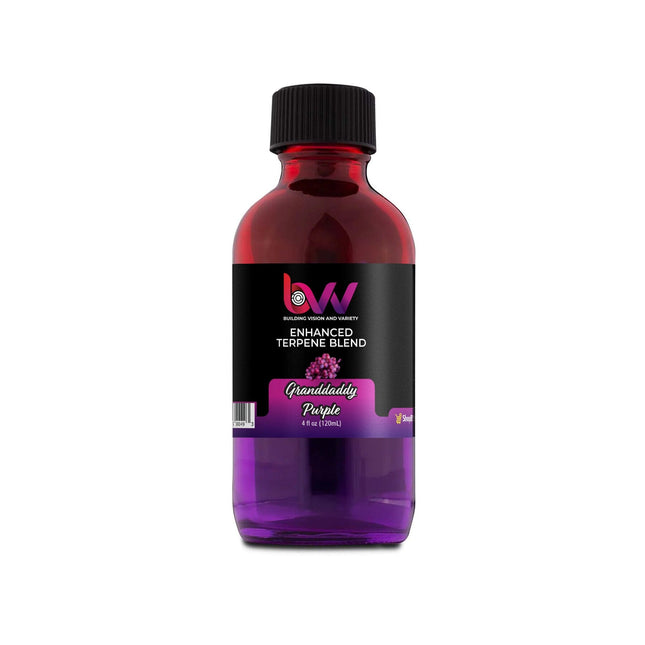

Terpenes Granddaddy Purple
BVV™ Terpenes Granddaddy Purple All sales are final. Orders can be refunded prior to fulfillment and shipping but once the order has been fulfilled and/or shipped, no refunds will be issued. Due to the hazardous nature of our product, we are unable to accept returns. BVV™ Terpenes are botanically derived terpenes enhanced with "nature-identical" artificial flavors. These flavors boost the natural flavor profile of the terpenes, providing the user with a more pleasant vaping experience. In order to provide complete transparency and elicit customer confidence, all ingredients are disclosed in the technical data sheet. BVV™ Granddaddy Purple Safety Data Sheet BVV™ Granddaddy Purple Technical Data Sheet Granddaddy Purple (GDP) is a strain from California with purple blooms. It is a cross between Big Bud and Purple Urkle. The effects of this sweet, grape/berry flavored, powerful strain are both euphoric and soothing. In addition to feeling soothed, patients describe feeling tired, happy, and hungry. FRAGRANCE: Sweet, floral, earth EFFECT: Soothed, tired, hungry and a fusion of euphoria Storage Requirements: Keep in the original container, lid securely tightened and away from heat, open flames, sunlight, combustible materials, and hot surfaces. Store below 15℃ (60℉). Improper storage can cause terpenes to degrade. Dilution: Terpenes must be diluted prior to use for flavor and effect (1-5% by total volume). Terpenes are oil soluble and mix well with plant extracts, coconut oil, and more. Handle With Care: Can cause skin irritation, do not ingest PRIOR to dilution.
$15.83 - $237.51
-
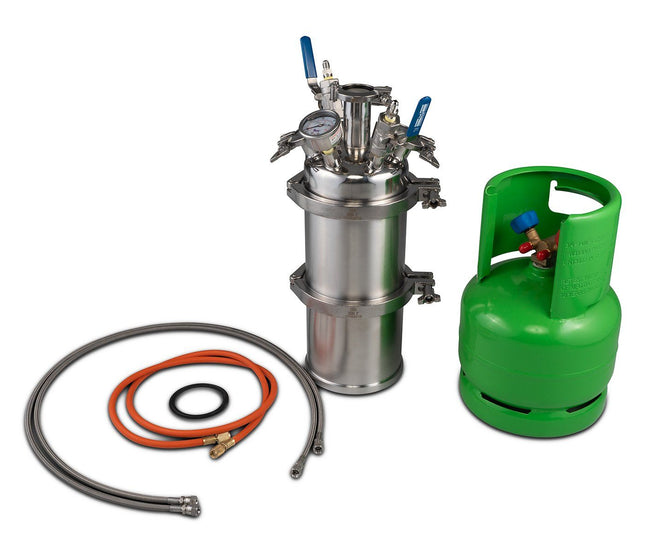

Closed Column Conversion Kit
Closed Column Extractor Conversion Kit This conversion kit will allow you to convert a closed column into a Closed-loop Apollo extractor. ***Disclaimer: Photos are of 1LB upgrade kit. 135g is not pictured yet.*** The V1 kit will include the following: Extractor Base Hemispherical Extractor Lid with BVV 316SS Full Bore Valves Polycarbonate Sight Glasses (2x) Tri Clamp Clamps Tri-Clamp Gaskets 1.5" 150 Mesh Gasket Stainless Steel Braided Hoses (2x) LP Storage and Recovery Tank The V2 kit will include the following: Extractor Base Splatter Platter Hemispherical Extractor Lid with BVV 316SS Full Bore Valves Polycarbonate Sight Glasses (2x) 1.5" BVV Ball Valve Tri Clamp Clamps Tri-Clamp Gaskets 1.5" 150 Mesh Gasket Stainless Steel Braided Hoses (2x) LP Storage and Recovery Tank
$1,295.52 - $2,418.30
-
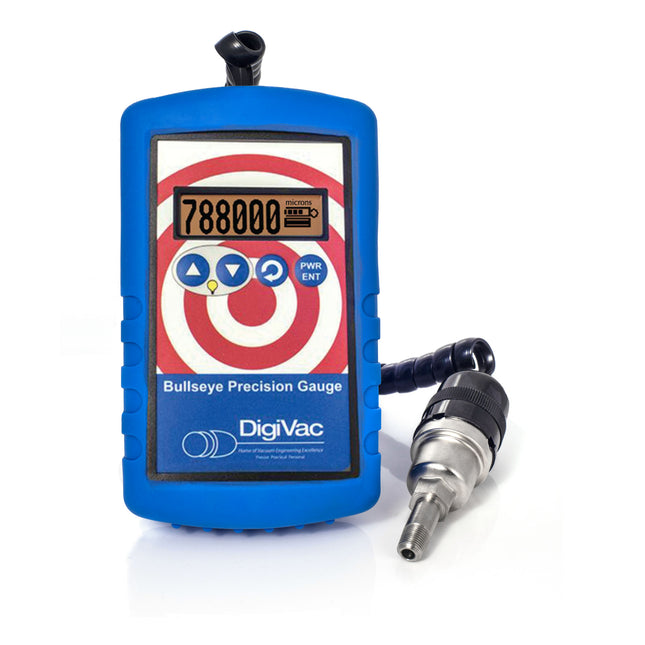

DigiVac Bullseye Precision Gauge | Portable Vacuum Gauge | .001 to 2 Torr Accuracy
Bullseye Precision Gauge | Portable Vacuum Gauge | .001 to 2 Torr Accuracy The Bullseye Precision Gauge is the ideal portable vacuum gauge to serve many applications. This patented vacuum gauge offers Graphical Displays and graphics supporting real-time analytics (Leak, Pump, Outgas, Stable) Visual graphing feature right on the display Display pinpoints the root of the problem so you get it right the first time Put it anywhere with its magnet and kickstand Options: Rugged carrying case designed for instrument, back-up sensor and these adapters that can change the NPT to a KF25 or KF16 vacuum interface adapters Sensor (Probe) Replacements: This gauge is paired with the Thermocouple Plus/531 Equivalent Sensor, but works with Agilent 531 or 536 sensors as well if you are looking for a more robust sensor option Numeric & Graphical Displays See vacuum readings in either numbers or easy-to-read graphs Calibrated & Precise Delivered pretested and calibrated with thermocouple sensor under actual vacuum against a NIST standard. Extended Battery Lifespan Solid state electronics are built into the Bullseye Precision Gauge. The portable vacuum gauge operates using AA batteries and lasts 70 hours. Applications Vacuum pump monitoring, vacuum pump testing, baseline vacuum pump performance, & transformer dry-out, distillation monitoring Bullseye Precision Gauge Accuracy Remember to choose your vacuum gauge that gives you the accuracy you need for your application. This Bullseye comes with a thermocouple sensor, which has better accuracy in the millitorr up to 6 Torr. If you need your Bullseye Gauge to have CE rating then choose either the Bullseye with 531 or Bullseye with 536 KF25 1 to 99 millitorr +/- 2 millitorr or 20% 100 to 2000 millitorr +/- 10% 2 to 6 Torr +/- 25% Above 6 Torr Continuous and monotonic (increasing reading indicates increasing pressure) Units Torr, mbar, bar, kPa, inHg, mm Hg, millitorr, microns, inches of water, PSI, Pa Control Range 1E-4 – 1000 Torr Range with Accuracy .001 – 5 Torr Sensor Type SEN-VGT500, Thermocouple Plus Dimensions 6.2”H x 3.7”W x 1.3”D Certifications ROHS and CE
$801.54
-

Vape Cartridge Packaging (Child Resistant 16 CFR 1700 Compliant)
Vape Cartridge Packaging (Child Resistant 16 CFR 1700 Compliant) **Does not come with a Cartridge. This blank matte black packaging will hold 0.5ml - 1.0ml carts. The carts pictured are the BVV™ ceramic tip carts. The packaging is universal. BVV™ has tested the fitment with dozens of carts and just about every length and barrel fits nice and snug. The packaging is child resistant to the latest standards and is fully recyclable. This attractive box is patented which means your box will stand out among the others. Give your extracts the presentation they deserve by affixing your own label and brand to this executive level box. The insert comes with all boxes but not installed and is pre-creased so it can easily be folded. Packaging Dimensions Measure: 2-1/4" Wide x 4-3/8" Long x 7/8" Tall *Custom Designs for orders over 5,000 pieces, production lead time 3 weeks from proof. BVV™ and their payment vendors retain the right to refuse to accept certain transactions if it conflicts with their Terms of Service. Therefore, certain items on the website may not be able to be purchased using certain payment methods (Ex. Amazon Pay) if it is prohibited in that payment method’s Terms of Service. The available payment methods will display at checkout.
$1.73 - $2.16
-
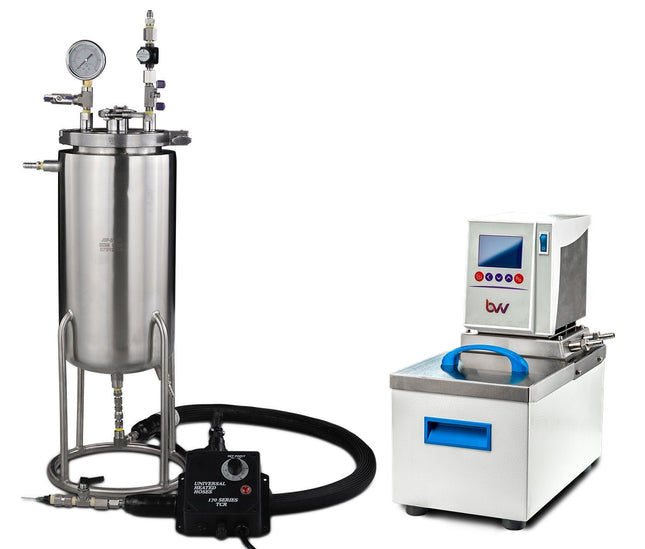

Table Top Cart Filler XL 6 Liter & Heater Kit
Table Top Cart Filler XL 6 Liter & Heater Kit Fill 6000 1ml Carts per Load This 6 Liter capacity Giant is made to fill. Fully jacketed 304SS with a design that allows the OIL inside to fully drain creating little to no loss. The system is made of all parts that can be sterilized. The body, valves and all connections are 304 Stainless Steel and the hosing is PTFE. The body of the vessel is fully jacked and is recommended to be run with stand alone heater to pre-heat the oil. The hose heated and insulated. The hose temperature is controlled by an analog PID. The hose and PID controller are precision made in the USA. The hose uses Platinum Thermocouples for durability and accuracy, which means you wont run into down time or temperature errors. To use the system you will need Nitrogen to back pressure the oil in the tank. The pressure is regulated by a low pressure regulator. To dispense the end of the hose has a toggle valve that connects to a Lure Lock connection. System Specs. Nitrogen Input MAX Pressure: 150PSI Regulator working pressure: 0.5-30PSI (*recommended pressure 10PSI) Hose Temperature Rating: 50°F - 450°F Controller Temperature Range: 50°F -450° Includes Right Angle Attachment for added user flexibility. Non-Metered Dispensing with toggle valve control. Pressure gauge for pressure monitoring: 0-150PSI BVV™ 5 Liter Heated circulator 275°F Max Temperature *Heater and 10Ft of hose is included in the kit. Ready to Run! BVV 5 Liter Heated Circulator Manual Cleaning: NOTE: Please Clean Prior to first use the system does not come sterilized. A simple IPA wash down will be sufficient. At any point the system can be cleaned using IPA or D-limonene. Note: The heater should be operated with RO water to avoid scale buildup. BVV™'s warranty does not protect heating coils that fail due to scale buildup.
$6,621.53
-
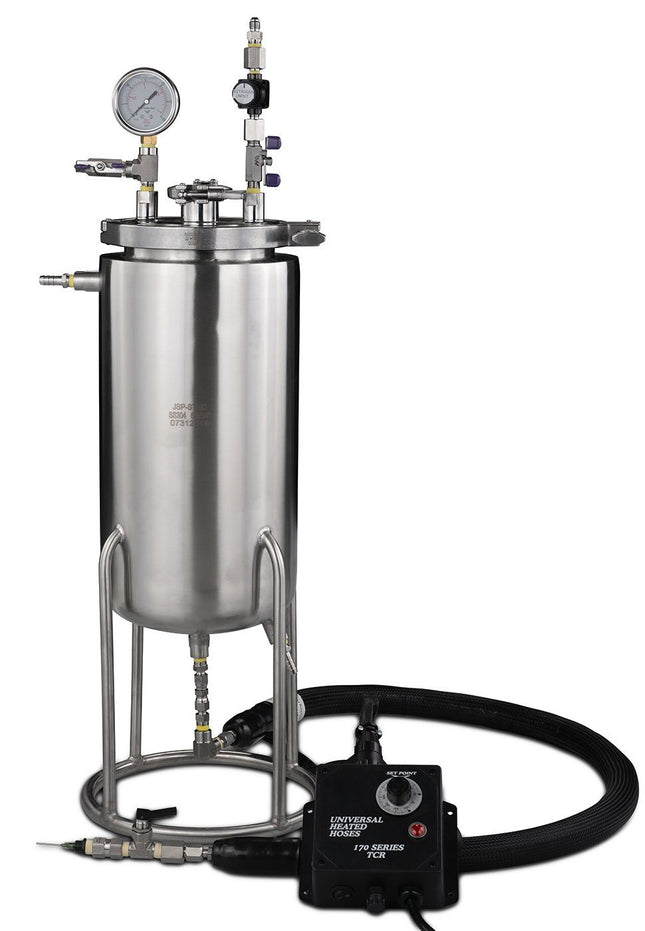
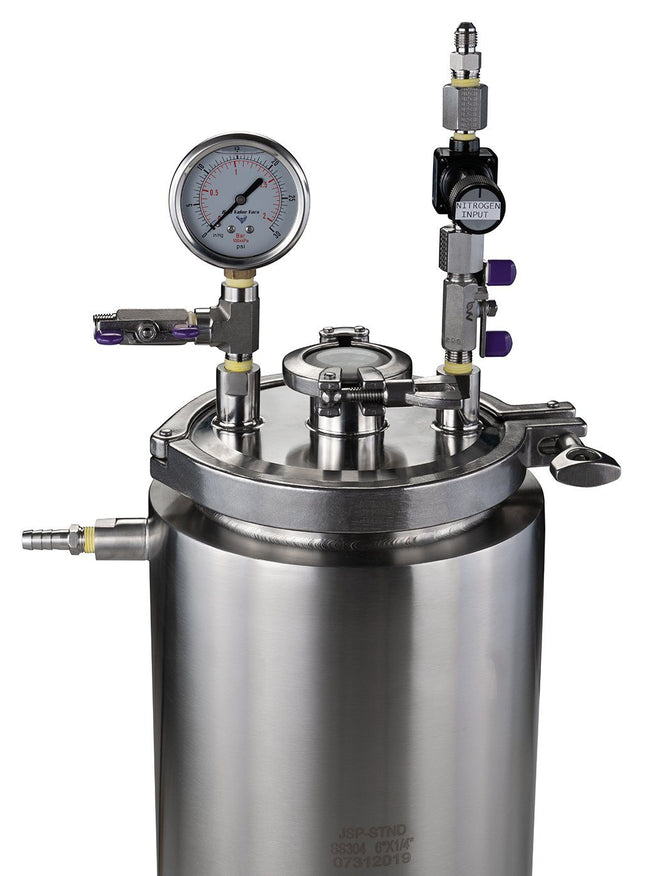
Table Top Cart Filler XL 6 Liter
Table Top Cart Filler XL 6 Liter Fill 6000 1ml Carts per Load This 6 Liter capacity Giant is made to fill. Fully jacketed 304SS with a design that allows the OIL inside to fully drain creating little to no loss. The system is made of all parts that can be sterilized. The body, valves and all connections are 304 Stainless Steel and the hosing is PTFE. The body of the vessel is fully jacked and is recommended to be run with stand alone heater to pre-heat the oil. The hose is heated and insulated. The hose temperature is controlled by an Digital PID. The hose and PID controller are precision made in the USA. The hose uses Platinum Thermocouples for durability and accuracy, which means you wont run into down time or temperature errors. To use the system you will need Nitrogen to back pressure the oil in the tank. The pressure is regulated by a low pressure regulator. To dispense the end of the hose has a toggle valve that connects to a Lure Lock connection. System Specs. Nitrogen Input MAX Pressure: 150PSI Regulator working pressure: 0.5-30PSI (*recommended pressure 10PSI) Hose Temperature Rating: 50°F - 450°F Digital* Controller Temperature Range: 50°F -450° Includes Right Angle Attachment for added user flexibility. Non-Metered Dispensing with toggle valve control. Pressure gauge for pressure monitoring: 0-150PSI Cleaning: NOTE: Please Clean Prior to first use the system does not come sterilized. A simple IPA wash down will be sufficient. At any point the system can be cleaned using IPA or D-limonene. *The controller has been updated to a Digital PID controller to replace the photographed analog style rotary dial.
$3,742.60
-
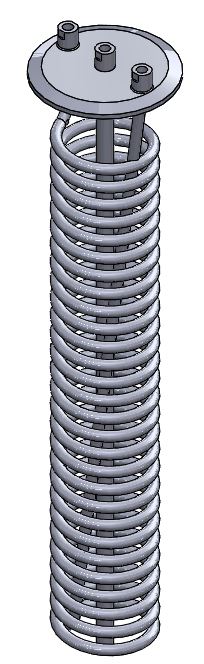
6" Tri-Clamp x 30" Column Cooling Coil with Dip Tube
6" Tri-Clamp x 30" Column Cooling Coil This column cooling coil is designed to fit in 6" Tri-Clamp material columns and allows the user to either chill or heat the column up from the inside which increased the surface area beyond a standard dewaxing jacket and reduces the need for dry ice. This cooling coil is made out of 304 stainless steel and has a 3/8" diameter coil spiraling from (3) 1/4" FNPT ports on the top with 2 of them connecting to the coil and one of the connecting to the dip tube
$568.59
-

Pure-Flo® B80 Natural Bentonite for Bleaching & Decolorizing Edible Oils *FDA-GRAS
Pure-Flo® B80 Bentonite for Decolorizing Edible Oils and Fats What is “Pure-Flo® B80 Natural Bentonite for Bleaching & Decolorizing Edible Oils *FDA-GRAS Instead of removing oil contaminants with harsh chemical additives, our Natural Bentonite Clay B80 uses the clay's inherent properties to purify the targeted oil. This means that naturally-active B80 poses no threat of mineral acid carryover in any finished oil products while significantly reducing red coloring and adsorbing chlorophyll. As an example, a typical dosage of B80 (anywhere between 0.5% and 1.0%) during the bleaching and deodorizing process of sunflower oil can help achieve a great improvement in the color complexion by removing its red pigmentation. Our B80 Product’s Benefits and Features This bleaching/decolorizing adsorbent is widely-used during the pretreatment and processing of edible oils and fats. It’s considered to be cost-effective, natural, and of excellent value due to its effective color removal without any mineral acid carryover. ph Level: 7.2 FDA GRAS-Approved (Generally Recognized as Safe): This product is regarded to be safe for food processing, as long as it's not a part of the end product being consumed. NSF-HACCP: Prior to the changes in its down packing, this product was certified Kosher & Halal. However, it does not retain its certifications after considering its down packing. Unfortunately, BVV™ doesn't have an on-staff and on-site Rabbi or Imam to re-establish those certifications. We apologize to our patrons for the inconvenience. Shop all Solvents & Gas on BVV! Note: Container style and color may vary. Product is sold by weight which may result in the container not being full when received. Product Safety and Related Information Pure-Flo® Quality Standards and Certifications Pure-Flo globally delivers high-quality, natural bleaching products. “Our manufacturing process includes modern hygiene controls at every stage in the production of Pure-Flo products. Our controls follow the HACCP approach consistent with EU Regulations. The HACCP system used in our production process is certified by NSF, an independent certification organization. Pure-Flo products are also certified both Kosher and Hallal for use in food processing.” BVV™ Technical and Safety Data Forms B80 Technical Data Sheet B80 Safety Data Sheet Note: Bulk Bags and Bulk sizes are non-stocked items and will be ordered as needed and carry a several weeks lead time and require a forklift or pallet jack Note: Container style and color may vary. Product is sold by weight which may result in container not being full.
$31.67 - $4,678.25
-
Bolt Kit For High Pressure Clamps
Bolt Kit For High-Pressure Clamps When high-pressure clamp bolts are used frequently the threads will wear down eventually causing the bolt to fail. User's need to replace their high-pressure bolts at the first sign of the threads wearing down or being marred. It is not recommended to tighten these bolts with an impact gun because it may cause the threads to be marred or jump threads causing the bolt to become stuck on the nut. This kit includes the following: Stainless Steel Bolt Stainless Steel Lock Washer Brass Nut ***Note: Size refers to size of Tri-Clamp not the actual length of the bolt. BVV™ only recommends tightening high-pressure clamps with wrenches and making sure the space on each side of the clamp is even. DO NOT tighten with an impact gun. Bolt Available for Clamp Sizes: 1.5" 2" 3" 4" 6"-12" Specifications: Material: Brass Nut, 18-8 Stainless Steel Bolt and Lock Washer. Threading: 3/8"-16
$5.76 - $10.08
-
CGA 555 Gas Fitting
This brass CGA 555 fitting allows the user to adapter to a LPG cylinder with CGA 555 thread type and convert it to either 1/4" or 3/8" MJIC. This item includes: Nut Nipple Cap
$25.91
-
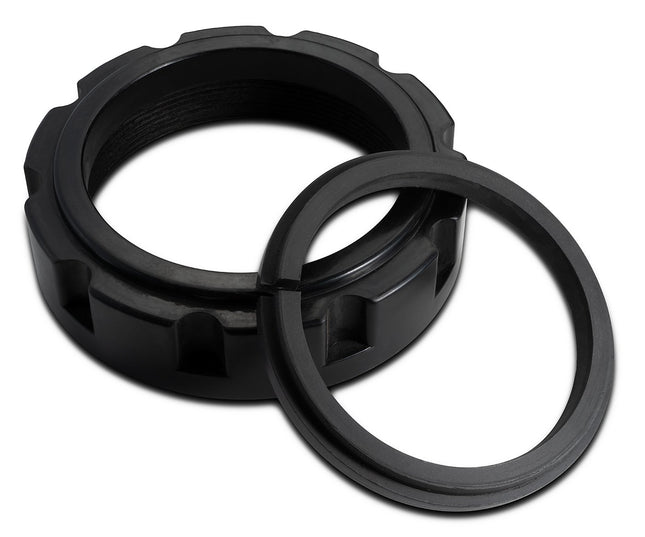
50L Solvent Pro Rotary Evaporator Nut and Washer Flask Set
Replacement nut and washer flask set for 50L Solvent Pro Rotary Evaporator
$244.71
-
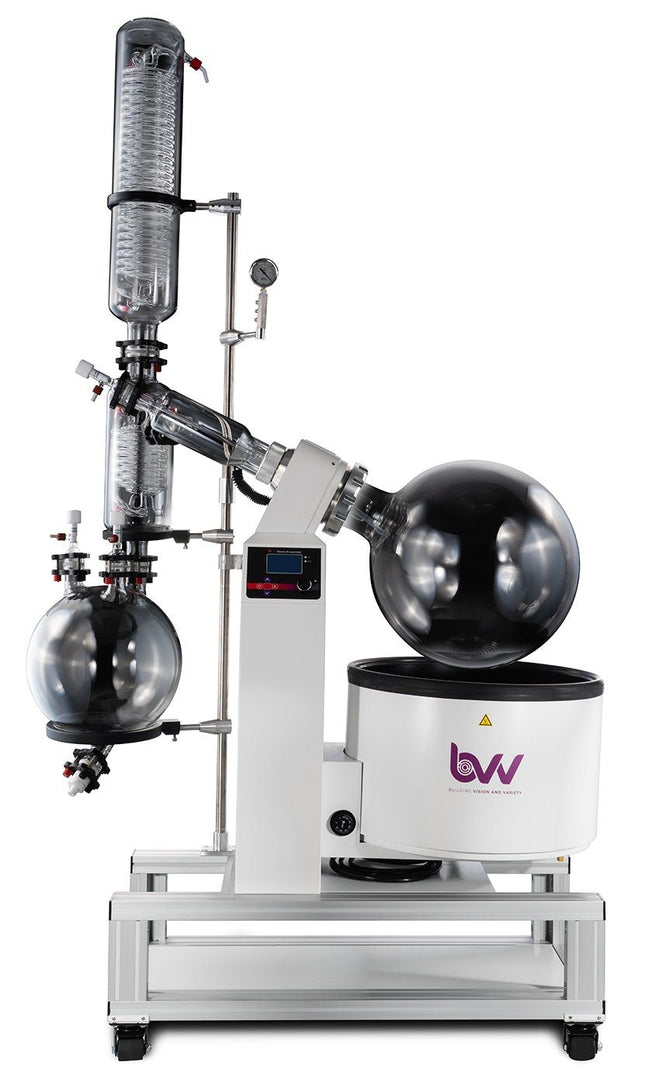
50L Neocision ETL Lab Certified Rotary Evaporator
50L Neocision ETL Lab Certified Rotary Evaporator The 50L Neocision ETL Lab Certified Rotary Evaporator is a full-scale system meant to fulfill the needs of large volume production and meet the requirements of a certified laboratory with its ETL certification standards. Featuring an electric lift bath and all PTFE valves for extreme chemical resistance, the 50L Neocision gives users the ability to recover large amounts of solvent in a smaller footprint with highly improved functionality. All Neocision rotovaps feature high-efficiency valves and drain ports making it easy to directly inject solution continuously without the need to stop the system or release vacuum to drain. The temperature and rotation speed are easily controlled from a single digital interface. Our rotovaps are a fraction of the price of more costly systems with the same functionality and evaporation efficiency. To keep your bath heating properly, this unit should only be used with RO or DI water. 10-50L NEO and ECO Rotary Evaporator Diagram Features: ETL Certified for Lab use. Digital temperature and speed control with simple user interface Electric Bath Lift Teflon Coated Bath for corrosion resistance High-efficiency drain port and injection valves Smaller footprint for improved workspace allocation Mobility with locking casters Shorter vapor path for faster evaporation and condensation Direct injection capability for continuous feeding of solution Continuous draining capability without the need to release vacuum or stop the system 1-year warranty on all mechanical parts. Does not include glassware/moving parts Specifications: Model 50L NEOCISION Rotary Evaporator Optimum Ambient Temperature 5~25C / 41~105.8F Glass Material GG-17 High Borosilicate Power (V/Hz) 220-240V 60Hz Single Phase Speed Regulation Digital Step-less Regulation Rotation Speed 0-120 RPM Set Temperature 0-99C / 0-210F Temperature Control Digital Temperature Control Maximum Vacuum Pressure -29.8 inHg Evaporating Flask Capacity 50L (20000ml) Receiving Flask Capacity 20L (10000ml) Condenser Style Main + Auxiliary Vertical Double Helix Evaporation Capacity Alcohol >/= 12 L/H Heater Max Current Draw (Amps) 25 Water Bath Material 304 Stainless Steel Water Bath Size 17.7 x 9.8 in. Lifting Function Electric Lifting Stroke 190mm / 7.5 in. Total Power Consumption (kW) 4.1 kW Dimensions 49 x 24 x 83 in. Weight 155 lbs Vacuum Connection 10mm / 3/8 in. Barb Condenser Connection 10mm / 3/8 in. Barb Warranty 1 Year Excluding: Moving Parts Glassware Certifications ETL Rotovap Quick Start Guide This guide gives basic quick start instructions for rotovaps. It is intended to provide a starting point for learning the process. Parameters should be adjusted to suit specific needs. Clean and assemble unit. Make sure all pieces are cleaned and sterilized using an alcohol solution. Connect chiller to condenser and set to 0C (32F). Always fill a rotovap condenser from the top down (chiller output to top of condenser, chiller input to bottom of condenser). Connect vacuum pump to cold trap and connect cold trap to vacuum port on rotovap. Turn on heat bath and set to 40C (113F). Once heat bath, chiller and cold trap have reached desired temperatures, turn on rotovap motor and set speed to approximately 100 RPM (does not have to be precise). Keep in mind, higher RPM’s will increase evaporation power but also increase heat load. Start vacuum pump and allow vacuum to pull down for a few minutes before injection. Once vacuum has been pulled to a sufficient level (does not have to be precise but should be below 100 Torr), using the injection valve, very slowly inject approximately 500 mL of solution into evaporating flask and then close the valve. Allow this small amount to begin evaporating. You may see the chiller begin to rise in temperature, this is called “priming” the rotovap. Once the temperature stops rising or all liquid is almost completely evaporated, open the injection valve again very slowly so that a small amount of liquid begins to enter the evaporating flask. Do not close injection valve this time but continue to allow solution to enter the evaporating flask. At this point you must try to match the input speed to the output speed. What this means is that you should be injecting the same amount of liquid into the rotovap that is equal to the amount of liquid dripping from the condenser into the receiving flask. You will know that the input speed and output speed are matched because the chiller will remain at a stable temperature. If the chiller begins to rise, then you are injecting too much liquid. Dial back the valve until the chiller stabilizes. Once everything is stabilized, you may walk away from the rotovap if necessary. Check every so often to make sure temperatures remain stable and evaporation continues efficiently. ***Note: All units are inspected for broken glass or parts before unit is shipped. If unit arrives damaged or glass is broken (this does not include minor imperfections or scuffs in glassware), Customer MUST contact BVV™ within 3 days of delivery to file a claim and receive a replacement part. If customer DOES NOT contact BVV™ within 3 days of delivery responsibility for replacement parts falls on the customer and they must pay for replacement pieces.*** ***Note: This item will ship by freight only.*** ***Glassware Safety Disclaimer: BVV™ is not responsible for failure of glassware which must be inspected before and after every use because it may eventually develop imperfections or damage through normal usage, mishandling, and stress caused by temperature variations. If an imperfection or damage is noted while inspecting the glassware DO NOT use the glassware because it can fail causing bodily harm or damage to the surrounding area.***.
$13,387.00
-
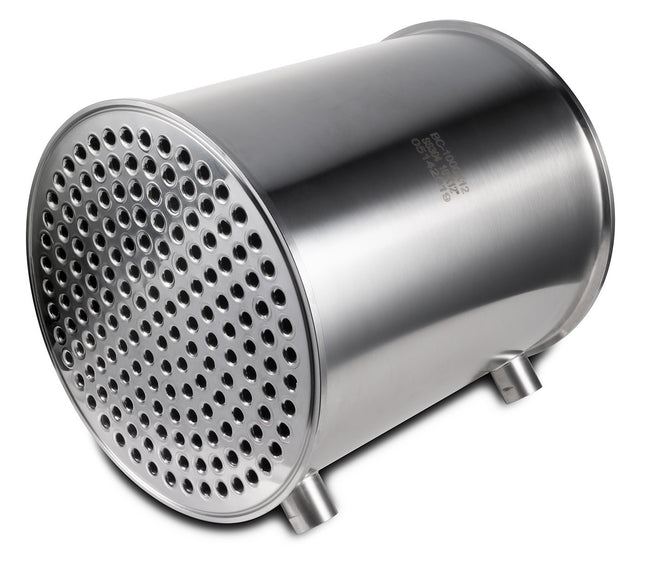

Baffled Condenser
Baffled Tri-Clamp Condenser This 304 Stainless Steel Tri-Clamp condenser allows the user to condense hot vapors and solvent while running an extraction system or use it as a heat exchanger if needed. It features internal baffles in the system allowing for better overall heat exchange, Tri-Clamp connections on each end and (2) 1/2" FNPT Ports on the side to allow various connections the user may need. The inside diameter of the tubing measures 7.5mm. BVV™ Baffled Tri-Clamp - Data Sheet
$352.67 - $3,008.48
-
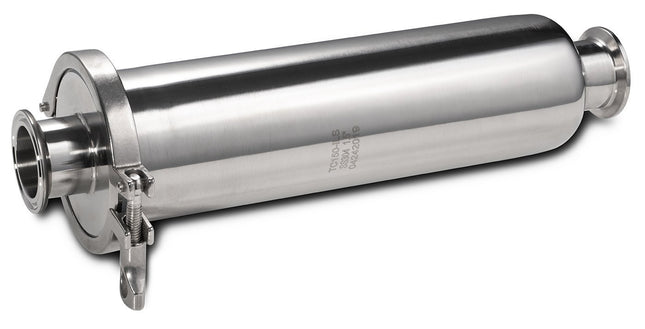

Inline Strainer 304 Stainless Steel
Inline Strainer 304 Stainless Steel Inline Tri-Clamp strainers are used when filtering solids from liquids in fluid processing systems. The inside of the strainer is perforated with 2mm holes to collect larger solids when filtering and comes with (1) 3" Single pin clamp and (1) 3" silicone Tri-Clamp gasket. It is recommended that a strainer be placed after a pump, as the suction could damage the strainer core. Specifications Material 304 Stainless Steel Connection Type 1.5" Tri-Clamp Secondary Mesh Perforated Stainless Steel with 2mm Holes
$280.70
-
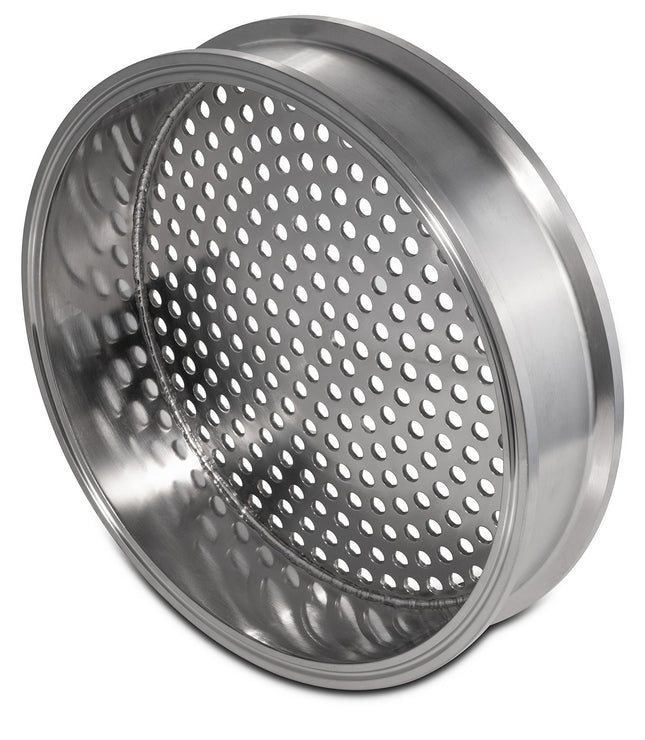
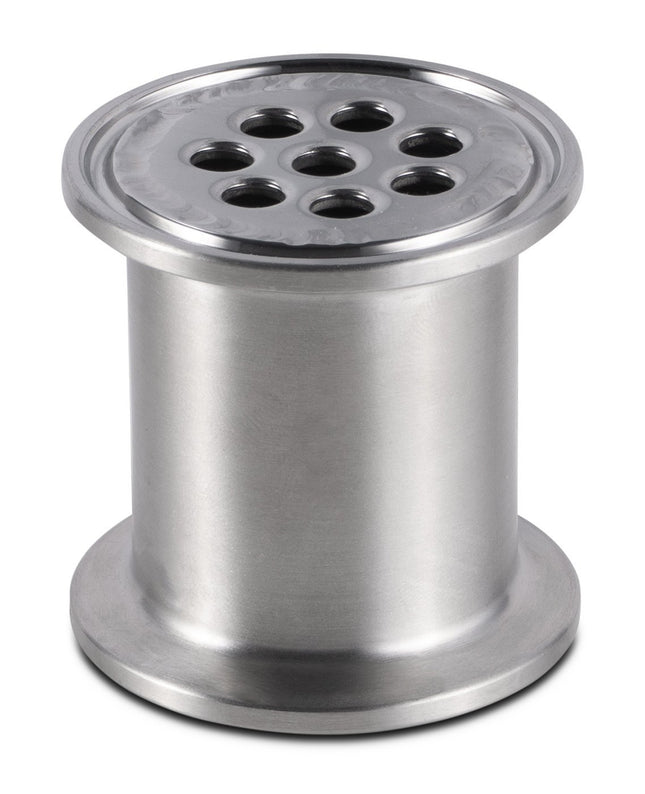
Bottom Weld Tri-Clamp Filter Plate
Bottom Weld Stainless Steel Tri-Clamp / Tri Clover Filter Plate Bottom Weld Stainless steel filter plates offer the user a great solid platform to help with filtration during the extraction process. These filter plates can be used simultaneously with ashless filter papers or any other filtration media like stainless steel ball bearings or steel wool to increase surface and filtration level to remove fats, lipids, waxes and any other unwanted material during the extraction process. **Note: Does not include Clamp, Gasket or Ring Sizes Available: 1.5" 2" 3" 4" 6" 8" 10" 12" Specifications: Material 304 Stainless Steel Standard 3A High Polish Connection Type(s) Tri-Clamp Hole Diameter 5.8mm Height 2" BVV™ Bottom Weld Tri-Clamp Filter Plate - Drawing
$40.30 - $525.40
-
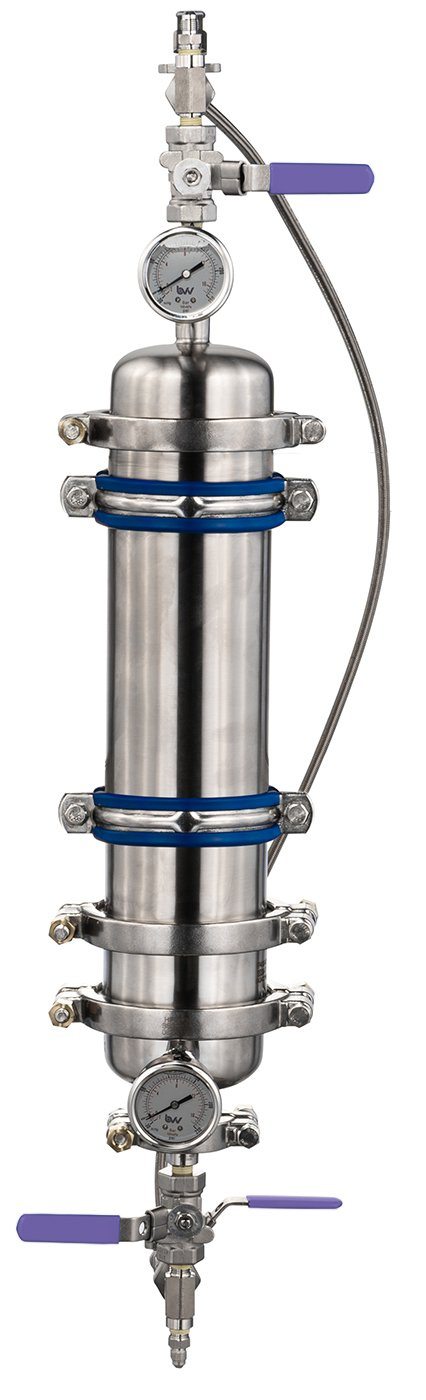

Color Remediation Column CRC
Color Remediation Column For BHO Extraction Color Remediation Columns are secondary columns used as a filtration cartridge for hydrocarbon and ethanol extraction systems. Removing impurities from extracted oils is aided by filter media, packed in the column above a triple filtration stack. The CRC features a bypass path, allowing the operator to skip the column in case of a clog. What simplifies the color remediation process is bundling the cartridge with the filter media. We have paired the unit with suggested media, supplied in the proper ratio, and a standard operating procedure. This makes filtration easy, allowing you to get it right the first time without having to guess. The CRC is a 4" x 12" spool with triple filter plates and rack mounting. Choose 1/4", 3/8" or 1/2" flares. This CRC Kit Includes: Color Remediation Column Rack Mounting Brackets 100 pack of 8 and 20-micron filter papers 1000g of Activated Alumina 1000g of Silica 60 1000g of Pure-Flo® B80 1000g of PurifiDE XG-12 Instruction Manual
$1,964.87 - $2,473.00
-
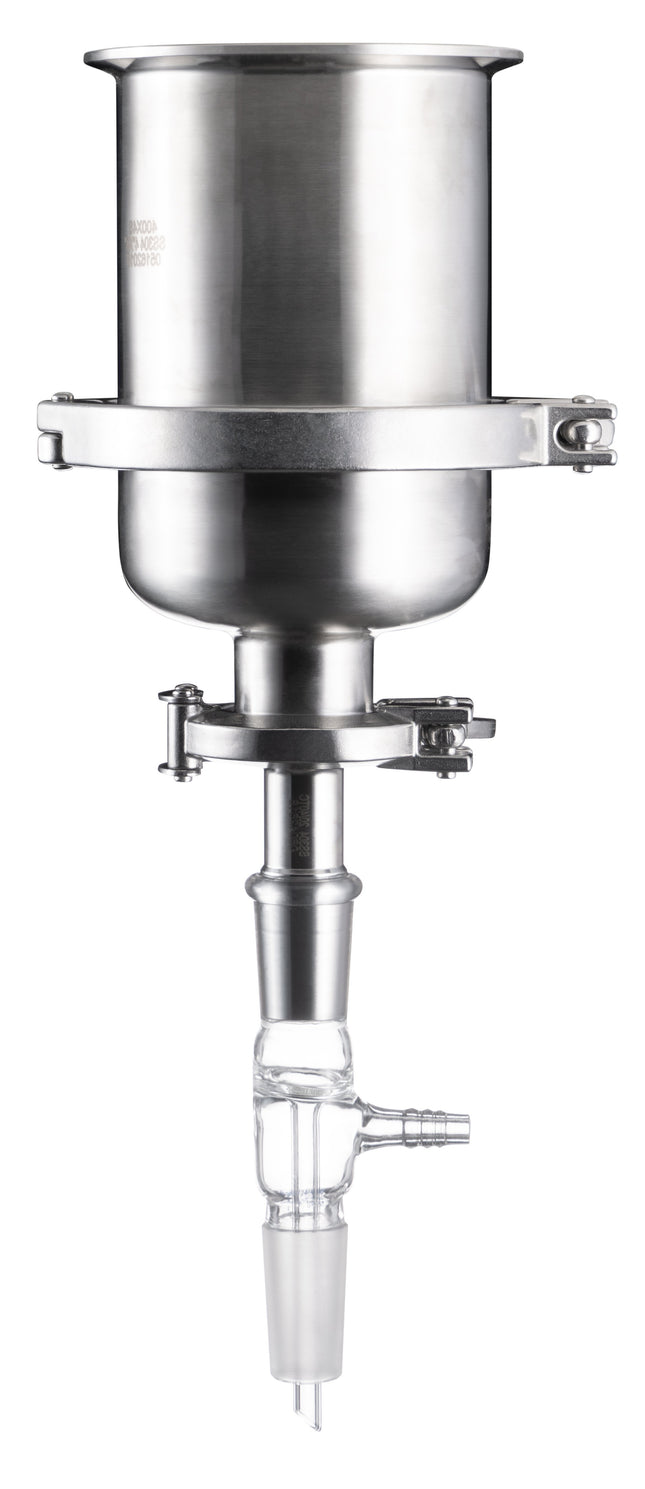
4" Stainless Steel Buchner Funnel
4 Inch Stainless Steel Buchner Funnel 4” Buchner Funnel Kit: This buchner funnel kit adapts to any vessel with a 24/40 joint. The included adapter makes it possible to pull vacuum and use large vessels as a collection. Max internal volume of the buchner funnel is 0.82L, but can be adapted with a larger spool for higher capacity. This kit features: 4” x 4” 304SS spool with a capacity of 0.82L 4” Tri-Clamp Single Hinge Clamp 4”x1.5” 304SS Hemispherical Reducer 1.5” Tri-Clamp Double Hinged Clamp 4” 5 Micron 304SS Sintered Disc Filter 4” 304SS Filter Plate V2 1.5”x24/40 304SS Adapter 24/40 Glass Inlet Straight Adapter with hose connection Recommended items: 110MM sized filter paper, 24/40 jointed glass conical flask. For additional information or questions regarding this kit contact our customer support line.
$532.60
-
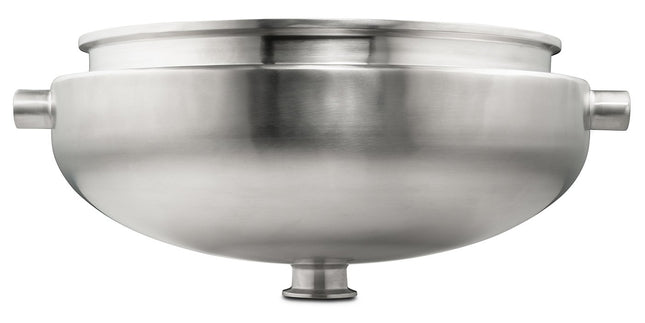
Jacketed Hemispherical Reducers with 2" Tri-Clamp Drain Port
Jacketed Hemispherical Reducers with 2" Tri-Clamp Drain Port Jacketed Hemispherical Reducers allow the user to circulate water around the bowl and keep extracted material liquefied for easier flow through the bottom port. These jacketed reducers have 1/2" FNPT ports on either side for circulation and a 2" Tri-Clamp port through the bottom of the dish. These reducers are made out of 304 stainless steel with a high polish interior. Specifications Material 304 Stainless Steel Connection Type(s): 12" Tri-Clamp 2" Tri-Clamp (2) 1/2" FNPT
$489.42
-
1" ID Heavy Wall Spiral Wire Reinforced Clear PVC Vacuum Hose
1" ID Heavy Wall Spiral Wire Reinforced Clear PVC Vacuum Hose Crystal clear Phthalate Free PVC compound, formulated with ingredients in compliance with applicable FDA requirements, meets USDA, 3A, NSF, UL, RoHS and USP Class VI criteria. Reinforced with spiraled polyester yarn and longitudinal orange tracer yarns for identification. Key Features: Constructed with Phthalate Free compounds. NSF-51 certified material. Crystal clear - allows visual confirmation of product flow. Longitudinally reinforced to reduce elongation under pressure. Light weight. Self-extinguishing. Non-marking. Silicone-free. Non-conductive. One-piece lengths. Resistant to chemicals (see chemical-resistance chart). Compound hardness 73 ±3 Shore "A". Phthalate Free! Common Applications: Food & beverage dispensing. Deionized water. Liquid food products. Air and water lines. Powdered food products. Potable water transfer. Air breathing lines. Pneumatic lines. Packaging machines. Specifications Series K7130 Sized Code 16 Service Temperature Range 25 to 150°F (-4 to 65°C) Nominal ID 1" (25.4mm) Nominal OD 1.375" (34.9mm) Max Working Pressure @ 70°F (20°C) 100 Psi Max Working Pressure @ 122°F (50°C) 50 Psi Standard Length Coils 100ft Approx. Wt. per Pkg. 44lb Brand Kuri Tec® Packaging Coils Material PVC Min. Bend Radius @ 70°F 1" Type Reinforced Water Supply and Food Grade Hose Reinforcement Material Helically-wound spring steel wire Color Crystal Clear Weight per Foot 0.44lbs/ft Performance Heavy Wall Clear PVC wire reinforced for vacuum
$43.18 - $857.92
-
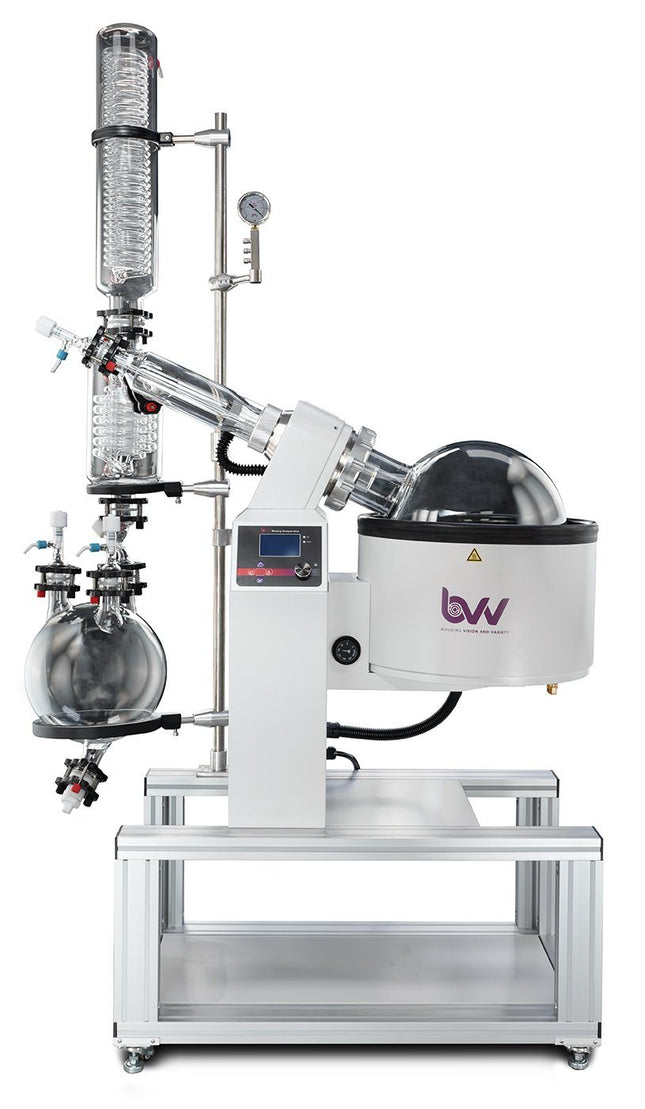
20L Neocision ETL Lab Certified Rotary Evaporator
20L Neocision ETL Lab Certified Rotary Evaporator The 20L Neocision ETL Lab Certified Rotary Evaporator is a full-scale system meant to fulfill the needs of large volume production and meet the requirements of a certified laboratory with its ETL certification standards. Featuring an electric lift bath and all PTFE valves for extreme chemical resistance, the 20L Neocision gives users the ability to recover large amounts of solvent in a smaller footprint with highly improved functionality. All Neocision rotovaps feature high-efficiency valves and drain ports making it easy to directly inject solution continuously without the need to stop the system or release vacuum to drain. The temperature and rotation speed are easily controlled from a single digital interface. Our rotovaps are a fraction of the price of more costly systems with the same functionality and evaporation efficiency. To keep your bath heating properly, this unit should only be used with RO or DI water. 10-50L NEO and ECO Rotary Evaporator Diagram Features: ETL Certified for Lab use. Digital temperature and speed control with simple user interface Electric Bath Lift Teflon Coated Bath for corrosion resistance High-efficiency drain port and injection valves Smaller footprint for improved workspace allocation Mobility with locking casters Shorter vapor path for faster evaporation and condensation Direct injection capability for continuous feeding of solution Continuous draining capability without the need to release vacuum or stop the system 1-year warranty on all mechanical parts. Does not include glassware. Model 20L NEOCISION Rotary Evaporator Optimum Ambient Temperature 5~25C / 41~105.8F Glass Material GG-17 High Borosilicate Power (V/Hz) 220-240V 60Hz Single Phase Speed Regulation Digital Step-less Regulation Rotation Speed 0-120 RPM Set Temperature 0-99C / 0-210F Temperature Control Digital Temperature Control Maximum Vacuum Pressure -29.8 inHg Evaporating Flask Capacity 20L (20000ml) Receiving Flask Capacity 10L (10000ml) Condenser Style Main + Auxiliary Vertical Double Helix Evaporation Capacity Alcohol >/= 12 L/H Heater Max Current Draw (Amps) 25 Water Bath Material 304 Stainless Steel Water Bath Size 17.7 x 9.8 in. Lifting Function Electric Lifting Stroke 190mm / 7.5 in. Total Power Consumption (kW) 4.1 Dimensions 49 x 24 x 83 in. Weight 155 lbs Vacuum Connection 10mm / 3/8 in. Barb Condenser Connection 10mm / 3/8 in. Barb Warranty 1 Year excluding glass parts Certifications ETL Rotovap Quick Start Guide This guide gives basic quick start instructions for rotovaps. It is intended to provide a starting point for learning the process. Parameters should be adjusted to suit specific needs. Clean and assemble unit. Make sure all pieces are cleaned and sterilized using an alcohol solution. Connect chiller to condenser and set to 0C (32F). Always fill a rotovap condenser from the top down (chiller output to top of condenser, chiller input to bottom of condenser). Connect vacuum pump to cold trap and connect cold trap to vacuum port on rotovap. Turn on heat bath and set to 40C (113F). Once heat bath, chiller and cold trap have reached desired temperatures, turn on rotovap motor and set speed to approximately 100 RPM (does not have to be precise). Keep in mind, higher RPM’s will increase evaporation power but also increase heat load. Start vacuum pump and allow vacuum to pull down for a few minutes before injection. Once vacuum has been pulled to a sufficient level (does not have to be precise but should be below 100 Torr), using the injection valve, very slowly inject approximately 500 mL of solution into evaporating flask and then close the valve. Allow this small amount to begin evaporating. You may see the chiller begin to rise in temperature, this is called “priming” the rotovap. Once the temperature stops rising or all liquid is almost completely evaporated, open the injection valve again very slowly so that a small amount of liquid begins to enter the evaporating flask. Do not close injection valve this time but continue to allow solution to enter the evaporating flask. At this point you must try to match the input speed to the output speed. What this means is that you should be injecting the same amount of liquid into the rotovap that is equal to the amount of liquid dripping from the condenser into the receiving flask. You will know that the input speed and output speed are matched because the chiller will remain at a stable temperature. If the chiller begins to rise, then you are injecting too much liquid. Dial back the valve until the chiller stabilizes. Once everything is stabilized, you may walk away from the rotovap if necessary. Check every so often to make sure temperatures remain stable and evaporation continues efficiently. ***Note: All units are inspected for broken glass or parts before unit is shipped. If unit arrives damaged or glass is broken (this does not include minor imperfections or scuffs in glassware), Customer MUST contact BVV™ within 3 days of delivery to file a claim and receive a replacement part. If customer DOES NOT contact BVV™ within 3 days of delivery responsibility for replacement parts falls on the customer and they must pay for replacement pieces.*** ***Note: This item will ship by freight only.*** ***Glassware Safety Disclaimer: BVV™ is not responsible for failure of glassware which must be inspected before and after every use because it may eventually develop imperfections or damage through normal usage, mishandling, and stress caused by temperature variations. If an imperfection or damage is noted while inspecting the glassware DO NOT use the glassware because it can fail causing bodily harm or damage to the surrounding area.***
$10,364.13
-

Filter Bag for Petroleum Oil and Organic Solvents
These filter bags come in a wide variety of micron levels and are specifically designed for BVV Pressure Filtration Systems. They are made of nylon fabric and range from 1 micron to 100 micron. For use with the following systems: Cryogenic 45L Centrifuge Extractor Kit Pressure Filtration System - 6 x 28 Trade Size #8 *Note: metal mesh cage not included - for reference only.
$71.97 - $84.93
-
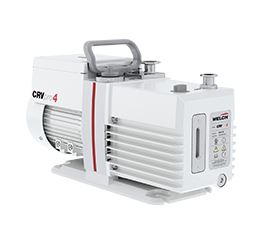
Welch Vacuum - Gardner Denver Welch Explosion Proof CRVpro4 Direct Drive Rotary Vane Vacuum Pump
Welch Explosion Proof CRVpro4 Direct Drive Rotary Vane Vacuum Pump ***Note: This item has a possible 1-2 week lead time depending on stock availability*** Product Details Explosion Proof Motor 110-120V/208-240V 60Hz 1 Phase The new CRVpro family of direct drive vacuum pumps offers increased reliability and longer service interval vs. other direct drive rotary vane vacuum pumps. The CRVpro family consumes up to 36% less oil than comparable pumps. Three features drive these benefits: Runs 10°C cooler than comparable pumps. Slows corrosion. Has a 40% larger oil capacity than comparable pumps. Dilutes aggressive chemicals. Has a chemical resistant coating in the oil case and pump module. Protects non-moving parts. The CRVpro family includes all the features you'd expect in a direct drive rotary vane pump: gas ballast, forced oil lubrication, anti-suckback mechanism and thermal overload protection. Suitable applications include freeze drying, degassing, vacuum ovens and concentrators. 3046E-01 comes with an explosion proof motor. Conduit wiring installation required. No cord, plug, or switch provided. Direct drive pumps are not recommended for filtration, aspiration, drying electrophoresis gels, or other applications requiring sustained operation above 30 torr. Specifications Application CRVpro4 Free Air Displacement @ 60 Hz, cfm (L/min) 2.8 (78) Free Air Displacement @ 50 Hz, m³/hr (L/min) 4 (67) Ultimate Pressure, torr (mbar) 5x10⁻⁴ (4x10⁻⁴) Noise Level, dBA 50 Motor Speed, RPM, @60Hz, @50Hz 1740 (1450) Motor Power, HP (kW) 0.4 (0.5) Oil Capacity, mL 1150 Connection Flanges NW 16 Inlet Hose Connection* 5/8" to 3/4" Weight, lbs (kg) 46.3 (21) Dimensions, LxWxH, in (mm) 18.2x6.1x9.1 (463x157x230)
$7,341.26
-
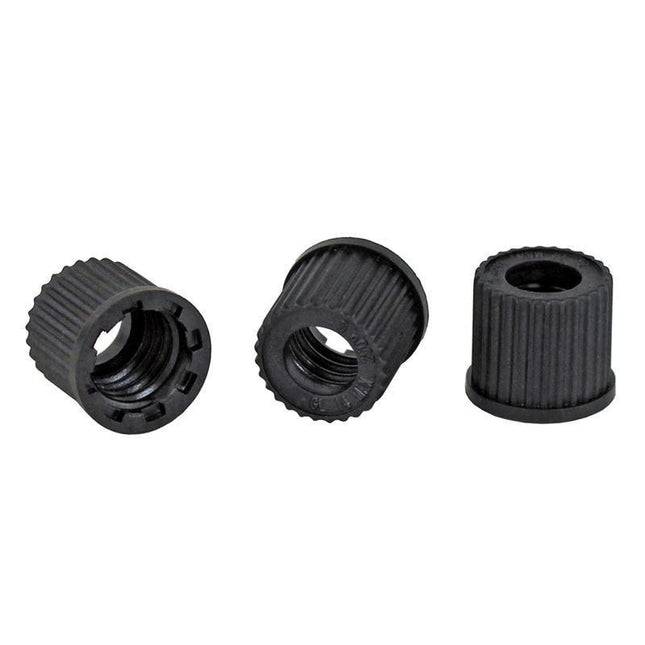
Chemglass Chemglass Caps With Aperture GL Threads High Temperatures
Chemglass Caps With Aperture GL Threads High Temperatures Open top cap for use with GL screw threads. Cap is made from PPS (polyphenylsiloxan) and will withstand temperatures up to 250°C.
$15.83
-
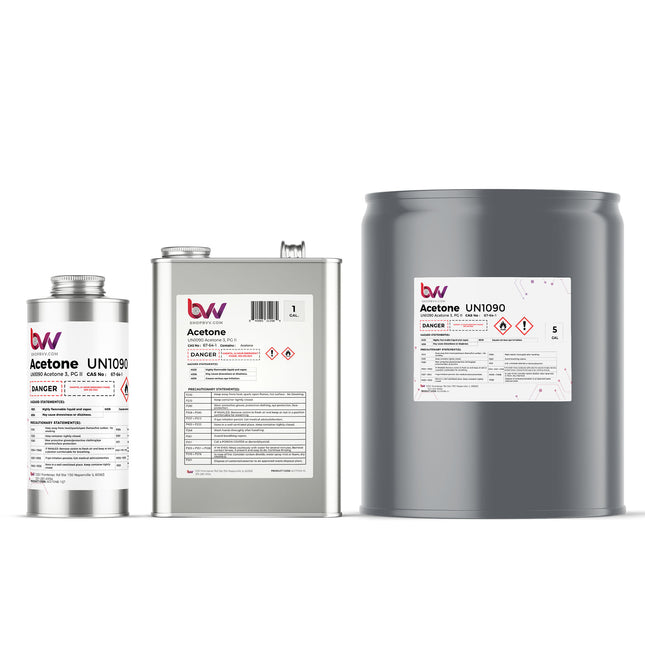

Acetone Technical Grade 99%
High Purity Acetone 99% (Note: Container style and color may vary) Explore our top-quality Acetone, a versatile solvent that meets the highest standards of quality and purity. Our Acetone is ideal for a wide range of applications, whether you're in the pharmaceutical, cosmetic or industrial sector. With its exceptional solvent properties, Acetone serves as a reliable solution for cleaning, degreasing, and dissolving various substances. Our Acetone is carefully sourced to ensure consistency and effectiveness, making it a popular choice for professionals and businesses alike. Our Acetone is subjected to stringent quality control measures, ensuring exceptional purity that's perfect for various processes, from extraction to cleaning and stripping applications. Discover the exceptional performance and dependability of our Acetone, specially created to surpass your rigorous requirements. Unleash the potential of this top-notch solvent, and enhance the efficiency and efficacy of your processes to a whole new level. Opt for our Acetone for unparalleled outcomes and make the most of its adaptability in a variety of crucial tasks. Chemical Formula: C3H6O Molecular Weight: 58.080 g·mol−1 CAS Registry Number: 67-64-1 Appearance Colorless Liquid Odor: Pungent, fruity Density 0.7845 g/cm3 (25 °C) Boiling Point: 56.08 °C /132.94 °F Solubility in water: Miscible GHS Pictograms: GHS Signal Word: Danger GHS Hazard Statements: H225, H302, H319, H336, H373 GHS Precautionary Statements P210, P235, P260, P305+P351+P338 UN Identification Number: 1090 Proper Shipping Name: Acetone Transport Hazard Class: 3 Packing Group: II DOT Placard: What is Acetone? Acetone is a clear, colorless, and highly flammable liquid with a distinctive sweet, fruity odor. It is a simple organic compound with the chemical formula C3H6O, belonging to the ketone family. Acetone is widely used as a solvent in various industries due to its excellent solubility and fast evaporation rate. In addition to its solvent properties, acetone has many other applications. It is commonly used as a cleaning agent, degreaser, and paint thinner. It is also a key ingredient in nail polish removers and some cosmetic products. Acetone is utilized in the production of plastics, fibers, resins, and various chemicals. Additionally, it serves as a fuel additive and is used for scientific and laboratory purposes. As a highly versatile and effective solvent, acetone plays a vital role in numerous industrial, commercial, and domestic applications, making it an essential component in various processes. What Are The Properties of Acetone? Acetone is a colorless, volatile, and highly flammable liquid with several notable properties: Physical State: Acetone is a liquid at room temperature and pressure, with a boiling point of 132.8F/56C and a melting point of -94.9°C (-138.8°F). Odor: It has a distinct and characteristic odor that is often described as sweet or fruity. Solubility: Acetone is highly soluble in water, alcohols, ethers, and many other organic solvents. This high solubility contributes to its effectiveness as a cleaning agent and solvent. Density: The density of acetone is about 0.79 g/cm³, making it less dense than water. Vapor Pressure: Acetone has a relatively high vapor pressure, which means that it readily evaporates into the air at room temperature. Flammability: Acetone is highly flammable and has a low flash point of -20.8°C (-5.4°F). This means that it can easily ignite when exposed to an open flame, spark, or other sources of ignition. Reactivity: Acetone is a reactive compound and can participate in various chemical reactions. It can react with strong acids, bases, and oxidizing agents. Acidity: Acetone is a weak acid, and its aqueous solutions can exhibit slightly acidic properties. Miscibility: Acetone is miscible with water and many organic solvents. This property makes it suitable for various applications in different industries. Polarity: Acetone is a polar solvent, meaning that it has a partial positive and partial negative charge distribution within its molecule. This polarity allows it to dissolve a wide range of polar and nonpolar compounds. Boiling Point: Acetone has a relatively low boiling point 132.8F/56C, which makes it easy to evaporate and separate from other substances during distillation processes. Evaporation Rate: Acetone has a fast evaporation rate, which makes it suitable for applications where rapid drying is necessary. It's important to note that acetone's properties contribute to its versatility and wide range of applications in various industries, including cleaning, manufacturing, laboratory work, cosmetics, and more. However, due to its flammability and reactivity, proper safety precautions should always be followed when working with acetone. What Is The Structure Of Acetone? The chemical structure of acetone consists of three atoms: one carbon (C) atom, one oxygen (O) atom, and three hydrogen (H) atoms. It is a simple organic compound with the molecular formula C3H6O. The structural formula of acetone can be represented as: In this structural representation: The central carbon (C) atom is bonded to two hydrogen (H) atoms and one oxygen (O) atom. The oxygen atom is double-bonded to the central carbon atom, forming a carbonyl group (C=O). The remaining valences of the carbon atom are filled by single bonds to the two hydrogen atoms. This arrangement of atoms gives acetone its distinctive chemical properties, including its solubility in water, high vapor pressure, and reactivity as a solvent and chemical reagent. How Is Acetone Produced? Acetone is produced through various industrial processes, with the most common method being the catalytic dehydrogenation of isopropanol. Here's an overview of the primary process used to produce acetone: 1. Dehydrogenation of Isopropanol: The most widely used method to produce acetone is the dehydrogenation of isopropanol, also known as the "cumene process." This process involves several steps: a. Production of Cumene: Cumene (isopropylbenzene) is produced from benzene and propylene in the presence of a catalyst such as aluminum chloride. This results in the formation of cumene and hydrogen chloride as byproducts. b. Oxidation of Cumene to Cumene Hydroperoxide: Cumene is then oxidized using air to form cumene hydroperoxide, typically using a catalytic process with acid or base catalysts. c. Cleavage of Cumene Hydroperoxide: Cumene hydroperoxide is cleaved using acid catalysts to yield phenol and acetone. This reaction results in the simultaneous production of phenol, which is used as a valuable chemical in various industries. d. Distillation and Separation: The mixture of phenol and acetone is then separated using distillation techniques. Acetone is obtained as a separate product from the mixture. 2. Other Processes: Apart from the cumene process, there are alternative methods for acetone production, including: a. Propylene Oxidation: Acetone can be produced through the direct oxidation of propylene using air or oxygen as the oxidizing agent. This method yields propylene oxide and acetone as products. b. Acetaldehyde Condensation: In this method, acetaldehyde is condensed and dehydrated to form acetone. This process is less common compared to the cumene process. c. Bio-based Production: Research is ongoing to develop bio-based methods of acetone production, using renewable resources like biomass or microorganisms that can convert sugars into acetone. d. Repurposing Byproducts: Acetone can also be obtained as a byproduct in various industrial processes, such as the production of phenol, where acetone is produced alongside phenol from cumene hydroperoxide. The cumene process remains the most dominant and economical method for producing acetone on an industrial scale. The choice of production method depends on factors such as availability of feedstocks, economics, environmental considerations, and desired product yields. Is Acetone Safe? Acetone is generally recognized as safe (GRAS) when used in appropriate amounts and under proper conditions. However, like any chemical substance, it should be handled with care and used according to safety guidelines. Here are some important points to consider regarding the safety of acetone: Ventilation: Acetone has a strong odor and can release fumes that may be irritating to the eyes, nose, and throat. When using acetone, make sure you are in a well-ventilated area to minimize inhalation of the fumes. Skin Contact: Acetone can be drying to the skin and may cause irritation, especially with prolonged or frequent exposure. It's advisable to wear gloves when handling acetone to protect your skin. Eye Contact: Avoid getting acetone in your eyes, as it can cause irritation and discomfort. If accidental eye contact occurs, rinse your eyes thoroughly with water and seek medical attention if irritation persists. Ingestion: Acetone is not intended for ingestion and should not be consumed. Ingesting acetone can be harmful and may lead to adverse health effects. Flammability: Acetone is highly flammable and should be kept away from open flames, sparks, and heat sources. Store acetone in a cool, dry place and away from direct sunlight. Sensitive Individuals: Some individuals may be more sensitive to the effects of acetone, experiencing skin irritation, allergic reactions, or respiratory discomfort. If you have a history of sensitivities or allergies, exercise caution when using acetone. Use as Directed: When using acetone for specific applications such as nail polish removal, adhesive removal, or cleaning, follow the recommended instructions on the product label or recipe. Avoid excessive or prolonged exposure. Alternative Options: If you are concerned about the potential risks of using acetone, you can consider using alternative products that are specifically formulated for the task at hand. For example, there are acetone-free nail polish removers available that may be gentler on the nails and cuticles. If you have specific health concerns or are unsure about the safety of using acetone, it's always a good idea to consult with a healthcare professional or seek advice from experts in the field. Additionally, reading and following safety information provided on product labels and material safety data sheets (MSDS) is crucial to ensure safe handling and use of acetone and other chemicals. What are the hazards of Acetone? Acetone is a commonly used chemical solvent, but like any chemical substance, it poses certain hazards that need to be considered when handling and using it. Some of the hazards associated with acetone include: Flammability: Acetone is highly flammable and can catch fire easily. Its low flash point makes it volatile and prone to ignition when exposed to open flames, sparks, or heat sources. It's important to store and use acetone away from potential sources of ignition. Inhalation Hazards: Acetone can release strong vapors that are irritating to the respiratory system. Prolonged or repeated inhalation of these vapors can lead to headaches, dizziness, nausea, and respiratory discomfort. Adequate ventilation is essential when using acetone to minimize exposure to its fumes. Skin and Eye Irritation: Acetone can be drying to the skin and may cause irritation or redness upon direct contact. It can also irritate the eyes and lead to discomfort if splashed or accidentally introduced into the eyes. Central Nervous System Effects: Acetone vapor exposure can affect the central nervous system, leading to symptoms like dizziness, confusion, and even unconsciousness at high concentrations. Toxic Effects: While acetone is generally considered to have low toxicity, exposure to large amounts or prolonged exposure can have toxic effects on the body. Ingesting acetone can lead to nausea, vomiting, abdominal pain, and even coma in severe cases. Health Risks: Long-term or chronic exposure to acetone can potentially have adverse health effects, including damage to the liver, kidneys, and respiratory system. Repeated skin contact can cause dryness and irritation. Environmental Impact: Improper disposal of acetone can lead to environmental contamination. Acetone is volatile and can easily evaporate into the air, contributing to air pollution. It can also be harmful to aquatic life if introduced into water bodies. Allergic Reactions: Some individuals may be sensitive or allergic to acetone, experiencing skin reactions or respiratory discomfort even at lower concentrations. It's important to take appropriate safety precautions when using acetone, including wearing protective gear such as gloves and safety goggles, working in a well-ventilated area, and avoiding open flames or heat sources. If working with acetone in an industrial or laboratory setting, it's crucial to follow established safety protocols and guidelines, as well as refer to the material safety data sheet (MSDS) provided by the manufacturer. Overall, while acetone is a valuable solvent with various applications, it should be handled with care and respect for its potential hazards. If you have any concerns or questions about the safe use of acetone, it's recommended to consult with experts in the field or seek guidance from health and safety professionals. How Flammable Is Acetone? Acetone is highly flammable and poses a significant fire and explosion hazard. It has a low flash point of -20.8°C (-5.4°F), which means that it can easily vaporize and form flammable mixtures with air at temperatures above its flash point. Acetone's wide flammability range (2.5% to 12.8% in air) indicates that even small concentrations of acetone vapor in the air can be ignited by a spark, open flame, or other sources of ignition. Due to its low flash point and flammable nature, acetone should be handled with extreme caution and stored away from sources of heat, sparks, and flames. When using acetone, it's important to follow proper safety practices, such as working in well-ventilated areas, using appropriate protective equipment, and avoiding activities that can generate sparks or heat. Acetone's high flammability also makes it necessary to take precautions when storing and transporting the solvent. Flammable liquids like acetone should be stored in approved containers and away from incompatible materials, such as oxidizing agents, to prevent potential chemical reactions and fires. It's essential to be aware of acetone's flammability and take all necessary safety measures to minimize the risk of fire and ensure a safe working environment when handling this solvent. How Is Acetone Used? Acetone is a versatile organic compound with a wide range of industrial, commercial, and household applications due to its excellent solvent properties and low toxicity. Here are some common uses of acetone: Solvent: Acetone is primarily known for its effectiveness as a solvent. It dissolves a variety of substances, making it useful for cleaning, degreasing, and removing residues from surfaces, equipment, and materials. It is commonly used in industrial settings to clean machinery and equipment. Nail Polish Remover: Acetone is a key ingredient in many nail polish removers. It effectively dissolves nail polish and helps remove it from the nails. Paint and Coating Removal: Acetone is used to remove paint, varnishes, lacquers, and other coatings from surfaces like wood, metal, and plastic. It's particularly useful for removing paint spills or overspray. Adhesive Remover: Acetone can be used to soften and remove adhesives, glues, and tapes from surfaces without causing damage. Chemical Intermediate: Acetone is used as an intermediate in the production of other chemicals. It's a precursor in the manufacturing of products like methyl methacrylate, bisphenol A (used in polycarbonate plastics and epoxy resins), and isopropyl alcohol. Laboratory Reagent: Acetone is used in laboratories as a reagent in various chemical reactions and as a solvent for analytical techniques like chromatography. Thinner for Paints and Inks: Acetone is used as a thinning agent for paints, inks, and varnishes to adjust their viscosity and improve their application. Cosmetics and Personal Care Products: Apart from nail polish remover, acetone is used in the production of cosmetics, skincare products, and perfumes. Medical and Pharmaceutical Uses: Acetone is used in some medical and pharmaceutical applications, such as cleaning medical equipment and removing residues from glassware in laboratories. Cleaning Agent: Acetone is effective at removing greasy or sticky residues from various surfaces. It's often used for cleaning electronics, removing ink stains, and cleaning glass surfaces. Fuel Additive: In some instances, acetone is used as an additive in fuel to improve its combustion efficiency, although this application is less common. Aerosol Propellant: Acetone's ability to vaporize quickly makes it useful as a propellant in aerosol products like air fresheners, deodorants, and cleaning sprays. It's important to note that while acetone is versatile and widely used, it should be handled with care due to its flammable nature. Proper ventilation and safety precautions should be taken when using acetone in any application. How Is Acetone Used In Extraction? Acetone is occasionally used in extraction processes, particularly in the field of chemistry and research, where it serves as a solvent to extract certain compounds from various materials. However, it's important to note that acetone has limitations and risks when used for extraction, and its use should be approached cautiously and with proper safety measures. Here's how acetone can be used in extraction processes: Extraction of Essential Oils and Fragrances: Acetone can be used to extract essential oils and fragrances from plant materials. The solvent's low boiling point allows it to evaporate quickly, leaving behind the extracted aromatic compounds. Extraction of Active Compounds: Acetone can be used to extract active compounds from natural sources, such as medicinal plants or herbs. The solvent's polarity can help dissolve and extract specific compounds like alkaloids, flavonoids, and phenolic compounds. Extraction of Lipids and Fats: Acetone is sometimes used to extract lipids and fats from materials like seeds, nuts, or plant tissues. Its ability to dissolve fats and oils makes it suitable for this purpose. Research and Analysis: In laboratories, acetone is sometimes used as a solvent to prepare samples for analysis by techniques like chromatography or spectroscopy. It can help solubilize compounds of interest for further investigation. Cleaning and Preparing Samples: Acetone can be used to clean surfaces and equipment in preparation for various chemical processes, ensuring that surfaces are free from contaminants that could affect the extraction. Recrystallization: Acetone can also be used for recrystallization processes in the lab, where impure solid compounds are dissolved in acetone and then allowed to crystallize out in a more purified form. It's important to exercise caution when using acetone in extraction processes: Flammability: Acetone is highly flammable and should never be used near open flames or in poorly ventilated areas. Toxicity: Acetone can be harmful if inhaled, ingested, or absorbed through the skin. Proper personal protective equipment (PPE) should be worn, and work should be conducted in a well-ventilated area. Chemical Compatibility: Acetone may not be suitable for extracting all types of compounds, as it can degrade certain materials and might not effectively extract specific compounds. Due to these risks and limitations, alternative solvents or extraction methods are often preferred in various extraction processes. When considering using acetone in an extraction, it's crucial to assess the specific requirements of the extraction and ensure that proper safety measures are in place. What Gaskets Are Compatible With Acetone? Acetone is a powerful solvent that can degrade certain materials, including both silicone and Nitrile/BUNA-N gaskets. When choosing gaskets for use with acetone, it's essential to select materials that are resistant to the solvent's effects to ensure safe and effective sealing. The following gasket materials are generally considered compatible with acetone: PTFE (Polytetrafluoroethylene): PTFE gaskets, also known as Teflon gaskets, are highly resistant to acetone and a wide range of other chemicals. They have excellent chemical stability and can withstand the corrosive nature of acetone. Viton (Fluoroelastomer): Viton gaskets are resistant to a variety of chemicals, including acetone. They are often used in applications where high-temperature and chemical resistance are required. EPDM (Ethylene Propylene Diene Monomer): EPDM gaskets are compatible with acetone for short exposure periods. However, their compatibility may be limited in extended contact with acetone or under specific conditions. It's important to note that the compatibility of gasket materials with acetone can vary based on factors such as temperature, concentration, and exposure duration. Before selecting gaskets for use with acetone, it's advisable to also consider the temperature and pressure range of your application to ensure that the chosen material is suitable for your specific application. Additionally, when working with acetone or any other chemical, it's crucial to follow proper safety protocols, including wearing appropriate personal protective equipment (PPE), working in a well-ventilated area, and observing all relevant safety guidelines. How do I clean with Acetone? Cleaning with acetone involves a few simple steps, but it's important to exercise caution due to its flammable nature and strong odor. Here's how to clean with acetone safely and effectively: Materials Needed: Acetone Clean, lint-free cloth or paper towels Ventilated area or protective mask Gloves Eye protection Steps: Choose a Well-Ventilated Area: Before you begin, make sure you're in a well-ventilated space. Acetone has strong fumes, so working outdoors or in a well-ventilated room is recommended. If ventilation is limited, consider wearing a protective mask and eye protection. Put on Protective Gear: While not always necessary for small cleaning tasks, wearing gloves and eye protection can help prevent skin and eye irritation. Test in an Inconspicuous Area: Before using acetone on a larger surface, test it in a small, inconspicuous area to ensure it doesn't damage or discolor the material you're cleaning. Apply Acetone: Moisten a clean, lint-free cloth or paper towel with a small amount of acetone. Gently blot or rub the area you want to clean. Start with a light touch and gradually increase pressure if needed. Avoid scrubbing vigorously, as this could damage surfaces or spread stains. Wipe Clean: As you blot or rub, you'll notice that dirt, residue, or certain stains are lifted onto the cloth. Continue until the area looks clean. For stubborn stains, you may need to repeat the process or use a slightly more concentrated amount of acetone. Dry the Area: After cleaning, use a separate clean cloth or paper towel to dry the area thoroughly. This helps prevent any remaining acetone from evaporating and leaving streaks. Dispose of Materials Safely: Dispose of used cloths, paper towels, and other materials soaked in acetone responsibly. Place them in a sealed container or bag and dispose of them according to your local regulations for hazardous waste. Wash Hands: After you're finished, wash your hands with soap and water to remove any traces of acetone. Important Tips: Acetone can damage certain plastics, paints, and finishes, so always test it in an inconspicuous area first. Do not use acetone on leather, acetate fabrics, or materials with printed designs, as it can cause fading or damage. Keep acetone away from open flames, sparks, or heat sources, as it is highly flammable. Always work in a well-ventilated area or use appropriate personal protective equipment. Remember that acetone is a powerful solvent, so it's best suited for specific cleaning tasks like removing certain adhesives, paint splatters, or sticky residues. If you're uncertain about using acetone on a particular material or surface, consider seeking professional advice or trying an alternative cleaning method. How Do I Make My Own Acetone-Based Nail Polish Remover? Cleaning with acetone involves a few simple steps, but it's important to exercise caution due to its flammable nature and strong odor. Here's how to clean with acetone safely and effectively: Materials Needed: Acetone Clean, lint-free cloth or paper towels Ventilated area or protective mask Gloves (optional) Eye protection (optional) Steps: Choose a Well-Ventilated Area: Before you begin, make sure you're in a well-ventilated space. Acetone has strong fumes, so working outdoors or in a well-ventilated room is recommended. If ventilation is limited, consider wearing a protective mask and eye protection. Put on Protective Gear: While not always necessary for small cleaning tasks, wearing gloves and eye protection can help prevent skin and eye irritation. Test in an Inconspicuous Area: Before using acetone on a larger surface, test it in a small, inconspicuous area to ensure it doesn't damage or discolor the material you're cleaning. Apply Acetone: Moisten a clean, lint-free cloth or paper towel with a small amount of acetone. Gently blot or rub the area you want to clean. Start with a light touch and gradually increase pressure if needed. Avoid scrubbing vigorously, as this could damage surfaces or spread stains. Wipe Clean: As you blot or rub, you'll notice that dirt, residue, or certain stains are lifted onto the cloth. Continue until the area looks clean. For stubborn stains, you may need to repeat the process or use a slightly more concentrated amount of acetone. Dry the Area: After cleaning, use a separate clean cloth or paper towel to dry the area thoroughly. This helps prevent any remaining acetone from evaporating and leaving streaks. Dispose of Materials Safely: Dispose of used cloths, paper towels, and other materials soaked in acetone responsibly. Place them in a sealed container or bag and dispose of them according to your local regulations for hazardous waste. Wash Hands: After you're finished, wash your hands with soap and water to remove any traces of acetone. Important Tips: Acetone can damage certain plastics, paints, and finishes, so always test it in an inconspicuous area first. Do not use acetone on leather, acetate fabrics, or materials with printed designs, as it can cause fading or damage. Keep acetone away from open flames, sparks, or heat sources, as it is highly flammable. Always work in a well-ventilated area or use appropriate personal protective equipment. Remember that acetone is a powerful solvent, so it's best suited for specific cleaning tasks like removing certain adhesives, paint splatters, or sticky residues. If you're uncertain about using acetone on a particular material or surface, consider seeking professional advice or trying an alternative cleaning method. What Is The Average Amount Of Acetone Used in Nail Polish Remover? The average amount of acetone used in commercial nail polish remover products typically ranges from 30% to 50%. This means that the nail polish remover solution contains 30% to 50% acetone, along with other ingredients such as water, emollients, and fragrances. The exact percentage can vary depending on the brand and formulation of the nail polish remover. When making your own nail polish remover at home, you can use pure acetone or a solution with a similar acetone concentration. Keep in mind that using pure acetone can be harsh on your nails and cuticles, potentially causing dryness and irritation with frequent use. It's a good idea to experiment with different acetone concentrations and observe how your nails and skin react to find the right balance between effective nail polish removal and gentle care for your nails. How Do you Dispose of Acetone? Disposing of acetone properly is important to ensure environmental and personal safety. Here are the steps to follow for proper acetone disposal: Check Local Regulations: Before disposing of acetone, check your local regulations and guidelines for hazardous waste disposal. Different regions may have specific requirements and disposal methods. Use a Secure Container: Transfer the acetone to a tightly sealed, labeled, and non-reactive container. Glass or metal containers with a secure lid are recommended. Label the Container: Clearly label the container with the contents ("Acetone"), the hazard symbol, and any other relevant information. Do Not Mix: Do not mix acetone with other chemicals, as this could lead to hazardous reactions. Contact Local Waste Disposal Facility: Contact your local hazardous waste disposal facility or municipality to inquire about drop-off locations and collection programs for hazardous materials. Do Not Pour Down the Drain: Do not pour acetone down the drain, toilet, or any other water source, as it can contaminate water systems and harm the environment. Evaporate in a Controlled Setting: If allowed by local regulations, you can let a small amount of acetone evaporate in a well-ventilated outdoor area. Ensure it's away from open flames, sparks, or ignition sources. Recycle or Reuse: Some regions may offer recycling or reclamation programs for acetone or other solvents. Research if any such programs are available in your area. Professional Disposal: If you have a large amount of acetone or are uncertain about the proper disposal method, consider contacting a professional hazardous waste disposal service. Remember, improper disposal of hazardous materials like acetone can harm the environment, human health, and local communities. Always prioritize safety and follow the regulations set by your local authorities for proper disposal. Acetone 99% Safety Data Sheet (SDS) Acetone 99% Certificate of Analysis (COA)
$24.47 - $1,151.57
-
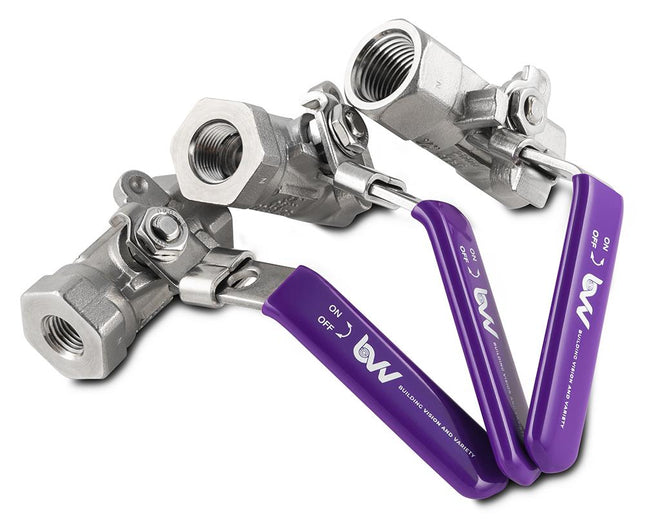

316SS FNPT Full Bore Ball Valve -40F to 450F
316SS FNPT Full Bore Ball Valve This BVV 316 stainless steel full bore ball valve is a fire safe ball valve and is 1 piece ball valve construction. It also features a straight body style with Female NPT x Female NPT threaded connections with one side being pinned into place for zero movement during installation. The fire safe ball valve features a maximum pressure rating of 2000 PSI CWP and has a blowout proof stem made of 316SS and the temperature range of this ball valve is -40F° to 450F°. Standard: ASTM A351 Pressure Tested in compliance with API 598 Ninth Edition 2009: Sec.5 and Sec.6 Technical Data Sheet Valve Specifications Sizes Available: 1/4" FNPT 1/2" FNPT Pressure Rating 2000 WOG Temperature Range -40 to 450F° Sizes Available: 1" (Fits 1.5" Tri-Clamp) Torque Specifications Do not Exceed 14.46ft-lbs when tightening.(Note: Overtightening the valve can cause damage to the pin. Doing this will void the valve warranty.) Valve Materials: Body 316SS / CF8M Ball 316 Stainless Steel Stem 316 Stainless Steel Stem Nut 304 Stainless Steel Insert 316 Stainless Steel Seat PTFE / Dyneon TFM1600 Thrust Washer PTFE / Dyneon TFM1600 Stem Packing PTFE / Dyneon TFM1600 Handle 304 Stainless Steel Handle Cov VINYL GRIP Handle Washer (1/2") 304 Stainless Steel Handle Nut 304 Stainless Steel Belleville Washer 304 Stainless Steel PIN 304 Stainless Steel
$100.76 - $107.96


You have seen 1104 out of 1791 products