
BVV
-
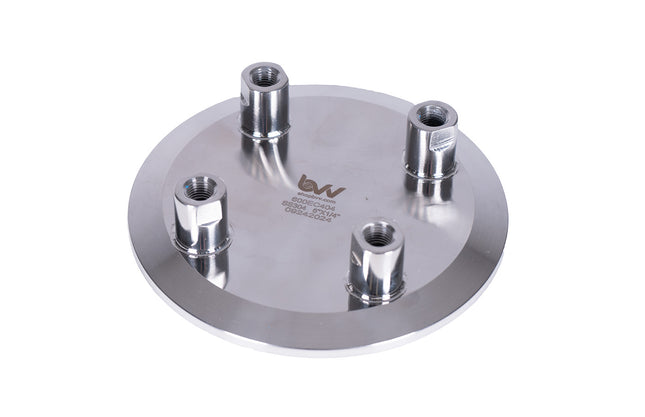

6" Tri-Clamp Endcap w/ (4) 1/4" FNPT Ports
6" Tri-Clamp Endcap w/ (4) 1/4" FNPT Ports These End Caps come with four 1/4"-18 FNPT Threaded connections welded to the end cap with a sanitary weld. They allow the user to adapt and connect a threaded connection to the 1/4" port on a Tri-Clamp lid. Specification Material: 304 Stainless Steel Connection Type: Tri-Clamp 1/4" - 18 FNPT Standard: 3A Sizes Available: 6" BVV™ 6" Tri-Clamp Endcap w/ (4) 1/4" FNPT Ports - Drawing BVV™ 6" Tri-Clamp Endcap w/ (4) 1/4" FNPT Ports - End Cap Chart
$137.49
-
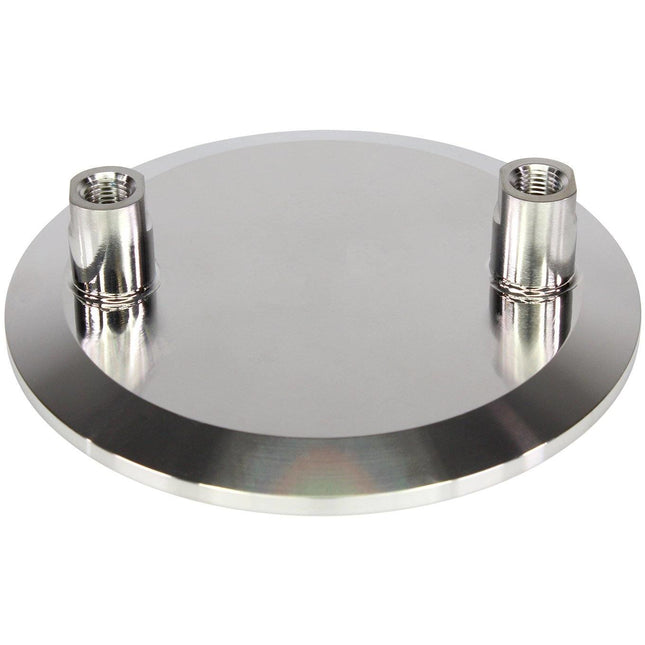
6" Tri-Clamp Endcap X (2) 1/4" FNPT Ports
6" Tri-Clamp Tri Clamp Endcap X (2) 1/4" FNPT Ports This 6" Triclamp endcap has 2x 1/4" FNPT ports welded to the top of the endcap allowing for several variations of connections that can customize an extraction system to the user's needs. Specifications: Material - 304 Stainless Steel Connection Type(s) - 6" Tri-clamp and 1/4"-18 FNPT BVV™ 6" Tri-Clamp Endcap X (2) 1/4" FNPT Ports - Drawing BVV™ 6" Tri-Clamp Endcap X (2) 1/4" FNPT Ports - End Cap Chart
$130.26
-
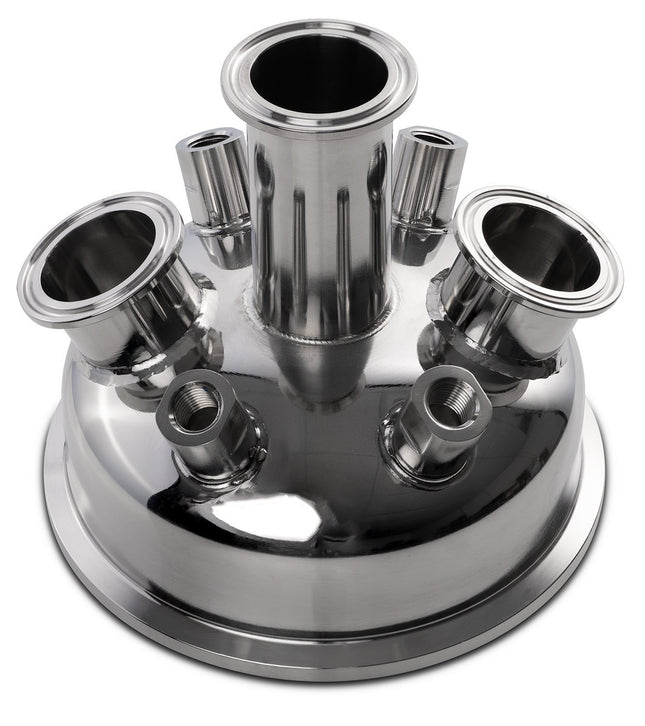
6" Tri-Clamp Hemispherical Extractor Lid
6" Tri-Clamp Tri Clover x (3) 1.5" TriClamp x (4) FNPT Hemispherical Lid This End Cap comes with Four FNPT Threaded connection and Three 1.5" Tri-Clamp ferrule welded to the end cap with a sanitary weld with a 3" Tube Extension Below the middle port on the lid. These allow the user to adapt and connect a threaded connection to the NPT ports and three 1.5" Tri-Clamp Connections on a 6" Hemispherical Tri-Clamp lid. With this versatile Tri-Clamp Extractor Lid, users can quickly create a leak-proof connection allowing easy assembly or disassembly for routine maintenance and inspection. Specification SKU: 600HEL 600HEL-V2 Material: 304 Stainless Steel 304 Stainless Steel Connection Types: 6" Tri Clamp 3x 1.5" Tri Clamp (Tube Extension Below Center Port) 4x 1/4" FNPT 2x 1/4" FNPT - 2x 1/2" FNPT Standard: 3A BVV™ 6" Tri-Clamp x (3) 1.5" TriClamp x (4) 1/4" FNPT Hemispherical Lid - Drawing BVV™ 6" Tri-Clamp x (3) 1.5" TriClamp x (4) 1/4" FNPT Hemispherical Lid - End Cap Chart
$238.80 - $253.27
-


6" Tri-Clamp Pressure Filtration System
The 6" Tri-Clamp pressure filtration system is an easy and sanitary way to use filter bags inline with your process. This system uses standard filter bags, trade size 8 (not included) This filter is designed for high flow rates to filter unwanted precipitates from your oleoresin. The housing provides full enclosure of your filter bags, which are fully supported by the strainer basket within the housing to prevent blowouts. Pressure and high flow rates may be applied to get the fastest flow through filter bags. There are two options to use as drain ports, on the side or the bottom. The bottom port is preferred, but if the application requires a low profile housing, the side port can be used. The housing allows full exhaustion of a bag prior to changing it without the sacrifice in filtering time.These filter bag housings use a tri-clamp style to allow for high pressure without leakage, while still maintaining an easy to remove cover. When one filter bag gets filled, it can easily be swapped out by removing the lid while not under pressure and pulling the old bag out. The liquid pump is of 316 Stainless Steel Construction with PTFE seals and runs on compressed air or nitrogen. Built options Include: 1x 304 Stainless Steel Filter Bag Housing 1x 304 Stainless Steel Basket 1x 304 Stainless Steel Displacement Cylinder Connection Types: Lid - 6" Tri-Clamp with 2x 1/2" Compression Inlet - 1.5" Tri-Clamp Outlet - 1.5" Tri-Clamp (2x) With Pump options Include: 1x 304 Stainless Steel Filter Bag Housing 1x 304 Stainless Steel Basket 1x 304 Stainless Steel Displacement Cylinder 1x 316 Stainless Steel Liquid pump Connecting hose or hardline tubing Specifications 600PFS-790-20 600PFS-790-60 Flow Rate (GPM) ≤15 ≤15 Max Pressure (PSI) 100 @28 CFM 100 @28 CFM Volume (in^3) 790 790 Working Temperature (°C) -20 - 100 -60 - 100 Gasket Material(s) Silicone / PTFE PTFE Air Hose Connection ¼” JIC Flare ¼” JIC Flare Filter Bag Housing Dimensions (LxWxH) 14” x 11” x 41” 14” x 11” x 41” Filter Bag Trade Size #8 #8 Inlet/ Outlet port size 1.5" Tri-Clamp 1.5" Tri-Clamp *This unit requires an air compressor for operation (not included)
$2,272.23 - $10,196.08
-
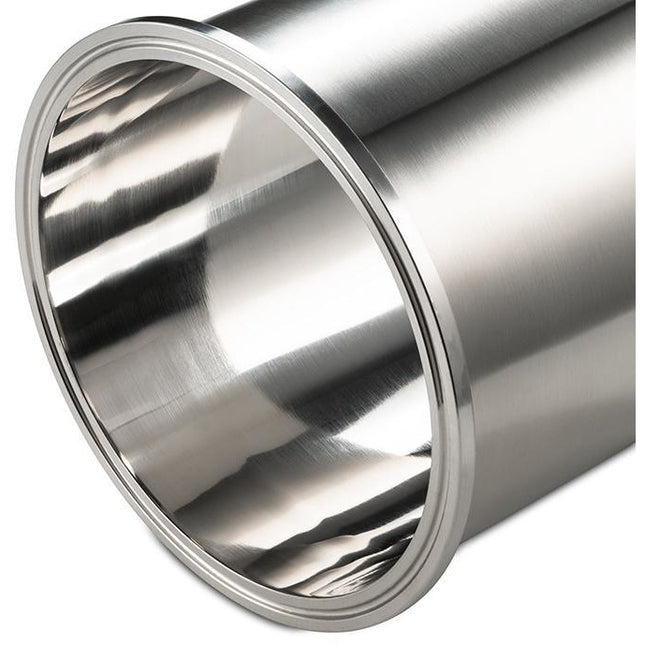
6" Tri-Clamp Spools
6" Tri-Clamp / Tri Clover Spools Sizes Available: 6" x 6" Tri-Clamp Spool 6" x 12" Tri-Clamp Spool 6" x 24" Tri-Clamp Spool 6" x 36" Tri-Clamp Spool 6" x 48" Tri-Clamp Spool Specifications: Tri-Clamp Size 6" Material 304 Stainless Steel Standard 3A High Polish Spool OD 6" Spool ID 5.78" Flange OD 6.57" Bead Center 6.156" OD = Outer Dimension ID = Inner Dimension Disclaimer to Customer: User assumes all responsibility and risks of the system for all Stainless Steel Parts bought separately to piece together a Closed Loop, Closed Column, or Open Blast Extractors. They DO NOT come with a standard 1 year system warranty, customer assistance on how to run your system, technical help or a guarantee of the system being tested. BVV™ 6" Tri-Clamp Spools - Drawing Material Capacity Cylinder Volume Radius (in) 1.5" 2" 3" 4" 6" 8" 10" 12" Length (in) Volume (in3) Select Material Butane ISO-Butane Propane How Much Will Fit in Cylinder FormulaVolume x Weight of Water x Specific Gravity ConstantsWeight of Water = 0.0360 (lbs / in3)Specific Gravity of = Lbs. of : Recommended: Account for an 80% fill to avoid a hydraulic lock How Much Material Will Fit in the Cylinder Volume Packing Density (g) 2.5 3 3.5 4.3 Grams of Material Lbs. of Material Cans of Butane Cans of Butane by Size Pounds of Butane mL fl oz lbs # of Cans 420 14.2 300 10.1 200 6.7 150 5.07
$209.86 - $528.26
-
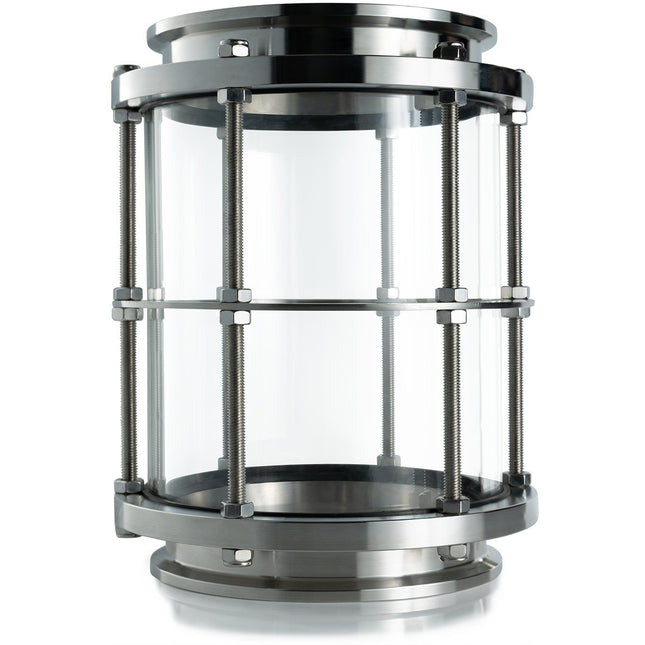

6" Tri-Clamp Tall Sight Glass
6" Tri-Clamp/Tri-Clover Tall Sight Glass This massive 6" Tri-Clamp sight glass is one of a kind and a specialty product for Best Value Vacs. It allows customers to attach it to alcohol or steam-based extraction systems or to monitor the flow of large scale sanitary systems. These sight glasses come in either 10, 20, or 30" lengths and the customer has the choice of choosing a Buna-N or Silicone gasket through dropdowns. (Sight Glass Comes Standard with Buna-N.) Specifications Material 304 Stainless Steel / Borosilicate / Nitrile OR Silicone Connection Type 6" Tri-Clamp Length 10" , 20", or 30" Pressure Rating 50 PSI
$694.69 - $1,295.31
-
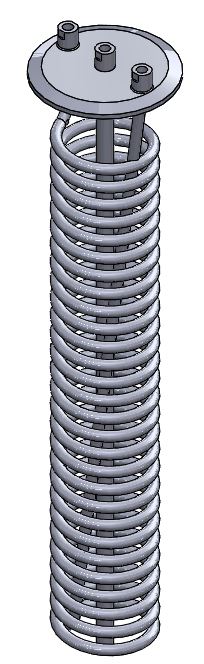
6" Tri-Clamp x 30" Column Cooling Coil with Dip Tube
6" Tri-Clamp x 30" Column Cooling Coil This column cooling coil is designed to fit in 6" Tri-Clamp material columns and allows the user to either chill or heat the column up from the inside which increased the surface area beyond a standard dewaxing jacket and reduces the need for dry ice. This cooling coil is made out of 304 stainless steel and has a 3/8" diameter coil spiraling from (3) 1/4" FNPT ports on the top with 2 of them connecting to the coil and one of the connecting to the dip tube
$571.67
-


6" Turnkey Falling Film Evaporator (20 GPH)
BVV 6" Turnkey Falling Film Evaporator Cutsheet Is your lab floor filled with a fleet of rotary evaporators? Looking to increase solvent recovery throughput? Our new and compact 20GPH Falling Film Evaporator (FFE) has the capability to maximize throughput and replace up to five 50L Rotary Evaporators. The BVV™ 20GPH Falling Film Evaporator is designed to evaporate ethanol that has been diluted in crude oil during a filtration or extraction process. By reducing the vapor pressure inside the system and metering the injection valve, the user can set the heat exchangers to the appropriate temperatures to efficiently evaporate solvent from their crude oil. We paired our FFE with reliable equipment that will keep operations running. End users are required to plumb the process inlet and outlet connections for both heat exchangers. They are supplied with 1.5” sanitary tri-clamp connections. BVV™ can assist with necessary parts needed for a permanent or temporary installation. Temporary installations may be necessary if your lab has limited fume hoods or space which is shared with other processing equipment. Below you will find key features, additional equipment included with the system and the power requirements for each, and real-life efficiencies that were tested. Key Features: · Compact rack design for use in fume hoods (39”x30”x75.5”) · Vernier scale metering valve for controlled injection · Accurate heater and chiller temperature control · Deep vacuum for effective solvent removal · Discharge pumps to eliminate constant reservoir draining and down time · Chemical resistant vacuum pump · Adaptable discharge outlets to customer preference · Insulation to limit thermal loses and reduce condensation (Not Pictured) · Sanitary tri-clamp and compression fittings · Pre-heat injection coil · Injection distribution plate · Tube in shell heat exchanger for efficient evaporation and condensation · Packable vapor path for reduction of contaminants and cleaner separation · Water reservoir for priming the heating system and expansion during operation · The certified model is 22 State certified by PRV Engineers and includes an Infield Verification by PRV Engineers within the purchase price. States include but are not limited to: Alabama, Arizona, Arkansas, California, Colorado, Connecticut, Florida, Illinois, Kansas, Louisiana, Maine, Massachusetts, Missouri, Nevada, North Carolina, Oklahoma, Oregon, Texas, Vermont, Washington, West Virginia, and Wyoming Crude Discharge Pump Easily control discharge speed and collect your extract directly from the 3/8" tube via a collection vessel or swage on a fitting of your preference to pump collected extract to a secondary location. Eliminate constant reservoir draining and operate continuously. Metered Solvent Injection Effectively repeat efficiency and throughput with our vernier scale metering valve. Easy to dial in the desired efficiency and throughput desired by the user. Distribution Plate Directs the injected solvent to be evenly distributed across all tubes in the heat exchanger which maximizes the effective heating surface area. Solvent Discharge and Vacuum Pump The solvent discharge pump eliminates the need for a reservoir and allows you to pump recovered solvent to any desired secondary location. The vacuum pump manifold gives you easy vacuum control during the complete operation. POWER REQUIREMENTS The equipment listed below is included with the system. Check power requirements and amp draw prior to purchasing. Equipment Purpose Power Requirement Amp Draw Notes Hubbell Process Water Heater Heater for Heat Exchanger Column (Evaporation) 240V 3-Phase 87 36kW Heating Capacity Taco ECM High-Efficiency Circulator Water Circulator for Heater 115V 1-Phase 2.5 Max flow rate 52GPM 10 Ton Low Temp Glycol Chiller Chiller for Heat Exchanger Column (Condensation) 230V 3-Phase 64 10 ton Cooling Capacity 2GPM Ethanol Recovery Pump for Vacuum Pump for Ethanol Recovery Discharge 230V 1-Phase 2.4 2GPM Max Flow Rate, Vacuum Check Valve Beaker and Wrench Explosion Proof Oil Pump Pump for Oil Recovery Discharge 230V 1-Phase 1.1 90L/hr. Max Flow Rate, Vacuum Check Valve Welch BTpro100 Diaphragm Pump Vacuum Pump for System 115 1-Phase 3.4 3.5 CFM, 6 Torr Ultimate Vacuum Total Amp Draw 174.4 EFFICIENCY We are proud to present real data with running parameters and efficiencies that reflect the actual operation of our system. Below you will find the tested throughputs and efficiencies that our FFE is capable of handling. Throughput 11 GPH 18 GPH 20 GPH 22 GPH 24 GPH Efficiency 98% 97% 94% 90% 85% ** Efficiency calculated at 10:1 ratio (Ethanol : Crude Oil) with heater temperature of 160°F. Crude is fully dewaxed when going into the falling film evaporator. Solution starts at room temperature. Speeds may differ based on dilution ratio, crude quality, and running parameters. **
$88,283.98 - $94,073.09
-
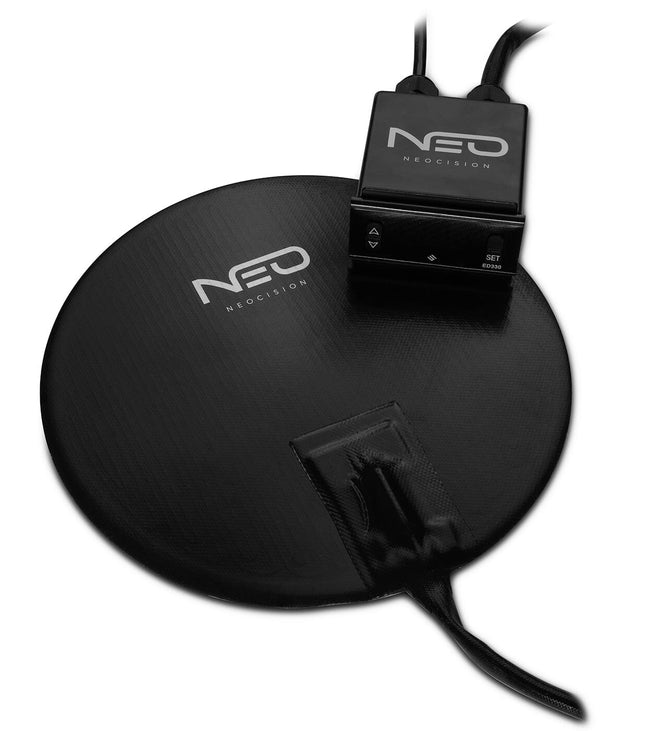
6" Vacuum Chamber Digital Heat Pad
6" Vacuum Chamber Digital Heat Pad Chamber NOT Included, Sold Separately. Heat Pad must fit correct size of the chamber! Fits a 1 and 1.5 Stainless Steel, 3 Qt Pyrex, and 1.75 Qt Pyrex Chamber This Digital Heat Pad will adhere to the bottom of a chamber vessel with a peel and stick backing. This unit will hold a temperature within a degree to the set temperature (dependent on the environment and air movement). The temperature offset must be found to set the controller accurately. (See ‘Operation’ instructions in the operation manual) Included with this Digital Heat Pad: Instructions on how to operate and set parameters. Simple standoff bumpers (provide thermal separation between the vessel and the work surface) Thermal tape (best method to check and verify temperature) Specs: UL Listed Fahrenheit Digital Controller. Min Temp: Ambient + 5 Max Set Temp: 160°F Ultimate Max Temp: 248°F Voltage: 110VAC Only Power Consumption: 220-watt Digital Control: Increments of 1 Degree. Accuracy: +/- 0.2 Degrees Units: Degrees Fahrenheit Instructions: Fully included Relay Lifespan: Approx. 10 million cycles User can reprogram: Yes
$133.15
-
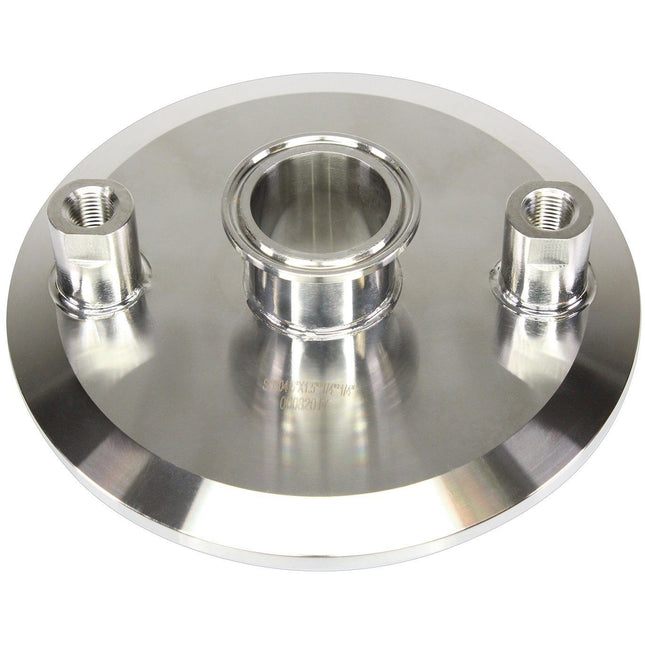
6" x 1.5" x (2) 1/4" FNPT Tri-clamp Endcap
6" x 1.5" x (2) 1/4" FNPT Tri-clamp Tri Clover Endcap This End Cap come with Two 1/4"-18 FNPT Threaded connection and 1.5" Tri-Clamp ferrule welded to the end cap with a sanitary weld with a 0.5" Tube Extension Below the Lid. They allow the user to adapt and connect a threaded connection to the 1/4" port on a Tri-Clamp lid and the 1.5" Tri-Clamp Connection. These 3 connections are welded on a 6" Tri-Clamp End Cap. Specification Material: 304 Stainless Steel Connection Types: 1.5" Tri-Clamp - 0.5" Tube Extension Below Lid 6" Tri-Clamp 1/4" - 18 FNPT Standard: 3A BVV™ 6" x 1.5" x (2) 1/4" FNPT Tri-clamp Endcap - Drawing BVV™ 6" x 1.5" x (2) 1/4" FNPT Tri-clamp Endcap - End Cap Chart
$282.22
-
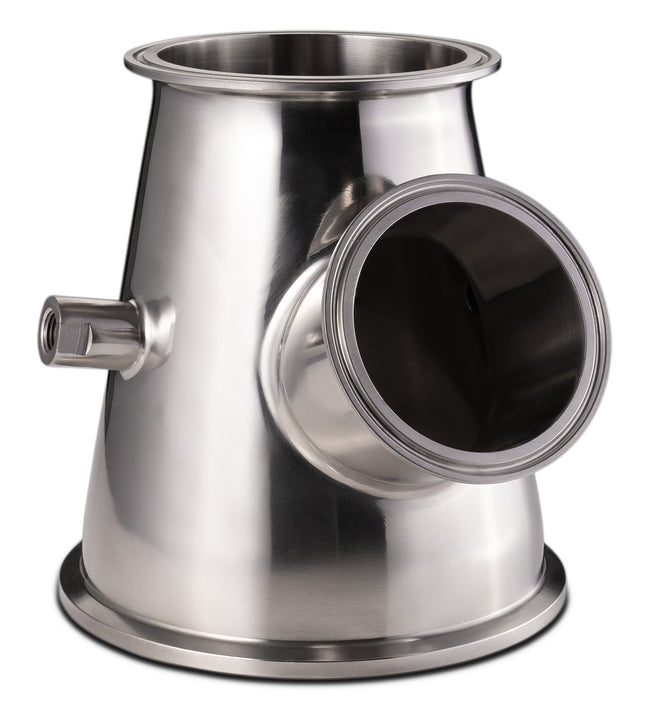
6" x 4" x 3" x (2) 1/4" FNPT Tri-Clamp Skylight
Specifications: 304 Grade Stainless Steel Reducer 'Skylight' w/ High Polish interior 6" Triclamp x 4" Triclamp x 3" Triclamp (Can be used as viewport to see inside) x (2)1/4" FNPT 7" Tall
$282.22
-


6% Hydrogen Peroxide Food Grade H2O2
6% Hydrogen Peroxide Food Grade is double the strength of the peroxide that is typically found in retail stores across the country. 6% peroxide is a stronger disinfectant than the typical 3%. It's great for stronger household cleaning. It has more power to lift stains, kill mold, whiten grout lines, and whiten the whites in the laundry. Our peroxide is USA made, sourced locally and we replenish the stock frequently to provide the freshest delivered peroxide. Made with high purity deionized water. 6% peroxide is the preferred by hairstylists/hairdressers to lift color and open up the cuticle to allow pigment to penetrate. If you want to dilute this to 3% you will need add 1x the volume of 6%. Example: If you had 1 gallon of 6% and wanted to make 3% you will need 1 gallon of distilled or R.O. water to mix in with your 1 gallon of 6%. You will end with 2 total gallons and the concentration will drop to 3%. Hydrogen Peroxide 6% Safety Data Sheet (SDS) Hydrogen Peroxide 6% Certificate of Analysis (Example) COA
$20.26 - $694.69
-
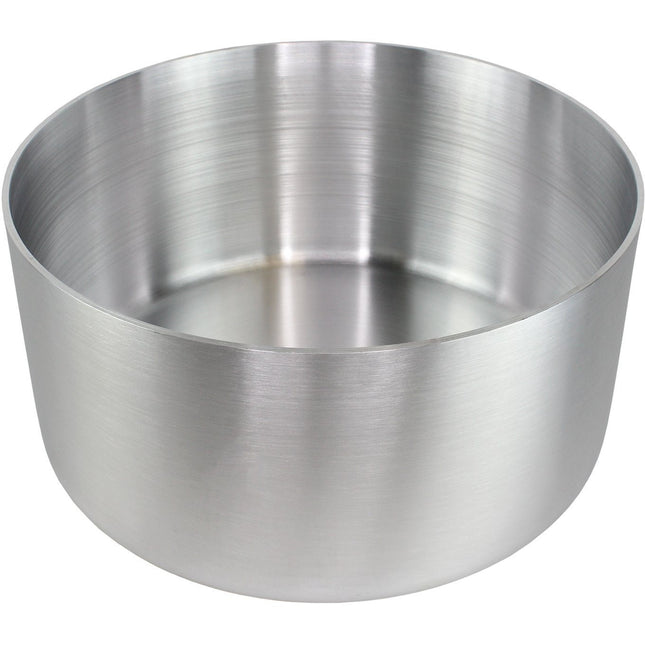
7 Gallon Aluminum - POT ONLY
7 Gallon Aluminum - POT ONLY This is a replacement part for the following Vacuum Chambers: Best Value Vacs 7 Gallon Aluminum Vacuum and Degassing Chamber Dimensions: 8" Tall x 16" Diameter Material: 3004 Aluminum
$156.31
-
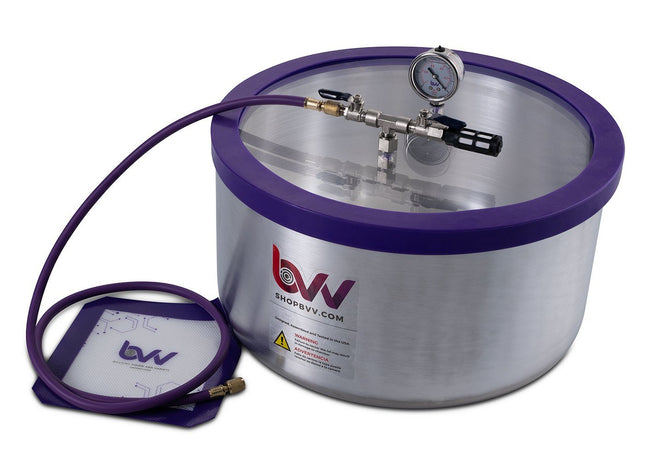
7 Gallon Aluminum Vacuum Chamber
7 Gallon Vacuum Chamber (Comes with 2 Year Limited Warranty) This is a complete BestValueVac® vacuum chamber setup designed built and 100% tested in Naperville, Illinois. With our unique patent pending gasket design (Patent #9475627) this chamber is sure to last 10,000 uses with proper care and maintenance. The gasket itself is reversible (doubling the life of our system) allowing customers to instantly take it off and flip it over. Every chamber is tested prior to shipping to lose no more than 2.5Hg/24hrs. -Please Refer to these charts for vacuum specifications at altitude and conversions: Vacuum at Altitude Chart Vacuum Conversion Chart Key Features: Aluminum Vessel Highly Durable and Reversible Silicone Gasket Glycerin filled vacuum gauge User friendly vacuum connections that fit most vacuum pumps on the market 50 Micron Air filter for reducing airborne contaminants when releasing the vacuum Silicone vacuum pad 5' of vacuum rated HVAC hose to pull a vacuum 3003 Grade Aluminum Body, lightweight and durable Precision lip edge at the top for the protection of silicone gasket Specification Chamber Material 3004 Aluminum Gasket Material Silicone Lid Material Acrylic Internal Dimensions (ID) 8" Tall x 16" Diameter Vacuum Gauge (Glycerin Filled) InHG (0)-(-30) Manifold Connections 1/4" SAE and 1/4" FNPT Temperature Rating 150°F (65°C) Additional Included Items 5' Purple Vacuum Rated HVAC Hose Platinum Cured Silicone Pad Black 50 Micro Air Filter Compatibility Explanation: Polymer Lid Vacuum Chambers are not compatible with stabilization resin (i.e. Cactus Juice™, Gator Venom™, Minwax™ etc.), alcohol, ethanol, acetone and acrylic based monomers or polymers. The lid may only be cleaned with soapy water. Lids that are 5.75” diameter are made of polycarbonate, all other polymer lids are made of acrylic. Glass Vac vacuum chambers are compatible with all solvents and stabilization resins. The lid is made of tempered Soda-Lime glass. We recommend GlassVac chambers for resin infusion and wood stabilization. The lid may be cleaned with any solvent or cleaning agent. Pump Warranty Information: Customers using solvents such as stabilization resins (MinWax™, Gator Venom™ etc.), alcohol and other polar solvents must use the vacuum pumps in conjunction with a cold trap for evacuations in excess of 5 minutes. (Exludes Cactus Juice™) If the consumer is using the pump for prolonged periods of time exceeding 5 minutes we require that a cold trap is used or the pump warranty is void. These stabilization resins have the ability to break down the internal components of the pump that are plastic resulting in a seized motor voiding all warranties. When evacuation exceeds 5 minutes these solvents begin to vaporize and then re-condense in the vacuum pump reservoir. Once enough solvent re-condenses in the pump displacing the oil the plastic internal components may begin to warp, melt or seize. The use of a cold trap will condense the vapors prior to making their way to the vacuum pump preventing pump damage due to excessive use. Furthermore, Minwax Wood Hardener™ is not to be used with any vacuum pumps, EVER. (A seized motor will result within the first use.) To prevent these issues from happening to your process, change the Oil after each vacuum pump use, Even if the use time is only 5min.
$426.95
-
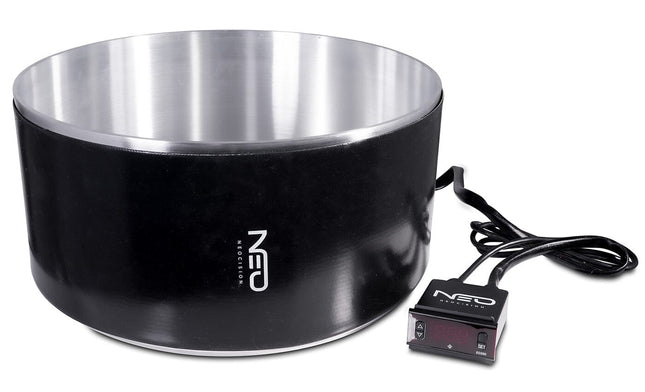
7 Gallon Aluminum Vacuum Chamber Digital Heating Jacket
7 Gallon Aluminum Vacuum Chamber Digital Heating Jacket A vacuum chamber heating jacket provides the user the ability to evenly heat the chamber around the circumference while being very stable and when combined with a heating pad it covers most of the vessel distributing heat on what is being degassed in the vessel. Key Features: Velcro Connections on each end. Digital PID Temperature Controller for accurate and stable control. Made of heat resistant silicone. Specifications: Min Temp: Ambient +5F Max Set Temp: 160F Ultimate Max Temp: 248F Voltage: 110VAC Only Precision: 1 degree F increments. Stability: +/- 0.2 F Dimensions: Approx. 7"W x 53.9"L Instructions Included Relay Lifespan 10million Cycles Reprogrammable: Yes This product comes with the Digital Heating Jacket ONLY, does not include the chamber.
$318.40
-
7 Gallon Aluminum Vessel SIDEMOUNT
7 Gallon Aluminum Sidemount - POT ONLY This vessel will have a hole drilled in the side to attach a vacuum manifold. ***Note: 'with Hardware' Option only includes the side-mount manifold with gauge pre-installed. (Does Not Include Lid or Gasket) Dimensions: 8" Tall x 16" Diameter Material: 3004 Aluminum
$163.54 - $192.49
-
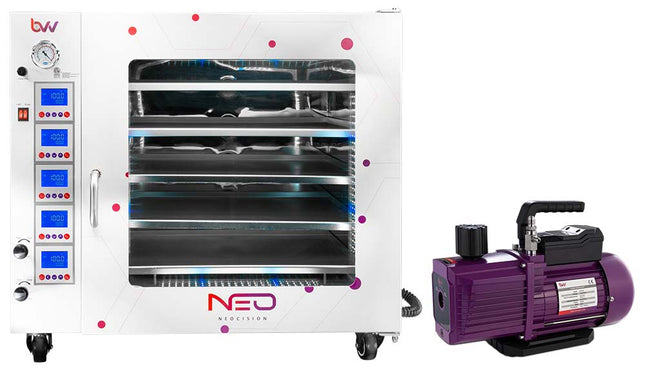
7.5CF Neocision Lab Certified Vacuum Oven and and V9D 9CFM Two Stage Vacuum Pump kit
7.5CF Neocision Lab Certified Vacuum Oven and V9D 9CFM Two Stage Vacuum Pump Kit Disclaimer: This unit is intended for LEGAL purposes only, to be used in accordance with local laws and ordinances. Use only in well-ventilated areas! INTRODUCTION Our vacuum ovens are purpose-built to perform degassing / purging of light hydrocarbon solvents. Using the technique of cold boiling, the oven applies a gentle heat under reduced pressure conditions to expedite solvent degassing while simultaneously preserving color, aroma, and overall solute quality. We've applied our extensive vacuum expertise and industry experience to produce a series of ovens designed exactly for your needs: low consumption, high-throughput, and reliable operation. PERFORMANCE CAPABILITIES At Best Value Vacs, we make every effort to provide oven performance capabilities in a standardized format. We're not interested in juking our stats to make a sale. Instead, our goal is to provide quality, transparent production capabilities that meet the demands of our professional customers. Temperature Stability: ±1.0° Temperature Uniformity: within 4% of the temperature setpoint. Heat-Up Time: 20 minutes. Ultimate Vacuum: <500 µmHg / mTorr / micron Time to Vacuum: 10 minutes to 29"Hg Vacuum Hold: guaranteed to lose less than 1"Hg (25.4 torr) in 24 hours. SPECIFICATIONS Electrical Voltage 120V Frequency 60HZ Power 1960W Current 20A Plug IEC C13 (unit ships with detachable NEMA 5-15p cable) Internal Chamber Heating Individual Direct-Heat shelves Temperature Range RT+18°-212°F Chamber Material Stainless Stee Dimensions (LxWxH) 22" x 23.25" x 25.25" Vacuum Gauge Style Glycerin-filled for accuracy and longevity Range (units) -30 to 0 (inHg) / -1 to 0 (bar) Shelving Ships With 5 Heated Shelves Shelf Dimensions (LxW) 21.5" x 21.5" Shelf Capacity 462 in2 Total Shelf Capacity 2311 in2 / 16.1 ft2 Door Seal Silicone on Tempered Glass Window Dimensions (LxH) 20.25" x 23.75" Lights 4 strips of LEDs provide clear, bright view of interior Handle No plastic, all metal parts for lifetime durability Exterior Dimensions (LxWxH) 35" x 33" x 34.5" Weight 430 lbs Support Locking Casters Safety Electrical Built-in, resettable, overcurrent circuit breaker Thermal Automatic overtemperature shutoff Compliance CE CE Listing Recognized ISO ISO 9001:2015 ETL Certified Conforms to ANSI/UL STD.61010-1, 61010-2-010 -- Certified to CAN/CSA STD. C22.2 NO.61010-1, 61010-2-010 Connection Vacuum Inlet KF25 / NW25, quarter-turn valve Purge Inlet 5/16" Barbed, 10-turn valve Atmospheric Release Quick-release dial Contains Ships With KF25 x 1/4" JIC Flare with 1/4" vacuum hose and adjusting wrenches. User Manual Included Warranty 3 year oven warranty Vacuum Pump Best Value Vacs VE280 9CFM Two Stage Vacuum Pump CAPACITY AND THROUGHPUT PLANNING Oven capacity requirements vary widely by the producer. We wanted to create a method to assist in determining the best oven match for your operation, based on a few of the parameters of your extraction and of your desired purge. We based this formula on an expected extraction yield of 25%, with an extract-density of 1 g/in2. Using the following variables, this formula is designed to provide an estimate of your required shelving capacity: Size = Extraction Batch Size (lbs) Number = Runs per 24h Period Purge = Your desired purging duration (hours) Area Required (ft2) = [(Size) * (Number) * (Purge+1)] / 122Area Required (in2) = (Size) * (Number) * (Purge+1) * 1.18 Note: This item is a freight ship item and will ship Via UPS Ground Freight. Expedited freight can only be calculated by calling customer service 331-281-0154. All orders with expedited freight through the website will not be honored and will need to be re-quoted. A valid Phone Number IS REQUIRED to ship, Otherwise UPS freight Cannot Contact you for a delivery setup window. Freight Time is 2-5 Days. West Coast 5 Days, Midwest 2 days, East Coast 3-4 days.
$12,366.99
-


70% Acetic Acid Technical Grade (Vinegar)
Acetic Acid 70% (Vinegar) roughly 15x times more concentrated than the 5% vinegar. One quart quart can be diluted or used directly. At this concentration its classified as industrial strength and ours is food grade. Our acetic acid is USA made, sourced locally and we replenish the stock frequently to provide the freshest delivered peroxide. Made with high purity deionized water. 70% Acetic Acid Technical Grade (Vinegar) SDS Safety Data Sheet 70% Acetic Acid Technical Grade (Vinegar) COA Example - Certificate of Analysis
$26.05 - $969.68
-
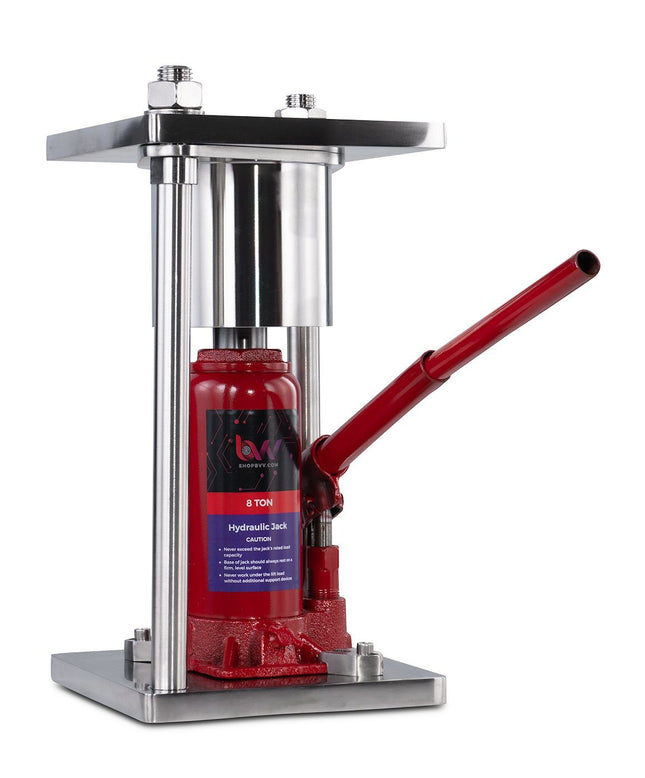

8 Ton 304SS Puck Press
8 Ton 304SS Puck Press This BVV™ 8 Ton 304SS Puck Press allows users to compress material into an easily manageable puck. Specifications: 304 Stainless Steel Components (Excludes Jack) External Dimensions - 7-1/8" x 7-1/8" x 14" Internal Puck Mold Diameter - 3.75" Mold Height - 3-1/4" Weight - 34LBS
$564.44
-
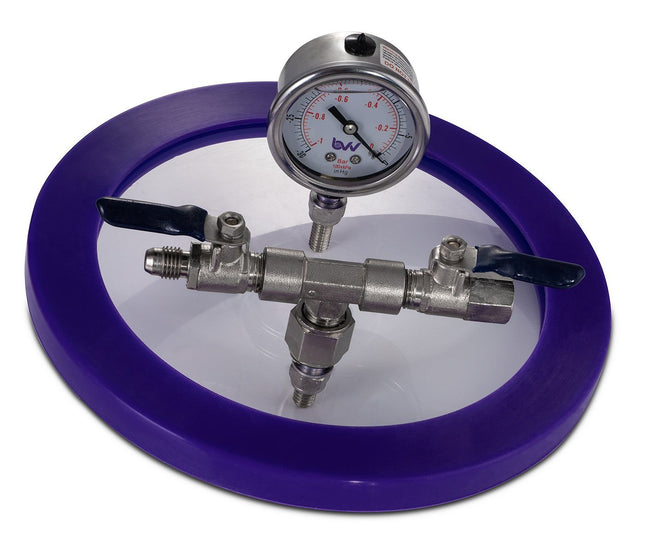

8" Diameter LID
BVV™ 8" Diameter LID Our patented gasket #9475627 Disclaimer: LID ONLY - does not include hardware unless selected through drop-downs or ordered separately. Hardware - includes Valve Manifold, Gauge, and Gasket. (Does not include 50-micron air filter or vacuum hose. This is a Replacement Lid for the following Vacuum Chambers: Best Value Vacs 1 Gallon Tall Stainless Steel Vacuum Chamber Best Value Vacs 1.5 Gallon Tall Stainless Steel Vacuum Chamber Best Value Vacs 1.75 Quart Pyrex Vacuum and Degassing Chamber Best Value Vacs 2 Quart Flat Stainless Steel Vacuum and Degassing Chamber
$40.52 - $85.39
-
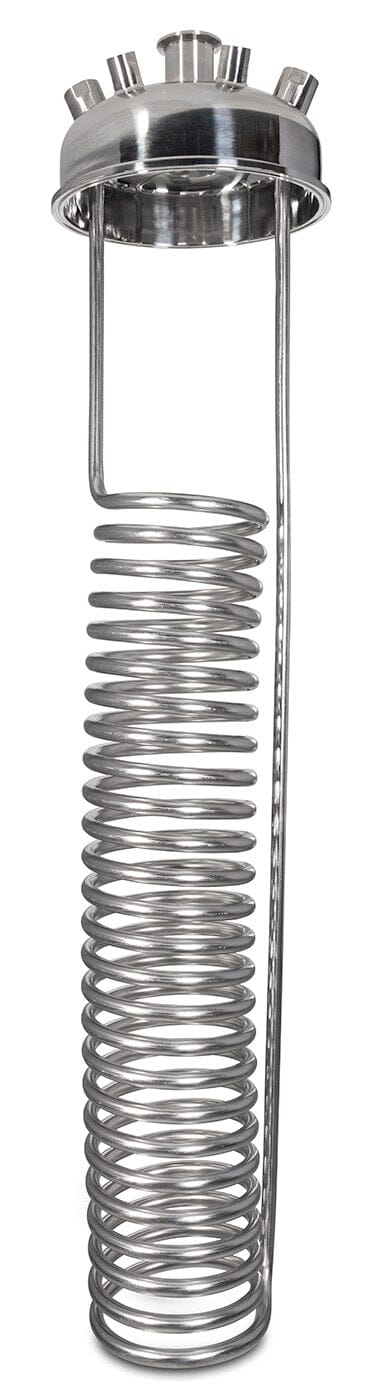

8" Hemispherical End Cap with Coil
8" Hemispherical End Cap with Coil This 8" Hemispherical End Cap with Coil comes standard with our 150L Conical Reactor. Complete with 2X 1/2" NPT accessory ports, 2X 1/4" NPT accessory ports, 2X 1/2" NPT ports for the coil, and a single 1.5" tri-clamp top port. This versatile part is perfect for those looking to add extra surface area to their heating or cooling application. From the 8" tri-clamp to the bottom of the coil measures 34".
$723.64 $434.18
-
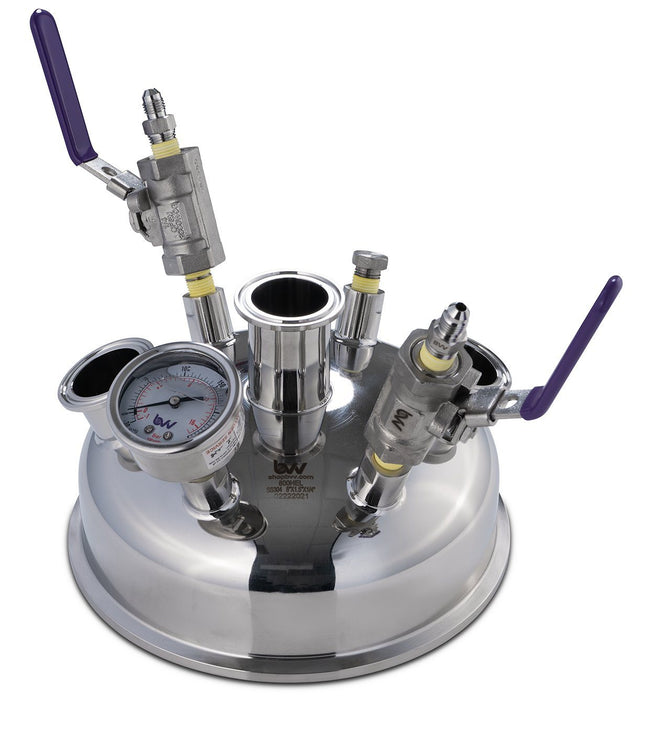

8" Pre-Built Hemispherical Lid with BVV 316SS Full Bore Valves
8" Pre-Built Hemispherical Lid with BVV 316SS Full Bore Valves (This Lid is fully assembled and Nitrogen Tested for Leaks at Best Value Vacs) This 8" Best Value Vacs Hemispherical lid is fully assembled and nitrogen tested for leaks at our warehouse. This lid comes with 2 BVV 316SS Full Bore Valves with 1/4" 37° JIC Flares, compound gauge and the 4th hole is plugged to allow for future expansion. These lids are made out of 304 stainless steel and have (3) 1.5" Tri-Clamp ports with the middle 1.5" port having an extended tube to control solvent flow. Key Features: Pre-built and Nitrogen Tested for Leaks BVV 316SS Full Bore Valves with 1/4" 37° JIC -40F to 450F 304 High Polish Stainless Steel Compound Gauge (-30)-0-(150PSI) Specifications Lid Material 304 Stainless Steel Valve Material 316SS Full Encapsulated PTFE Core - 1/4 Turn Flare Size (2)1/4" 37° JIC Tri-Clamp Size(s) (3) 1.5" Ports x x 8" Tri-Clamp Nitrogen Tested Yes
$573.12
-
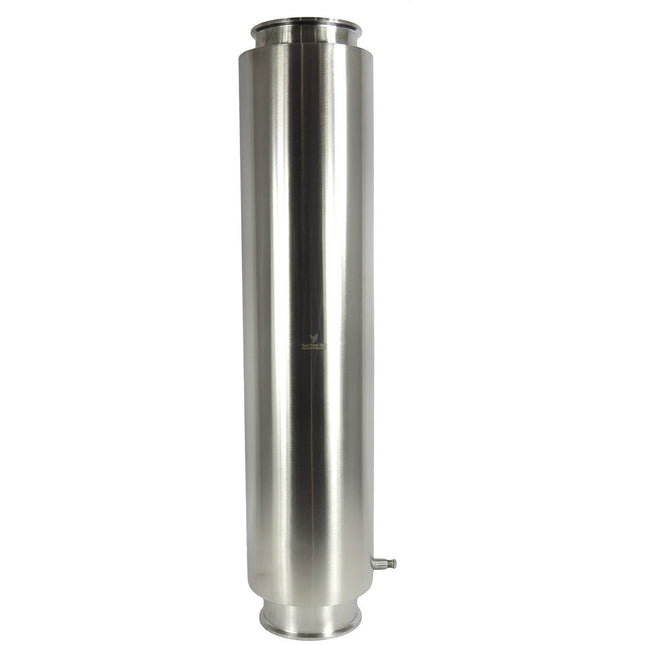
8" Tri-Clamp Dewaxer Column
8" Tri-Clamp/ Tri Clover Dewaxing Columns This is a 8" Tri-Clamp BVV™ Tri-Clamp Dewaxing Spool. It is intended to have dry ice put into the sleeve to chill the material inside the column. **Note: When selecting a Pipe Hanger choose the size that correlates to the Sleeve OD NOT Spool OD Sizes Available: 8" x 36" Tri-clamp Dewaxer Column 8" x 48" Tri-clamp Dewaxer Column Specifications: Tri-Clamp Size 8" Material 304 Stainless Steel Standard 3A High Polish Sleeve OD 10.000" Spool ID 7.782" Spool OD 8.000" Flange OD 8.570" Bead Center 8.150" Drain Port 1/4"-18 FNPT (Drain Plug Included) OD = Outer Dimension ID = Inner Dimension Disclaimer to Customer: User assumes all responsibility and risks of the system for all Stainless Steel Parts bought separately to piece together a Closed Loop, Closed Column, or Open Blast Extractors. They DO NOT come with a standard 1 year system warranty, customer assistance on how to run your system, technical help or a guarantee of the system being tested. BVV™ 8" Tri-Clamp Dewaxer Columns - Drawing
$651.28 $506.55
-
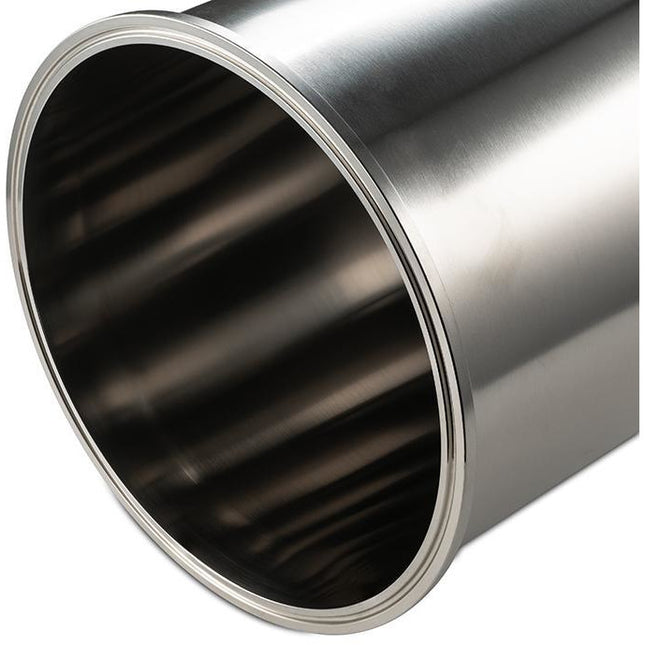
8" Tri-Clamp Spools
8" Tri-Clamp/ Tri Clover Spools Sizes Available: 8" x 12" Tri-Clamp Spool 8" x 24" Tri-Clamp Spool Tri-Clamp Size 8" Material 304 Stainless Steel Standard 3A High Polish Spool OD 8" Spool ID 7.782" Flange OD 8.57" Bead Center 8.15" OD = Outer Dimension ID = Inner DimensionDisclaimer to Customer: User assumes all responsibility and risks of the system for all Stainless Steel Parts bought separately to piece together a Closed Loop, Closed Column, or Open Blast Extractors. They DO NOT come with a standard 1 year system warranty, customer assistance on how to run your system, technical help or a guarantee of the system being tested. BVV™ 8" Tri-Clamp Spools - Drawing Material Capacity Cylinder Volume Radius (in) 1.5" 2" 3" 4" 6" 8" 10" 12" Length (in) Volume (in3) Select Material Butane ISO-Butane Propane How Much Will Fit in Cylinder FormulaVolume x Weight of Water x Specific Gravity ConstantsWeight of Water = 0.0360 (lbs / in3)Specific Gravity of = Lbs. of : Recommended: Account for an 80% fill to avoid a hydraulic lock How Much Material Will Fit in the Cylinder Volume Packing Density (g) 2.5 3 3.5 4.3 Grams of Material Lbs. of Material Cans of Butane Cans of Butane by Size Pounds of Butane mL fl oz lbs # of Cans 420 14.2 300 10.1 200 6.7 150 5.07
$224.33 - $564.44
-
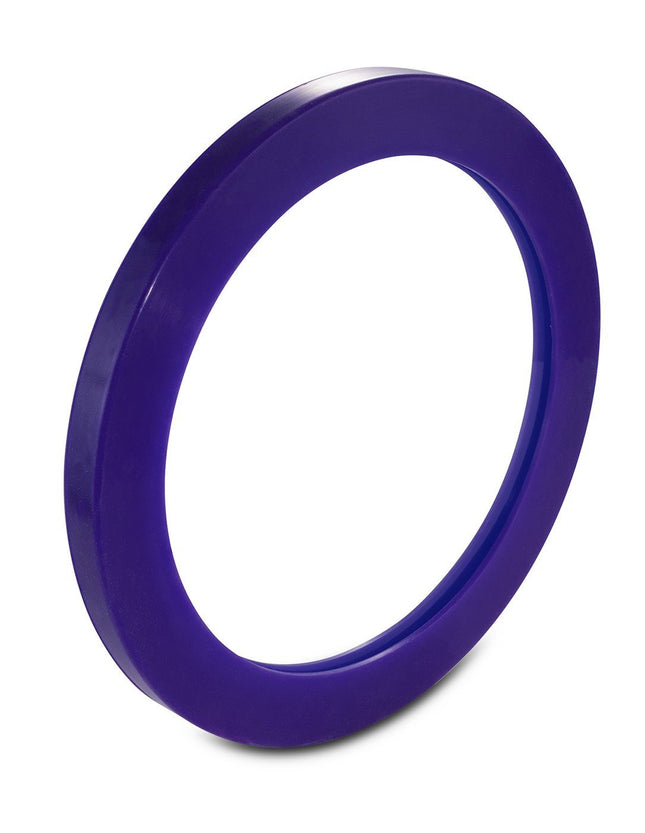
8" Vacuum Chamber Gasket
8" Vacuum Chamber Gasket This Gasket fits the following Vacuum Chamber Lids: Best Value Vacs 1.75 Quart Pyrex Vacuum and Degassing Chamber Best Value Vacs 2 Quart Flat Stainless Steel Vacuum and Degassing Chamber Best Value Vacs 1 Gallon Tall Stainless Steel Vacuum and Degassing Chamber Best Value Vacs 1.5 Gallon Tall Stainless Steel Vacuum and Degassing Chamber Glass Vac 1 Gallon Tall Stainless Steel Vacuum Chamber Glass Vac 1.5 Gallon Tall Stainless Steel Vacuum Chamber 1 Gallon Resin Trap Vacuum Chamber 1.5 Gallon Resin Trap Vacuum Chamber
$39.08
-
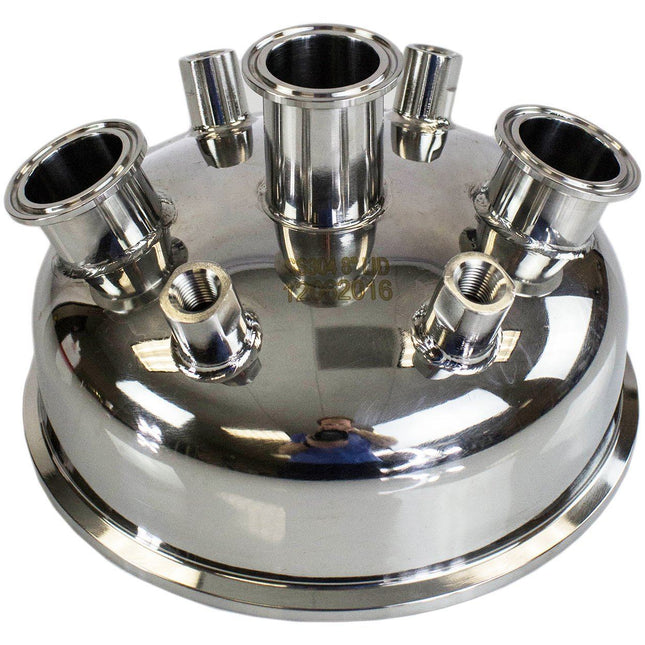
8" x (3) 1.5" Tri-Clamp x (4) 1/4" FNPT Hemispherical Lid
8" x (3) 1.5" Tri-Clamp Tri Clover x (4) 1/4" FNPT Hemispherical Lid Our Tri-Clamp Hemisperical Lid delivers superior rating performance and is commonly found in systems operating over 100 PSI. This End Cap comes with Four 1/4"-18 FNPT Threaded connection and Three 1.5" Tri-Clamp ferrule welded to the end cap with a 3" Tube Extension Below the Lid. The tube extension is designed to keep extracts from dripping on the inside of the lid, to minimize cleanup and maximize yield. They allow the user to adapt and connect a threaded connection to the 1/4" port on a Tri-Clamp lid and the 1.5" Tri-Clamp Connection. These 7 connections are welded on a 8" Hemispherical Tri-Clamp End Cap. Specifications: Material: 304 Stainless Steel Connection Types: 1.5" Tri-Clamp - 3" Tube Extension Below Lid on Center Tri-Clamp Port 8" Tri-Clamp 1/4" - 18 FNPT Standard: 3A BVV™ 8" x (3) 1.5" Tri-Clamp x (4) 1/4" FNPT Hemispherical Lid - Drawing BVV™ 8" x (3) 1.5" Tri-Clamp x (4) 1/4" FNPT Hemispherical Lid - End Cap Chart
$282.22
-
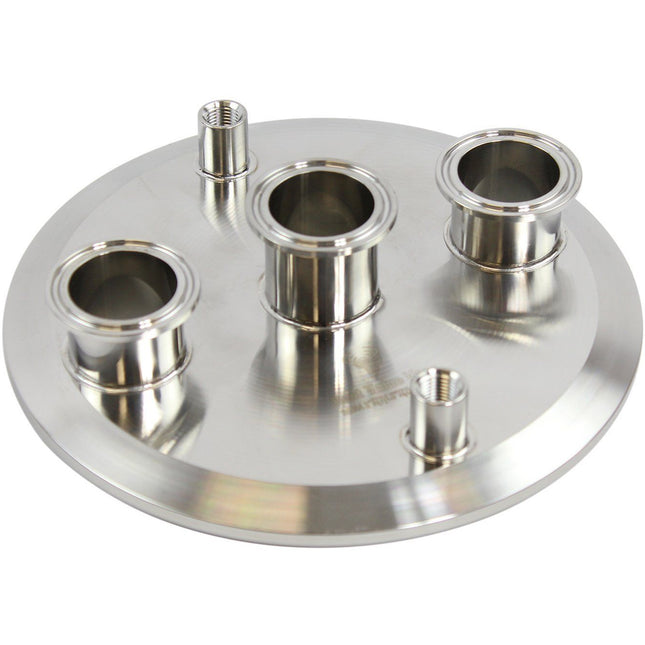
8" X (3) 1.5" X (2) 1/4" FNPT Tri-Clamp Endcap
8" X (3) 1.5" X (2) 1/4" FNPT Tri-Clamp Tri Clover Endcap This End Cap come with Two 1/4"-18 FNPT Threaded connection and Three 1.5" Tri-Clamp ferrules welded to the end cap with a sanitary weld with a 0.5" Tube Extension on the center 1.5" ferrule Below the Lid. They allow the user to adapt and connect a threaded connection to the 1/4" port on a Tri-Clamp lid and the 1.5" Tri-Clamp Connection. These 5 connections are welded on an 8" Tri-Clamp End Cap. Specifications Material: 304 Stainless Steel Connection Type: 1.5" Tri-Clamp - 0.5" Tube Extensionon center ferrule Below Lid 8" Tri-Clamp 1/4" - 18 FNPT Standard: 3A BVV™ 8" X (3) 1.5" X (2) 1/4" FNPT Tri-Clamp Endcap - Drawing BVV™ 8" X (3) 1.5" X (2) 1/4" FNPT Tri-Clamp Endcap - End Cap Chart
$376.29
-
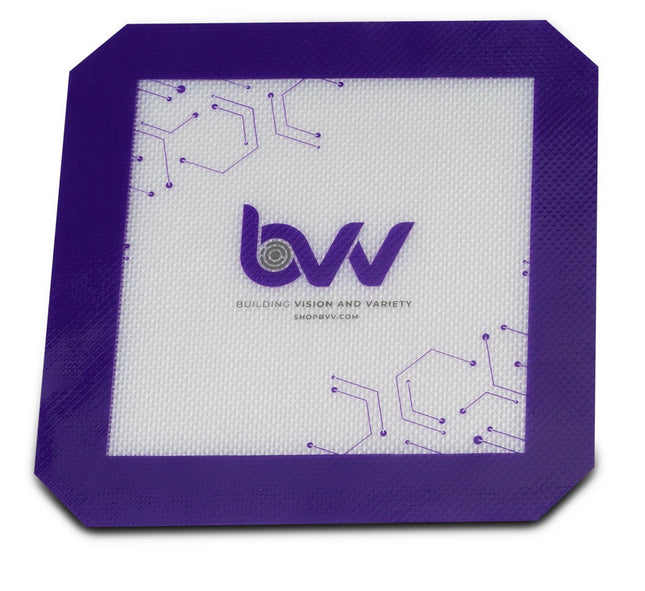
8" x 8" Platinum Cured Silicone Vac Pad
8" x 8" Platinum Cured Silicone Pad
$7.24
-
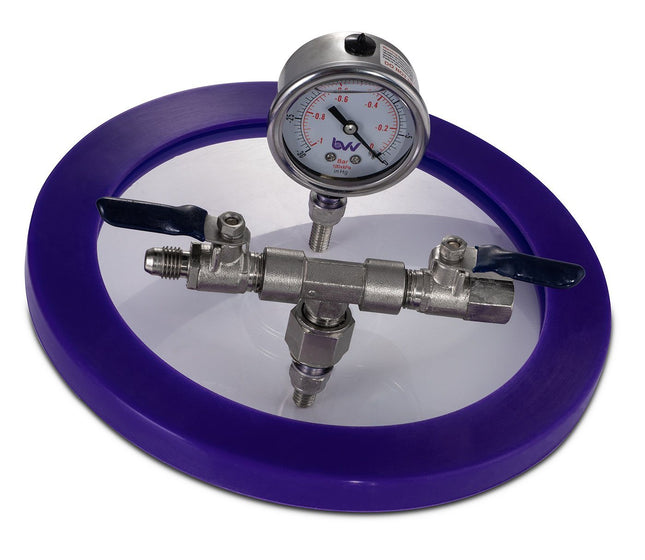
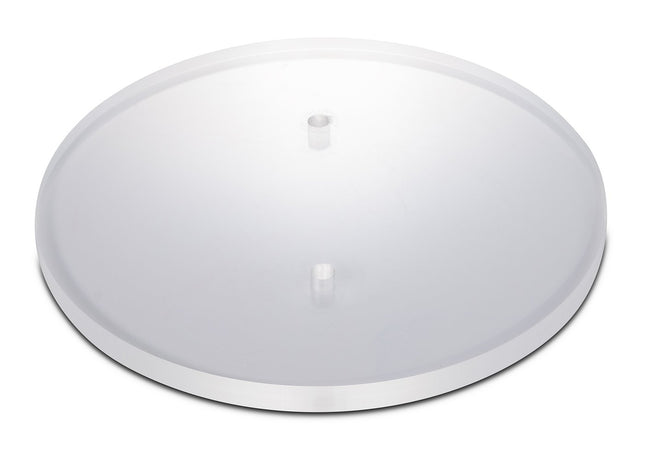
8.25" Diameter GLASS LID
BVV™ 8.25" Diameter Glass LID Our patented gasket #9475627 Disclaimer: LID ONLY - does not include hardware unless selected through drop-downs or ordered separately. Hardware - includes Valve Manifold, Gauge, and Gasket. (Does not include 50-micron air filter or vacuum hose.) This is a Replacement Lid for the following Vacuum Chambers: Best Value Vacs 1 Gallon Tall Stainless Steel Vacuum Chamber Best Value Vacs 1.5 Gallon Tall Stainless Steel Vacuum Chamber Best Value Vacs 1.75 Quart Pyrex Vacuum and Degassing Chamber Best Value Vacs 2 Quart Flat Stainless Steel Vacuum and Degassing Chamber
$76.71 - $98.41
-
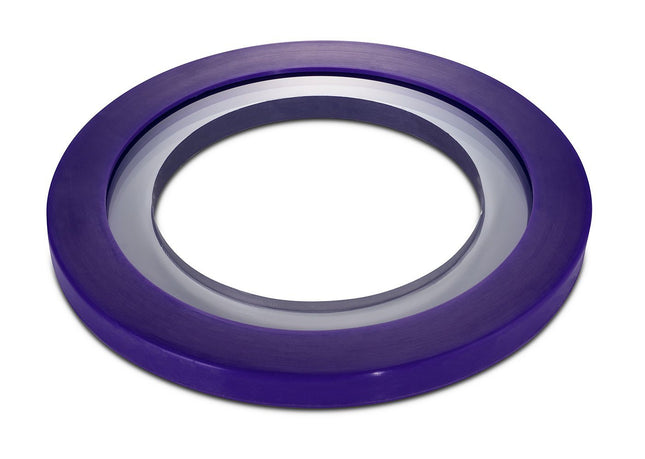

8.25" Diameter x 5.125 ID Cold Trap Donut
8.25" Diameter x 5.125 ID Cold Trap Donut LID Our patented gasket #9475627 Disclaimer: This lid comes with a gasket included. This is a Replacement Lid for the following Vacuum Chambers: 1.5 Gallon Cold Trap (2QT Tank) Dry Ice, Liquid Nitrogen
$81.05 - $94.07
-


80% Acetic Acid Technical Grade (Vinegar)
80% Acetic Acid Vinegar - Technical Grade Acetic Acid 80% is 20x Stronger than standard 4% vinegar. One quart can be diluted to 5 gallons of 4% vinegar. Our acetic acid is USA made, sourced locally and we replenish the stock frequently to provide the freshest delivered peroxide. Made with high purity deionized water. Dilution: The dilution is approximately 1 Tablespoon of acetic acid 80% per 16 ounces of distilled or R.O. water to make 4% standard vinegar. 80% Acetic Acid Technical Grade (Vinegar) Example COA - Certificate of Analysis 80% Acetic Acid Technical Grade (Vinegar) SDS - Safety Data Sheet
$27.50 - $904.55
-
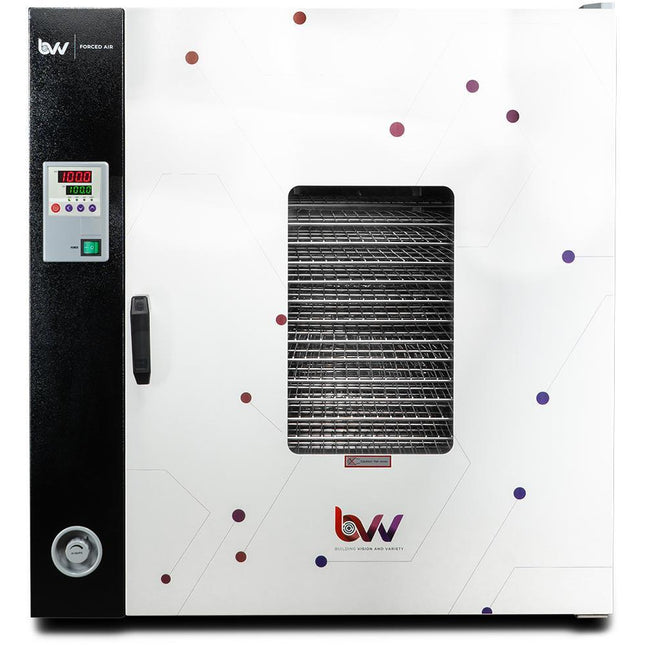
8CF CSA Certified Lab Grade Forced Air Convection Drying Oven – 16 Shelves Standard
8CF BVV™ CSA Certified Lab Grade Forced Air Convection Drying Oven – 16 Shelves Standard DISCLAIMER: This unit is intended for LEGAL purposes only, to be used in accordance with local laws and ordinances. Use only in WELL VENTILATED AREAS! The 8CF CSA Certified Laboratory Grade Drying Oven is our newest addition to the Best Value Vacs line of Laboratory-grade processing equipment. Offering a leading ±1⁰F temperature stability, over 98% heat uniformity, and no overshoot, technicians can now process material with ease and confidence. We regulate heat using a modern, high-precision PID controller with a large, bright display and touchscreen buttons. The interior is a high-polish stainless steel, presenting a clean and easy to maintain surface. Our drying oven comes fully-stocked as a standard- offering ten spacious, wire frame shelves you can easily insert, remove, and clean. With a clear, no-overshoot advantage, there’s simply no better choice for your precision processing needs. Key Oven Features: Long-lifetime convection fan gently circulates air for optimal heat distribution Stainless steel interior for a sanitary, easy-to-clean look 16 spacious, wire racks are easy to insert and remove Level-adjusting caster wheels for mobility and stability Overload circuit breaker for electrical protection Large, tough, stainless steel door handle feels solid and works great Temperature overshoot protection enabled Digital timer allows users precise control of heating cycle Simple and powerful user interface presented in a large, bright, clear display Specifications Electrical 220 VAC / 60Hz / 2450W / USA Plug Internal Chamber Material: Polished Stainless Steel Dimensions (LxWxH): 23.62" x 19.69" x 29.53" External Dimensions 35" x 25" x 37" Temperature Control LED PID Controller Temperature Range: RT+18F - 572F Temperature Stability: +/- 1F Temp Resolution: +/-0.1F Heat Uniformity: 98% Shelves Up to 16 Removeable Shelves Door Dual Layer Observation Window made from Tempered Glass Replaceable Gasket Material: Silicone Compliance CSA Certified *ISO 9001:2005 Note: This item is a freight ship item and will ship Via Freight. Expedited freight can only be calculated by calling customer service 331-281-0154. All orders with expedited freight through the website will not be honored and will need to be re-quoted. A valid Phone Number IS REQUIRED to ship, Otherwise freight Cannot Contact you for a delivery setup window.
$4,631.29 $4,197.11
-
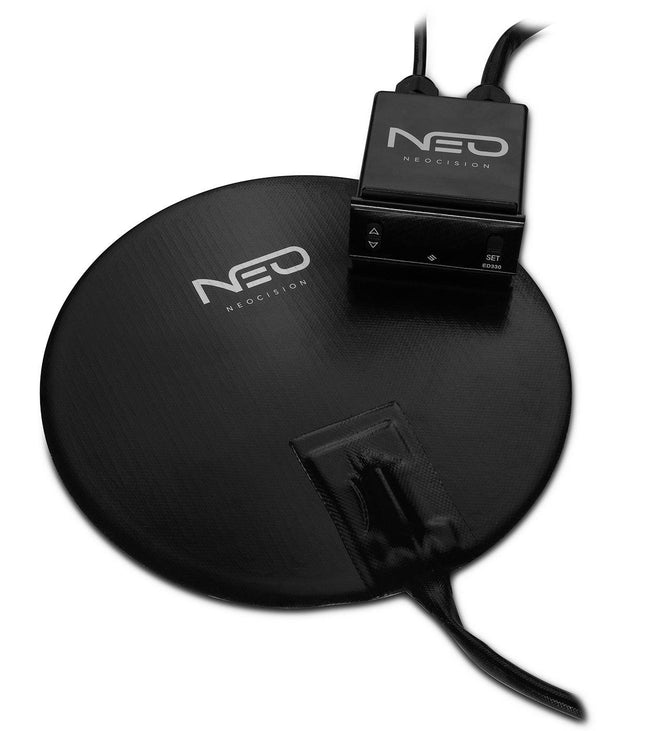
9" Vacuum Chamber Digital Heat Pad
9" Vacuum Chamber Digital Heat Pad Chamber NOT Included, Sold Separately. Heat Pad must fit correct size of the chamber! Fits our 2, 3 and aluminum pots and 3QT & 1GL Flat Chamber This Digital Heat Pad will adhere to the bottom of a chamber vessel with a peel and stick backing. This unit will hold a temperature within a degree to the set temperature (dependent on the environment and air movement). The temperature offset must be found to set the controller accurately. (See ‘Operation’ instructions in the operation manual) Included with this Digital Heat Pad: Instructions on how to operate and set parameters. Simple standoff bumpers (provide thermal separation between the vessel and the work surface) Thermal tape (best method to check and verify temperature) Specs: UL Listed Fahrenheit Digital Controller. Min Temp: Ambient + 5 Max Set Temp: 160F Ultimate Max Temp: 248F Voltage: 110VAC Only Power Consumption: 220-watt Digital Control: Increments of 1 Degree. Accuracy: +/- 0.2 Degrees Units: Degrees Fahrenheit Instructions: Fully included Relay Lifespan: Approx. 10 million cycles User can reprogram: Yes
$130.26
-
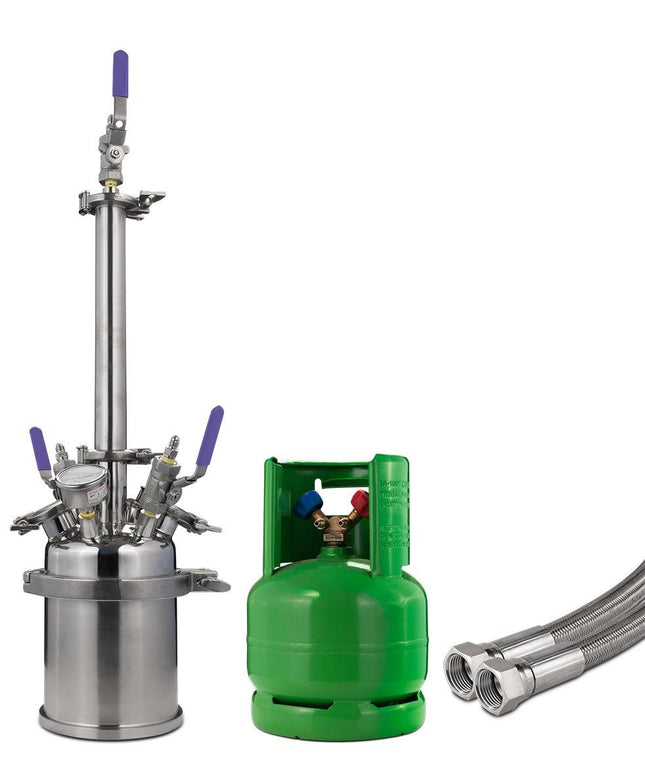

90-270G Apollo Top Fill Closed Loop Extractor
Closed Loop Reclamation Extraction System Please Read Optional Upgrades Section for Clarification on System Upgrades The scalable closed loop hydrocarbon extraction system performs botanical extraction within a sealed, vacuumed system. Utilizing a top-fill input, solvent washes through the material column, collecting oils as it passes over the material. The oil-bearing solvent is collected in the collection base under the material column. Once collected, the solvent is distilled and recovered, leaving the oils in the collection base. This is a passive unit that utilizes pressure differences created by manipulating temperature to move solvent. Extractor Configurations: Explorer: Our standard, most economical setup, perfect for the entry-level extractor on a budget. It comes with a welded bottom base and a standard LP tank. This model has minimal features to keep costs low while providing the necessary equipment to get the job done. Professional: This model features upgrades to help produce a higher quality extract. Coming with a sleeved spool, this model allows users to utilize dry ice to freeze the material column. This will help lock in fats and waxes to the material. An inline ball valve is used to allow the solvent to be suspended in the material column, as well as closing the collection base off during recovery. Upon completion of the run, extract removal is made simple by adding a removable bottom to the collection base. Elite: The Elite series is the premium version of the Professional. It features all American-made instrumentation valves by SSP, an AVCO ultra-low temperature inline ball valve, and all high-pressure clamps. The elite series adds a level of dependability needed for those seeking to produce the highest quality extracts. Explorer Professional Elite BVV 316SS Full Bore Valves Welded Bottom Base BVV 316SS Full Bore Valves Dewaxer Ball Valve Splatter Platter Base SSP Valves Dewaxer AVCO Ball Valve HP Clamps Splatter Platter Base Kit Includes: 6" x 6" Collection Base 1.5" Material Column (12",18",24", or 36") 6lb Recovery Cylinder 1/4" Stainless Steel Braided PTFE hoses Buna-N Gaskets Standard Valves *Note: Column capacity may vary depending on the density of packed material and packing density. Capacity is calculated using the industry standard of 4.2g/in3. This is the upper limit for column capacity. Low density, uncut, and/or lightly packed material can reduce capacity by 50%. For best results, we recommend to tightly pack coarse ground material. ***Note: Butane(Solvent) not included with systems unless ordered with dropdown menu or separately. Any order with butane WILL NOT SHIP EXPEDITED. DISCLAIMER: This unit is intended for LEGAL purposes only, to be used in accordance with local laws and ordinances. Use only in extremely well-ventilated areas. Check with your local fire marshal for guidance when operating indoors Material Capacity Cylinder Volume Triclamp Spool (in) 1.5" 2" 3" 4" 6" 8" 10" 12" Length (in) 1" 2" 3" 4" 6" 8" 10" 12" 18" 24" 36" 48" Volume (in3) Select Material Butane ISO-Butane Propane How Much Will Fit in Cylinder FormulaVolume x Weight of Water x Specific Gravity ConstantsWeight of Water = 0.0360 (lbs / in3)Specific Gravity of = Lbs. of : Recommended: Account for an 80% fill to avoid a hydraulic lock How Much Material Will Fit in the Cylinder Packing Density (g) 2.5 3 3.5 4.3 Grams of Material Lbs. of Material
$1,157.82 - $2,576.16
-
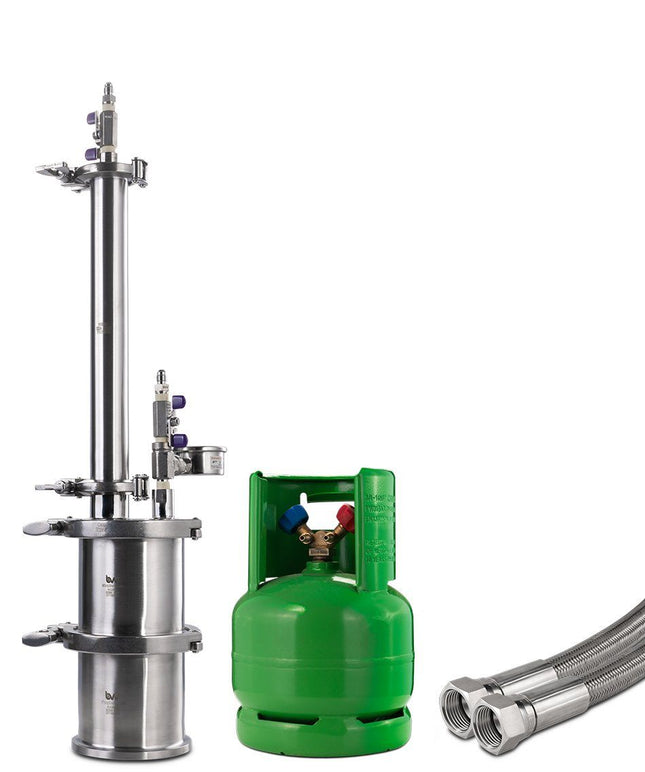

90G XL Mini Top Fill Closed Loop Extractor
***Note: Butane(Solvent) not included with systems unless ordered with dropdown menu or separately. Any order with butane WILL NOT SHIP EXPEDITED. DISCLAIMER: This unit is intended for LEGAL purposes only, to be used in accordance with local laws and ordinances. Use only in extremely well ventilated areas. Check with your local fire marshal for guidance when operating indoors Closed Loop Reclamation Extraction System (Comes with 1 yr. Limited warranty) 90G XL Mini Top Fill Closed Loop Extractor (System comes with 1 yr. limited warranty) The MiniXL Extractor is an excellent choice for small personal runs or test runs of material and comes in a small tabletop design that is easy to use. Mini CLS / Mini XL Upgrades: Explorer: Our standard, most economical setup, perfect for the entry level extractor on a budget. Comes with a welded bottom base and stainless reclaim container. This model has minimal features to keep cost low while providing the necessary equipment to get the job done. Professional: This model features upgrades to help produce a higher quality extract. Coming with a sleeved spool, this model allows users to utilize dry ice to freeze the material column. This will help lock in fats and waxes to the material. An inline ball valve is used to allow solvent to be suspended in the material column, as well as closing the collection base off during recovery. Upon completion of the run, extract removal is made simple by adding a removable bottom to the collection base. Explorer Professional Standard Valves Welded Bottom Base Standard Valves Dewaxer Ball Valve Splatter Platter Base Specifications: 1.5"x 12" 304 Stainless Steel Material Tube 90g 304 Stainless Steel Heavy Duty Miniature Ball Valves System Rated to 100PSI Multiple port connections for 1/4" 316 Stainless SAE 37 Degree 304 Stainless Steel Base Container 4" diameter by 8" tall Tri-Clamps at all interfaces make for a high pressure, easy clean unit. Buna-N Gaskets are designed for Oil Processing Temp range -40-200F Dimensions (Inches): 16" Overall Height x 4" Diameter Weight: 18 lbs. Operating Temperature Range: -40F to 160F Ultimate Vacuum: as low as 10 Microns Designed to run two cans of solvent and reclaim them (420ml) 1135ml Max FILL!! Construction: All components made of 304 Stainless Steel. Max Vacuum -29.9inHg High Polish Interior Automatically Includes: High-Pressure PTFE Braided Stainless Steel Hose Can Tap Tool 6LB Mastercool Solvent Recovery Tank *Note: Column capacity may vary depending on the density of packed material and packing density. Capacity is calculated using the industry standard of 4.2g/in3. This is the upper limit for column capacity. Low density, uncut, and/or lightly packed material can reduce capacity by 50%. For best results, we recommend to tightly pack coarse ground material.
$756.93 - $940.73
-
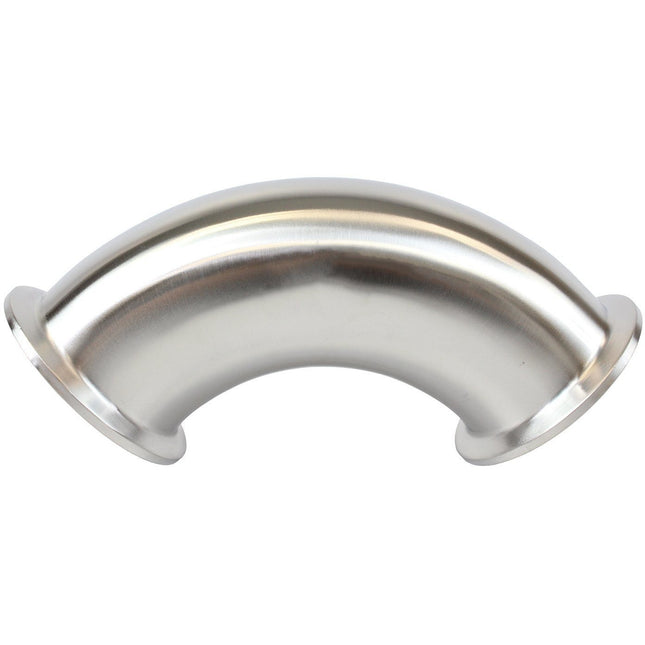

90° Degree Elbow Tri-Clamp Bend
90° Degree Elbow Tri-Clamp Bend Specifications: 304 Grade Stainless Steel w/ High Polish interior Fits 1.5", 2",4" or 6" Tri-clamp / Tri Clover Unique 90 Degree Bend Disclaimer:All Stainless Steel Parts bought separately to piece together a Closed Loop, Closed Column, or Open Blast Extractor DO NOT come with a standard 1 year system warranty, customer assistance on how to run your system, technical help or a guarantee of the system being tested.User assumes all responsibility and risks of the system
$43.42 - $202.62
-


Acetone Technical Grade 99%
High Purity Acetone 99% (Note: Container style and color may vary) Explore our top-quality Acetone, a versatile solvent that meets the highest standards of quality and purity. Our Acetone is ideal for a wide range of applications, whether you're in the pharmaceutical, cosmetic or industrial sector. With its exceptional solvent properties, Acetone serves as a reliable solution for cleaning, degreasing, and dissolving various substances. Our Acetone is carefully sourced to ensure consistency and effectiveness, making it a popular choice for professionals and businesses alike. Our Acetone is subjected to stringent quality control measures, ensuring exceptional purity that's perfect for various processes, from extraction to cleaning and stripping applications. Discover the exceptional performance and dependability of our Acetone, specially created to surpass your rigorous requirements. Unleash the potential of this top-notch solvent, and enhance the efficiency and efficacy of your processes to a whole new level. Opt for our Acetone for unparalleled outcomes and make the most of its adaptability in a variety of crucial tasks. Chemical Formula: C3H6O Molecular Weight: 58.080 g·mol−1 CAS Registry Number: 67-64-1 Appearance Colorless Liquid Odor: Pungent, fruity Density 0.7845 g/cm3 (25 °C) Boiling Point: 56.08 °C /132.94 °F Solubility in water: Miscible GHS Pictograms: GHS Signal Word: Danger GHS Hazard Statements: H225, H302, H319, H336, H373 GHS Precautionary Statements P210, P235, P260, P305+P351+P338 UN Identification Number: 1090 Proper Shipping Name: Acetone Transport Hazard Class: 3 Packing Group: II DOT Placard: What is Acetone? Acetone is a clear, colorless, and highly flammable liquid with a distinctive sweet, fruity odor. It is a simple organic compound with the chemical formula C3H6O, belonging to the ketone family. Acetone is widely used as a solvent in various industries due to its excellent solubility and fast evaporation rate. In addition to its solvent properties, acetone has many other applications. It is commonly used as a cleaning agent, degreaser, and paint thinner. It is also a key ingredient in nail polish removers and some cosmetic products. Acetone is utilized in the production of plastics, fibers, resins, and various chemicals. Additionally, it serves as a fuel additive and is used for scientific and laboratory purposes. As a highly versatile and effective solvent, acetone plays a vital role in numerous industrial, commercial, and domestic applications, making it an essential component in various processes. What Are The Properties of Acetone? Acetone is a colorless, volatile, and highly flammable liquid with several notable properties: Physical State: Acetone is a liquid at room temperature and pressure, with a boiling point of 132.8F/56C and a melting point of -94.9°C (-138.8°F). Odor: It has a distinct and characteristic odor that is often described as sweet or fruity. Solubility: Acetone is highly soluble in water, alcohols, ethers, and many other organic solvents. This high solubility contributes to its effectiveness as a cleaning agent and solvent. Density: The density of acetone is about 0.79 g/cm³, making it less dense than water. Vapor Pressure: Acetone has a relatively high vapor pressure, which means that it readily evaporates into the air at room temperature. Flammability: Acetone is highly flammable and has a low flash point of -20.8°C (-5.4°F). This means that it can easily ignite when exposed to an open flame, spark, or other sources of ignition. Reactivity: Acetone is a reactive compound and can participate in various chemical reactions. It can react with strong acids, bases, and oxidizing agents. Acidity: Acetone is a weak acid, and its aqueous solutions can exhibit slightly acidic properties. Miscibility: Acetone is miscible with water and many organic solvents. This property makes it suitable for various applications in different industries. Polarity: Acetone is a polar solvent, meaning that it has a partial positive and partial negative charge distribution within its molecule. This polarity allows it to dissolve a wide range of polar and nonpolar compounds. Boiling Point: Acetone has a relatively low boiling point 132.8F/56C, which makes it easy to evaporate and separate from other substances during distillation processes. Evaporation Rate: Acetone has a fast evaporation rate, which makes it suitable for applications where rapid drying is necessary. It's important to note that acetone's properties contribute to its versatility and wide range of applications in various industries, including cleaning, manufacturing, laboratory work, cosmetics, and more. However, due to its flammability and reactivity, proper safety precautions should always be followed when working with acetone. What Is The Structure Of Acetone? The chemical structure of acetone consists of three atoms: one carbon (C) atom, one oxygen (O) atom, and three hydrogen (H) atoms. It is a simple organic compound with the molecular formula C3H6O. The structural formula of acetone can be represented as: In this structural representation: The central carbon (C) atom is bonded to two hydrogen (H) atoms and one oxygen (O) atom. The oxygen atom is double-bonded to the central carbon atom, forming a carbonyl group (C=O). The remaining valences of the carbon atom are filled by single bonds to the two hydrogen atoms. This arrangement of atoms gives acetone its distinctive chemical properties, including its solubility in water, high vapor pressure, and reactivity as a solvent and chemical reagent. How Is Acetone Produced? Acetone is produced through various industrial processes, with the most common method being the catalytic dehydrogenation of isopropanol. Here's an overview of the primary process used to produce acetone: 1. Dehydrogenation of Isopropanol: The most widely used method to produce acetone is the dehydrogenation of isopropanol, also known as the "cumene process." This process involves several steps: a. Production of Cumene: Cumene (isopropylbenzene) is produced from benzene and propylene in the presence of a catalyst such as aluminum chloride. This results in the formation of cumene and hydrogen chloride as byproducts. b. Oxidation of Cumene to Cumene Hydroperoxide: Cumene is then oxidized using air to form cumene hydroperoxide, typically using a catalytic process with acid or base catalysts. c. Cleavage of Cumene Hydroperoxide: Cumene hydroperoxide is cleaved using acid catalysts to yield phenol and acetone. This reaction results in the simultaneous production of phenol, which is used as a valuable chemical in various industries. d. Distillation and Separation: The mixture of phenol and acetone is then separated using distillation techniques. Acetone is obtained as a separate product from the mixture. 2. Other Processes: Apart from the cumene process, there are alternative methods for acetone production, including: a. Propylene Oxidation: Acetone can be produced through the direct oxidation of propylene using air or oxygen as the oxidizing agent. This method yields propylene oxide and acetone as products. b. Acetaldehyde Condensation: In this method, acetaldehyde is condensed and dehydrated to form acetone. This process is less common compared to the cumene process. c. Bio-based Production: Research is ongoing to develop bio-based methods of acetone production, using renewable resources like biomass or microorganisms that can convert sugars into acetone. d. Repurposing Byproducts: Acetone can also be obtained as a byproduct in various industrial processes, such as the production of phenol, where acetone is produced alongside phenol from cumene hydroperoxide. The cumene process remains the most dominant and economical method for producing acetone on an industrial scale. The choice of production method depends on factors such as availability of feedstocks, economics, environmental considerations, and desired product yields. Is Acetone Safe? Acetone is generally recognized as safe (GRAS) when used in appropriate amounts and under proper conditions. However, like any chemical substance, it should be handled with care and used according to safety guidelines. Here are some important points to consider regarding the safety of acetone: Ventilation: Acetone has a strong odor and can release fumes that may be irritating to the eyes, nose, and throat. When using acetone, make sure you are in a well-ventilated area to minimize inhalation of the fumes. Skin Contact: Acetone can be drying to the skin and may cause irritation, especially with prolonged or frequent exposure. It's advisable to wear gloves when handling acetone to protect your skin. Eye Contact: Avoid getting acetone in your eyes, as it can cause irritation and discomfort. If accidental eye contact occurs, rinse your eyes thoroughly with water and seek medical attention if irritation persists. Ingestion: Acetone is not intended for ingestion and should not be consumed. Ingesting acetone can be harmful and may lead to adverse health effects. Flammability: Acetone is highly flammable and should be kept away from open flames, sparks, and heat sources. Store acetone in a cool, dry place and away from direct sunlight. Sensitive Individuals: Some individuals may be more sensitive to the effects of acetone, experiencing skin irritation, allergic reactions, or respiratory discomfort. If you have a history of sensitivities or allergies, exercise caution when using acetone. Use as Directed: When using acetone for specific applications such as nail polish removal, adhesive removal, or cleaning, follow the recommended instructions on the product label or recipe. Avoid excessive or prolonged exposure. Alternative Options: If you are concerned about the potential risks of using acetone, you can consider using alternative products that are specifically formulated for the task at hand. For example, there are acetone-free nail polish removers available that may be gentler on the nails and cuticles. If you have specific health concerns or are unsure about the safety of using acetone, it's always a good idea to consult with a healthcare professional or seek advice from experts in the field. Additionally, reading and following safety information provided on product labels and material safety data sheets (MSDS) is crucial to ensure safe handling and use of acetone and other chemicals. What are the hazards of Acetone? Acetone is a commonly used chemical solvent, but like any chemical substance, it poses certain hazards that need to be considered when handling and using it. Some of the hazards associated with acetone include: Flammability: Acetone is highly flammable and can catch fire easily. Its low flash point makes it volatile and prone to ignition when exposed to open flames, sparks, or heat sources. It's important to store and use acetone away from potential sources of ignition. Inhalation Hazards: Acetone can release strong vapors that are irritating to the respiratory system. Prolonged or repeated inhalation of these vapors can lead to headaches, dizziness, nausea, and respiratory discomfort. Adequate ventilation is essential when using acetone to minimize exposure to its fumes. Skin and Eye Irritation: Acetone can be drying to the skin and may cause irritation or redness upon direct contact. It can also irritate the eyes and lead to discomfort if splashed or accidentally introduced into the eyes. Central Nervous System Effects: Acetone vapor exposure can affect the central nervous system, leading to symptoms like dizziness, confusion, and even unconsciousness at high concentrations. Toxic Effects: While acetone is generally considered to have low toxicity, exposure to large amounts or prolonged exposure can have toxic effects on the body. Ingesting acetone can lead to nausea, vomiting, abdominal pain, and even coma in severe cases. Health Risks: Long-term or chronic exposure to acetone can potentially have adverse health effects, including damage to the liver, kidneys, and respiratory system. Repeated skin contact can cause dryness and irritation. Environmental Impact: Improper disposal of acetone can lead to environmental contamination. Acetone is volatile and can easily evaporate into the air, contributing to air pollution. It can also be harmful to aquatic life if introduced into water bodies. Allergic Reactions: Some individuals may be sensitive or allergic to acetone, experiencing skin reactions or respiratory discomfort even at lower concentrations. It's important to take appropriate safety precautions when using acetone, including wearing protective gear such as gloves and safety goggles, working in a well-ventilated area, and avoiding open flames or heat sources. If working with acetone in an industrial or laboratory setting, it's crucial to follow established safety protocols and guidelines, as well as refer to the material safety data sheet (MSDS) provided by the manufacturer. Overall, while acetone is a valuable solvent with various applications, it should be handled with care and respect for its potential hazards. If you have any concerns or questions about the safe use of acetone, it's recommended to consult with experts in the field or seek guidance from health and safety professionals. How Flammable Is Acetone? Acetone is highly flammable and poses a significant fire and explosion hazard. It has a low flash point of -20.8°C (-5.4°F), which means that it can easily vaporize and form flammable mixtures with air at temperatures above its flash point. Acetone's wide flammability range (2.5% to 12.8% in air) indicates that even small concentrations of acetone vapor in the air can be ignited by a spark, open flame, or other sources of ignition. Due to its low flash point and flammable nature, acetone should be handled with extreme caution and stored away from sources of heat, sparks, and flames. When using acetone, it's important to follow proper safety practices, such as working in well-ventilated areas, using appropriate protective equipment, and avoiding activities that can generate sparks or heat. Acetone's high flammability also makes it necessary to take precautions when storing and transporting the solvent. Flammable liquids like acetone should be stored in approved containers and away from incompatible materials, such as oxidizing agents, to prevent potential chemical reactions and fires. It's essential to be aware of acetone's flammability and take all necessary safety measures to minimize the risk of fire and ensure a safe working environment when handling this solvent. How Is Acetone Used? Acetone is a versatile organic compound with a wide range of industrial, commercial, and household applications due to its excellent solvent properties and low toxicity. Here are some common uses of acetone: Solvent: Acetone is primarily known for its effectiveness as a solvent. It dissolves a variety of substances, making it useful for cleaning, degreasing, and removing residues from surfaces, equipment, and materials. It is commonly used in industrial settings to clean machinery and equipment. Nail Polish Remover: Acetone is a key ingredient in many nail polish removers. It effectively dissolves nail polish and helps remove it from the nails. Paint and Coating Removal: Acetone is used to remove paint, varnishes, lacquers, and other coatings from surfaces like wood, metal, and plastic. It's particularly useful for removing paint spills or overspray. Adhesive Remover: Acetone can be used to soften and remove adhesives, glues, and tapes from surfaces without causing damage. Chemical Intermediate: Acetone is used as an intermediate in the production of other chemicals. It's a precursor in the manufacturing of products like methyl methacrylate, bisphenol A (used in polycarbonate plastics and epoxy resins), and isopropyl alcohol. Laboratory Reagent: Acetone is used in laboratories as a reagent in various chemical reactions and as a solvent for analytical techniques like chromatography. Thinner for Paints and Inks: Acetone is used as a thinning agent for paints, inks, and varnishes to adjust their viscosity and improve their application. Cosmetics and Personal Care Products: Apart from nail polish remover, acetone is used in the production of cosmetics, skincare products, and perfumes. Medical and Pharmaceutical Uses: Acetone is used in some medical and pharmaceutical applications, such as cleaning medical equipment and removing residues from glassware in laboratories. Cleaning Agent: Acetone is effective at removing greasy or sticky residues from various surfaces. It's often used for cleaning electronics, removing ink stains, and cleaning glass surfaces. Fuel Additive: In some instances, acetone is used as an additive in fuel to improve its combustion efficiency, although this application is less common. Aerosol Propellant: Acetone's ability to vaporize quickly makes it useful as a propellant in aerosol products like air fresheners, deodorants, and cleaning sprays. It's important to note that while acetone is versatile and widely used, it should be handled with care due to its flammable nature. Proper ventilation and safety precautions should be taken when using acetone in any application. How Is Acetone Used In Extraction? Acetone is occasionally used in extraction processes, particularly in the field of chemistry and research, where it serves as a solvent to extract certain compounds from various materials. However, it's important to note that acetone has limitations and risks when used for extraction, and its use should be approached cautiously and with proper safety measures. Here's how acetone can be used in extraction processes: Extraction of Essential Oils and Fragrances: Acetone can be used to extract essential oils and fragrances from plant materials. The solvent's low boiling point allows it to evaporate quickly, leaving behind the extracted aromatic compounds. Extraction of Active Compounds: Acetone can be used to extract active compounds from natural sources, such as medicinal plants or herbs. The solvent's polarity can help dissolve and extract specific compounds like alkaloids, flavonoids, and phenolic compounds. Extraction of Lipids and Fats: Acetone is sometimes used to extract lipids and fats from materials like seeds, nuts, or plant tissues. Its ability to dissolve fats and oils makes it suitable for this purpose. Research and Analysis: In laboratories, acetone is sometimes used as a solvent to prepare samples for analysis by techniques like chromatography or spectroscopy. It can help solubilize compounds of interest for further investigation. Cleaning and Preparing Samples: Acetone can be used to clean surfaces and equipment in preparation for various chemical processes, ensuring that surfaces are free from contaminants that could affect the extraction. Recrystallization: Acetone can also be used for recrystallization processes in the lab, where impure solid compounds are dissolved in acetone and then allowed to crystallize out in a more purified form. It's important to exercise caution when using acetone in extraction processes: Flammability: Acetone is highly flammable and should never be used near open flames or in poorly ventilated areas. Toxicity: Acetone can be harmful if inhaled, ingested, or absorbed through the skin. Proper personal protective equipment (PPE) should be worn, and work should be conducted in a well-ventilated area. Chemical Compatibility: Acetone may not be suitable for extracting all types of compounds, as it can degrade certain materials and might not effectively extract specific compounds. Due to these risks and limitations, alternative solvents or extraction methods are often preferred in various extraction processes. When considering using acetone in an extraction, it's crucial to assess the specific requirements of the extraction and ensure that proper safety measures are in place. What Gaskets Are Compatible With Acetone? Acetone is a powerful solvent that can degrade certain materials, including both silicone and Nitrile/BUNA-N gaskets. When choosing gaskets for use with acetone, it's essential to select materials that are resistant to the solvent's effects to ensure safe and effective sealing. The following gasket materials are generally considered compatible with acetone: PTFE (Polytetrafluoroethylene): PTFE gaskets, also known as Teflon gaskets, are highly resistant to acetone and a wide range of other chemicals. They have excellent chemical stability and can withstand the corrosive nature of acetone. Viton (Fluoroelastomer): Viton gaskets are resistant to a variety of chemicals, including acetone. They are often used in applications where high-temperature and chemical resistance are required. EPDM (Ethylene Propylene Diene Monomer): EPDM gaskets are compatible with acetone for short exposure periods. However, their compatibility may be limited in extended contact with acetone or under specific conditions. It's important to note that the compatibility of gasket materials with acetone can vary based on factors such as temperature, concentration, and exposure duration. Before selecting gaskets for use with acetone, it's advisable to also consider the temperature and pressure range of your application to ensure that the chosen material is suitable for your specific application. Additionally, when working with acetone or any other chemical, it's crucial to follow proper safety protocols, including wearing appropriate personal protective equipment (PPE), working in a well-ventilated area, and observing all relevant safety guidelines. How do I clean with Acetone? Cleaning with acetone involves a few simple steps, but it's important to exercise caution due to its flammable nature and strong odor. Here's how to clean with acetone safely and effectively: Materials Needed: Acetone Clean, lint-free cloth or paper towels Ventilated area or protective mask Gloves Eye protection Steps: Choose a Well-Ventilated Area: Before you begin, make sure you're in a well-ventilated space. Acetone has strong fumes, so working outdoors or in a well-ventilated room is recommended. If ventilation is limited, consider wearing a protective mask and eye protection. Put on Protective Gear: While not always necessary for small cleaning tasks, wearing gloves and eye protection can help prevent skin and eye irritation. Test in an Inconspicuous Area: Before using acetone on a larger surface, test it in a small, inconspicuous area to ensure it doesn't damage or discolor the material you're cleaning. Apply Acetone: Moisten a clean, lint-free cloth or paper towel with a small amount of acetone. Gently blot or rub the area you want to clean. Start with a light touch and gradually increase pressure if needed. Avoid scrubbing vigorously, as this could damage surfaces or spread stains. Wipe Clean: As you blot or rub, you'll notice that dirt, residue, or certain stains are lifted onto the cloth. Continue until the area looks clean. For stubborn stains, you may need to repeat the process or use a slightly more concentrated amount of acetone. Dry the Area: After cleaning, use a separate clean cloth or paper towel to dry the area thoroughly. This helps prevent any remaining acetone from evaporating and leaving streaks. Dispose of Materials Safely: Dispose of used cloths, paper towels, and other materials soaked in acetone responsibly. Place them in a sealed container or bag and dispose of them according to your local regulations for hazardous waste. Wash Hands: After you're finished, wash your hands with soap and water to remove any traces of acetone. Important Tips: Acetone can damage certain plastics, paints, and finishes, so always test it in an inconspicuous area first. Do not use acetone on leather, acetate fabrics, or materials with printed designs, as it can cause fading or damage. Keep acetone away from open flames, sparks, or heat sources, as it is highly flammable. Always work in a well-ventilated area or use appropriate personal protective equipment. Remember that acetone is a powerful solvent, so it's best suited for specific cleaning tasks like removing certain adhesives, paint splatters, or sticky residues. If you're uncertain about using acetone on a particular material or surface, consider seeking professional advice or trying an alternative cleaning method. How Do I Make My Own Acetone-Based Nail Polish Remover? Cleaning with acetone involves a few simple steps, but it's important to exercise caution due to its flammable nature and strong odor. Here's how to clean with acetone safely and effectively: Materials Needed: Acetone Clean, lint-free cloth or paper towels Ventilated area or protective mask Gloves (optional) Eye protection (optional) Steps: Choose a Well-Ventilated Area: Before you begin, make sure you're in a well-ventilated space. Acetone has strong fumes, so working outdoors or in a well-ventilated room is recommended. If ventilation is limited, consider wearing a protective mask and eye protection. Put on Protective Gear: While not always necessary for small cleaning tasks, wearing gloves and eye protection can help prevent skin and eye irritation. Test in an Inconspicuous Area: Before using acetone on a larger surface, test it in a small, inconspicuous area to ensure it doesn't damage or discolor the material you're cleaning. Apply Acetone: Moisten a clean, lint-free cloth or paper towel with a small amount of acetone. Gently blot or rub the area you want to clean. Start with a light touch and gradually increase pressure if needed. Avoid scrubbing vigorously, as this could damage surfaces or spread stains. Wipe Clean: As you blot or rub, you'll notice that dirt, residue, or certain stains are lifted onto the cloth. Continue until the area looks clean. For stubborn stains, you may need to repeat the process or use a slightly more concentrated amount of acetone. Dry the Area: After cleaning, use a separate clean cloth or paper towel to dry the area thoroughly. This helps prevent any remaining acetone from evaporating and leaving streaks. Dispose of Materials Safely: Dispose of used cloths, paper towels, and other materials soaked in acetone responsibly. Place them in a sealed container or bag and dispose of them according to your local regulations for hazardous waste. Wash Hands: After you're finished, wash your hands with soap and water to remove any traces of acetone. Important Tips: Acetone can damage certain plastics, paints, and finishes, so always test it in an inconspicuous area first. Do not use acetone on leather, acetate fabrics, or materials with printed designs, as it can cause fading or damage. Keep acetone away from open flames, sparks, or heat sources, as it is highly flammable. Always work in a well-ventilated area or use appropriate personal protective equipment. Remember that acetone is a powerful solvent, so it's best suited for specific cleaning tasks like removing certain adhesives, paint splatters, or sticky residues. If you're uncertain about using acetone on a particular material or surface, consider seeking professional advice or trying an alternative cleaning method. What Is The Average Amount Of Acetone Used in Nail Polish Remover? The average amount of acetone used in commercial nail polish remover products typically ranges from 30% to 50%. This means that the nail polish remover solution contains 30% to 50% acetone, along with other ingredients such as water, emollients, and fragrances. The exact percentage can vary depending on the brand and formulation of the nail polish remover. When making your own nail polish remover at home, you can use pure acetone or a solution with a similar acetone concentration. Keep in mind that using pure acetone can be harsh on your nails and cuticles, potentially causing dryness and irritation with frequent use. It's a good idea to experiment with different acetone concentrations and observe how your nails and skin react to find the right balance between effective nail polish removal and gentle care for your nails. How Do you Dispose of Acetone? Disposing of acetone properly is important to ensure environmental and personal safety. Here are the steps to follow for proper acetone disposal: Check Local Regulations: Before disposing of acetone, check your local regulations and guidelines for hazardous waste disposal. Different regions may have specific requirements and disposal methods. Use a Secure Container: Transfer the acetone to a tightly sealed, labeled, and non-reactive container. Glass or metal containers with a secure lid are recommended. Label the Container: Clearly label the container with the contents ("Acetone"), the hazard symbol, and any other relevant information. Do Not Mix: Do not mix acetone with other chemicals, as this could lead to hazardous reactions. Contact Local Waste Disposal Facility: Contact your local hazardous waste disposal facility or municipality to inquire about drop-off locations and collection programs for hazardous materials. Do Not Pour Down the Drain: Do not pour acetone down the drain, toilet, or any other water source, as it can contaminate water systems and harm the environment. Evaporate in a Controlled Setting: If allowed by local regulations, you can let a small amount of acetone evaporate in a well-ventilated outdoor area. Ensure it's away from open flames, sparks, or ignition sources. Recycle or Reuse: Some regions may offer recycling or reclamation programs for acetone or other solvents. Research if any such programs are available in your area. Professional Disposal: If you have a large amount of acetone or are uncertain about the proper disposal method, consider contacting a professional hazardous waste disposal service. Remember, improper disposal of hazardous materials like acetone can harm the environment, human health, and local communities. Always prioritize safety and follow the regulations set by your local authorities for proper disposal. Acetone 99% Safety Data Sheet (SDS) Acetone 99% Certificate of Analysis (COA)
$24.60 - $1,157.82
-


Acetone ≥99.5% ACS Grade
Our ACS grade Acetone specification meets the standards set by the American Chemical Society (ACS). Acetone ACS is material of a higher quality, commonly also described as “Reagent” material. ACS Acetone is primarily used in laboratory research, analytical chemistry. Here at BVV we use it in our preparations for our gas chromatography equipment. Acetone ACS grade Sample Certificate of Analysis COA Acetone ACS grade Safety Data Sheet SDS
$28.95 - $1,555.82
-
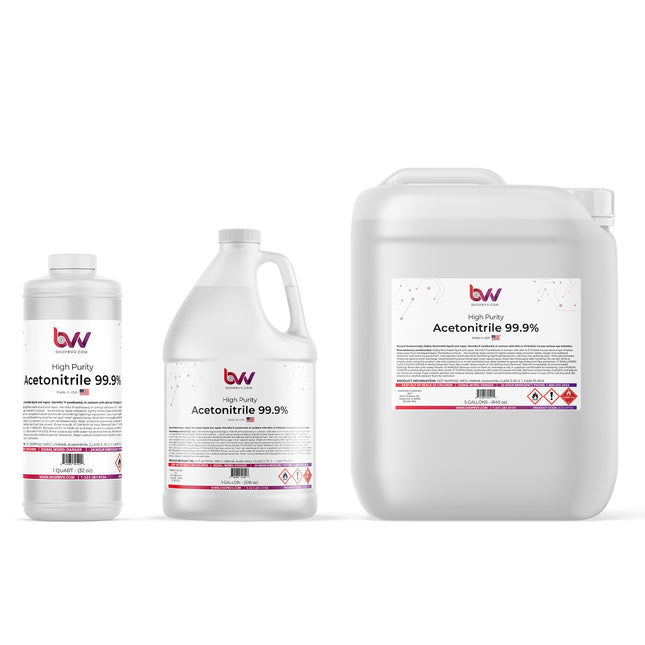

Acetonitrile High Purity
Acetonitrile (CH₃CN) is a colorless, volatile, and flammable liquid organic compound with a distinctive, slightly sweet odor. It is the simplest aliphatic nitrile and is commonly used as a solvent in laboratories and industries due to its ability to dissolve a wide range of polar and nonpolar substances. Acetonitrile is highly polar, miscible with water and many organic solvents, and is often used in the production of pharmaceuticals, plastics, and adhesives. Additionally, it plays a key role in the extraction and purification of various compounds, especially in high-performance liquid chromatography (HPLC). Acetonitrile is widely used in various industrial, laboratory, and scientific applications. Some of the key applications of acetonitrile include: Solvent in Organic Synthesis: Acetonitrile is often used as a solvent in organic synthesis due to its ability to dissolve a wide range of both polar and nonpolar substances. It's commonly employed in reactions involving electrophilic substitution, nucleophilic substitution, and polymerization. High-Performance Liquid Chromatography (HPLC): Acetonitrile is a common solvent in HPLC, where it's used in mobile phases for separating and analyzing compounds, particularly in the pharmaceutical and environmental industries. Pharmaceutical Industry: Acetonitrile is used in the production of various pharmaceuticals, particularly in the synthesis of intermediates and active pharmaceutical ingredients (APIs). It helps to purify and isolate compounds in medical formulations. Extraction and Purification: Acetonitrile is used in liquid-liquid extraction to separate or purify chemicals, such as when isolating nucleic acids or proteins, and in the extraction of rare earth metals. Chemical Manufacturing: It is involved in the production of acetic acid, adiponitrile (for nylon production), and various other chemicals, such as dyes, resins, and plastics. Electrochemical Applications: Acetonitrile is used in electrochemical processes due to its high polarity and low viscosity, making it suitable for applications like electroplating and electrochemical cell research. Cleaning and Degreasing: In some industrial applications, acetonitrile serves as a cleaning agent, helping to remove grease, oils, and other contaminants from machinery and equipment. Gas Chromatography (GC): It can be used as a solvent in GC to help in the analysis and separation of volatile organic compounds. Chemical Formula: C2H3N + CH3CN Molecular Weight: 41.05 g/mol CAS Registry Number: 75-05-8 Appearance Colorless Liquid Odor: Sweet, ethereal Density 0.787 at 68 °F (less dense than water) Boiling Point: 82°C /179 °F Solubility in water: 800 g/L at 25 °C GHS Pictograms: GHS Signal Word: Danger GHS Hazard Statements: H225, H302, H312, H332, H319 GHS Precautionary Statements P210, P233, P240, P241, P243, P261, P264, P270, P271, P280, P301, P212, P330, P303, P361, P353, P304, P340, P312, P305, P351, P338, P337, P313, P363, P370,P378, P403, P235, P501 UN Identification Number: 1648 Proper Shipping Name: Acetonitrile Transport Hazard Class: 3 Packing Group: II DOT Placard: Acetonitrile Certificate of Analysis (COA) Acetonitrile Safety Data Sheet (SDS)
$41.97 - $2,134.74
-


Acidic Activated Alumina Powder
Acidic Activated Alumina pH: 4.3 | 50-200 Micron *Compare to Alumicel™ A This activated alumina is a low pH adsorbent used to remove excess moisture from your extraction and CRC process. The addition of this media is used as the last layer in the typical BVV™ CRC setups. This grabs any excess moisture from the previous CRC layers and the Biomass. The activated alumina will produce a sugary finish almost immediately after you start your purge. This rapid crystallization is because the process has stripped out additional phospholipoids and fats. Chromatographic Grade Activated Alumina Acidic Powder Sample Certificate of Analysis (COA Example) Activated Alumina Acidic Powder Safety Data Sheet SDS
$37.63 - $1,476.22
-
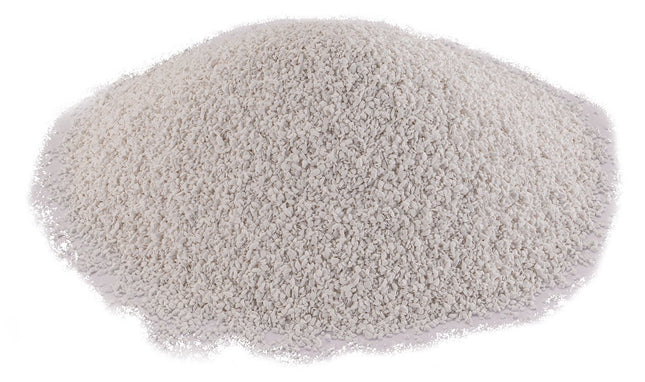

Activated Alumina 14x28 Mesh (Aluminum Oxide)
Activated Alumina pH :7–9 (in suspension) Activated Alumina also known as aluminum oxide is designed for a range of general filtration and dewaxing when extracting plant resins. This granular media is coarse and has high surface area. Activated alumina in extraction is primarily used to remove water during the butane extraction process. This particular Activated Alumina is pH Neural (7) making it an excellent choice for purification. Without a pH bias you can filter across a broad spectrum of applications and expect consistent performance. Activated alumina is an effective desiccant for drying gasses and liquids. Activated alumina also removes impurities like fluoride, arsenic, soaps and acids. NSF 61 certified & Made in USA, Purity: 100%. Shelf life 5 Years. Activated Alumina SDS Sheet Activated Alumina Technical Data Sheet Key Uses: Removal of water, acids, and polar compounds from hydrocarbons and solvents. Porous, stable carrier for petrochemical and refining catalysts High porosity improves diffusion rates while high surface area. NSF 61 Certified: Guaranteed the product is free of harmful chemicals, and can be used in systems that humans come into contact consuming. Lot certificates can be available per request. Typical Properties Bulk Density lbₘ/ft³ 40 Loss on Ignition wt% wt% ≤7.5 Particle Size µm 300-850 Particle Size *50 mesh 20 Surface Area m²/g 300 Aluminum Oxide (Al₂O₃) Content wt% 99-100 Iron Oxide (Fe₂O₃) Content wt% ≤0.014 Sodium Oxide (Na₂O) Content wt% ≤0.6 Silicon Dioxide (SiO₂) Content wt% 0-0.01 CAS# 1344-28-1 Storage Store containers/packaging in a dry, covered location protected from the ambient environment. Remove from direct exposure to sunlight and rain. Do not subject material to temperatures exceeding 450°F/230°C while in storage. Once the material is loaded into the vessel, a thorough nitrogen purge is recommended to remove excessive free moisture. Desiccant products intended for regenerative service willrequire a complete thermal regeneration cycle (in TSA service) or several pressureswing cycles (in PSA service) before full activity is restored. Note: Container style and color may vary. Product is sold by weight which may result in container not being full.
$34.73 - $15,196.42
-

Activated Bentonite Clay T-5™
Activated Bentonite Clay T-5™ BVV™ activated Bentonite Clay T-5™ is a highly effective decolorizing agent for filter organic materials. This Clay is tan in color and is Heat Activated to help remove Anthocyanin pigments while preventing isomerization. This is a slow filtering media but will produce high clarity when used as a filter aid. pH:5 BVV™ Activated Bentonite Clay T-5™
$101.31 - $3,299.79
-
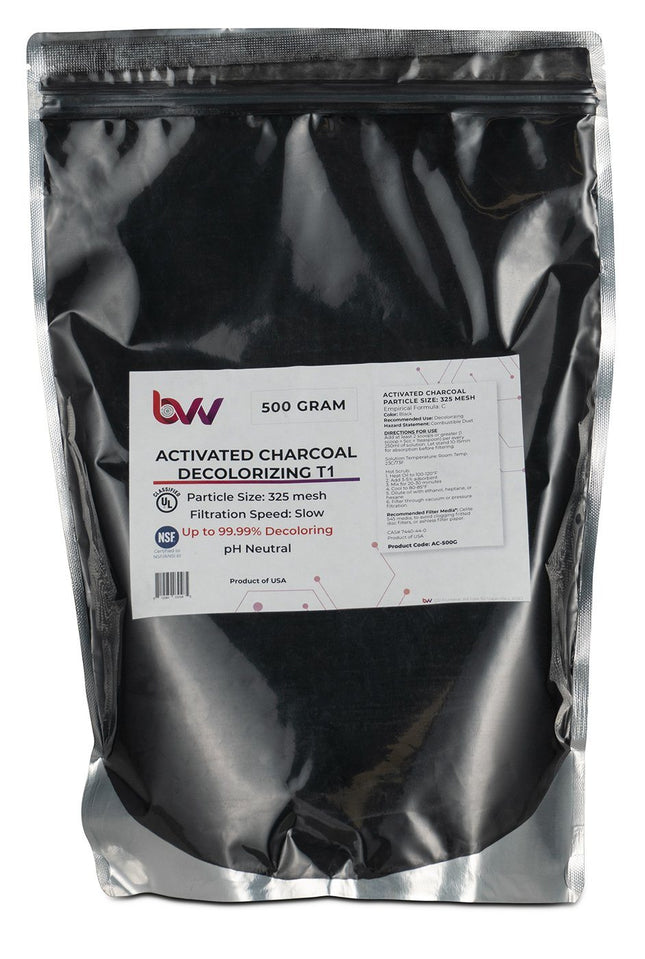
Activated Hardwood Carbon (Charcoal)
Activated Carbon Decolorizing T1 100% Hardwood NSF 61 & UL Classified for food and Consumption Contact BVV™ Activated Carbon or Charcoal powder is some of the highest purity and quality activated charcoal on the market. Made in the USA, and 100% Hardwood. Activated charcoal can be used for several processes in the laboratory and can be most importantly used for the removal of color, unwanted chemical impurities, and unwanted flavors in the starting material resulting in a more refined purer end substance. Each bag includes a 5cc scoop inside. pH:7NSF 61 Certified & UL Classified. Guaranteed the product is free of harmful chemicals, and can be used in systems that humans come into contact consuming. Lot certificates can be available per request. BVV™ Activated Carbon Technical Data Sheet BVV™ Activated Carbon Decolorizing T1 SDS Note: Bulk Bags and Bulk sizes are non-stocked items and will be ordered as needed and carry a several weeks lead time and require a forklift or pallet jack
$69.47 - $5,065.47
-
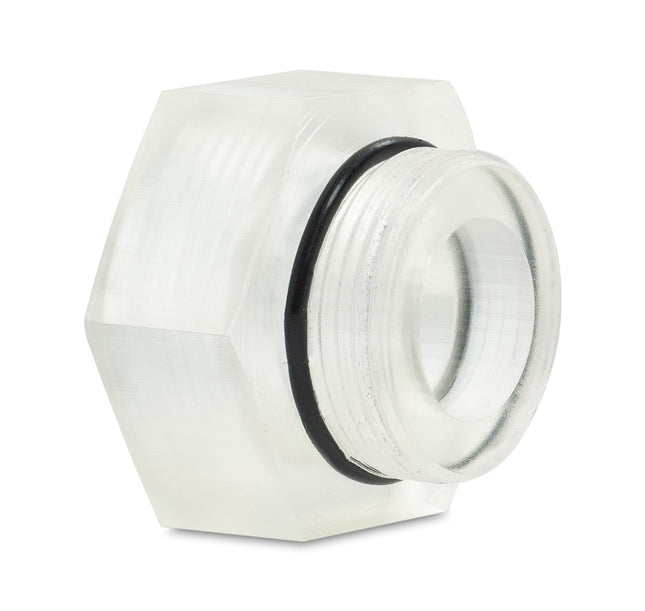

Adapter from VE filters to BVV/CPS pumps
This adapter will fit the exhaust ports on BVV VRD series vacuum pumps and adapt them to fit our BVV carbon exhaust filter.
$21.71 $17.37
-
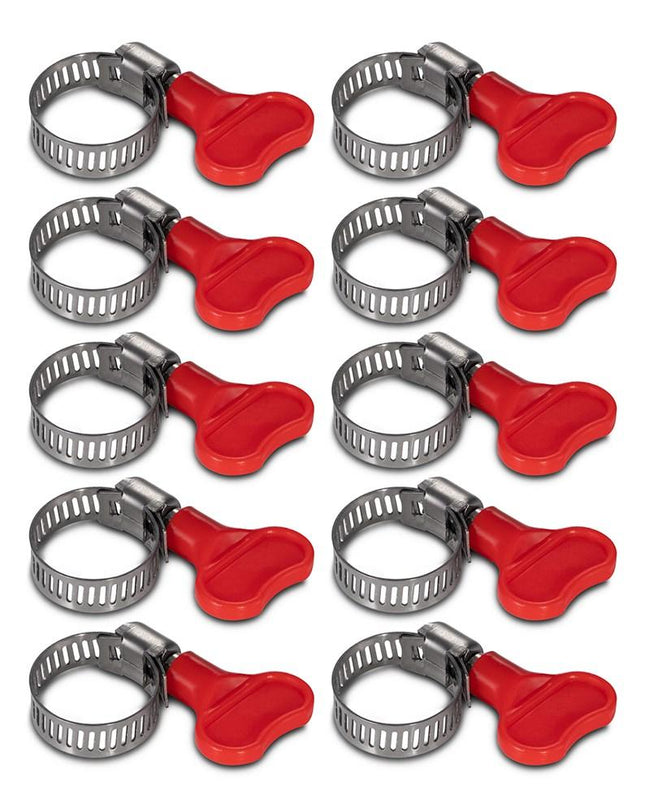

Adjustable Stainless Steel Hose Clamp with Red Butterfly Key - 10 Pack
Adjustable Stainless Steel Hose Clamp with Red Butterfly Key – 10 Pack Secure hoses and tubing with confidence using these premium stainless steel clamps. Engineered to withstand high-pressure applications, each clamp features a smooth, burr-free design and adjustable worm-gear mechanism for precise, tool-free tightening. Built from 301 series stainless steel band and housing with a corrosion-resistant 410 stainless screw, these clamps deliver durability and reliability in demanding environments. Small Clamp Specifications: Clamping range: 7/32" to 5/8" Adjustable worm-gear design 301 series stainless steel construction Smooth, burr-free edges Large Clamp Specifications: Clamping range: 5/16" to 7/8" Adjustable worm-gear design 301 series stainless steel construction Smooth, burr-free edges Pack of 10. Choose your size to match your application needs.
$18.09 - $21.71
-
AFS Disposable Color Bleach / B80 Cartridge *FDA Certified Material
AFS Disposable Color Bleach Cartridge Note: Stainless Steel filter housing sold separately. (Click Here for Housing) AFS Instruction Manual Download Here AFS Filters are the first and only disposable color remediation filter cartridges for the botanical extraction industry. The Patent Pending design allows for an easy to use solution implemented into existing extraction systems; and is now available as a standard integration from many equipment manufacturers. AFS Filters are a simple solution that allows for the use of prepackaged filters, which are available in different recipes depending on the application. With the integrated 2.5µm paper filter molded and sealed into the cup there is no media leak through. Pre-packed means there's no need to be an expert in remediation filter media and how to construct filters; as well as eliminates the messy process of building/packing filters yourself. Disposable offers no need for cleaning the filter housings afterwards and trying to un-clog stainless filter screens. Less R&D investment, less mess, and less down time allows for higher throughput and more profit. The media contained in the BVV™ Color Bleach filter cartridge is a low pH Pure-Flo® Perform 6000 bentonite clay in a 10:1 ratio of BVV™ T-1 Activated Hardwood Carbon. Using only made in the USA materials that are FDA-GRAS and NSF certified. *The results show are using the same material for each extraction. Butane only method vs. BVV™ color bleach (110g filled Cartridge) Light Filtration is the trimmed down version of the standard Medium filter. These are best suited for extractions using fresh high end input materials that only needs a light cleaning. Medium Filtration is our standard go-to filter. This is the most commonly used and sold filter. It's great for general filtration and lightening of extracted products. Heavy Filtration is packed with the highest amount of active extraction media. These filters are best suited for exceptionally dark extractions or for extractions with normal input materials where the desired outcome is closer to clear. Heavy filters offer the highest level of filtration. Technical Specifications: Life Span: 1 Time use, Good for 5-7 lbs. of dry material. Temperature Rating: -40°C-70°C Top Seal: Induction Sealed (No glue is used) Filter: Cellulose Paper Pressure Rating: Recommended 60psi, Paper will hold 80-90 psi Max. Media: Low pH bentonite clay in a 10:1 ratio of activated 100% hardwood carbon, USA Made Materials and Certificates of Analysis available. Shell Material: Polypropylene Excellent compatibility and Safe for chemicals in our industry (Butane, Propane, Ethanol). Pressure Method: Nitrogen Assist, unless you open blast CRC. Then you can assist with an air compressor. AFS Cup weight: 48g Media Fill Volume: 110-120g Recommend Minimum Biomass: 1lb (lesser biomass will see drastic yield losses) AFS Safety Data Sheets *Please recycle your spent Cartridges. *Yield losses under refinement are to be expected but overall potency will be retained and will proportionally increase.
$79.60 - $907.44
-


AFS Economy CRC Botanical Extraction Filter
AFS Economy CRC Botanical Extraction Filter When to use Economy Filtration AFS's 2.5" Economy Botanical Extraction Filter is our best-valued extraction product. These filters are ideal when you are looking for CRC filtration without significant cost. Reformulated by eliminating some of the higher-end media this filter is a great economical alternative. Seamlessly fitting into our 2.5" housing products, this filter handles standard extraction filtration with ease. Contact us if you need advice on which filter is best for you. Perfect for: Low-cost filtering When higher-end filtering media is not required General filtration Why Choose AFS Filters? AFS Filters are the first and only disposable color remediation filter cartridges for the botanical extraction industry. Our patent-pending design allows for an easy-to-use solution implemented into existing extraction systems and is now available as a standard integration from many equipment manufacturers. AFS Filters are a simple solution that allows for the use of prepackaged filters. With the integrated 2.5 µm paper filter molded and sealed into the cup, there is no media leak through. Prepacked means there's no need to be an expert in remediation filter media or how to construct filters. In addition, it eliminates the messy process of building/packing filters yourself. Disposable means no need for cleaning the filter housings afterward or trying to unclog stainless filter screens. Less R&D investment, less mess, and less downtime allow for higher throughput and more profit.
$26.05 - $312.61
-

AFS Empty 2.5" CRC Botanical Extraction Filter Cup
2.5" CRC Botanical Extraction Filter Cup
$21.69 $15.92


You have seen 384 out of 1090 products