Specialty Chemicals

64 products

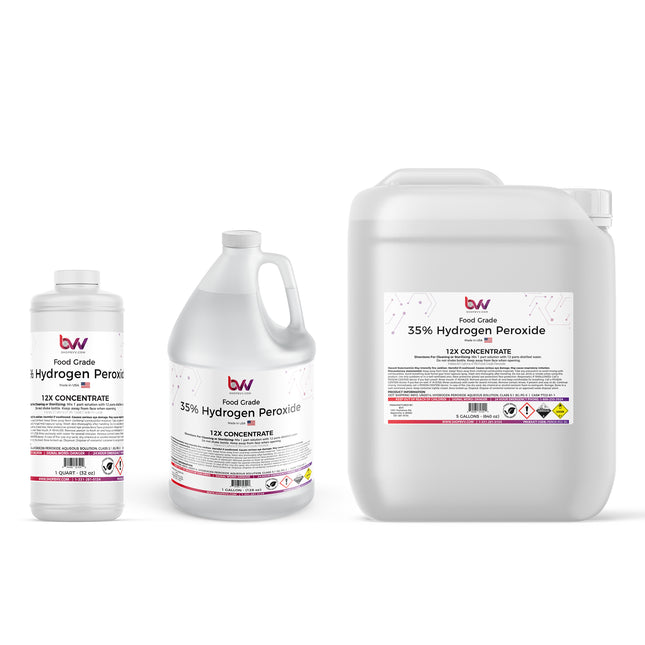
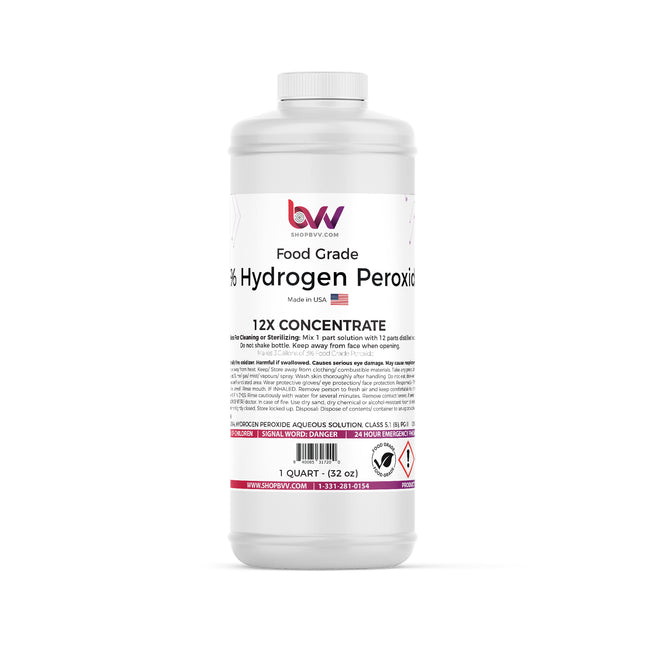
  • Sale -10% 35% Food Grade Hydrogen Peroxide H2O2 (Food Grade) 35% Food Grade Hydrogen Peroxide H2O2 (Food Grade)

    35% Hydrogen Peroxide Food Grade H2O2

    35% Food Grade Hydrogen Peroxide This is the second highest concentration of hydrogen peroxide we offer just under our 50% Food Grade Hydrogen Peroxide.   Our food-grade peroxide is clear, colorless, and free of any stabilizers or additives.  Peroxide is one of the most effective oxidizers and may be applied to food directly to food products.  Our peroxide is certified FCC (Food Chemical Codex).  It has been tested and verified for its quality and purity.    35% Food Grade Hydrogen Peroxide Certificate of Analysis 35% Food Grade Hydrogen Peroxide Safety Data Sheet Our food-grade hydrogen peroxide is 12x strength, when diluted you can make a remarkably large volume of 3% hydrogen peroxide that can be used for a wide variety of applications.   1 Quart 35% Makes 4.2 Gallons of 3% 1 Gallon 35% Makes 11.5 Gallons of 3% 5 Gallon 35% Makes 57.8 Gallons of 3% 55 Gallon 35% Makes 634 Gallons of 3%   Some applications include... Elevating Plant Growth: Diluted hydrogen peroxide supports healthy roots and elevated oxygen availability in the soil. Excellent Cleaner for Food Prep Environments: Hydrogen peroxide is a disinfectant, that kills viruses and various forms of bacteria. Bleaching: Diluted hydrogen peroxide is a mild bleaching agent that can be used to clean stains.  Cleansing Fresh Produce: Diluted hydrogen peroxide can be used to clean fruits and vegetables.  Mold and Mildew Removal: Hydrogen peroxides strong oxidative qualities breakdown mold and mildew with ease.  How to Dilute 35% Hydrogen Peroxide to 3% Hydrogen Peroxide: 35% food-grade hydrogen peroxide Deionized distilled water A clean, empty Gallon bottle for the final 3% hydrogen peroxide solution Measuring cup Funnel Safety goggles Rubber gloves Apron or old clothes Steps to perform dilution: Wear safety goggles, rubber gloves, an apron or old clothing to protect yourself from spills and splashes.  Choose a well-ventilated space. Mix 1 part 35% hydrogen peroxide with 11 parts distilled water. Example: Mix 1 cup hydrogen peroxide, with 11 cups of distilled water.  To be exact, this will make a slightly less than 3% solution of hydrogen peroxide – 2.92%. What Is Hydrogen Peroxide? Hydrogen peroxide (H2O2) is a chemical compound composed of two hydrogen atoms and two oxygen atoms. It is a clear, colorless liquid with a slightly more viscous consistency than water. Hydrogen peroxide is commonly used for its powerful oxidizing properties and has a wide range of applications in various industries and household settings. Chemical Formula: H2O2 Molecular Weight: 34.015 g/mol CAS Registry Number: 7722-84-1  Appearance Colorless Liquid Odor: None Density 1.11 g/cm3 Boiling Point: 106 °C (223 °F) Solubility in water: Completely Soluble GHS Pictograms: GHS Signal Word: Danger GHS Hazard Statements: H272, H302, H318, H335 GHS Precautionary Statements P210, P220, P260, P261, P264, P270, P271, P280, P283, P301+P317, P301+P330+P331, P302+P361+P354, P304+P340, P305+P354+P338, P306+P360, P316, P317, P321, P330, P363, P370+P378, P371+P380+P375, P405, P420, and P501 UN Identification Number: 2014 Proper Shipping Name: 35% Hydrogen Peroxide, Aqueous Solution Transport Hazard Class: 5.1, 8 Packing Group: II DOT Placard: What Is Hydrogen Peroxide Used For? Hydrogen peroxide (H2O2) is used for a wide range of purposes in various industries and household settings due to its versatile properties. Some common uses of hydrogen peroxide include: Disinfectant and Antiseptic: Hydrogen peroxide is a common disinfectant and antiseptic agent. It is used to clean wounds, cuts, and minor injuries to prevent infection. In lower concentrations (typically 3%), it can be safely applied to the skin. Hair Bleaching and Dyeing: Many hair bleaching and hair dyeing products contain hydrogen peroxide as it can help break down the natural pigments in hair, lightening its color. Teeth Whitening: Hydrogen peroxide is used in some teeth whitening products and dental treatments to remove stains and discoloration from teeth. Cleaning Agent: It is used as a cleaning agent for surfaces, fabrics, and contact lenses due to its ability to break down and remove organic stains and deposits. Water Treatment: In water treatment processes, hydrogen peroxide can be used to remove contaminants, oxidize organic matter, and disinfect water supplies. Rocket Propellant: In the aerospace industry, highly concentrated hydrogen peroxide (usually around 90% purity) is used as a rocket propellant. Chemical Synthesis: Hydrogen peroxide is used in the synthesis of various chemicals and pharmaceuticals. Environmental Applications: It can be employed for soil and groundwater remediation, helping to break down pollutants and contaminants. Food Industry: In the food industry, hydrogen peroxide can be used for cleaning and disinfection of equipment and packaging materials. Cosmetics: It is used in some cosmetic and personal care products, such as hair dyes, hair bleaches, and skin creams. Textiles: Hydrogen peroxide is used in the textile industry to bleach fabrics and remove stains. Paper and Pulp Industry: It is used for bleaching paper pulp and improving the quality of paper products. Agriculture: In agriculture, hydrogen peroxide can be used as an oxygen source in soil, promoting plant growth. Medical and Laboratory Use: It is utilized for cleaning and sterilizing medical equipment and laboratory instruments. First Aid: Hydrogen peroxide is a household item for treating minor cuts and scrapes. The specific application and concentration of hydrogen peroxide used can vary depending on the intended purpose. Higher concentrations are typically used in industrial and chemical applications, while lower concentrations are common in household and personal care products. It's important to handle hydrogen peroxide with care, follow safety guidelines, and use the appropriate concentration for a given task. How Is Hydrogen Peroxide Produced? Hydrogen peroxide (H2O2) is typically produced through one of two main methods: the anthraquinone process and the direct synthesis process. Both processes involve the reaction of hydrogen and oxygen in the presence of a catalyst to form hydrogen peroxide. Here's an overview of these two methods: Anthraquinone Process: This is the most common method for commercial hydrogen peroxide production. It involves a series of chemical reactions that use anthraquinone derivatives as catalysts. The process typically consists of the following steps: Hydrogenation: Anthraquinone derivatives are hydrogenated with hydrogen gas (H2) to form hydroquinone derivatives. Autoxidation: The hydroquinone derivatives react with oxygen (O2) to form anthraquinone derivatives again, while producing hydrogen peroxide in the process. Extraction: The hydrogen peroxide is then extracted from the reaction mixture. Oxidation of Anthraquinone: The anthraquinone derivatives are oxidized back to their original form for reuse in the process. Direct Synthesis Process: In this method, hydrogen and oxygen are directly combined to produce hydrogen peroxide using a catalyst. The reaction typically occurs in a gas-phase reactor, and the process is often referred to as the "direct synthesis" or "hydrogenation-oxygenation" process. Common catalysts used in this process include palladium or platinum on a support material. While these are the main methods for hydrogen peroxide production, there are other less common methods as well. The choice of production method depends on factors such as the desired concentration of hydrogen peroxide, production scale, and cost considerations. It's worth noting that hydrogen peroxide is a sensitive compound and can decompose over time, especially when exposed to heat, light, or contaminants. Therefore, it requires careful handling and storage to maintain its stability and effectiveness. Does Hydrogen Peroxide Expire? Hydrogen peroxide can degrade over time and may lose its effectiveness, so it can be said to have a shelf life rather than a strict expiration date. The shelf life of hydrogen peroxide depends on several factors, including its concentration, exposure to light, temperature, and how well it's stored. Here are some general guidelines: Concentration: Higher concentrations of hydrogen peroxide (e.g., 30% or 35%) tend to be more stable and have a longer shelf life compared to lower concentrations (e.g., 3% or 6%). Exposure to Light: Hydrogen peroxide is light-sensitive, and exposure to ultraviolet (UV) light can accelerate its decomposition. It is typically sold in brown or opaque containers to protect it from light. Temperature: Storage at higher temperatures can also speed up the decomposition of hydrogen peroxide. It should be stored at a cool, dry place away from heat sources. Contaminants: Contaminants or impurities can catalyze the decomposition of hydrogen peroxide. It's essential to keep the container tightly sealed and free from any potential contaminants. Age: Hydrogen peroxide degrades slowly over time, even when stored correctly. The rate of degradation is higher for lower concentrations. To maximize the shelf life and potency of hydrogen peroxide, follow these recommendations: Store it in its original, tightly sealed container. Keep it in a cool, dark place away from direct sunlight and heat sources. Check the expiration date on the container, if available. If you're unsure about the potency of an old bottle of hydrogen peroxide, consider testing it on a small, non-critical area before using it for medical or cleaning purposes. It's important to note that even if hydrogen peroxide has degraded, it may still be useful for some applications, such as cleaning and disinfecting surfaces. However, for medical or first-aid use, it's best to use hydrogen peroxide that is within its recommended shelf life to ensure its effectiveness. Is Hydrogen Peroxide Safe As Mouthwash? Hydrogen peroxide can be used as a mouthwash, but it should be used with caution and in a diluted form. Here are some important considerations: Dilution: Never use undiluted hydrogen peroxide as a mouthwash. It's too concentrated at its full strength and can cause irritation, burning, and tissue damage. Instead, dilute it with water. A common recommendation is to use a 3% hydrogen peroxide solution, which is typically sold in drugstores. Frequency: Do not use hydrogen peroxide as a mouthwash too frequently. Using it daily or excessively can lead to oral issues, including irritation and disruption of the natural balance of oral bacteria. Duration: When using hydrogen peroxide as a mouthwash, swish it around your mouth for a brief period, typically about 30 seconds, and then spit it out. Do not swallow it. Rinse Thoroughly: After using hydrogen peroxide as a mouthwash, rinse your mouth thoroughly with water to remove any residual hydrogen peroxide. Avoid Ingestion: Do not swallow hydrogen peroxide, even when diluted. Swallowing hydrogen peroxide can lead to stomach upset and other health issues. Consultation: Before using hydrogen peroxide as a mouthwash, it's a good idea to consult with your dentist or oral healthcare provider. They can provide guidance on its safe and appropriate use based on your specific oral health needs. Hydrogen peroxide can help kill harmful bacteria in the mouth and may be used as a short-term remedy for issues like canker sores or minor gum irritations. However, it is not a substitute for regular oral hygiene practices such as brushing, flossing, and using a fluoride-based mouthwash. If you experience any adverse reactions, such as severe irritation, burning, or pain, discontinue use immediately and consult a healthcare professional. It's important to use hydrogen peroxide as a mouthwash cautiously and in accordance with recommended guidelines to avoid potential side effects or harm to oral tissues. What Are The Hazards Of Hydrogen Peroxide? Hydrogen peroxide, while commonly used for various purposes, can pose certain hazards if mishandled or used improperly. Here are some of the potential hazards associated with hydrogen peroxide: Irritation and Burns: Hydrogen peroxide is a strong oxidizing agent and can cause skin and eye irritation upon contact. In higher concentrations or with prolonged exposure, it can lead to chemical burns. Ingestion: Ingesting concentrated hydrogen peroxide can be harmful and even life-threatening. It can cause gastrointestinal irritation, stomach pain, vomiting, and, in severe cases, internal burns or damage. Inhalation: Inhalation of hydrogen peroxide vapors can irritate the respiratory tract, leading to coughing, shortness of breath, and throat irritation. Explosive Hazards: Concentrated hydrogen peroxide solutions can be sensitive to shock, heat, or contamination with organic materials. This can lead to the potential for explosions or fires if mishandled. Skin Sensitization: Prolonged or repeated contact with hydrogen peroxide can lead to skin sensitization, where the skin becomes more sensitive or allergic to the chemical. Environmental Impact: Hydrogen peroxide can be harmful to aquatic life and the environment if not properly disposed of. It should not be released into natural waterways. hydrogen peroxide, consider the following precautions: Dilution: When using hydrogen peroxide, dilute it to the appropriate concentration for the intended purpose. Most household hydrogen peroxide solutions are 3%, while higher concentrations are used for industrial or medical applications. Protective Equipment: When handling concentrated hydrogen peroxide, wear appropriate personal protective equipment, including gloves and safety goggles. Ventilation: Use hydrogen peroxide in well-ventilated areas to minimize inhalation risks. First Aid: In case of skin or eye contact, rinse immediately with plenty of water. If ingested, seek medical attention. Storage: Store hydrogen peroxide in a cool, dark place away from flammable materials and heat sources. Dispose Properly: Dispose of hydrogen peroxide in accordance with local regulations. Do not pour it down drains or release it into the environment. Always follow the safety guidelines and instructions provided on the product label or by the manufacturer. If you have specific concerns or questions about handling hydrogen peroxide for a particular application, it's advisable to consult with a safety professional or chemical expert for guidance. How Can I Use Hydrogen Peroxide Safely? Using hydrogen peroxide safely involves taking appropriate precautions to minimize the risk of accidents or harm. Here are some guidelines for safe handling and use of hydrogen peroxide: Read the Label: Always read and follow the instructions and safety precautions provided on the hydrogen peroxide product label. Different concentrations may have different recommended uses and safety guidelines. Personal Protective Equipment (PPE): Wear appropriate personal protective equipment, including safety goggles or a face shield to protect your eyes. Use gloves made of materials that are compatible with hydrogen peroxide, such as nitrile or latex gloves. Ventilation: Use hydrogen peroxide in a well-ventilated area to minimize exposure to vapors. If you're using it in a confined space, consider using a fume hood or working near an open window or door. Concentration: Ensure that you are using the correct concentration of hydrogen peroxide for your specific application. Most household hydrogen peroxide solutions are typically 3%, but higher concentrations are available for industrial or medical use. Dilution: When diluting concentrated hydrogen peroxide, always add the hydrogen peroxide to water, not the other way around. This helps prevent splattering and potential reactions. Avoid Contaminants: Keep hydrogen peroxide away from organic materials (e.g., paper, cloth) and flammable substances, as it can react with them and potentially cause fires or explosions. Avoid Mixing: Do not mix hydrogen peroxide with other chemicals unless you are following a specific recipe or procedure that requires it. Mixing hydrogen peroxide with certain substances can be dangerous. First Aid: In case of skin contact, immediately rinse the affected area with plenty of water. If hydrogen peroxide comes into contact with your eyes, flush them with water for at least 15 minutes and seek medical attention if irritation persists. If ingested, do not induce vomiting. Seek medical attention immediately. Storage: Store hydrogen peroxide in a cool, dark place, away from direct sunlight and heat sources. Keep the container tightly closed when not in use. Disposal: Dispose of hydrogen peroxide in accordance with local regulations. Do not pour it down drains or release it into the environment. Emergency Response: Have access to an emergency eyewash station and safety shower if you are working with concentrated hydrogen peroxide. Keep a spill kit and appropriate cleanup materials on hand in case of accidents. Training: Ensure that individuals handling hydrogen peroxide are trained in its safe use and understand the potential hazards. If you are unsure about how to use hydrogen peroxide safely for a specific application, consider seeking guidance from a safety professional or chemical expert. Always exercise caution and pr

    $36.11 - $4,028.15

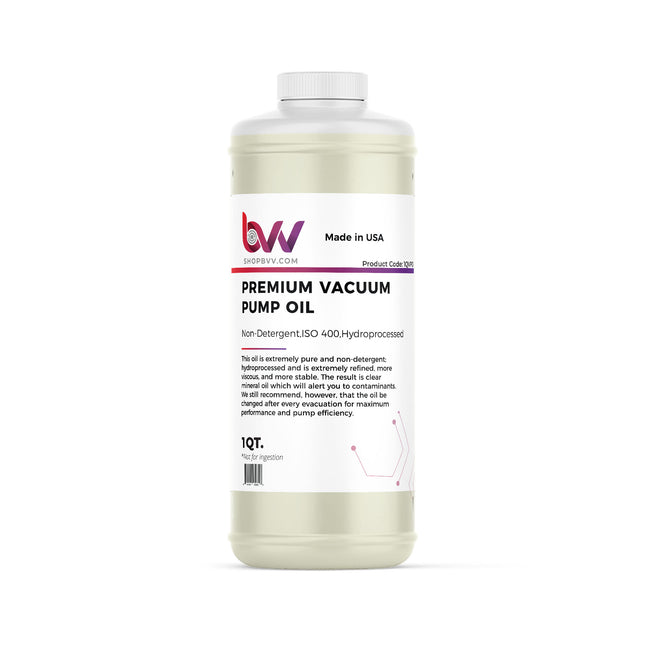
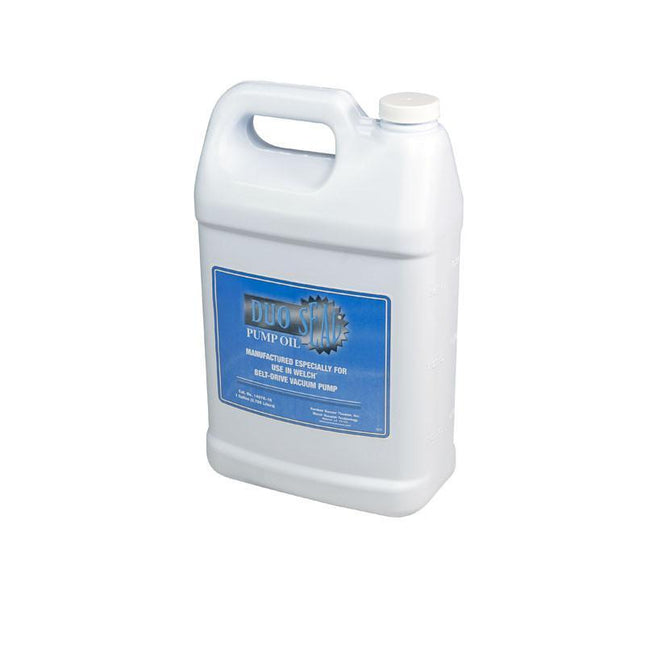
  • BVV™  Premium Vacuum Pump Oil BVV™  Premium Vacuum Pump Oil

    Premium Vacuum Pump Oil

    Premium Vacuum Pump Oil For Maximum performance and pump efficiency, change the oil after every evacuation. After evacuation, oil contains contaminants which limit pump efficiency. Premium vacuum pump oil can be used in any vacuum pump to maintain and prolong the life of the pump. Drain immediately after evacuation while pump is warm. Slowly add oil to top of "oil level" line. If oil is to low, you will hear the exhaust baffle chatter. If oil level is too high, excess oil will be blown out of the exhaust. Non detergent-Extra Pure-Hydroprocessed-ISO 400 BVV Vacuum Pump Oil Certificate of Analysis COA BVV Vacuum Pump Oil Safety Data Sheet SDS

    $30.56 - $1,354.29

  • Cactus Juice Stabilizing Resin for Woodworking Cactus Juice Stabilizing Resin for Woodworking

    Cactus Juice Cactus Juice Stabilizing Resin for Woodworking

    Cactus Juice Wood Stabilizing Resin Cactus Juice Stabilizing Resin is the original premium professional grade heat cured resin for stabilizing and hardening wood and other porous material. This makes the wood harder, and much more resistant to moisture.  It is especially effective on those beautiful, punky, spalted woods that are just too soft to work with! Cactus Juice is easy to use and does not significantly change the color of most woods. It is NOT solvent-based and cures 99.99% from liquid to solid by weight, far superior to typical home stabilizing solutions such as Minwax Wood Hardener or polyurethane. Stop throwing away those punky blanks and give Cactus Juice a try!  Cactus Juice MSDS Key Benefits:  Stabilizes and hardens soft woods Minimal color change Lasts for months Reuse again and again Non-flammable Sizes Available: Pint Cactus Juice - Ready To Use 1 Quart Cactus Juice - Ready To Use 1/2 Gallon Cactus Juice - Activator Included 1 Gallon Cactus Juice - Activator Included UNCURED PROPERTIES Composition/type: methacrylate ester monomersAppearance/Color: translucent, very light amber liquidViscosity @25ºC : 4-6 cpsSpecific Gravity: 1.03Flash Point: >200ºFVapor Pressure: Less than 5mm Hg at 72° FFlorescence: No CURED PROPERTIES Appearance: hard, translucent, plasticHardness Shore D (ASTM D2240): 80-85 CURING METHOD Cactus Juice is heat cured at temperatures between 80ºC -96ºC, (177º F -205º F ). Cactus Juice cures when the temperature of the resin within the blank reaches 90º C for 6-8 minutes.  The typical small shop method for curing is in a counter top toaster oven until internal blank temperature reaches the cure temperature  for 10 minutes or more. This usually take 1-1.5 hours for a typical small batch of 10 pen blanks.  Blanks with large cross section areas or larger batches of blanks may require longer processing times to achieve the required cure temperature. SERVICE TEMPERATURE RANGE Cactus Juice is formulated from the highest quality monomers to maximize the service operating range of the polymer. Cactus Juice is recommended for continuous service from –54ºC, (-65ºF) to 189ºC, (372ºF). STORAGE Activated Cactus Juice is easy to store and will exhibit an approximately 12 month shelf life under proper storage conditions. The resin should be stored in its original container and away from direct sunlight or other sources of UV light.  Storage temperatures should be maintained below 29ºC (85ºF).  Storage in a refrigerator is recommended. HANDLING ALL CHEMICALS SHOULD BE HANDLED WITH CARE!.Cactus Juice resin can be safely handled using normally accepted practices for handling non-toxic industrial chemicals. Rubber gloves should be worn when handling liquid Cactus Juice. Avoid excessive skin contact and wash thoroughly with water and mild soap if contact occurs. If dermatitis occurs, seek medical attention and avoid further exposure.  Avoid accidental contact with the eyes by using safety glasses. If accidental contact with the eyes should occur, flush immediately with copious amounts of clean water and obtain medical attention as necessary. WASTE TREATMENT Cured Cactus Juice is inert and can be disposed of as ordinary industrial trash. Uncured resin should be cured before disposal. Resin in solution in wash water effluent is biodegradable.  NOTES Information presented herein has been compiled from sources considered to be accurate and reliable, but is not guaranteed to be so. Nothing herein shall be considered as recommending practices or products in violation of any patent, law or regulation. It is the user's responsibility to determine the suitability of any material for a specific purpose and to adopt such safety precautions as may be necessary. TURNTEX, LLC MAKES NO WARRANTIES REGARDING THE PRODUCTS AND DISCLAIM ALL EXPRESS OR IMPLIED WARRANTIES, INCLUDING ANY WARRANTY OF MERCHANTABILITY OR FITNESS FOR A PARTICULAR PURPOSE.

    $41.60 - $222.10

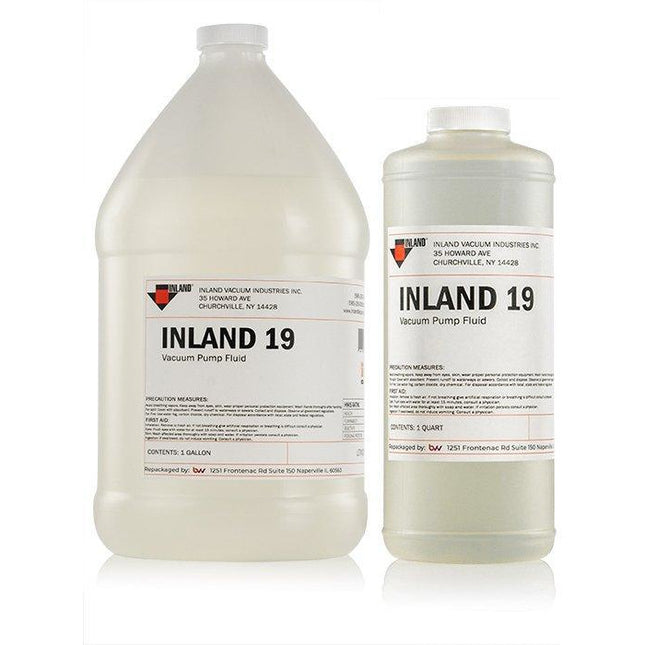
  • Inland 19 Vacuum Pump Oil Inland 19 Vacuum Pump Oil

    Inland Vacuum Inland 19 Vacuum Pump Oil for Edwards, Welch, Leybold, Agilent

    Inland 19 Vacuum Pump Oil Inland 19 is Inland Vacuum’s recommended general-purpose hydrocarbon fluid for mechanical vacuum pumps used in non-corrosive applications. The manufacturing process of Inland 19 includes molecular distillation, which removes light end fractions present in the fluid and gives it the desired properties: lower vapor pressures, reduced backstreaming, and longer fluid life. As a result, it can be used within the same applications as more expensive diffusion pump oils which would otherwise be contaminated by a vacuum oil of lower grade.A durable, long-lasting mechanical pump fluid, Inland 19 is cost-effective in vacuum applications such as mass spectrometers, electron microscopes, thin-film sputtering, UHV systems, and freeze dry systems. Proper use of this oil effects reduced maintenance costs, improved pumping cycles, and a cleaner vacuum system. Inland 19 MSDS Properties: Molecularly distilled Reduced backstreaming Increased fluid life Low vapor pressure Areas of Application: Mass spectrometry Electron microscopy Thin film sputtering UHV systems Freeze dry systems Other non-corrosive general applications Specifications Inland 19 Vapor Pressure at 25ºC (torr) 1x10⁻⁵ Boiling Point at .01 torr (ºC) 112 Viscosity at 40ºC (cSt) 55 Pour Point (ºC) -15 Flash Point (ºC) 213 Fire Point (ºC) 244 Density at 25ºC (g/ml) 0.87

    $34.73 - $1,937.68

  • MOLYKOTE® High Vacuum Grease 150g

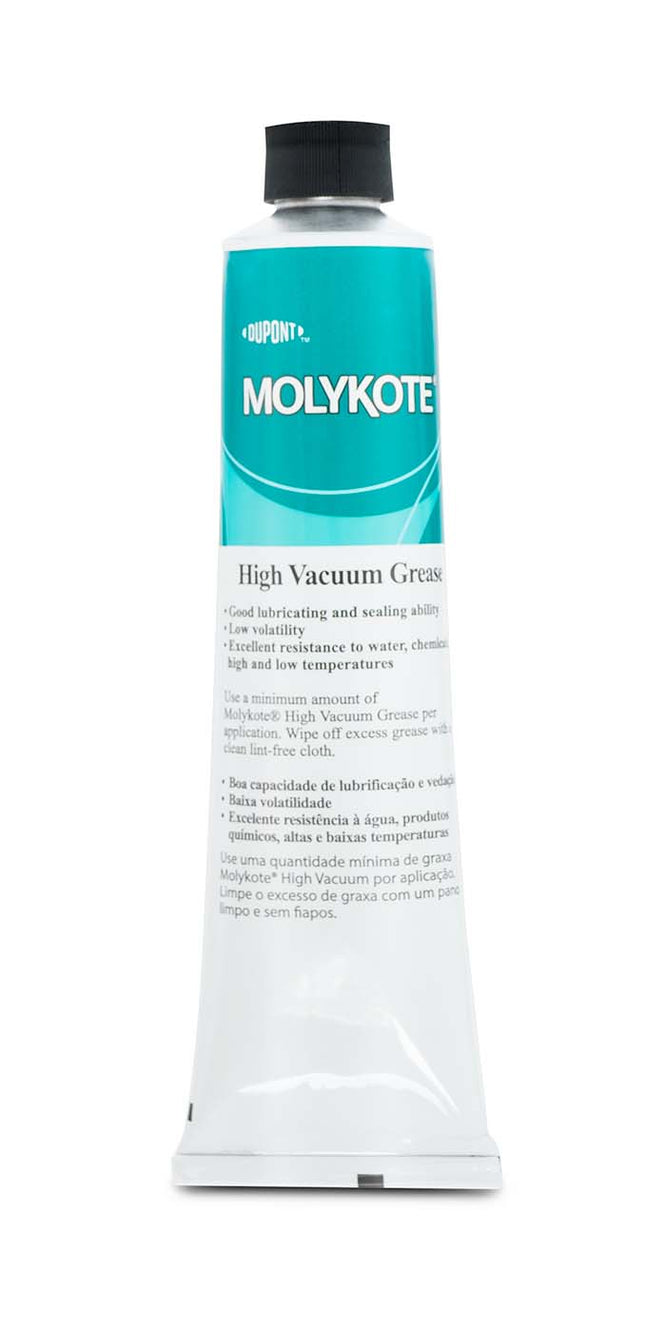
    Dupont MOLYKOTE® High Vacuum Grease 150g

    Key Properties: NLGI Grade 3-4, translucent white, used primarily in sealing vacuum and pressure systems. Molykote Technical Data Sheet Molykote Safety Data Sheet Applications:  Seals and lubricates chemical processing equipment. Lubricating plug valves, control valves, flow meter bearings, ceramic plug cocks, fire extinguisher valves, water treating equipment, synthetic rubber gaskets and seals in high-temperature applications. Sealing vacuum and pressure systems. Lubricating O-rings in binoculars and telescopes; prevents fogging of delicate lenses.  Performance Benefits: Reduces wear in plastic-to-metal and rubber-to-metal contact Low volatility Excellent resistance to water, chemicals, and high and low temperatures Meets requirements of FDA 21 CFR 175.300 Good chemical resistance Good oxidation resistance Good plastic & rubber compatibility Good water resistance High tack & adhesion High temperature performance Low temperature performance Wide temperature range Product Details: Product type: Compounds Technology: Silicone NLGI Grade: 3-4 Thickener: Silica Low Temp: (C) -40 High Temp: (C) 204 Color Translucent: White

    $63.89

  • Sale -30% Alumilite Dye Alumilite Dye

    Alumilite Alumilite Dye

    Use Alumilite/Polycolor dyes to add color to your casting resins! Dyes can be used in clear resins for translucent castings, with epoxy for dynamic coatings, or in opaque resin for solid bold colors. Highly concentrated for many, many uses Works in Clear Resins for translucence Bold colors achieve in opaque resins Use smallest amount possible to achieve desired color (up to 5%). Our Alumilite Dyes are highly concentrated. In some instances it's necessary to use less than 1 drop to achieve color in small resin batch. This can be achieved by adding a spec of dye to the tip of a stir stick rather than dispensing into the resin...a little goes a long way! Opaque dyes contain fillers that may settle in the bottle. To maintain consistent color, agitate/stir prior to use. Translucent colors include green*, yellow, red, blue, orange, violet, and ocean blue. ***Note that Green translucent dye is not compatible with epoxy chemistry and will shift to a blue color. This is due in part to chemistry, but also shift in hues (yellowing) over time of epoxy, causing changes in color. *** Opaque colors include white, black, flo red, flo orange, flo yellow, brown, and flo green. Some translucency can be achieved by adding an incredibly small amount of these dyes to clear resin. Disclaimer: Bottle style/label may vary from what is pictured due to mfr. labeling update. Otherwise it is still the same product.
    $13.88 $9.72

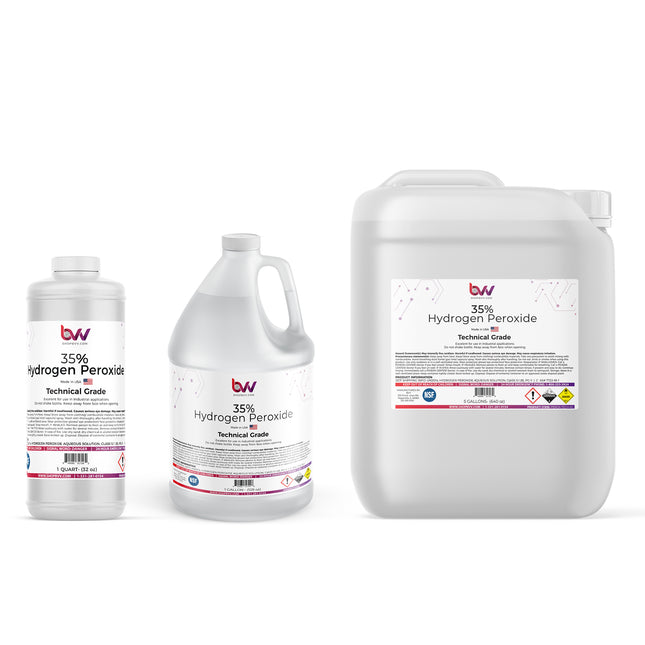
  • Sale -29% 35% Hydrogen Peroxide Tech Grade, NSF, H2O2 35% Hydrogen Peroxide Tech Grade, NSF, H2O2

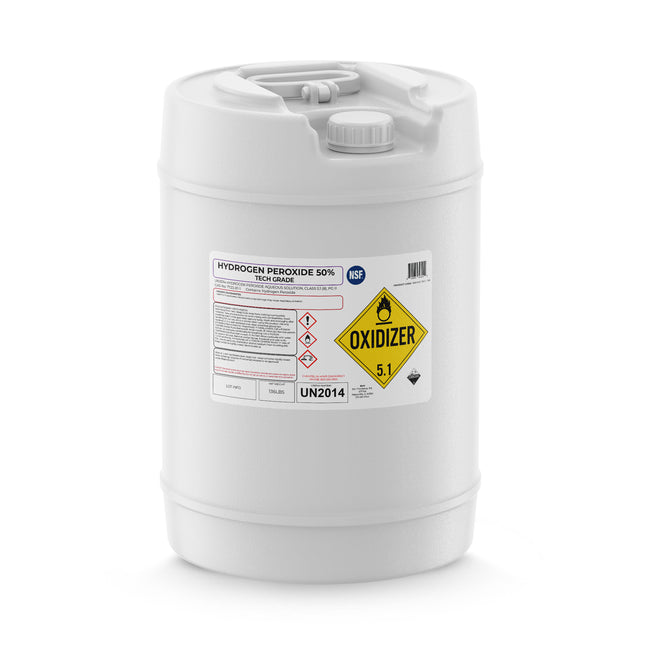
    35% Hydrogen Peroxide Tech Grade, NSF, H2O2

    35% Technical Grade Hydrogen Peroxide Our Technical-grade 35% peroxide tests at ~34.8%. It's our second highest concentrated peroxide next to our 50% Tech Grade Peroxide. Our Technical Grade hydrogen peroxide is formulated with a special stabilizer package that replaces transition metals stabilizers typically found in hydrogen peroxide solutions. Our Peroxide is NSF® Certified.  NSF-certified means a product was independently verified for safety, sanitation, and quality by NSF. NSF certification is recognized by health departments, government agencies, and industry associations.  *Certified under ANSI/NSF Standard 60 Drinking Water Additives-Health Effects. Dosage levels shall be in accordance with NSF requirements. 55 Gallon Drum weights 500lbs, 330 Gallon Tote weighs 3000lbs. 35% Food Grade Hydrogen Peroxide Certificate of Analysis 35% Food Grade Hydrogen Peroxide Safety Data Sheet Our 34% hydrogen peroxide when diluted you can make a remarkably large volume of 3% hydrogen peroxide that can be used for a wide variety of applications.   1 Quart 35% Makes 4.2 Gallons of 3% 1 Gallon 35% Makes 11.5 Gallons of 3% 5 Gallon 35% Makes 57.8 Gallons of 3% 55 Gallon 35% Makes 634 Gallons of 3%   Some applications include... Elevating Plant Growth: Diluted hydrogen peroxide supports healthy roots and elevated oxygen availability in the soil. Excellent Cleaner for Food Prep Environments: Hydrogen peroxide is a disinfectant, that kills viruses and various forms of bacteria. Bleaching: Diluted hydrogen peroxide is a mild bleaching agent that can be used to clean stains.  Cleansing Fresh Produce: Diluted hydrogen peroxide can be used to clean fruits and vegetables.  Mold and Mildew Removal: Hydrogen peroxides strong oxidative qualities breakdown mold and mildew with ease.  How to Dilute 35% Hydrogen Peroxide to 3% Hydrogen Peroxide: 35% hydrogen peroxide Deionized distilled water A clean, empty Gallon bottle for the final 3% hydrogen peroxide solution Measuring cup Funnel Safety goggles Rubber gloves Apron or old clothes Steps to perform dilution: Wear safety goggles, rubber gloves, an apron or old clothing to protect yourself from spills and splashes.  Choose a well-ventilated space. Mix 1 part 34.83% hydrogen peroxide with 10 parts distilled water. Example: Mix 1 cup hydrogen peroxide, with 10 cups of distilled water.  To be exact, this will make slightly more than 3% solution of hydrogen peroxide – 3.46%. What Is Hydrogen Peroxide? Hydrogen peroxide (H2O2) is a chemical compound composed of two hydrogen atoms and two oxygen atoms. It is a clear, colorless liquid with a slightly more viscous consistency than water. Hydrogen peroxide is commonly used for its powerful oxidizing properties and has a wide range of applications in various industries and household settings. Chemical Formula: H2O2 Molecular Weight: 34.015 g/mol CAS Registry Number: 7722-84-1  Appearance Colorless Liquid Odor: None Density 1.11 g/cm3 Boiling Point: 106 °C (223 °F) Solubility in water: Completely Soluble GHS Pictograms: GHS Signal Word: Danger GHS Hazard Statements: H272, H302, H318, H335 GHS Precautionary Statements P210, P220, P260, P261, P264, P270, P271, P280, P283, P301+P317, P301+P330+P331, P302+P361+P354, P304+P340, P305+P354+P338, P306+P360, P316, P317, P321, P330, P363, P370+P378, P371+P380+P375, P405, P420, and P501 UN Identification Number: 2014 Proper Shipping Name: 35% Hydrogen Peroxide, Aqueous Solution Transport Hazard Class: 5.1, 8  Packing Group: II DOT Placard: What Is Hydrogen Peroxide Used For? Hydrogen peroxide (H2O2) is used for a wide range of purposes in various industries and household settings due to its versatile properties. Some common uses of hydrogen peroxide include: Disinfectant and Antiseptic: Hydrogen peroxide is a common disinfectant and antiseptic agent. It is used to clean wounds, cuts, and minor injuries to prevent infection. In lower concentrations (typically 3%), it can be safely applied to the skin. Hair Bleaching and Dyeing: Many hair bleaching and hair dyeing products contain hydrogen peroxide as it can help break down the natural pigments in hair, lightening its color. Teeth Whitening: Hydrogen peroxide is used in some teeth whitening products and dental treatments to remove stains and discoloration from teeth. Cleaning Agent: It is used as a cleaning agent for surfaces, fabrics, and contact lenses due to its ability to break down and remove organic stains and deposits. Water Treatment: In water treatment processes, hydrogen peroxide can be used to remove contaminants, oxidize organic matter, and disinfect water supplies. Rocket Propellant: In the aerospace industry, highly concentrated hydrogen peroxide (usually around 90% purity) is used as a rocket propellant. Chemical Synthesis: Hydrogen peroxide is used in the synthesis of various chemicals and pharmaceuticals. Environmental Applications: It can be employed for soil and groundwater remediation, helping to break down pollutants and contaminants. Food Industry: In the food industry, hydrogen peroxide can be used for cleaning and disinfection of equipment and packaging materials. Cosmetics: It is used in some cosmetic and personal care products, such as hair dyes, hair bleaches, and skin creams. Textiles: Hydrogen peroxide is used in the textile industry to bleach fabrics and remove stains. Paper and Pulp Industry: It is used for bleaching paper pulp and improving the quality of paper products. Agriculture: In agriculture, hydrogen peroxide can be used as an oxygen source in soil, promoting plant growth. Medical and Laboratory Use: It is utilized for cleaning and sterilizing medical equipment and laboratory instruments. First Aid: Hydrogen peroxide is a household item for treating minor cuts and scrapes. The specific application and concentration of hydrogen peroxide used can vary depending on the intended purpose. Higher concentrations are typically used in industrial and chemical applications, while lower concentrations are common in household and personal care products. It's important to handle hydrogen peroxide with care, follow safety guidelines, and use the appropriate concentration for a given task. How Is Hydrogen Peroxide Produced? Hydrogen peroxide (H2O2) is typically produced through one of two main methods: the anthraquinone process and the direct synthesis process. Both processes involve the reaction of hydrogen and oxygen in the presence of a catalyst to form hydrogen peroxide. Here's an overview of these two methods: Anthraquinone Process: This is the most common method for commercial hydrogen peroxide production. It involves a series of chemical reactions that use anthraquinone derivatives as catalysts. The process typically consists of the following steps: Hydrogenation: Anthraquinone derivatives are hydrogenated with hydrogen gas (H2) to form hydroquinone derivatives. Autoxidation: The hydroquinone derivatives react with oxygen (O2) to form anthraquinone derivatives again, while producing hydrogen peroxide in the process. Extraction: The hydrogen peroxide is then extracted from the reaction mixture. Oxidation of Anthraquinone: The anthraquinone derivatives are oxidized back to their original form for reuse in the process. Direct Synthesis Process: In this method, hydrogen and oxygen are directly combined to produce hydrogen peroxide using a catalyst. The reaction typically occurs in a gas-phase reactor, and the process is often referred to as the "direct synthesis" or "hydrogenation-oxygenation" process. Common catalysts used in this process include palladium or platinum on a support material. While these are the main methods for hydrogen peroxide production, there are other less common methods as well. The choice of production method depends on factors such as the desired concentration of hydrogen peroxide, production scale, and cost considerations. It's worth noting that hydrogen peroxide is a sensitive compound and can decompose over time, especially when exposed to heat, light, or contaminants. Therefore, it requires careful handling and storage to maintain its stability and effectiveness. Does Hydrogen Peroxide Expire? Hydrogen peroxide can degrade over time and may lose its effectiveness, so it can be said to have a shelf life rather than a strict expiration date. The shelf life of hydrogen peroxide depends on several factors, including its concentration, exposure to light, temperature, and how well it's stored. Here are some general guidelines: Concentration: Higher concentrations of hydrogen peroxide (e.g., 30% or 35%) tend to be more stable and have a longer shelf life compared to lower concentrations (e.g., 3% or 6%). Exposure to Light: Hydrogen peroxide is light-sensitive, and exposure to ultraviolet (UV) light can accelerate its decomposition. It is typically sold in brown or opaque containers to protect it from light. Temperature: Storage at higher temperatures can also speed up the decomposition of hydrogen peroxide. It should be stored at a cool, dry place away from heat sources. Contaminants: Contaminants or impurities can catalyze the decomposition of hydrogen peroxide. It's essential to keep the container tightly sealed and free from any potential contaminants. Age: Hydrogen peroxide degrades slowly over time, even when stored correctly. The rate of degradation is higher for lower concentrations. To maximize the shelf life and potency of hydrogen peroxide, follow these recommendations: Store it in its original, tightly sealed container. Keep it in a cool, dark place away from direct sunlight and heat sources. Check the expiration date on the container, if available. If you're unsure about the potency of an old bottle of hydrogen peroxide, consider testing it on a small, non-critical area before using it for medical or cleaning purposes. It's important to note that even if hydrogen peroxide has degraded, it may still be useful for some applications, such as cleaning and disinfecting surfaces. However, for medical or first-aid use, it's best to use hydrogen peroxide that is within its recommended shelf life to ensure its effectiveness. Is Hydrogen Peroxide Safe As Mouthwash? Hydrogen peroxide can be used as a mouthwash, but it should be used with caution and in a diluted form. Here are some important considerations: Dilution: Never use undiluted hydrogen peroxide as a mouthwash. It's too concentrated at its full strength and can cause irritation, burning, and tissue damage. Instead, dilute it with water. A common recommendation is to use a 3% hydrogen peroxide solution, which is typically sold in drugstores. Frequency: Do not use hydrogen peroxide as a mouthwash too frequently. Using it daily or excessively can lead to oral issues, including irritation and disruption of the natural balance of oral bacteria. Duration: When using hydrogen peroxide as a mouthwash, swish it around your mouth for a brief period, typically about 30 seconds, and then spit it out. Do not swallow it. Rinse Thoroughly: After using hydrogen peroxide as a mouthwash, rinse your mouth thoroughly with water to remove any residual hydrogen peroxide. Avoid Ingestion: Do not swallow hydrogen peroxide, even when diluted. Swallowing hydrogen peroxide can lead to stomach upset and other health issues. Consultation: Before using hydrogen peroxide as a mouthwash, it's a good idea to consult with your dentist or oral healthcare provider. They can provide guidance on its safe and appropriate use based on your specific oral health needs. Hydrogen peroxide can help kill harmful bacteria in the mouth and may be used as a short-term remedy for issues like canker sores or minor gum irritations. However, it is not a substitute for regular oral hygiene practices such as brushing, flossing, and using a fluoride-based mouthwash. If you experience any adverse reactions, such as severe irritation, burning, or pain, discontinue use immediately and consult a healthcare professional. It's important to use hydrogen peroxide as a mouthwash cautiously and in accordance with recommended guidelines to avoid potential side effects or harm to oral tissues. What Are The Hazards Of Hydrogen Peroxide? Hydrogen peroxide, while commonly used for various purposes, can pose certain hazards if mishandled or used improperly. Here are some of the potential hazards associated with hydrogen peroxide: Irritation and Burns: Hydrogen peroxide is a strong oxidizing agent and can cause skin and eye irritation upon contact. In higher concentrations or with prolonged exposure, it can lead to chemical burns. Ingestion: Ingesting concentrated hydrogen peroxide can be harmful and even life-threatening. It can cause gastrointestinal irritation, stomach pain, vomiting, and, in severe cases, internal burns or damage. Inhalation: Inhalation of hydrogen peroxide vapors can irritate the respiratory tract, leading to coughing, shortness of breath, and throat irritation. Explosive Hazards: Concentrated hydrogen peroxide solutions can be sensitive to shock, heat, or contamination with organic materials. This can lead to the potential for explosions or fires if mishandled. Skin Sensitization: Prolonged or repeated contact with hydrogen peroxide can lead to skin sensitization, where the skin becomes more sensitive or allergic to the chemical. Environmental Impact: Hydrogen peroxide can be harmful to aquatic life and the environment if not properly disposed of. It should not be released into natural waterways. hydrogen peroxide, consider the following precautions: Dilution: When using hydrogen peroxide, dilute it to the appropriate concentration for the intended purpose. Most household hydrogen peroxide solutions are 3%, while higher concentrations are used for industrial or medical applications. Protective Equipment: When handling concentrated hydrogen peroxide, wear appropriate personal protective equipment, including gloves and safety goggles. Ventilation: Use hydrogen peroxide in well-ventilated areas to minimize inhalation risks. First Aid: In case of skin or eye contact, rinse immediately with plenty of water. If ingested, seek medical attention. Storage: Store hydrogen peroxide in a cool, dark place away from flammable materials and heat sources. Dispose Properly: Dispose of hydrogen peroxide in accordance with local regulations. Do not pour it down drains or release it into the environment. Always follow the safety guidelines and instructions provided on the product label or by the manufacturer. If you have specific concerns or questions about handling hydrogen peroxide for a particular application, it's advisable to consult with a safety professional or chemical expert for guidance. How Can I Use Hydrogen Peroxide Safely? Using hydrogen peroxide safely involves taking appropriate precautions to minimize the risk of accidents or harm. Here are some guidelines for safe handling and use of hydrogen peroxide: Read the Label: Always read and follow the instructions and safety precautions provided on the hydrogen peroxide product label. Different concentrations may have different recommended uses and safety guidelines. Personal Protective Equipment (PPE): Wear appropriate personal protective equipment, including safety goggles or a face shield to protect your eyes. Use gloves made of materials that are compatible with hydrogen peroxide, such as nitrile or latex gloves. Ventilation: Use hydrogen peroxide in a well-ventilated area to minimize exposure to vapors. If you're using it in a confined space, consider using a fume hood or working near an open window or door. Concentration: Ensure that you are using the correct concentration of hydrogen peroxide for your specific application. Most household hydrogen peroxide solutions are typically 3%, but higher concentrations are available for industrial or medical use. Dilution: When diluting concentrated hydrogen peroxide, always add the hydrogen peroxide to water, not the other way around. This helps prevent splattering and potential reactions. Avoid Contaminants: Keep hydrogen peroxide away from organic materials (e.g., paper, cloth) and flammable substances, as it can react with them and potentially cause fires or explosions. Avoid Mixing: Do not mix hydrogen peroxide with other chemicals unless you are following a specific recipe or procedure that requires it. Mixing hydrogen peroxide with certain substances can be dangerous. First Aid: In case of skin contact, immediately rinse the affected area with plenty of water. If hydrogen peroxide comes into contact with your eyes, flush them with water for at least 15 minutes and seek medical attention if irritation persists. If ingested, do not induce vomiting. Seek medical attention immediately. Storage: Store hydrogen peroxide in a cool, dark place, away from direct sunlight and heat sources. Keep the container tightly closed when not in use. Disposal: Dispose of hydrogen peroxide in accordance with local regulations. Do not pour it down drains or release it into the environment. Emergency Response: Have access to an emergency eyewash station and safety shower if you are working with concentrated hydrogen peroxide. Keep a spill kit and appropriate cleanup materials on hand in case of accidents. Training: Ensure that individuals handling hydrogen peroxide are trained in its safe use and understand the potential hazards. If you are unsure about how to use hydrogen peroxide safely for a specific application, consider seeking guidance from a safety professional or chemical expert. Always exercise caution and pr

    $20.84 - $2,044.63

  • Apiezon H High Temperature Vacuum Grease

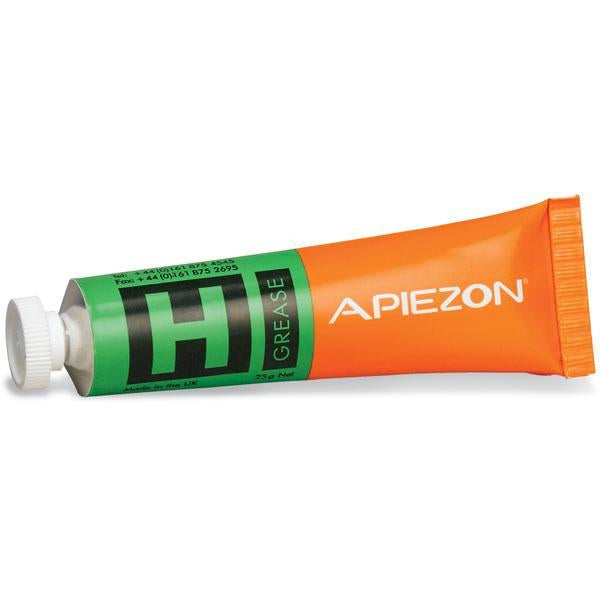
    Apiezon Apiezon H High Temperature Vacuum Grease

    Apiezon H High Temperature Vacuum Grease 25g Apiezon H Grease is a silicone-free high vacuum grease perfectly suited for use at high temperatures in both scientific and industrial applications. H Grease has exceptional 'stiction' and thermal conduction properties and has gained prestigious approvals from a variety of international organizations, including BAE Systems, the European Space Agency and NASA. Safety Data Sheet Technical Data Sheet Apiezon H Grease: High Temperature Vacuum Grease Properties Apiezon H Grease is a silicone-free high temperature vacuum grease which: performs well under a wide range of temperatures, from -10 to +240°C, and retains its optimum consistency at temperatures between +10 and +110°C rather than melting, actually becomes stiffer as temperature increases and therefore is not recommended for highly stressed bearings has excellent heat transfer properties conducts heat away from the site of operation, reducing the danger of overheating and damaging heat-sensitive components exhibits good 'stiction' or sticking power has powerful 'gettering' action, meaning it absorbs potentially harmful grease and chemical impurities on metal and glass surfaces is easy to clean and remove as it is soluble in hydrocarbon solvents exhibits a vapor pressure of 1.7 x 10⁻⁹ Torr at 20°C Please click the links for typical properties and vapour pressure graphs of Apiezon H Grease. Applications of Apiezon H Grease As a high temperature, low to medium vacuum grease with excellent 'stiction' power and good thermal conduction properties Apiezon H Grease is used for many diverse applications. In particular H Grease is commonly used in scientific and industrial high temperature sealing applications.Thanks to its 'stiction' power Apiezon H Grease is ideal for use with laboratory glassware; it is also favoured by the electronics and space industries where its high thermal conductivity makes it the perfect vacuum grease in situations where heat sink media requires adhesion.Apiezon H grease has been approved by NASA as a material suitable for lubricating the gold-plated threads of small variable capacitors required to operate under high vacuum from -65°C to +125°C to prevent galling.

    $368.09

  • BVV™ Propylene Glycol Tech Grade 100% BVV™ Propylene Glycol Tech Grade 100%

    Propylene Glycol Tech Grade 100%

    Propylene Glycol Disclaimer: Spigots/Faucets are only compatible with 5 Gallon Jugs and must be purchased separately Tech Grade 100% BVV™ brand propylene glycol is a great heat transfer fluid alternative to water for all processing equipment such as refrigerated or heated circulators and cold traps. This propylene glycol has a freezing point of -74°F and a boiling point of 370°F. BVV™ propylene glycol is considered NOT genetically modified and NOT derived from a genetically modified organism. BVV™ Propylene Glycol SDS BVV™ Propylene Glycol Certificat of Analysis COA The expiration date is 2 years from the date of manufacture and when the glycol is kept below 100F and out of direct sunlight.

    $23.61 - $4,722.66

  • Inland 19 ULTRA® Semi-Synthetic Vacuum Pump Oil Inland 19 ULTRA® Semi-Synthetic Vacuum Pump Oil

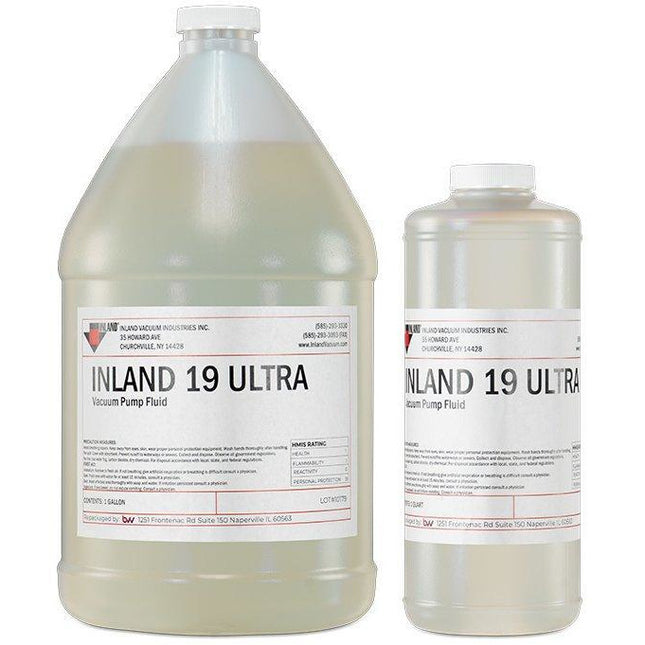
    Inland Vacuum Inland 19 ULTRA® Semi-Synthetic Vacuum Pump Oil

    Inland 19 ULTRA® Semi-Synthetic Vacuum Pump Oil Disclaimer: Spigots/Faucets are only compatible with 5 Gallon Jugs and must be purchased separately Inland ULTRA® products are semi-synthetic hydrocarbon fluids designed to endure thermal and chemical stresses much better than standard vacuum pump fluids. The ultra-refined process eliminates nitrogen, sulfur, oxygen, and aromatic hydrocarbons, leaving a clear base stock virtually free of impurities. The additive package will not volatize under thermal stress; the antioxidant will stay in solution and bond up to four times as many radicals as other antioxidants, extending the life of the pump and the fluid. Inland 19 ULTRA® MSDS Properties: Good Thermal Stability Oxidation Resistant Hydrotreated Low Vapor Pressure Long Fluid Life Areas of Application: Mass Spectrometry Electron Microscopy thin Film Sputtering Vacuum Distillation and impregnation UHV Surface Analysis Vacuum Furnaces and Heat Treatment EB Welding Vacuum Tube Evacuation Vacuum Metallization Chemical Pumping Specification Inland 19 ULTRA Vapor Pressure at 25ºC (torr) <1x10⁻⁶ Boiling Point at .01 torr (ºC) 166 Viscosity at 40ºC (cSt) 55 Pour Point (ºC) -10 Flash Point (ºC) 247 Fire Point (ºC) Density at 25ºC (g/ml) 0.86 Color clear    

    $37.50 - $2,673.86

  • Sale -21% 50% Hydrogen Peroxide Food Grade H2O2 50% Hydrogen Peroxide Food Grade H2O2

    50% Hydrogen Peroxide Food Grade H2O2

    50% Food Grade Hydrogen Peroxide Our Food-grade 50% peroxide tests at ~50.4%.  This the strongest peroxide we offer, next to our 35% Food Grade Peroxide, Our Food Grade 50% hydrogen peroxide is formulated with a special stabilizer package (organophosphonate) that replaces transition metals stabilizers typically found in hydrogen peroxide solutions. Our Peroxide is NSF® Certified.  NSF-certified means a product was independently verified for safety, sanitation, and quality by NSF. NSF certification is recognized by health departments, government agencies, and industry associations.  *Certified under ANSI/NSF Standard 60 Drinking Water Additives-Health Effects. Dosage levels shall be in accordance with NSF requirements. 55 Gallon Drum weights 548lbs, 270 Gallon Tote weighs 2500lbs. hydrogen peroxide usually loses less than 1% of its initial concentration in one year (0.5% for a 50% solution). 50% Hydrogen Peroxide NSF Food Grade Certificate of Analysis 50% Hydrogen Peroxide NSF Food Grade Safety Data Sheet Chemical Formula: H2O2 Molecular Weight: 34.015 g/mol CAS Registry Number: 7722-84-1  Appearance Colorless Liquid Odor: None Density 1.196 g/cm3 @ 20 °C (68 °F) Boiling Point: 114 °C (237 °F)  Solubility in water: Completely Soluble GHS Pictograms: GHS Signal Word: Danger GHS Hazard Statements: H272, H302 + H332, H314, H335 GHS Precautionary Statements P210, P220, P260, P261, P264, P270, P271, P280, P283, P301+P317, P301+P330+P331, P302+P361+P354, P304+P340, P305+P354+P338, P306+P360, P316, P317, P321, P330, P363, P370+P378, P371+P380+P375, P405, P420, and P501 UN Identification Number: 2014 Proper Shipping Name: 50% Hydrogen Peroxide, Aqueous Solution Transport Hazard Class: 5.1, 8 Packing Group: II DOT Placard:

    $305.58 - $909.81

  • Caffeine Powder ≥99.0% USP/FCC/Food Grade Caffeine Powder ≥99.0% USP/FCC/Food Grade

    Caffeine Powder ≥99.0% USP/FCC/Food Grade

    Pure Caffeine Powder USP/FCC/Food Grade  - ≥99.0% Pure Our Caffeine Powder has a nice fine consistency. Similar to powdered sugar. It is an anhydrous product so it's free of any water/moisture.  Synthetically derived.  Caffeine Example COA Certificate of Analysis Chemical Formula: C8H10N4O2 Molecular Weight: 194.19 g/mol CAS Registry Number: 58-8-2 Appearance White Powdery Crystalline Odor: None Density 1.23 g/cm3 @ 20 °C Boiling Point: 178C/352F Solubility in water: Moderately Soluble GHS Pictograms:  Irritant GHS Signal Word: Warning GHS Hazard Statements: H302  GHS Precautionary Statements P264, P270, P301+P317, P330, P501 What is Caffeine? Caffeine is a natural stimulant most commonly found in coffee, tea, and certain plants like cacao. It works by stimulating the brain and central nervous system, helping to reduce fatigue and enhance alertness and focus. Chemically classified as a psychoactive drug, caffeine blocks the action of adenosine, a neurotransmitter that promotes relaxation and sleepiness. In addition to its natural sources, caffeine is also added to many soft drinks, energy drinks, and over-the-counter medications. As the world's most widely consumed psychoactive substance, moderate consumption of caffeine has been linked to various health benefits, including improved cognitive function and mood. However, excessive intake can lead to side effects such as insomnia, jitteriness, and increased heart rate. How Much Caffeine is found in coffee, tea, soda, & etc? Coffee drinks Size in oz. (mL) Caffeine (mg) Brewed 8 (237) 96 Brewed, decaf 8 (237) 2 Espresso 1 (30) 64 Espresso, decaf 1 (30) 0 Instant 8 (237) 62 Instant, decaf 8 (237) 2 Teas Size in oz. (mL) Caffeine (mg) Brewed black 8 (237) 47 Brewed black, decaf 8 (237) 2 Brewed green 8 (237) 28 Ready-to-drink, bottled 8 (237) 19 Sodas Size in oz. (mL) Caffeine (mg) Citrus (most brands) 8 (237) 0 Cola 8 (237) 22 Root beer (most brands) 8 (237) 0 Energy drinks Size in oz. (mL) Caffeine (mg) Energy drink 8 (237) 71.9 Energy shot 2 (60) 215 How Much Caffeine should I take? The recommended dosage of caffeine varies based on individual tolerance, age, and health factors. For most healthy adults, a moderate daily intake of 100-200 mg of caffeine is considered safe. This equates to about 1-2 cups of brewed coffee or 2-3 cups of tea. Consuming caffeine in moderate amounts can enhance alertness, boost mood, and improve focus. However, exceeding 200 mg per day may lead to side effects like restlessness, insomnia, rapid heart rate, and headaches. For sensitive individuals or those with certain health conditions, even lower doses can cause adverse effects. It’s important to monitor caffeine intake from all sources, including coffee, tea, energy drinks, and supplements, to ensure safe consumption levels.  

    $23.61 - $1,250.12

  • Sale -53% 50% Hydrogen Peroxide Tech Grade NSF, H2O2 50% Hydrogen Peroxide Tech Grade NSF, H2O2

    50% Hydrogen Peroxide Tech Grade NSF, H2O2

    50% Technical Grade Hydrogen Peroxide Our Technical-grade 50% peroxide tests at ~50.4%.  Is the strongest proxied we offer, next to our 35% Technical Peroxide, Our Technical Grade 50% hydrogen peroxide is formulated with a special stabilizer (organophosphonate) package that replaces transition metals stabilizers typically found in hydrogen peroxide solutions. Our Peroxide is NSF® Certified.  NSF-certified means a product was independently verified for safety, sanitation, and quality by NSF. NSF certification is recognized by health departments, government agencies, and industry associations.  *Certified under ANSI/NSF Standard 60 Drinking Water Additives-Health Effects. Dosage levels shall be in accordance with NSF requirements. 55 Gallon Drum weights 548lbs, 270 Gallon Tote weighs 2500lbs. hydrogen peroxide usually loses less than 1% of its initial concentration in one year (0.5% for a 50% solution). 50% Hydrogen Peroxide NSF Technical Grade Certificate of Analysis 50% Hydrogen Peroxide NSF Technical Grade Safety Data Sheet Chemical Formula: H2O2 Molecular Weight: 34.015 g/mol CAS Registry Number: 7722-84-1  Appearance Colorless Liquid Odor: None  Density 1.196 g/cm3 @ 20 °C (68 °F) Boiling Point: 114 °C (237 °F)  Solubility in water: Completely Soluble  GHS Pictograms:   GHS Signal Word: Danger GHS Hazard Statements: H272, H302 + H332, H314, H335 GHS Precautionary Statements P210, P220, P260, P261, P264, P270, P271, P280, P283, P301+P317, P301+P330+P331, P302+P361+P354, P304+P340, P305+P354+P338, P306+P360, P316, P317, P321, P330, P363, P370+P378, P371+P380+P375, P405, P420, and P501 UN Identification Number: 2014 Proper Shipping Name: 50% Hydrogen Peroxide, Aqueous Solution Transport Hazard Class: 5.1, 8 Packing Group: II DOT Placard:

    $168.07 - $527.83

  • Therminol XP Heat Transfer Fluid Therminol XP Heat Transfer Fluid

    Therminol XP Heat Transfer Fluid

    Product description Safety Data Sheet Technical Data Sheet Therminol XP heat transfer fluid is an extremely pure white mineral oil which provides reliable heat transfer. Performance Benefits Low Fouling— The chemical composition of Therminol XP has been carefully selected to minimize system fouling that results from oxidation and degradation of the fluid. Practically Non-Toxic— It meets the purity specifications in U.S. Food and Drug Administration Regulation 21 CFR 172.878 and is listed as a Registered Nonfood Compound by NSF International (Category Code HT-1: Heat transfer fluids - Incidental contact). Thermal Stability—Users can expect many years of reliable, trouble-free operation, even when operating Therminol XP continuously at the recommended bulk temperature of 315°C (600°F). Environmentally Friendly—Therminol XP has outstanding regulatory status for those seeking heat transfer fluids that have minimum environmental reporting requirements. Applications Adhesives Desalination Dryer heating Fatty acid HTF - bakery HTF - deodorizing HTF - deodorizing oil and fat HTF - edible oil HTF - food production HTF - food/feed/beverage processing HTF - production of bioalcohol HTF - production of biodiesel Industrial Peek (polyether ether ketone) Phthalic anhydride Polyester (PET) Specialty and batch chemical production Specialty chemicals Key attributes Environmentally Friendly Low Fouling Practically Non-Toxic Thermal Stability

    $208.35 - $5,556.07

  • Apiezon PFPE 501 High Temperature Vacuum Grease

    Apiezon Apiezon PFPE 501 High Temperature Vacuum Grease

    Apiezon PFPE 501 High Temperature Vacuum Grease 100g We are pleased to announce that there is a new addition to the Apiezon range of high vacuum greases. Delivering the quality and reliability synonymous with the Apiezon brand, PFPE 501 is the perfect addition to our range. PFPE 501 is a chemically inert, high temperature and extreme pressure lubricant. With an upper operating temperature of 250°C and vapor pressure of 1.3 x 10⁻¹² at 25°C, it is robust, versatile and can be used for sealing and lubricating under the most extreme operating conditions. This includes environments where aggressive chemicals and strong oxidizing agents are regularly used. As most Apiezon users are more familiar with hydrocarbon chemistry we’d like to provide some background on what PFPE is, and how its molecular structure can explain its physical properties. This information can be found in What is PFPE? Safety Data Sheet Technical Data Sheet Why Use Apiezon PFPE 501 Grease? PFPE based High temperature lubricant Used in oxygen-rich environments Ultra high vacuum Chemically inert Extreme pressure Wide temperature range Benefits of Apiezon PFPE 501 Grease? Extended equipment life High temperature lubricant Reduced equipment downtime Lower service costs Life-time lubrication 10 year shelf life Guaranteed Apiezon quality Expert technical support

    $445.87

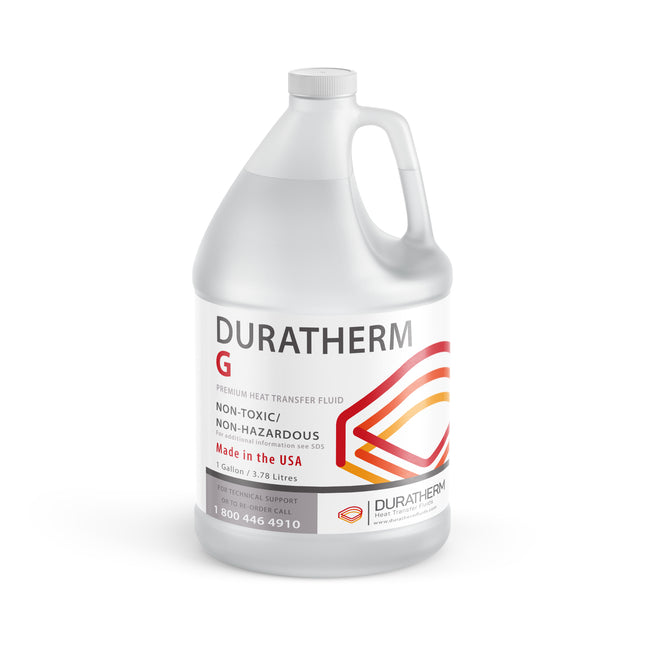
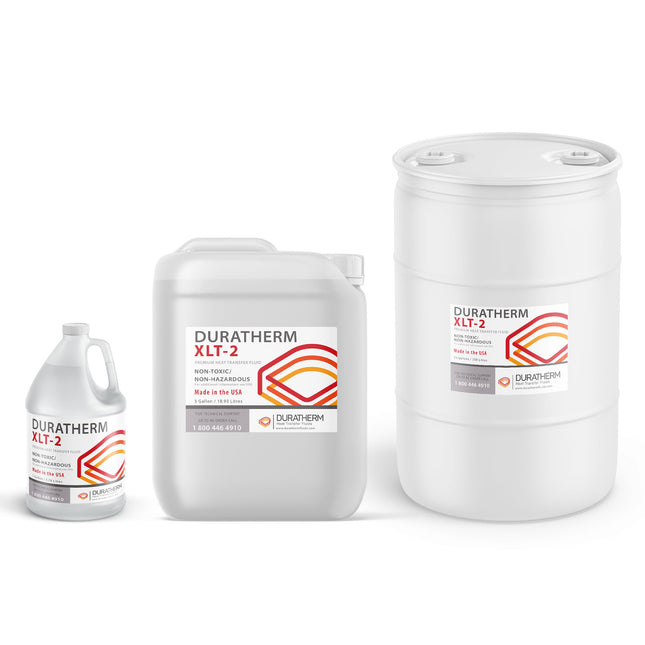
  • Duratherm S Thermal Fluid Duratherm S Thermal Fluid

    Duratherm Duratherm S Thermal Fluid

    DURATHERM S A silicone based heat transfer fluid that is ideally suited for high oxidation applications or completely exposed systems. Duratherm S is virtually impervious to oxidation at temperatures under 204°C (400°F) and offers superior protection from fluid degradation. Duratherm S is best suited for applications not prone to contamination or leaking. 316°C (600°F) maximum operating temperature Pumpable down to -50°C (-46°F)  Very strong resistance to oxidation up to 204°C (400°F) Recommended for use in fully exposed systems like open baths Highly resistant to fouling for an extremely long service life Non-corrosive and non-toxic thermal fluid for added workplace safety TEMPERATURE RATINGS Max Bulk/Use Temp 316°C Max Film Temp. 366°C Pour Point ASTM D97 -66°C SAFETY DATA Flash Point ASTM D92 324°C Fire Point ASTM D92 336°C Autoignition ASTM E-659-78 437°C THERMAL PROPERTIES Thermal Expansion Coefficient 0.099 %/°C Thermal Conductivity W/m·K 38°C 0.133 204°C 0.109 204°C 0.109 260°C 0.100 288°C 0.097 316°C 0.093 Heat Capacity kJ/kg·K 38°C 1.717 204°C 2.034 204°C 2.035 260°C 2.144 288°C 2.194 316°C 2.248 PHYSICAL PROPERTIES Viscosity ASTM D445 cSt -18°C 113.08 40°C 36.14 100°C 16.57 260°C 5.19 288°C 4.54 316°C 4.03 Density ASTM D1298 kg/l 38°C 0.95 204°C 0.81 204°C 0.81 260°C 0.77 288°C 0.74 316°C 0.72 Vapor Pressure ASTM D2879 kPa 38°C 0.00 204°C 0.14 204°C 0.14 260°C 1.79 288°C 3.52 316°C 6.83 Distillation Range ASTM D2887 10% 494°C 90% 679°C Note: The values quoted in the table above are typical of normal production.They do not constitute a specification.

    $208.35 - $9,445.32

  • Dynalene HC-50

    Dynalene HC-50 Heat Transfer Fluid

    Dynalene HC-50 Dynalene HC/Potassium Formate is a water-based, low-temperature heat transfer fluid engineered to deliver the excellent heat transfer performance in applications down to -58°F (-50°C). With the temperature range -50°C to +218°C, Dynalene HC easily exceeds the performance of other water-based chemistries such as glycol /water mixtures, calcium chloride/water as well as hydrocarbon and silicone-based fluids. The fluid comes in five concentrations and is non-toxic, non-hazardous and non-flammable. Effective Calcium Chloride Alternative  Dynalene HC/Potassium Formate heat transfer fluid is an excellent alternative to calcium chloride and other brine solutions because it demonstrates a higher thermal efficiency and lower corrosion rate. This fluid, as compared to other glycols, calcium chloride, and other brine solutions, should lower the leak and spillage rate, and reduce maintenance and repair costs on refrigerated systems. This is due to Dynalene HC's use of "safe" chemistries resulting in a high level of corrosion inhibition. The viscosity of calcium chloride solutions is also noticeably higher than Dynalene HC heat transfer fluid, which in turn makes Dynalene HC a more thermally efficient solution. Key Features: 100% Biodegradable Non-Toxic Non-flammable Aqueous-Based Superior heat transfer characteristics Attractive alternative to glycols and brines Applications: Pharmaceutical process Food and beverage Chemical process Climatic Chamber LPG Processing Low-Temperature Baths Temperature Range: Open systems: HC-50: -51°C (-60°F) to 110°C (230°F)Closed Systems: HC-50: -50°C (-58°F) to 218°C (425°F) Technical Data Sheet MSDS Engineering Guide

    $166.68 - $18,751.73

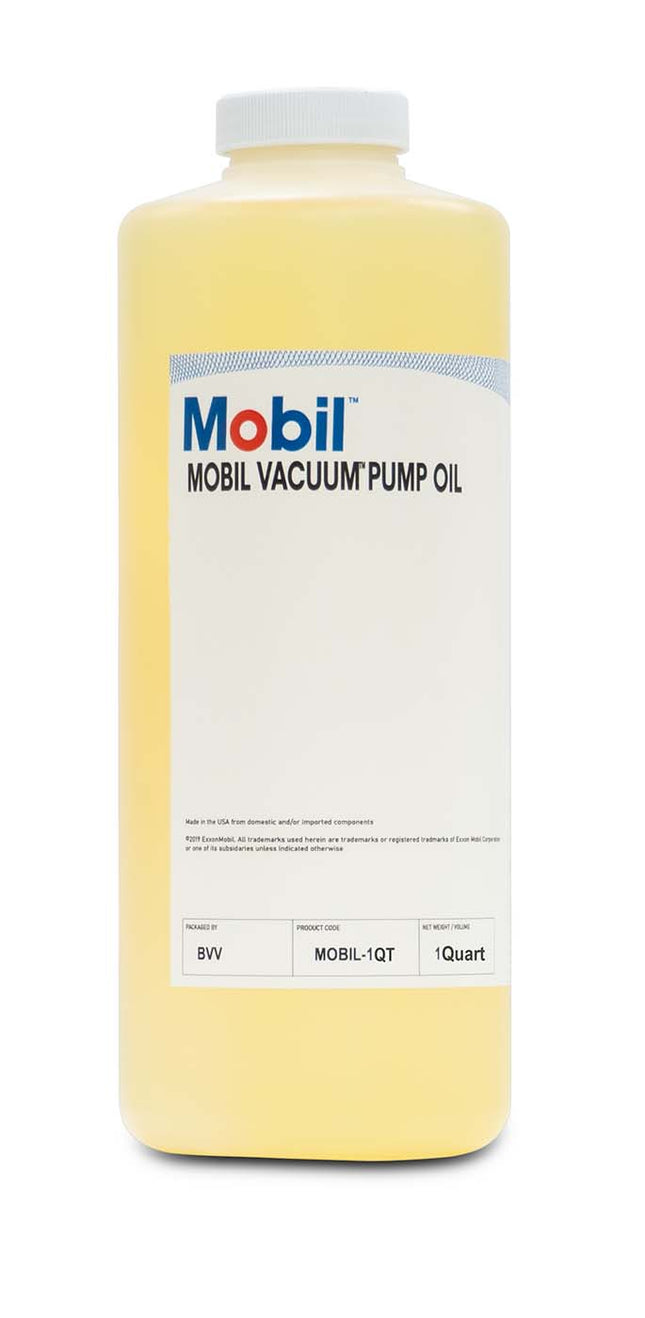
  • Mobil Vacuum Pump Oil SAE Grade 20, ISO Viscosity Grade 68 (Mist Free) Mobil Vacuum Pump Oil SAE Grade 20, ISO Viscosity Grade 68 (Mist Free)

    Mobil Mobil Vacuum Pump Oil SAE Grade 20, ISO Viscosity Grade 68 (Mist Free)

    BVV's Top Recommended Vacuum Pump Oil Ultra long Service Life! Mobil Vacuum™ Pump Oil is a special lubricant that is designed to be used for the lubrication of critical vacuum pumps.  It has a very low vapor pressure and can be used when extremely high vacuum is required. It provides excellent wear and corrosion protection for vacuum pump components and will give the following benefits in service: Long lubrication life No viscosity change in use No odor or vapor generated Wide use temperature range Pulls vacuum down to 1micron or less (*BVV internal testing) SAE Grade 20, ISO Viscosity Grade 68 Safety Data Sheet  Product Data Sheet BVV's Testimonial: "Mobil Vacuum Pump Oil has an insane service life and at BVV we have migrated over to Mobile for all of our laboratory pump applications.  We use Mobil oil for Edwards, Welch, and the BVV Pro Series pumps.  From vacuum purging and distillation we know we need good oil to get low vacuum and the fact that we can run continually for months on the same oil is amazing.  This oil has led to less pump rebuilds and extended service life of our in house pumps used in our labs.  Overall Mobil is the most reliable oil we have ever used at BVV." Water vapor is a common contaminant in vacuum systems and tends to condense inside the pumps.  Mobil Vacuum Pump Oil has good demulsibility (Ability to separate oil from water) Which aids water removal and prevents its return to metal surfaces to cause rust and corrosion.   This oil has a high degree of chemical stability enabling it to resist oxidation and the subsequent formation of sludge and deposits, an essential characteristic in all cases where continuous service is involved. This enables the oil to retain its original properties such as viscosity and demulsibility and so to prolong oil service life.  

    $48.62 - $409.76

  • Mineral Oil 7 White USP Mineral Oil 7 White USP

    Mineral Oil 7 White USP

    BVV Mineral Oil 7 White (USP/NF) Food Grade White mineral oil can be used for many applications.  Industrial, cosmetics, and food processing.  Our Mineral Oil can be used in direct skin and food contact.  Our oil is colorless, odorless and tasteless .  This mineral oil can act as a non-conductive coolant, thermal fluid, lubricant, release agent, binder, defoamer, protective coating or float, sealing and polishing agent, dust control agent, and more. It has applications in three main areas: The industrial sector Cosmetics Food processing While those three sectors use this element most widely, it has a variety of other applications. White mineral oil is a standard household item, but has also found uses in some niche markets. The substance is versatile and has many properties making it useful in a range of applications. Food Grade Certified to FDA 21 CFR 172.878  BVV Mineral Oil 7 White NF - COA   BVV Mineral Oil 7 White NF  - Spec Sheet  BVV Mineral Oil 7 White NF - SDS  What is a food grade mineral oil? To use mineral oil in food preparation, it must be classified as a food-grade mineral oil. This is vital for health and safety as well as legal compliance. The Food and Drug Administration (FDA) has established standards any 'food-grade' substance must meet for both direct additions to foods and uses that may result in incidental contact with food. The requirements for purity, amount used, and processes vary based on how one uses mineral oil. The United States Pharmacopoeia (USP) and the National Formulary (NF) first created guidelines for the use of mineral oil in manufacturing. The FDA requires that food-grade mineral oil meet USP XX test requirements for readily carbonizable substances, which USP released in 1980, and USP XVII test requirements for sulfur compounds. It also needs to meet the specifications in Volume 45 of the Journal of the Association of Official Analytical Chemists. Mineral oil used as a lubricant for food-processing machinery must be registered with NSF International, an independent global food safety organization, as lubricants for incidental food contact to be used in food-processing plants under the jurisdiction of the U.S. Department of Agriculture (USDA).  Other organizations oversee mineral oil use in other industries. For example, the Association of American Feed Control Officials (AAFCO) governs its use as a dust control agent for animal feeds. This classification is different, however, from food-grade mineral oil. Mineral oil used in the production of pharmaceuticals must be considered pharmaceutical-grade. The cosmetics and medical industry use highly refined mineral oil to avoid irritating the skin, eyes, and other body parts. Mineral oil chemical formula Mineral oils coming from crude petroleum oils vary in their make-up and contain complex structures. They include mixtures of straight and branched-chain paraffinic, naphthenic, and aromatic hydrocarbons. Alkanes, which are acyclic saturated hydrocarbons, are a significant component. They are made up of hydrogen and carbon atoms in a tree structure where all the carbon-to-carbon bonds are single. Mineral oil typically contains between 15 and 40 hydrocarbons. Mineral oil attributes Understanding the physical and chemical properties of mineral oil will help you to determine how best to use it in your industrial, food-processing, or other processes. These attributes may differ depending on the type of mineral used, how you use it, and whether any other substances get added to the oil. Mineral oil is a clear, colorless, and odorless liquid. This lack of strong physical qualities helps make it valuable in a variety of applications. Manufacturers can add it to products without changing their color, scent, flavor, or other crucial aspects. Mineral oil is also generally regarded as safe for human consumption, but in limited amounts. These features enable its use in the food processing and pharmaceutical sectors. Refined mineral oil does not clog pores, which allows for its use in cosmetics. Mineral oil has a density of 0.85 grams per milliliter (g/ml), and its specific gravity is 0.845 - 0.905. Its kinematic viscosity is greater than or equal to 38.1 millimeters squared per second (mm2/s). It is insoluble in water. The substance has an initial boiling point of 424.4 degrees Fahrenheit (°F) and a boiling range that extends up to 1189.4 °F. Its flash point is 275.00 °F closed cup and 380.00 °F open cup. It has an auto-ignition temperature of 500 °F, and its heat of combustion is 31.5 kilojoules per gram (kJ/g). As mentioned above, mineral oil has an NFPA flammability rating of one, a health rating of zero, and a reactivity rating of zero, meaning it is not a high fire risk. One of the most beneficial attributes of white mineral oil is its lubrication capabilities. This is the primary reason it has so many industrial, mechanical, food-processing, and medical applications. This property plays a crucial role in many manufacturing and food production processes. Its ability to transfer heat and its non-conductivity enable mineral oil's use as a coolant in a various electronic and mechanical equipment, as well as in industrial processes. Its resistance to water and other liquids, as well as insolubility in water, allow mineral oil to function as a sealant and binder in a variety of products. Safety Mineral oil is not regarded as an especially dangerous substance, but like all chemicals, users should handle it with appropriate care and precautions. A Material Safety Data Sheets (MSDS) for mineral oil may include the following information: Eyes: Mineral oil may cause eye irritation if it comes into contact with them. Flush eyes for several minutes and seek medical attention. Skin: It may cause skin irritation if prolonged contact with skin occurs. Remove contaminated clothing and wash affected areas or shower. Get medical attention if irritation persists. Inhalation: Inhaling mineral oil mist may irritate the respiratory tract and lungs. If this occurs, move to fresh air. Get medical attention if irritation persists. Ingestion: Ingestion can cause gastrointestinal irritation and result in nausea, vomiting, and diarrhea. If conscious, rinse mouth and drink water. Do not induce vomiting. If irritation persists, get medical attention. Mineral oil is combustible but has a low flammability rating. Having a National Fire Protection Association (NFPA) rating of one, means mineral oil must be preheated to ignite. Mineral oil has an instability rating of zero, which means it is stable even under fire conditions, and a health rating of zero, meaning it does not create any additional hazards beyond normal combustibility. You can extinguish a mineral oil fire using water fog, foam, dry chemical powder, or carbon dioxide (CO2) but should not use a water jet as this can spread the fire.If you encounter a spill of mineral oil, keep unnecessary personnel away, wear protective equipment, and absorb the spill with an absorbent material before cleaning the affected surface to remove any residue. Applications for mineral oil Mineral oil is inert, which makes it easy to use. Both consumers and businesses in a range of industries use mineral oil for a variety of applications. The three sectors named above primarily use mineral oil, but it appears across a wide range of industries and applications. Here are some of the most common uses in the industrial, personal care, and food production sectors. Use in cosmetics You can find mineral oil in many different cosmetics products including baby lotions, ointment, make-up remover, sunscreens, hair conditioner, and even tissues. Mineral oil is an ideal base material for many of these products because it is inert, colorless, and odorless. Mineral oils may appear in cosmetics as liquid oils or solid waxes. Some kinds of mineral oils are comedogenic, meaning they clog pores. Because of this, the mineral oil used in skincare and cosmetic products is noncomedogenic and does not clog pores. In fact, cosmetics companies often describe mineral oil as having moisturizing, protective, and cleansing properties for the skin. Additionally, these oils are used to give cosmetic products film-forming and water-repellent features as well as increased firmness. Use in food processing The food processing and preparation industries frequently use mineral oil. Sometimes, manufacturers add mineral oil directly to food. At other times, mineral oil assists in the production process but is not added to food directly. As mentioned earlier, all mineral oil that may come into contact with food must achieve classification as food-grade, and it must be used in accordance with all relevant laws and regulations. Food producers use mineral oil as a: Binder, release agent, or lubricant in bakery products, dehydrated foods, egg white solids, and in tablets or capsules for adding nutrients, flavoring, spices, or for use as a dietary supplement Release agent, sealing agent, and polishing agent in confectioners Protective coating on raw fruits and vegetables Defoamer in vinegar and beet sugar production Dough divider Dust control agent for grains. Binder, release agent, and lubricant in the manufacturing of yeast   Mineral oil plays a role in some of the non-food products used to prepare, serve, and eat food. In these situations, the oil should also be food-grade. When applied to cookware, bakeware, and cooking utensils, mineral oil prevents food from sticking to them. People rub it onto the surface of wooden cutting boards, bowls, and utensils to prevent them from absorbing water, which can damage them. Mineral oil also prevents wood-based cooking tools from absorbing food liquids and odors, which makes cleaning easier. It acts as a lubricant for food processing equipment as well. Industrial, mechanical, and electrical uses Mineral oil serves to assist with various industrial, mechanical, and electrical purposes. It is an effective lubricant for industrial equipment and often functions as a processing aid. It is an element that helps make up various substances used in industrial processes, such as lubricants, greases, dyes, polymers, and surface treatment products. Mineral oil also acts as a thermal fluid or non-conductive coolant in various electric components. In refrigerators and oil-based electric heaters, mineral oil is used as a cooling liquid. In switchgear, it serves as an insulator and a coolant to diffuse switching arcs. In the production of plastics, mineral oil is used to control the melt flow rate of finished polymer and act as a release agent. Automotive equipment frequently uses mineral oil, primarily as a component in hydraulic liquids in automotive suspension, as well as in lubricants in brake fluids and motor oil.

    $20.84 - $4,514.31

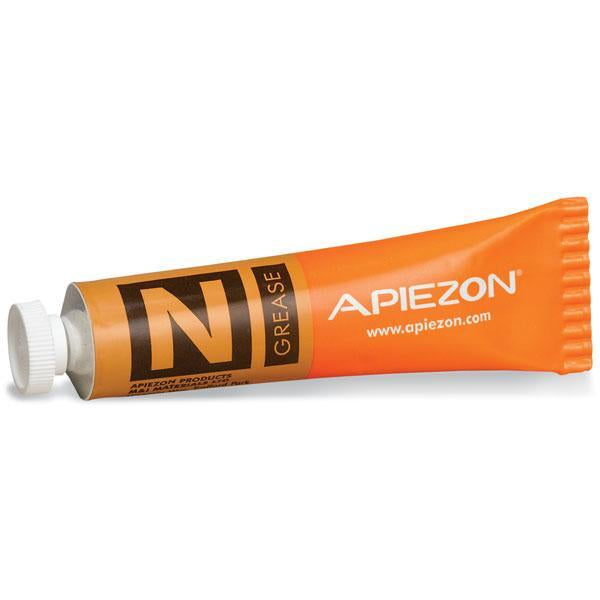
  • Apiezon N Cryogenic Vacuum Grease

    Apiezon Apiezon N Cryogenic Vacuum Grease

    Apiezon N Cryogenic Vacuum Grease Apiezon N Grease is silicone-free and widely recognized and recommended as the cryogenic vacuum grease of choice. This cryogenic grease is specially formulated to exhibit craze-free performance characteristics at low temperatures and withstand frequent cycling between cryogenic temperatures as low as -273°C and +30°C. Safety Data Sheet Thermal Conductance Sheet Technical Data Sheet Apiezon N Grease: Cryogenic High Vacuum Grease Properties Apiezon N Grease is a silicone- and halogen-free cryogenic high vacuum grease which: can withstand frequent cycling between cryogenic temperatures as low as -273°C and +30°C is craze-free at cryogenic temperatures has the ability to fill the micropores of adjoining surfaces, so improve thermal contact does not suffer from contamination problems associated with silicone based greases such as 'creep' or 'carry over' exhibits a vapour pressure of 6 x 10⁻¹⁰ Torr at 20°C has powerful 'gettering' action, meaning it absorbs potentially harmful grease and chemical impurities on metal and glass surfaces is easy to clean, use and remove as it is soluble in hydrocarbon solvents Please click the links for typical properties and vapour pressure graphs of Apiezon N Grease. Cryogenic Applications of Apiezon N Grease Cryogenic Vacuum Seal Apiezon N Grease exhibits extremely low vapour pressures at ambient temperatures, 6 x 10⁻¹⁰ torr at 20°C, which are further improved by reductions in temperature to the cryogenic region. Its ability to resist cracking at extremely low temperatures makes it particularly useful as a vacuum seal for cryosystems. Apiezon N Grease can be relied upon to form and maintain a vacuum seal for long periods, even when subjected to frequent thermal cycling, withstanding cycling between temperatures as extreme as -273°C and +30°C. Its unique properties mean N Grease is widely used to create a reliable vacuum and pressure-tight seals in, amongst others: vacuum lines; Schlenk lines; cold traps; liquid helium hoses and electron microscopes. Thermal Coupling Apiezon N Grease has a proven track record in improving thermal contact under cryogenic conditions. This is important for the coupling of cooling systems to superconducting magnets, cryostats, temperature sensors or any system that is required to reach cryogenic temperatures as quickly as possible. Low levels of magnetic susceptibility also make it ideal for superconductor manufacturing applications. Sensor Mounting Apiezon N Grease is ideal for use in cryogenic sensor mounting. It is pliable at room temperature and solidifies at cryogenic temperatures to allow for easy mounting and removal of sensors without causing damage. Sample Mounting Important in low-temperature testing of semiconductor chips, laser diodes and crystals, etc., Apiezon N Grease is used to improve thermal contact between the sample boat and cold finger of a cryotstat. This cryogenic thermal contact grease ensures that samples are at the lowest possible temperatures to improve test sensitivities. Ambient Temperature Applications - Added Cushioning Apiezon N Grease can be used in a variety of applications at ambient temperatures such as when added cushioning is required. N Grease has a special additive which gives it a tenacious, rubbery consistency which absorbs vibrations in equipment, making N Grease invaluable in fragile glass to glass joints, like burette taps, which continually risk fracture.

    $379.20

  • Lidocaine Hydrochloride Powder USP/DMF Grade Lidocaine Hydrochloride Powder USP/DMF Grade

    Lidocaine Hydrochloride Powder USP/DMF Grade

    Lidocaine ≥97.5% Complies with USP Testing Specifications Lidocaine Hydrochloride is a white crystalline powder widely used as a local anesthetic and antiarrhythmic agent. With rapid onset and intermediate duration of action, it is commonly employed in topical formulations.  Its widely used in medical, dental, and veterinary applications. Specifications: Assay: 97.5% – 102.5% Melting Range: 66°C – 69°C Water Content (H₂O): 5.0% – 7.0% Residue After Ignition: ≤ 0.1% Sulfate (SO₄): Passes Test Heavy Metals: ≤ 0.002% This pharmaceutical-grade compound is manufactured under strict quality control standards to ensure consistency, purity, and compliance with international regulatory requirements. Applications: Local anesthesia for minor surgical procedures Pain relief in topical formulations Antiarrhythmic treatment for certain heart conditions Storage: Store in a cool, dry place, protected from light and moisture. Lidocaine Hydrochloride Safety Data Sheet (SDS) Lidocaine Hydrochloride Certificate of Analysis (COA) Chemical Formula: C14H23CIN2O Molecular Weight: 270.80 g/mol CAS Registry Number: 6108-05-0 Appearance White Crystalline Powder Odor: Characteristic Density 0.984 g/mL at 25 °C Boiling Point: 159-160 °C at 2 mmHg Solubility in water: Highly Soluble GHS Pictograms:   GHS Signal Word: Danger GHS Hazard Statements: H301, H302 H315, H319, H334, H335, H412 GHS Precautionary Statements P233, P260, P261, P264, P264+P265, P270, P271, P273, P280, P284, P301+P317, P302+P352, P304+P340, P305+P351+P338, P319, P321, P330, P332+P317, P337+P317, P342+P316, P362+P364, P403, P403+P233, P405, P501 UN Identification Number: None Proper Shipping Name: None Transport Hazard Class: None Packing Group: None DOT Placard: None

    $25.00 - $902.86

  • Benzocaine Powder 99% Benzocaine Powder 99%

    Benzocaine Powder 99%

    Benzocaine 99% Complies with USP Testing Specifications Our high purity benzocaine is greater than ≥99% purity. It standard testing is meets USP DMF grade It's widely used across various industries, including pharmaceuticals, cosmetics, and research. * USP DMF GRADE : refers to materials, specifically raw materials and active pharmaceutical ingredients (APIs), that meet the quality standards established by the United States Pharmacopeia (USP) and are used in the production of pharmaceutical products. Applications: Pharmaceuticals: Core ingredient in formulating topical anesthetics and pain relief solutions. Cosmetic Manufacturing: Used in skin-soothing and numbing products. Research & Development: Suitable for experimental formulations and chemical studies. Handling and Storage: Store in a cool, dry place away from direct sunlight. Ensure the container is tightly sealed after use. Important Notice: This product is intended for industrial and professional use only. Misuse or unauthorized handling may result in legal or health consequences. Benzocaine Powder 99% Certificate of Analysis (COA) Benzocaine Powder 99% Safety Data Sheet (SDS) Chemical Formula: C9H11NO2 Molecular Weight: 165.19 g/mol CAS Registry Number: 94-09-7 Appearance White Crystalline Powder Odor: Odorless Density 1.17 g/cm3 Boiling Point: 591.3°F (310.7°C) Solubility in water: Slightly Soluble GHS Pictograms: GHS Signal Word: Danger GHS Hazard Statements: H317, H370, H411 GHS Precautionary Statements P260, P261,P264, P270, P272, P273, P280, P302+P352, P308+P316, P333+P317, P362+P364, P391, P405, P501 UN Identification Number: None Proper Shipping Name: None Transport Hazard Class: None Packing Group: None DOT Placard: None

    $25.00 - $902.86

  • Duratherm G Thermal Fluid - High Temp Rated 260°C (500°F) Duratherm G Thermal Fluid - High Temp Rated 260°C (500°F)

    Duratherm Duratherm G Thermal Fluid - High Temp Rated 260°C (500°F)

    DURATHERM G Duratherm G is a glycol based thermal fluid rated to 260°C (500°F), a proprietary additive system that not only helps the fluid last longer and run cleaner, it makes it the ideal choice for extreme oxidation environments including demanding, open bath applications. 260°C (500°F) maximum operating temperature High flash point of 249°C (480°F) Ideal for use in extreme oxidation environments like open baths Polyalkylene glycol based thermal fluid with enhanced performance TEMPERATURE RATINGS Max Bulk/Use Temp 260°C Max Film Temp. 288°C Pour Point ASTM D97 -40°C SAFETY DATA Flash Point ASTM D92 249°C Fire Point ASTM D92 263°C Autoignition ASTM E-659-78 366°C THERMAL PROPERTIES Thermal Expansion Coefficient 0.0679 %/°C Thermal Conductivity W/m·K 38°C 0.182 100°C 0.175 204°C 0.165 204°C 0.164 260°C 0.159 Heat Capacity kJ/kg·K 38°C 1.976 100°C 2.043 204°C 2.153 204°C 2.152 260°C 2.211 PHYSICAL PROPERTIES Viscosity ASTM D445 cSt 40°C 42.16 100°C 7.43 204°C 1.88 204°C 1.87 260°C 1.23 Density ASTM D1298 kg/l 38°C 0.92 100°C 0.90 204°C 0.87 204°C 0.87 260°C 0.86 Vapor Pressure ASTM D2879 kPa 38°C 0.28 100°C 0.88 204°C 2.40 204°C 2.41 260°C 3.52 Distillation Range ASTM D2887 10% 368°C 90% 514°C Specific Gravity @ 16°C 0.963 Note: The values quoted in the table above are typical of normal production.They do not constitute a specification

    $104.18 - $3,403.09

  • Huber DW-Therm M90.200.02, Heat transfer fluid -90 to 170 °

    Huber Huber DW-Therm M90.200.02, Heat transfer fluid -90 to 170 °

    Huber DW-Therm M90.200.02, Heat transfer fluid -90 to 170 ° DW-Therm is a mixture of isomeric triethoxysilanes and has been developed for hydraulically sealed systems.   We recommend the heat transfer fluid DW-Therm for Unistats. DWTherm has a high specific heat capacity and so contributes towards an optimum heat transfer. In addition, DW-Therm covers a large temperature range, and has an impressively long service life.   Advantages: Valid only for Unistats Size 10L Broad working range from -90 °C to 200 °C (hydraulically sealed systems) excellent thermooxidative stability at high temperatures Low viscosity at low temperatures Low volatility and pleasant odour Easy handling (no creeping like silicone oils) Good compatibility with silicone oils Insolubile in water and good environmental compability   Safety Data Sheet     Properties Working temperature °C -90 to 200 Flash Point °C 101 Fire Point °C 112 Viscosity mm2/s (kinematic at 25 °C) 2 Density g/cm3(at 20 °C) 0,879 Pour Point °C -137 Ignition temperature °C 265 Colour yellowish, clear Thermal expansion coefficient 10-5/K 96,98 Heat conductivity W/(m·K) at 25 °C 0,116 Material incompatibility copper, aluminum,non-ferrous metals

    $3,375.31

  • Formaldehyde 37% Lab Grade Formaldehyde 37% Lab Grade

    Formaldehyde 37% Lab Grade

    Formaldehyde 37% Stabilized with 11% Methanol | Laboratory Grade Our Formaldehyde is a clear colorless liquid with a strong odor.  Formaldehyde is used in a variety of industrial applications.  It can be used as a preservative, disinfectant, and as an additive in production of adhesives, plastics, and textiles.  Formaldehyde 37% M 11% Certificate of Analysis (COA) Formaldehyde 37% M 11% Safety Data Sheet (SDS) Chemical Formula: CH2O Molecular Weight: 30.026 g/mol   CAS Registry Number: 50-00-0, 67-56-1  Appearance: Colorless Liquid Odor: Pungent Density 1.08 g/ml Boiling Point:  122.58 °F (50.32 °C) estimated  Solubility in water: Completely Soluble GHS Pictograms:   GHS Signal Word: Danger GHS Hazard Statements: H226, H301 + H311, H314, H317,H330, H335, H341, H350, H370, H401 GHS Precautionary Statements P201, P202, P210, P233, P240, P241, P242, P243, P260, P264, P270, P271, P272, P273, P280, P284, P301 + P310 + P330, P301 + P330 + P331, P303 + P361 + P353, P304 + P340 + P310, P305 + P351 + P338 + P310, P308 + P313, P361 + P364,P370 + P378, P403 + P233, P403 + P235, P405, P501  UN Identification Number: 2209 Proper Shipping Name: Formaldehyde Solution Transport Hazard Class: 8 Packing Group: III DOT Placard:

    $25.00 - $694.51

  • Deionized Water (DI) - Ultrapure Water - Type 1 Deionized Water (DI) - Ultrapure Water - Type 1

    Deionized Water (DI) - Ultrapure Water - Type 1

    Deionized Water Ultrapure Water - Type 1 Deionized Water Type 1, also known as ultrapure water, is water that has been processed through ion-exchange methods to remove nearly all of its dissolved ions, such as minerals, salts, and other charged particles. This ultra-purification process results in water with a very low level of conductivity, making it ideal for high-precision applications in laboratories, pharmaceuticals, electronics manufacturing, and scientific research. As defined by the ASTM there are only 4 types of Pure Water. Type 1 being the most pure. Type 1 deionized water is the highest grade of deionized water, ensuring a high level of purity, typically with resistivity values of 18.2 MΩ·cm at 25°C. It is free from contaminants like bacteria, organic material, and particulate matter, making it suitable for critical tasks like reagent preparation, tissue culture, analytical procedures, and cleaning of sensitive equipment. Due to its lack of ions and impurities, Deionized Water Type 1 is non-reactive, ensuring it does not interfere with experiments or sensitive processes, which is essential in fields requiring the highest level of water purity. *Packaged in FDA Compliant HDPE Bottles. Each order is poured directly from the factory drum ensuring you get the freshest stock upon delivery.  Deoinized Water Certificate of Analysis COA Deionized Water Safety Data Sheet SDS  

    $26.39 - $645.89

  • Sodium Metabisulfite NSF-Certified Sodium Metabisulfite NSF-Certified

    Sodium Metabisulfite NSF-Certified

    Sodium Metabisulfite has many major and niche uses. It is widely used for preserving food and beverages, and as a laboratory reagent. It is a white crystalline powder.   Our Sodium Metabisulfite is NSF® Certified.  NSF-certified means a product was independently verified for safety, sanitation, and quality by NSF. NSF certification is recognized by health departments, government agencies, and industry associations.  Sodium Metabisulfite NSF Certified - Certificate of Analysis (COA) Sodium Metabisulfite NSF Certified - Safety Data Sheet (SDS)  

    $22.22 - $84.73

  • Mercury 99.9995%

    Mercury 99.9995%

    Our mercury is virgin triple distilled.  Its purity is 99.9995%.  This product ships as Hazardous material in any quantity, even small vial is required to ship as a regulated hazardous material and carries all the additional handling fees associated with this type of shipment.   ACS Grade MCT Grade (crystal growth) Dental Grade Reagent Grade Instrument Grade Made in USA Product Shipping and packaging detail. 1lb size ships in a 2oz HDPE bottle 5LB size ships in a 8oz bottle not entirely filled 10lb ships as 2x 5oz bottles.  Mercury Certificate of Analysis COA Mercury Safety Data Sheet SDS

    $104.18 - $1,916.84

  • Huber SilOil M20.195/235.20, Heat transfer fluid -20 to 235 °C

    Huber Huber SilOil M20.195/235.20, Heat transfer fluid -20 to 235 °C

    Huber SilOil M20.195/235.20, Heat transfer fluid -20 to 235 °C SilOil M20.195/235.20 is a low-viscosity silicone fluid which, as a result of its special property profile, is particularly suitable for use as a cold and heat transfer medium in cryostats, thermostats and heat transfer installations.   SilOil M20.195/235.20 can be used in the range from -20 °C to 195 °C (for open systems) and to 235 °C in externally sealed systems (Unistats). It should be borne in mind that, at high temperatures, SilOil M20.195/235.20 can be chemically altered by oxidising media, such as air, or substances with a catalytic effect, such as acids, lyes and various metal compounds. An increase in viscosity, and possibly even gelling of the fluid owing to crosslinking reactions, must be expected in the presence of oxidising agents, while contact with products having a catalytic effect usually induces a process of depolymerisation, resulting in a drop in viscosity. Advantages:  Virtually insolubile in water Non-corrosive Low setting points and vapour pressures high flash points low toxicity odourless no coking tendency under thermal stress high thermal stability resistance to ageing   Safety Data Sheet    Heat transfer fluid M20.195/235.20 Working temperature °C -20 to 195/235 open/closed systems: -20°C…195°C Unistats (only closed): -20°C…235°C Material: silicon oil Viscosity at 25°C: 20 mm²/s Colour colourless, clear Material incompatibility Silicone rubber

    $1,458.47 - $2,597.46

  • Duratherm XLT-2 Thermal Fluid Duratherm XLT-2 Thermal Fluid

    Duratherm Duratherm XLT-2 Thermal Fluid

    DURATHERM XLT-2 Engineered for long-term operation in heat transfer applications requiring precise temperature control ranging from -84°C (-120°F) up to 177°C (350°F). Ideal for near-cryogenic applications Duratherm XLT-2’s economical cost and wide operating temperature also makes it well-suited for heating and cooling applications found in the food processing, pharmaceutical, chemical and botanical extraction industries. Maximum temperature: 177ºC/350°F Minimum temperature: -84ºC/-120°F Flash point 63ºC/145°F Extreme low-temperature capabilities Stable and non-corrosive Properties remain consistent over temperature range Includes free fluid analysis and tech support Standard Metric TEMPERATURE RATINGS Max Bulk/Use Temp 177°C Max Film Temp. 204°C Pour Point ASTM D97 -90°C SAFETY DATA Flash Point ASTM D92 63°C Fire Point ASTM D92 70°C Autoignition ASTM E-659-78 275°C THERMAL PROPERTIES Thermal Expansion Coefficient Thermal Conductivity W/m·K -40°C 0.119 -18°C 0.116 38°C 0.107 Heat Capacity kJ/kg·K -40°C 1.863 -18°C 1.947 38°C 2.169 PHYSICAL PROPERTIES Viscosity ASTM D445 cSt -40°C 8.68 -18°C 3.78 Density ASTM D1298 kg/l -40°C 0.81 -18°C 0.80 38°C 0.76 Vapor Pressure ASTM D2879 kPa -40°C 0.00 -18°C 0.00 38°C 0.22 Distillation Range ASTM D2887 10% -18°C 90% -18°C Note: The values quoted in the table above are typical of normal production.They do not constitute a specification.

    $104.18 - $2,708.58

  • Huber SilOil M60.115/200.05, Heat transfer fluid -60 to 200 °C

    Huber Huber SilOil M60.115/200.05, Heat transfer fluid -60 to 200 °C

    Huber SilOil M60.115/200.05, Heat transfer fluid -60 to 200 °C SilOil M60.115/200.05 is a low-viscosity silicone fluid which, as a result of its special property profile, is particularly suitable for use as a cold and heat transfer medium in cryostats, thermostats and heat transfer installations.   SilOil M60.115/200.05 can be used in the range from -60 °C to 115 °C (for open systems) and to 200 °C in externally sealed systems (Unistats). It should be borne in mind that, at high temperatures, SilOil M60.115/200.05 can be chemically altered by oxidising media, such as air, or substances with a catalytic effect, such as acids, lyes and various metal compounds. An increase in viscosity, and possibly even gelling of the fluid owing to crosslinking reactions, must be expected in the presence of oxidising agents, while contact with products having a catalytic effect usually induces a process of depolymerisation, resulting in a drop in viscosity Advantages: virtually insolubile in water non-corrosive low setting points and vapour pressures high flash points low toxicit odourless no coking tendency under thermal stress high thermal stability resistance to ageing chlorine free   Safety Data Sheet   Heat transfer fluid M60.115/200.05 Working temperature °C 60 to 115/200 open/closed systems: -60°C…115°C Unistats (only closed): -60°C…200°C Material: silicon oil Viscosity at 25°C: 5 mm²/s Colour colourless, clear Material incompatibility Silicone rubber

    $1,458.47 - $2,597.46

  • Welch DuoSeal Vacuum Pump Oil, Gallon 1407K-15

    Welch Vacuum - Gardner Denver Welch DuoSeal Vacuum Pump Oil, Gallon 1407K-15

    Welch DuoSeal Vacuum Pump Oil, Gallon 1407K-15 ***Note: This item has a possible 1-2 week lead time depending on stock availability*** Welch fractionated oil for DuoSeal belt-driven pumps to ensure the highest vacuum performance. DuoSeal Oil performs to rigid standards for vapor pressure, vacuum level stability, and viscosity -the lubrication that helps enable renowned DuoSeal pump durability.

    $145.85

  • Huber SilOil M80.055.03, Heat transfer fluid -80 to 55 °C

    Huber Huber SilOil M80.055.03, Heat transfer fluid -80 to 55 °C

    Huber SilOil M80.055.03, Heat transfer fluid -80 to 55 °C SilOil M80.055.03 is a low-viscosity silicone fluid which, as a result of its special property profile, is particularly suitable for use as a cold and heat transfer medium in cryostats, thermostats and heat transfer installations. The fluid can be used in the range from -80  °C to 55  °C. It should be borne in mind that, at high temperatures, SilOil M80.055.03 can be chemically altered by oxidising media, such as air, or substances with a catalytic effect, such as acids, lyes and various metal compounds. An increase in viscosity, and possibly even gelling of the fluid owing to crosslinking reactions, must be expected in the presence of oxidising agents, while contact with products having a catalytic effect usually induces a process of depolymerisation, resulting in a drop in viscosity   Advantages: virtually insolubile in water non-corrosive low setting points and vapour pressures high flash points low toxicity odourless no coking tendency under thermal stress high thermal stability resistance to ageing chlorine free   Safety Data Sheet      Heat transfer fluid M80.055.03 Working temperature °C -80 to 55 open/closed systems: -80°C…55°C Material: silicon oil Viscosity at 25°C: 3 mm²/s Colour colourless, clear Material incompatibility Silicone rubber

    $1,555.70 - $2,708.58

  • Inland FF-10 Flushing Fluid Inland FF-10 Flushing Fluid

    Inland Vacuum Inland FF-10 Flushing Fluid

    Inland FF-10 Flushing Fluid Inland FF-10 is a solvent free hydrocarbon flushing fluid designed to be used as part of a preventive maintenance program. Periodic use of FF-10 will enable the user to remove contaminants and particulates from within all areas of the pump without the worry of contaminating the pump with an expensive solvent Specifications FF-10 Vapor Pressure at 25ºC (torr) 2x10⁻⁴ Viscosity at 40ºC (cSt) 28 Viscosity at 100ºC (cSt) 4.5 Flash Point (ºC) 199 Fire Point (ºC) 221 Density at 25ºC (g/ml) 0.85   Inland FF-10 Flushing Fluid Safety Data Sheet SDS

    $19.45 - $37.50

  • Julabo C2 Thermal Bath Fluid - 10 Liters

    Julabo Julabo C2 Thermal Bath Fluid - 10 Liters

    Julabo C2 Thermal Bath Fluid JULABO Thermal bath fluids are ideally suited for all of your temperature control applications and guarantee safe and reliable operation. Choosing the proper bath fluid is critical for best results in temperature control. Viscosity, oxidation characteristics and heat transfer of Thermal fluids are specifically matched with each JULABO temperature control unit.   C2 Thermal Bath Fluid Product Data Sheet C2 Thermal Bath Fluid SDS     JULABO Thermal bath fluids have been carefully selected and are optimized for maximum performance with JULABO instruments. Benefits Low toxicity Low viscosity High stability Minimum odor Good heat conductivity Low corrosion tendency Wide temperature ranges   Technical Data Order no. 10 liters 8891400 Working temperature (°C) -90...+60 Flash point (°C) > +75 Fire point (°C) > +430 Viscosity (kinematic at 20 °C in mm²/s) 2 Density (at 20 °C in g/cm³) 0.873 Pour point (°C) -120 Boiling point (°C) 229 Ignition temperature (°C) 430 Color clear

    $2,316.88

  • Oxone PS-16 Monopersulfate (Non-Chlorine Shock) Oxone PS-16 Monopersulfate (Non-Chlorine Shock)

    Oxone PS-16 Monopersulfate (Non-Chlorine Shock)

    OxoneTM PS-16 Monopersulfate | Non-Chlorine Shock Oxone PS-16 Compound is used as an active ingredient in disinfectant formulations (not registered as a biocide in USA), and as an oxidizing agent in other formulations, such as pool & spa non-chlorine shock oxidizers, denture cleansers and laundry bleaches. The grade is also used as a wet strength resin paper repulping aid, metal surface treatment agent, selective oxidizer in chemical synthesis, wool shrink-proofing treatment, waste water treatment and odor control agent. Applications: Water Treatment: It can be used to treat water, including drinking water and pool & spa water, due to its ability to kill bacteria and neutralize contaminants. Cleaning and Sanitization: It's used in various industrial cleaning products, especially for disinfecting surfaces or purifying air and water. Oxidation Reactions: In chemical processes, Oxone PS-16 can be used as a strong oxidizing agent to break down pollutants or aid in chemical synthesis. Active Ingredients: Potassium Peroxymonosulfate (KHSO₅) - 45% Other Ingredients - 55% Total -100% Bag Dimensions: 21"x14"x4" (55.1lbs)  Chemical Formula: KHSO₅·KHSO₄·K₂SO₄ Molecular Weight: 614.8 g/mol CAS Registry Number: 70693-62-8, 7646-93-7, 7727-21-1 Appearance White Granules Odor: Odorless Density 2.35 g/cm3 (68 °F / 20 °C) Boiling Point: None Solubility in water: Highly and Readily Soluble at 297–357 g/L at 22°C (72°F) GHS Pictograms:   GHS Signal Word: Danger GHS Hazard Statements: H302, H314 GHS Precautionary Statements P260, P264, P270, P280, P301 + P312 + P330, P301 + P330 + P331, P303 + P361 + P353, P304 + P340 + P310, P305 + P351 + P338 + P310, P363, P405, P501  UN Identification Number: 3260 Proper Shipping Name: Corrosive solid, acidic, inorganic, n.o.s. (Monopersulfate Compound)  Transport Hazard Class: 8 Packing Group: II DOT Placard: Oxone PS-16 Monopersulfate (SDS) Oxone PS-16 Monopersulfate Certificate of Analysis (COA)

    $11.11 - $383.37

  • Huber SilOil M40.165/220.10, Heat transfer fluid -40 to 220 °C

    Huber Huber SilOil M40.165/220.10, Heat transfer fluid -40 to 220 °C

    Huber SilOil M40.165/220.10, Heat transfer fluid -40 to 220 °C SilOil M40.165/220.10 is a low-viscosity silicone fluid which, as a result of its special property profile, is particularly suitable for use as a cold and heat transfer medium in cryostats, thermostats and heat transfer installations. SilOil M40.165/220.10 can be used in the range from -40 °C to 165 °C and to 220 °C in externally sealed systems (Unistats). It should be borne in mind that, at high temperatures, SilOil M40.165/220.10 can be chemically altered by oxidising media, such as air, or substances with a catalytic effect, such as acids, lyes and various metal compounds. An increase in viscosity, and possibly even gelling of the fluid owing to crosslinking reactions, must be expected in the presence of oxidising agents, while contact with products having a catalytic effect usually induces a process of depolymerisation, resulting in a drop in viscosity. Advantages: Virtually insolubile in water Non-corrosive Low setting points and vapour pressures High flash points Low toxicity No coking tendency under thermal stress High thermal stability Resistance to ageing Chlorine free   Safety Data Sheet   Heat transfer fluid M20.195/235.20 Working temperature °C -40 to165/220 open/closed systems: -40°C - 165°C Unistats (only closed): -40°C - 220°C Material: silicon oil Viscosity at 25°C: 10 mm²/s Colour colourless, clear Material incompatibility Silicone rubber

    $1,458.47 - $2,597.46

  • Huber DW-Therm HT P20.340.32 Heat transfer fluid 20 to 340 °C

    Huber Huber DW-Therm HT P20.340.32 Heat transfer fluid 20 to 340 °C

    Huber DW-Therm HT 20 to 340 °C Heat transfer fluid Huber heat transfer fluids are recommended for many temperature control applications because they have the best possible thermodynamic and environmental characteristics. Safe reliable operation relies on compliance with safety standards to ensure optimal results. DW-Therm HT is a mixture of partially hydrogenated naphthalenes. It is especially suited for high temperature applications using hydraulically sealed thermostats. Please note: Valid only for Unistats   Safety Data sheet    Advantage: broad working range from 20 °C up to 340 °C (hydraulically sealed systems) Long lifetime at high temperatures under inert atmosphere: 3 -4 years Good thermal properties for heat transfer High thermo-oxiation stability    Properties Working temperature°C 20 to 340 Flash Point °C 190 Flash Point °C approx. 218 Viscosity mm2/s (kinematic at 25 °C) 32 Density g/cm3,(at 20 °C) 1,043 Pour Point °C -30 Ignition temperature °C 385 Colour orange, clear Thermal expansion coefficient 10-5/K not specified Heat conductivity W/(m·K) at 30 °C 0,130 Material incompatibility not specified

    $1,354.29 - $2,347.44

  • Inland 70 Ultra Vacuum Pump Oil (Edwards Ultragrade 70) Inland 70 Ultra Vacuum Pump Oil (Edwards Ultragrade 70)

    Inland Vacuum Inland 70 Ultra Vacuum Pump Oil (Edwards Ultragrade 70)

    Inland 70 Ultra Vacuum Pump Oil This is oil is a direct replacement for Edwards Ultragrade 70 oil. Specifications Inland 70 Ultra Vapor Pressure @25°C 1x10^-7 torr Viscosity @ 40°C 72 cSt Pour Point: -10°C Flash Point: 249°C Density: 0.86 g/ml Color: Clear   Inland 70 Ultra Safety Data Sheet PDF

    $23.61 - $48.62

  • Huber MinOil P20.190.40, Heat transfer fluid 20 to 190 °C

    Huber Huber MinOil P20.190.40, Heat transfer fluid 20 to 190 °C

    Huber MinOil P20.190.40, Heat transfer fluid 20 to 190 °C P20.190.40 is a high quality mineral oil based heat transfer fluid. It meets the technical safety requirements and tests according to DIN 4754 as well as the recommendations of VDI 3033 (Construction, operation and maintenance of heat transfer systems). Advantages: very good oxidation stability high thermal stability good viscosity-temperature characteristics low tendency to coke extended oil change interval Safety Data Sheet    Properties Working temperature °C  20°C…190°C Flash Point °C 190 Fire Point °C not Specified Viscosity mm2/s (kinematic at 25 °C) 40 Density g/cm3 0,86 Pour Point °C > 300 Ignition temperature °C > 300 Color light yellow Thermal expansion coefficient 10-5/K not Specified Heat conductivity W/(m·K) at 25 °C 0,135 Material incompatibility Not Specified

    $757.01 - $2,236.32

  • Huber SilOil M80.100/250.03, Heat transfer fluid -80 to 250°C

    Huber Huber SilOil M80.100/250.03, Heat transfer fluid -80 to 250°C

     Huber SilOil M80.100/250.03, Heat transfer fluid -80 to 250°C SilOil M80.100/250.03 is a low-viscosity silicone fluid which, as a result of its special property profile, is particularly suitable for use as a cold and heat transfer medium in cryostats, thermostats and heat transfer installations. SilOil M80.100/250.03 can be used in the range from -80 °C to 100 °C (for open systems) and to 250 °C with externally sealed systems (Unistats). It should be borne in mind that, at high temperatures, SilOil M80.100/250.03 can be chemically altered by oxidizing media, such as air, or substances with a catalytic effect, such as acids, lyes and various metal compounds. An increase in viscosity, and possibly even gelling of the fluid owing to crosslinking reactions, must be expected in the presence of oxidising agents, while contact with products having a catalytic effect usually induces a process of depolymerization, resulting in a drop in viscosity   Safety Data Sheet    Advantage: virtually insoluble in water non-corrosive low setting points and vapor pressures high flash points low toxicity odorless no coking tendency under thermal stress high thermal stability resistance to ageing chlorine free   Heat transfer fluid M80.100/250.03 Working temperature °C -80 to 100/250 open/closed systems: -80°C - 100°C Unistats (only closed): -80°C - 250°C Material: silicon oil Viscosity at 25°C: 7 mm²/s Color colorless, clear Material incompatibility Silicone rubber

    $3,055.84 - $5,847.76

  • Oxone Monopersulfate Compound REDI-DRI® free flowing Oxone Monopersulfate Compound REDI-DRI® free flowing

    Oxone Monopersulfate Compound REDI-DRI® free flowing

    Oxone Monopersulfate Compound REDI-DRI® is a potassium triple salt mainly used as a stable, easy to handle and nontoxic oxidant.  REDI-DRI® is a process that allows the salts to be a free flowing material for months of storage.  This eliminates clumping and the need for complicated procedures to keep your salts free-flowing. When the salts are kept dry this makes your measurements easier and more accurate.  The material is easier-to-handle and will help avoid drying your salts in an oven or desiccator or breaking them apart by hand. Oxone Monopersulfate Compound REDI-DRI Certificate of Analysis COA  

    $62.51 - $902.86

  • Julabo C5 Thermal Bath Fluid - 10 Liters

    Julabo Julabo C5 Thermal Bath Fluid - 10 Liters

    Julabo C5 Thermal Bath Fluid JULABO Thermal bath fluids are ideally suited for all of your temperature control applications and guarantee safe and reliable operation. Choosing the proper bath fluid is critical for best results in temperature control. Viscosity, oxidation characteristics and heat transfer of Thermal fluids are specifically matched with each JULABO temperature control unit. C5 Thermal Bath Fluid SDS C5 Thermal Bath Fluid Product Data Sheet JULABO Thermal bath fluids have been carefully selected and are optimized for maximum performance with JULABO instruments. Benefits Low toxicity Low viscosity High stability Minimum odor Good heat conductivity Low corrosion tendency Wide temperature ranges Technical Data Order no. 10 liters 8891402 Working temperature (°C) -60...+110 Flash point (°C) > +135 Fire point (°C) > +443 Viscosity (kinematic at 20 °C in mm²/s) 5 Density (at 20 °C in g/cm³) 0.918 Pour point (°C) -100 Boiling point (°C) >205 Ignition temperature (°C) 443 Color clear

    $2,936.38

  • Julabo Thermal C10

    Julabo Julabo Thermal C10

    Julabo Thermal C10  JULABO Thermal bath fluids are ideally suited for all of your temperature control applications and guarantee safe and reliable operation. Choosing the proper bath fluid is critical for the best temperature control results. Viscosity, oxidation characteristics and heat transfer of Thermal fluids are matched specifically with each JULABO temperature control unit. JULABO Thermal bath fluids have been carefully selected and optimized for maximum performance with JULABO instruments. Thermal C10 is a clear 10 cSt silicone fluid rated for use in open bath JULABO units with a working temperature range of -20…+160 °C. Care should be taken to observe atmospheric moisture condensation in the bath fluid with prolonged sub-ambient operation in humid environments. Water and silicone fluids are not miscible. Operation at the maximum temperature for heating applications will result in vapor formation. Vapor formation at elevated temperatures is a normal occurrence for silicone fluids. The upper temperature limit of the fluid is lower than the fluid flashpoint.    

    $2,216.87 - $4,403.18

  • Huber SynOil M10.120.08, Heat transfer fluid -10 to 120°C

    Huber Huber SynOil M10.120.08, Heat transfer fluid -10 to 120°C

    Huber SynOil M10.120.08, Heat transfer fluid -10 to 120°C SynOil is a low viscosity Poly-alpha-olefin based fluid with a strongly enhanced low temperature characteristic. SynOil has excellent thermal stability as well as a very low tendency to evaporate. The fluid has a high viscosity index, which enables the product to flow, even at low temperatures, and not to build a disruptive film at high temperatures.   Safety Data Sheet    Advantages: High thermal stability Low evaporation rate Low tendency to evaporate Transparent, clear     Heat transfer fluid M10.120.08 Working temperature °C -10 to 120 Flash Point °C 145 Fire Point °C 176 Viscosity mm2/s (kinematic at 25 °C) 8 Density g/cm3 (at 20 °C) 0,8 Pour Point °C -66 Ignition temperature °C not specified Colour colourless, clear Thermal expansion coefficient 10-5/K not specified Heat conductivity W/(m·K) at 25 °C not specified Material incompatibility Natural Rubber®Silicone Rubber®

    $1,027.87 - $1,639.04

  • Inland 15A Vacuum Pump Oil Inland 15A Vacuum Pump Oil

    Inland Vacuum Inland 15A Vacuum Pump Oil

    Inland 15A Vacuum Pump Oil     Inland 15A Vacuum Pump Oil Safety Data Sheet SDS

    $20.84 - $1,937.68

  • Inland 56 Vacuum Pump Oil (LVO 200) Inland 56 Vacuum Pump Oil (LVO 200)

    Inland Vacuum Inland 56 Vacuum Pump Oil (LVO 200)

    Inland 56 Vacuum Pump Oil The Inland 56 is an equivalent to the Leybold LVO 200 oil. This oil can be used in pumps specifically designed for pumps that use the Leybold LVO 200 oil. Inland 56 Vacuum Pump Oil Safety Data Sheet SDS

    $31.95 - $5,299.10

  • Huber SilOil M90.055/170.03, Heat transfer fluid -90 to 170 °C

    Huber Huber SilOil M90.055/170.03, Heat transfer fluid -90 to 170 °C

    Huber SilOil M90.055/170.03, Heat transfer fluid -90 to 170 °C Low viscous, linear polydimethylsiloxane particularly suitable as environmentally friendly cold- and heat transfer media. SilOil M90.055/170.02 can be used in the range from -90 °C to 55 °C (for open systems) and to 170 °C in connection with externally sealed systems (for Unistats) SilOil M90.055/170.02 is characterised by a unique combination of low viscosity and a relatively high flash point. In contrast to competitive products, SilOil M90.055/170.02 oil is not classified as dangerous good and hazardous substance. It allows an economic use even at low temperatures due to its low viscosity. Since the SilOil M90.055/170.02 is based on polydimethylsiloxane this material is easily miscible with other media on the basis of polydimethylsiloxane. SilOil M90.055/170.02 oil is colorless, odorless and non-toxic.   Safety Data Sheet  Technical DataSheet      Heat transfer fluid M90.055/170.02 Working temperature °C -90 to 55/170 open/closed systems: -90°C…55°C Unistats (only closed): -90°C…170°C Material: silicon oil Viscosity at 25°C: 2 mm²/s Color colorless, clear Material incompatibility Silicone rubber

    $2,958.61 - $5,819.98


You have seen 48 out of 64 products

BVV’s Specialty Chemicals collection features a curated selection of specialty compounds used in laboratory, analytical, industrial, and formulation applications where specificity, purity, and controlled performance are essential. This collection includes specialty materials such as caffeine, benzocaine, lidocaine, formaldehyde, mercury, sodium metabisulfite, and Oxone, supporting a wide range of technical and research-driven workflows.

Carefully sourced and quality-controlled, BVV specialty chemicals are selected to meet professional standards for consistency, documentation, and reliable chemical behavior. With in-stock availability and knowledgeable technical support, BVV provides trusted specialty chemical solutions for controlled use in precision-focused environments.

Login

Forgot your password?

Don't have an account yet?
Create account