Specialty Chemicals

64 products

  • 6% Hydrogen Peroxide Food Grade H2O2 6% Hydrogen Peroxide Food Grade H2O2

    6% Hydrogen Peroxide Food Grade H2O2

    6% Hydrogen Peroxide Food Grade is double the strength of the peroxide that is typically found in retail stores across the country.  6% peroxide is a stronger disinfectant than the typical 3%.  It's great for stronger household cleaning.  It has more power to lift stains, kill mold, whiten grout lines, and whiten the whites in the laundry.  Our peroxide is USA made, sourced locally and we replenish the stock frequently to provide the freshest delivered peroxide. Made with high purity deionized water.  6% peroxide is the preferred by hairstylists/hairdressers to lift color and open up the cuticle to allow pigment to penetrate.  If you want to dilute this to 3% you will need add 1x the volume of 6%.  Example: If you had 1 gallon of 6% and wanted to make 3% you will need 1 gallon of distilled or R.O. water to mix in with your 1 gallon of 6%.  You will end with 2 total gallons and the concentration will drop to 3%.

    $19.47 - $667.48

  • 12% Food Grade Hydrogen Peroxide H2O2 (Food Grade) 4x Concentrate 12% Food Grade Hydrogen Peroxide H2O2 (Food Grade) 4x Concentrate

    12% Hydrogen Peroxide Food Grade H2O2

    12% Food Grade Hydrogen Peroxide This is the highest concentration of hydrogen peroxide we offer.   Our food-grade peroxide is clear, colorless, and free of any stabilizers or additives.  Peroxide is one of the most effective oxidizers and may be applied to food directly to food products.  Our peroxide is certified FCC (Food Chemical Codex).  It has been tested and verified for its quality and purity.  Our 12% food-grade hydrogen peroxide is 4x strength, when diluted you can make a remarkably large volume of 3% hydrogen peroxide that can be used for a wide variety of applications.   Dilution: 1 part 12% H2O2 to 3 part distilled or R.O. water to make 3% Some applications include... Elevating Plant Growth: Diluted hydrogen peroxide supports healthy roots and elevated oxygen availability in the soil. Excellent Cleaner for Food Prep Environments: Hydrogen peroxide is a disinfectant, that kills viruses and various forms of bacteria. Bleaching: Diluted hydrogen peroxide is a mild bleaching agent that can be used to clean stains.  Cleansing Fresh Produce: Diluted hydrogen peroxide can be used to clean fruits and vegetables.  Mold and Mildew Removal: Hydrogen peroxides strong oxidative qualities breakdown mold and mildew with ease.  How to Dilute 12% Hydrogen Peroxide to 3% Hydrogen Peroxide: 12% food-grade hydrogen peroxide Deionized distilled water A clean, empty Gallon bottle for the final 3% hydrogen peroxide solution Measuring cup Funnel Safety goggles Rubber gloves Apron or old clothes Steps to perform dilution: Wear safety goggles, rubber gloves, an apron or old clothing to protect yourself from spills and splashes.  Choose a well-ventilated space. Mix 1 part 12% hydrogen peroxide with 3 parts distilled water. Example: Mix 1 cup hydrogen peroxide, with 3 cups of distilled water.  This will make an exact 3% solution of hydrogen peroxide. What Is Hydrogen Peroxide? Hydrogen peroxide (H2O2) is a chemical compound composed of two hydrogen atoms and two oxygen atoms. It is a clear, colorless liquid with a slightly more viscous consistency than water. Hydrogen peroxide is commonly used for its powerful oxidizing properties and has a wide range of applications in various industries and household settings. What Are The Properties Of Hydrogen Peroxide? Hydrogen peroxide (H2O2) is a clear, colorless liquid with several notable properties: Chemical Formula: H2O2 - It consists of two hydrogen atoms (H) and two oxygen atoms (O) linked by a single covalent bond, as well as a second oxygen atom connected to one of the hydrogen atoms by a single covalent bond. Molecular Weight: Approximately 34.01 grams per mole. Physical State: Hydrogen peroxide is a liquid at room temperature and pressure (25°C or 77°F). Odor: It has a slightly sharp and distinctive odor. Solubility: Hydrogen peroxide is miscible (mixes completely) with water in all proportions. Density: The density of hydrogen peroxide varies with concentration. A common concentration of 3% hydrogen peroxide has a density of approximately 1.01 grams per milliliter (g/mL). Boiling Point: The boiling point of hydrogen peroxide is approximately 150.2°C (302.4°F). Melting Point: Pure hydrogen peroxide does not have a distinct melting point because it decomposes before reaching a stable liquid state at atmospheric pressure. Reactivity: Hydrogen peroxide is a powerful oxidizing agent and is highly reactive with various substances, including organic compounds and some metals. It readily decomposes into water and oxygen when exposed to heat, light, or certain catalysts. Concentration: Hydrogen peroxide is available in various concentrations, with common household solutions typically being around 3%. Higher concentrations, such as 30% or 35%, are used in industrial and laboratory applications. pH: The pH of hydrogen peroxide solutions varies with concentration but is typically slightly acidic. Stability: Hydrogen peroxide solutions are not indefinitely stable and can decompose over time, especially when exposed to light, heat, or contaminants. Storing hydrogen peroxide in a cool, dark place in a well-sealed container helps preserve its stability. Safety: Concentrated hydrogen peroxide solutions can be hazardous and should be handled with care. Contact with skin or eyes should be avoided, and protective equipment may be required when working with high-concentration solutions. These properties make hydrogen peroxide a versatile chemical with various applications in industries ranging from healthcare and cosmetics to water treatment and rocket propulsion. The concentration and handling precautions should be considered based on the specific use and requirements of the application. What Is Hydrogen Peroxide Used For? Hydrogen peroxide (H2O2) is used for a wide range of purposes in various industries and household settings due to its versatile properties. Some common uses of hydrogen peroxide include: Disinfectant and Antiseptic: Hydrogen peroxide is a common disinfectant and antiseptic agent. It is used to clean wounds, cuts, and minor injuries to prevent infection. In lower concentrations (typically 3%), it can be safely applied to the skin. Hair Bleaching and Dyeing: Many hair bleaching and hair dyeing products contain hydrogen peroxide as it can help break down the natural pigments in hair, lightening its color. Teeth Whitening: Hydrogen peroxide is used in some teeth whitening products and dental treatments to remove stains and discoloration from teeth. Cleaning Agent: It is used as a cleaning agent for surfaces, fabrics, and contact lenses due to its ability to break down and remove organic stains and deposits. Water Treatment: In water treatment processes, hydrogen peroxide can be used to remove contaminants, oxidize organic matter, and disinfect water supplies. Rocket Propellant: In the aerospace industry, highly concentrated hydrogen peroxide (usually around 90% purity) is used as a rocket propellant. Chemical Synthesis: Hydrogen peroxide is used in the synthesis of various chemicals and pharmaceuticals. Environmental Applications: It can be employed for soil and groundwater remediation, helping to break down pollutants and contaminants. Food Industry: In the food industry, hydrogen peroxide can be used for cleaning and disinfection of equipment and packaging materials. Cosmetics: It is used in some cosmetic and personal care products, such as hair dyes, hair bleaches, and skin creams. Textiles: Hydrogen peroxide is used in the textile industry to bleach fabrics and remove stains. Paper and Pulp Industry: It is used for bleaching paper pulp and improving the quality of paper products. Agriculture: In agriculture, hydrogen peroxide can be used as an oxygen source in soil, promoting plant growth. Medical and Laboratory Use: It is utilized for cleaning and sterilizing medical equipment and laboratory instruments. First Aid: Hydrogen peroxide is a household item for treating minor cuts and scrapes. The specific application and concentration of hydrogen peroxide used can vary depending on the intended purpose. Higher concentrations are typically used in industrial and chemical applications, while lower concentrations are common in household and personal care products. It's important to handle hydrogen peroxide with care, follow safety guidelines, and use the appropriate concentration for a given task. How Is Hydrogen Peroxide Produced? Hydrogen peroxide (H2O2) is typically produced through one of two main methods: the anthraquinone process and the direct synthesis process. Both processes involve the reaction of hydrogen and oxygen in the presence of a catalyst to form hydrogen peroxide. Here's an overview of these two methods: Anthraquinone Process: This is the most common method for commercial hydrogen peroxide production. It involves a series of chemical reactions that use anthraquinone derivatives as catalysts. The process typically consists of the following steps: Hydrogenation: Anthraquinone derivatives are hydrogenated with hydrogen gas (H2) to form hydroquinone derivatives. Autoxidation: The hydroquinone derivatives react with oxygen (O2) to form anthraquinone derivatives again, while producing hydrogen peroxide in the process. Extraction: The hydrogen peroxide is then extracted from the reaction mixture. Oxidation of Anthraquinone: The anthraquinone derivatives are oxidized back to their original form for reuse in the process. Direct Synthesis Process: In this method, hydrogen and oxygen are directly combined to produce hydrogen peroxide using a catalyst. The reaction typically occurs in a gas-phase reactor, and the process is often referred to as the "direct synthesis" or "hydrogenation-oxygenation" process. Common catalysts used in this process include palladium or platinum on a support material. While these are the main methods for hydrogen peroxide production, there are other less common methods as well. The choice of production method depends on factors such as the desired concentration of hydrogen peroxide, production scale, and cost considerations. It's worth noting that hydrogen peroxide is a sensitive compound and can decompose over time, especially when exposed to heat, light, or contaminants. Therefore, it requires careful handling and storage to maintain its stability and effectiveness. Does Hydrogen Peroxide Expire? Hydrogen peroxide can degrade over time and may lose its effectiveness, so it can be said to have a shelf life rather than a strict expiration date. The shelf life of hydrogen peroxide depends on several factors, including its concentration, exposure to light, temperature, and how well it's stored. Here are some general guidelines: Concentration: Higher concentrations of hydrogen peroxide (e.g., 30% or 35%) tend to be more stable and have a longer shelf life compared to lower concentrations (e.g., 3% or 6%). Exposure to Light: Hydrogen peroxide is light-sensitive, and exposure to ultraviolet (UV) light can accelerate its decomposition. It is typically sold in brown or opaque containers to protect it from light. Temperature: Storage at higher temperatures can also speed up the decomposition of hydrogen peroxide. It should be stored at a cool, dry place away from heat sources. Contaminants: Contaminants or impurities can catalyze the decomposition of hydrogen peroxide. It's essential to keep the container tightly sealed and free from any potential contaminants. Age: Hydrogen peroxide degrades slowly over time, even when stored correctly. The rate of degradation is higher for lower concentrations. To maximize the shelf life and potency of hydrogen peroxide, follow these recommendations: Store it in its original, tightly sealed container. Keep it in a cool, dark place away from direct sunlight and heat sources. Check the expiration date on the container, if available. If you're unsure about the potency of an old bottle of hydrogen peroxide, consider testing it on a small, non-critical area before using it for medical or cleaning purposes. It's important to note that even if hydrogen peroxide has degraded, it may still be useful for some applications, such as cleaning and disinfecting surfaces. However, for medical or first-aid use, it's best to use hydrogen peroxide that is within its recommended shelf life to ensure its effectiveness. Is Hydrogen Peroxide Safe As Mouthwash? Hydrogen peroxide can be used as a mouthwash, but it should be used with caution and in a diluted form. Here are some important considerations: Dilution: Never use undiluted hydrogen peroxide as a mouthwash. It's too concentrated at its full strength and can cause irritation, burning, and tissue damage. Instead, dilute it with water. A common recommendation is to use a 3% hydrogen peroxide solution, which is typically sold in drugstores. Frequency: Do not use hydrogen peroxide as a mouthwash too frequently. Using it daily or excessively can lead to oral issues, including irritation and disruption of the natural balance of oral bacteria. Duration: When using hydrogen peroxide as a mouthwash, swish it around your mouth for a brief period, typically about 30 seconds, and then spit it out. Do not swallow it. Rinse Thoroughly: After using hydrogen peroxide as a mouthwash, rinse your mouth thoroughly with water to remove any residual hydrogen peroxide. Avoid Ingestion: Do not swallow hydrogen peroxide, even when diluted. Swallowing hydrogen peroxide can lead to stomach upset and other health issues. Consultation: Before using hydrogen peroxide as a mouthwash, it's a good idea to consult with your dentist or oral healthcare provider. They can provide guidance on its safe and appropriate use based on your specific oral health needs. Hydrogen peroxide can help kill harmful bacteria in the mouth and may be used as a short-term remedy for issues like canker sores or minor gum irritations. However, it is not a substitute for regular oral hygiene practices such as brushing, flossing, and using a fluoride-based mouthwash. If you experience any adverse reactions, such as severe irritation, burning, or pain, discontinue use immediately and consult a healthcare professional. It's important to use hydrogen peroxide as a mouthwash cautiously and in accordance with recommended guidelines to avoid potential side effects or harm to oral tissues. What Are The Hazards Of Hydrogen Peroxide? Hydrogen peroxide, while commonly used for various purposes, can pose certain hazards if mishandled or used improperly. Here are some of the potential hazards associated with hydrogen peroxide: Irritation and Burns: Hydrogen peroxide is a strong oxidizing agent and can cause skin and eye irritation upon contact. In higher concentrations or with prolonged exposure, it can lead to chemical burns. Ingestion: Ingesting concentrated hydrogen peroxide can be harmful and even life-threatening. It can cause gastrointestinal irritation, stomach pain, vomiting, and, in severe cases, internal burns or damage. Inhalation: Inhalation of hydrogen peroxide vapors can irritate the respiratory tract, leading to coughing, shortness of breath, and throat irritation. Explosive Hazards: Concentrated hydrogen peroxide solutions can be sensitive to shock, heat, or contamination with organic materials. This can lead to the potential for explosions or fires if mishandled. Skin Sensitization: Prolonged or repeated contact with hydrogen peroxide can lead to skin sensitization, where the skin becomes more sensitive or allergic to the chemical. Environmental Impact: Hydrogen peroxide can be harmful to aquatic life and the environment if not properly disposed of. It should not be released into natural waterways. hydrogen peroxide, consider the following precautions: Dilution: When using hydrogen peroxide, dilute it to the appropriate concentration for the intended purpose. Most household hydrogen peroxide solutions are 3%, while higher concentrations are used for industrial or medical applications. Protective Equipment: When handling concentrated hydrogen peroxide, wear appropriate personal protective equipment, including gloves and safety goggles. Ventilation: Use hydrogen peroxide in well-ventilated areas to minimize inhalation risks. First Aid: In case of skin or eye contact, rinse immediately with plenty of water. If ingested, seek medical attention. Storage: Store hydrogen peroxide in a cool, dark place away from flammable materials and heat sources. Dispose Properly: Dispose of hydrogen peroxide in accordance with local regulations. Do not pour it down drains or release it into the environment. Always follow the safety guidelines and instructions provided on the product label or by the manufacturer. If you have specific concerns or questions about handling hydrogen peroxide for a particular application, it's advisable to consult with a safety professional or chemical expert for guidance. How Can I Use Hydrogen Peroxide Safely? Using hydrogen peroxide safely involves taking appropriate precautions to minimize the risk of accidents or harm. Here are some guidelines for safe handling and use of hydrogen peroxide: Read the Label: Always read and follow the instructions and safety precautions provided on the hydrogen peroxide product label. Different concentrations may have different recommended uses and safety guidelines. Personal Protective Equipment (PPE): Wear appropriate personal protective equipment, including safety goggles or a face shield to protect your eyes. Use gloves made of materials that are compatible with hydrogen peroxide, such as nitrile or latex gloves. Ventilation: Use hydrogen peroxide in a well-ventilated area to minimize exposure to vapors. If you're using it in a confined space, consider using a fume hood or working near an open window or door. Concentration: Ensure that you are using the correct concentration of hydrogen peroxide for your specific application. Most household hydrogen peroxide solutions are typically 3%, but higher concentrations are available for industrial or medical use. Dilution: When diluting concentrated hydrogen peroxide, always add the hydrogen peroxide to water, not the other way around. This helps prevent splattering and potential reactions. Avoid Contaminants: Keep hydrogen peroxide away from organic materials (e.g., paper, cloth) and flammable substances, as it can react with them and potentially cause fires or explosions. Avoid Mixing: Do not mix hydrogen peroxide with other chemicals unless you are following a specific recipe or procedure that requires it. Mixing hydrogen peroxide with certain substances can be dangerous. First Aid: In case of skin contact, immediately rinse the affected area with plenty of water. If hydrogen peroxide comes into contact with your eyes, flush them with water for at least 15 minutes and seek medical attention if irritation persists. If ingested, do not induce vomiting. Seek medical attention immediately. Storage: Store hydrogen peroxide in a cool, dark place, away from direct sunlight and heat sources. Keep the container tightly closed when not in use. Disposal: Dispose of hydrogen peroxide in accordance with local regulations. Do not pour it down drains or release it into the environment. Emergency Response: Have access to an emergency eyewash station and safety shower if you are working with concentrated hydrogen peroxide. Keep a spill kit and appropriate cleanup materials on hand in case of accidents. Training: Ensure that individuals handling hydrogen peroxide are trained in its safe use and understand the potential hazards. If you are unsure about how to use hydrogen peroxide safely for a specific application, consider seeking guidance from a safety professional or chemical expert. Always exercise caution and pr

    $26.42 - $695.29

  • Thermal P90

    Julabo Thermal P90

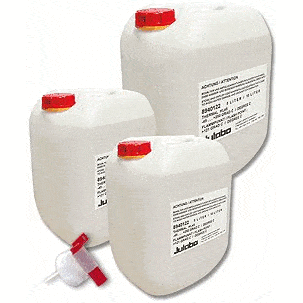
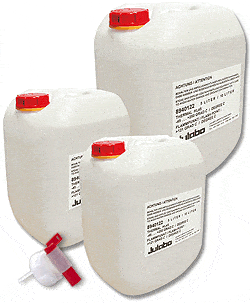
    Thermal P90 JULABO Thermal bath fluids are ideally suited for all of your temperature control applications and guarantee safe and reliable operation. Choosing the proper bath fluid is critical for the best temperature control results. Viscosity, oxidation characteristics and heat transfer of Thermal fluids are matched specifically with each JULABO temperature control unit. JULABO Thermal bath fluids have been carefully selected and optimized for maximum performance with JULABO instruments. Thermal P90 is a clear 2 cSt silicone fluid rated for use in JULABO PRESTO units only with a working temperature range of -90…+170 °C. This temperature range is only valid when used in PRESTO systems! The internal PRESTO cold oil overlay technology enables for safe operation above the fluid flashpoint. Low Toxicity Low viscosity High stability Minimum odor Good heat conductivity Low corrosion tendency Wide temperature ranges Working Temperature:  90 … +170

    $1,693.73 - $3,262.30

  • 18% Hydrogen Peroxide Food Grade H2O2 18% Hydrogen Peroxide Food Grade H2O2

    18% Hydrogen Peroxide Food Grade H2O2

    18% Hydrogen Peroxide food grade - You have arrived at professional use and industrial strength.  This product is great for heavy duty disinfection, bleaching and environmental sanitation. This strength eliminates viruses, bacteria, mold, attacks and removes odors. Our peroxide is USA made, sourced locally and we replenish the stock frequently to provide the freshest delivered peroxide. Made with high purity deionized water.  Dilution: Mix 1 part 18% peroxide with 5 parts distilled or R.O. water to make 3% 1QT Bottle - Makes 1.5 Gallons of 3% Food Grade Peroxide1 Gallon Bottle- Makes 6 Gallons of 3% Food Grade Peroxide5 Gallon Container - Makes 30 Gallons of 3% Food Grade Peroxide

    $30.59 - $737.01

  • 3% Hydrogen Peroxide Food Grade H2O2 3% Hydrogen Peroxide Food Grade H2O2

    3% Hydrogen Peroxide Food Grade H2O2

    Our 3% hydrogen peroxide food grade is the standard concentration of hydrogen peroxide found in retail stores across the country.  As you likely know this product has a wide range of uses and its food grade, making this a very versatile disinfectant. Our peroxide is USA made, sourced locally and we replenish the stock frequently to provide the freshest delivered peroxide. Made with high purity deionized water.  Peroxide Typical Uses: Cleaning Vegetables, Household cleaning, Kitchen Cleaning Hydroponic and Garden Use: 3% Peroxide can be added to Hydroponic systems and traditional soil beds.  3% peroxide when added to soil or hydro root systems it will oxygenate the the roots and will give your plants a growth boost. 

    $13.21 - $639.67

  • Borax Pentahydrate 5 Mol *High Purity Borax Pentahydrate 5 Mol *High Purity

    Borax Pentahydrate 5 Mol *High Purity

    Borax Pentahydrate 5 Mol contains 5 fewer moles of water, making it more concentrated (approx. 15% boron), while 10 Mol (approx. 11.4% boron) is generally more soluble.  Borax 5 MOL has a wide range of uses because its more concentrated its used as a flux in ceramics, glass, and metallurgical welding, a detergent builder, water softener, agricultural nutrient, fire retardant, and preservative against fungi. At BVV we have a range of requests but most notably we see our 5 MOL borax being used in soldering and welding to prevent metal oxidation and promote, for example, the flow of molten metals and solder.  This product is made in USA.  Borax Pentahydrate 5 Mol Cerificate of Analysis (Example COA) Borax Pentahydrate 5 Mol Safety Data Sheet (Example SDS)

    $13.91 - $83.43

  • Apiezon Q Sealing Compound

    Apiezon Apiezon Q Sealing Compound

    Apiezon Q Sealing Compound Apiezon Q Compound sealant can be used to seal around the edges of flat unground joints, to blank off parts of an apparatus temporarily or to seal glass cylinders to metal plates to produce temporary vacuum enclosures. Whether sealing joints, filling in holes or filling gaps in a vacuum system, it is extremely versatile and is the ideal leak sealant in a wide array of uses and industries. Temporary vacuum sealant Versatile product suitable for a multitude of uses Excellent waterproof medium Easy to use and to remove Ambient temperatures (10 to 30°C) 10 year shelf life MSDS Technical Data Sheet

    $417.17

  • Apiezon T grease

    Apiezon Apiezon T grease

    Apiezon T grease Apiezon T Grease is a silicone-free medium temperature vacuum grease renowned for its quality and tenacity. Apiezon T Grease has gained approval from prestigious organisations including NATO and the US Navy. Apiezon T Grease is a silicone-free medium temperature vacuum grease which: performs well under a wide range of temperatures, from +10 to +120°C is not recommended for highly stressed bearings has added cushioning exhibits good ‘stiction’ or sticking power has powerful ‘gettering’ action, meaning it absorbs potentially harmful grease and chemical impurities on metal and glass surfaces is easy to clean and remove as it is soluble in hydrocarbon solvents exhibits a vapour pressure of 4.6 x 10⁻⁹ Torr at 20°C As a vacuum grease, Apiezon T Grease is specifically designed for use in the low to medium vacuum range, yet is suitable to be used in the high vacuum range at lower temperatures. We specifically recommend that Apiezon T Grease is used for both sealing and lubrication in medium temperature environments (but not for highly stressed bearings). T Grease confers excellent cohesive strength and therefore when joints are mated they stay mated, forming an extremely efficient, gas tight seal. Apiezon T Grease provides extra cushioning between mated surfaces, and is highly effective in protecting fragile glass to glass joints. The strong absorption properties of Apiezon T Grease give it a powerful ‘gettering’ action . This is of considerable value in the electronics industry where scrupulous cleanliness of metal surfaces is required. Apiezon T Grease has also found a niche as a barrier to oxygen transmission in both vacuum and non-vacuum situations. Apiezon T Grease Vapour Pressure Graph MSDS Technical Data Sheet

    $410.22

  • Apiezon M grease

    Apiezon Apiezon M grease

    Apiezon M grease Apiezon M Grease is a silicone and halogen-free high vacuum grease and is ideally suited to all manner of high vacuum applications. Its inherent versatility means M Grease is also frequently used for non-vacuum purposes in both scientific and industrial settings and it is approved for use by NATO. Apiezon M Grease is designed for use in high vacuum environments at ambient temperatures (generally between 10 to 30°C / 50 to 86°F). If you are looking for a grease capable of performing at higher temperatures, Apiezon AP101 or Apiezon H Grease may be more appropriate. Apiezon M Grease is a silicone- and halogen-free high vacuum grease which: does not suffer from contamination problems associated with silicone based greases such as ‘creep’ or ‘carry over’ provides excellent lubrication is recommended for use at ambient temperatures exhibits a vapour pressure of 1.7 x 10⁻⁹ Torr at 20°C has built-in radiation resistance has powerful ‘gettering’ action, meaning it absorbs potentially harmful grease and chemical impurities on metal and glass surfaces is easy to clean and remove as it is soluble in hydrocarbon solvents As a high vacuum grease with excellent lubrication properties and radiation resistance, Apiezon M Grease is used for many diverse applications. In particular, M Grease is commonly used in scientific and industrial sealing and lubrication applications. Apiezon M Grease has been especially formulated to provide excellent lubrication while maintaining an efficient gas seal and is therefore widely used in the manufacture and servicing of high performance vacuum pumps. Using silicone-free Apiezon M Grease avoids the problems of ‘creep’ and ‘carry over’ which can often lead to sample contamination. Therefore, it is regularly used in analytical techniques such as infrared or mass spectrometry where sample contamination must be avoided. Similarly, ‘creep’ can cause problems in industrial paint or metal deposition processes as trace amounts of silicone on surfaces can prevent the adherence of paint, leading to poor coverage. When using silicone-free Apiezon M Grease this is not a problem. As a halogen-free product, Apiezon M Grease has a built-in resistance to irradiation. Other high vacuum greases such as esters, silicones or halogenated paraffins decompose at radiation levels of 0.1 MGy or less. In contrast, M Grease maintains excellent lubrication properties in high radiation applications, despite a small increase in stiffness when irradiated with 4 MeV electrons to 1 MGy. Apiezon M Grease has strong powers of absorption, particularly for other hydrocarbon molecules due to its complex hydrocarbon structure and very high molecular weight. Consequently it is frequently used as a stationary phase in gas chromatography. Apiezon M Grease Vapour Pressure Graph MSDS Technical Data Sheet

    $201.63 - $333.74

  • Apiezon L grease. 25g tube

    Apiezon Apiezon L grease. 25g tube

    Apiezon L grease. 25g tube Apiezon L Grease is a silicone and halogen-free ultra-high vacuum grease suitable for use scientific and industrial applications. Apiezon L Grease has the best vapour pressure properties of all the Apiezon products and is therefore suitable for use in ultra-high vacuum applications. L Grease is regularly used by highly respected organisations such as The European Space Agency, NASA and NATO. Apiezon L Grease is designed for use at ambient temperatures (generally between 10 to 30°C / 50 to 86°F). If you are looking for a grease capable of performing at higher temperatures, Apiezon AP101 or Apiezon H Grease may be more appropriate. Apiezon L Grease is a silicone and halogen-free ultra-high vacuum grease which: exhibits an extremely low vapour pressure of 7 x 10-11 Torr at 20°C does not suffer from contamination problems associated with silicone based greases such as ‘creep’ or ‘carry over’ provides excellent lubrication is recommended for use at ambient temperatures has built-in radiation resistance has powerful ‘gettering’ action, meaning it absorbs potentially harmful grease and chemical impurities on metal and glass surfaces is easy to clean and remove as it is soluble in hydrocarbon solvents As an ultra-high vacuum grease with excellent lubrication properties and radiation resistance Apiezon L Grease is used for many diverse applications. In particular, L Grease is commonly used in scientific and industrial sealing and lubrication applications. Apiezon L Grease has been especially formulated to provide excellent lubrication while maintaining an efficient gas seal and is therefore widely used in the manufacture and servicing of high performance vacuum pumps. Using silicone-free Apiezon L Grease avoids the problems of ‘creep’ and ‘carry over’ which can often lead to sample contamination. Therefore, it is regularly used in analytical techniques such as infrared or mass spectrometry where sample contamination must be avoided. Similarly, ‘creep’ can cause problems in industrial paint or metal deposition processes as trace amounts of silicone on surfaces can prevent the adherence of paint, leading to poor coverage. When using silicone-free Apiezon L Grease this is not a problem. As a halogen-free product Apiezon L Grease has a built-in resistance to irradiation. Other high vacuum greases such as esters, silicones or halogenated paraffins decompose at radiation levels of 0.1 MGy or less. In contrast, L Grease maintains excellent lubrication properties in high radiation applications, demonstrating only a small increase in stiffness when irradiated with 4 MeV electrons to 1 MGy. To find out more about Apiezon L Grease or the Apiezon family of silicone-free high vacuum greases manufactured by M&I Materials Ltd, contact our team of experts available via our helpline and online. Apiezon L Grease Vapour Pressure Graph MSDA Techinical Data Sheet

    $292.02

  • Apiezon AP101 grease. 50g tube

    Apiezon Apiezon AP101 grease. 50g tube

    Apiezon AP101 grease. 50g tube Apiezon AP101 is a silicone-free, excellent general purpose, hydrocarbon grease, which is intended for a variety of industrial and scientific applications. Apiezon AP101 is a specialist, anti-seize vacuum grease, containing PTFE, which confers superior anti-seize properties providing glass and metal surfaces with long-lasting lubrication and protection from fusing and corrosion. Apiezon AP101 is a silicone-free anti-seize vacuum grease which: is ideally suited for use in low to medium vacuum ranges having a vapour pressure of <10-5 Torr at 20°C has anti-seize properties, making it an effective protector and lubricant for metal surfaces which may be subject to seizure or corrosion is a critical lubricant is insoluble in most solvents, is resistant to water, alcohols, ketones and esters resists attack from aqueous acid and alkali solutions, alcoholic alkali solutions and corrosive gases. is suitable for use over a wide temperature range does not suffer from contamination problems associated with silicone based greases such as ‘creep’ or ‘carry over’ is easy to clean and remove using hot water and an aqueous glassware detergent or hydrocarbon solvents. Apiezon AP101 with its superior anti-seize properties is typically used to maintain the smooth operation of stopcocks and taps in scientific and industrial settings. Coupled with easy separation of ground or polished glass joints AP101 is an excellent general purpose grease for laboratory use. The value of Apiezon AP101 anti-seize properties is not limited to laboratory or glassware use, but is equally effective when used on metal equipment which may be subject to seizure or corrosion. Just a small amount of AP101 on fastenings which, when exposed to corrosive environments would normally jam solid, will ensure they are protected. Apiezon AP101 is an excellent general purpose grease for sealing joints and is ideal for use in critical lubrication conditions such as highly stressed bearings. Being hydrocarbon based, Apiezon AP101 does not suffer from the problems of “creep” or “carry over” which is traditionally associated with silicone greases. It reduces sample contamination and consequently the risk of interference in analytical techniques such as infra-red and mass spectrometry. Additionally AP101 can be used with confidence in paint spraying and metal deposition processes. To find out more about Apiezon AP101 Grease or the Apiezon family of silicone-free high vacuum greases manufactured by M&I Materials Ltd, contact our team of experts available via our helpline and online. Apiezon AP101 Grease Vapour Pressure Graph MSDS Technical Data Sheet

    $201.63

  • Apiezon AP100 grease. 50g tube

    Apiezon Apiezon AP100 grease. 50g tube

    Apiezon AP100 grease Apiezon AP100 vacuum grease is a silicone-free vacuum grease and lubricant. Containing PTFE, AP100 exhibits extremely high levels of lubricity and has been shown to provide eight times the level of lubrication offered by standard, petroleum-based lubricating greases. Apiezon AP100 is designed for use at ambient temperatures (generally between 10 to 30°C / 50 to 86°F). If you are looking for a grease capable of performing at higher temperatures, Apiezon AP101 or Apiezon H Grease may be more appropriate. Apiezon AP100 Grease is a silicone-free ultra high vacuum lubricating grease which: has anti-seize properties, making it an effective protector and lubricant in ultra-high vacuums exhibits extremely high levels of lubricity demonstrates an extremely low vapour pressure of 7 x 10-11 Torr at 20°C is recommended for use at ambient temperatures does not suffer from contamination problems associated with silicone based greases such as ‘creep’ or ‘carry over’ is easy to clean and remove using hot water and an aqueous glassware detergent or hydrocarbon solvents The unique properties of Apiezon AP100 lubricating vacuum grease mean it is frequently used to protect stepping motors and gearboxes from corrosion and abrasion, particularly when they are subjected to high load conditions. AP100 is also used to prevent seizure in stopcocks, taps and small metal fastenings. The creep resistance of Apiezon AP100 benefits scientific and semiconductor users alike. AP100 helps to increase the accuracy of analytical techniques and improve yields in semiconductor manufacture by contamination avoidance. In addition, AP100 is used for surface coating applications where silicone contamination can lead to poor surface adhesion and incomplete coating defects. To find out more about Apiezon AP100 grease or the Apiezon family of silicone-free high vacuum greases manufactured by M&I Materials Ltd, contact our team of experts available via our helpline and online. Apiezon AP100 Grease Vapour Pressure Graph MSDS Technical Data Sheet

    $424.13

  • Lacquer Thinner - Reclaimed Lacquer Thinner - Reclaimed

    Lacquer Thinner - Reclaimed

    Lacquer thinner thins lacquers and epoxies.  Its great for cleaning tools and equipment.  This is a medium - fast drying solvent.  The lacquer thinner we carry is LT-R which stands for lacquer thinner - reclaimed.  Lacquer Thinner Certificate of Analysis (Example) COA Lacquer Thinner Safety Data Sheet SDS

    $12.52 - $903.88

  • Mineral Spirits (Low Odor) Mineral Spirits (Low Odor)

    Mineral Spirits (Low Odor)

    Ideal for cleanup after painting, Mineral spirits thin oil based paints, stains, and varnishes.  This product also works and an excellent household and automotive degreaser.  Mineral Spirits Certificate of Analysis (Example) COA Mineral Spirits Safety Data Sheet SDS

    $17.38 - $632.71

  • Methyl Propyl Ketone (MPK) Methyl Propyl Ketone (MPK)

    Methyl Propyl Ketone (MPK)

    MPK Methyl Propyl Ketone is a medium evaporating solvent. Its commonly used to dissolve synthetic resins in paints, coatings, adhesives and inks.  Compared to MEK, MPK has the slower evaporation rate and lower density which helps prevent solvent trapping.  Solvent trapping is when the solvent in the paint doesn't evaporate before the surface "skins" over. MPK is used in the extraction of oils and fats, offering high solubility for resins and other compounds.  The boiling point is ~ 101°C. MPK is used widely in industrial hemp oil extraction. MPK also known as 2-Pentanone is a clear, flammable liquid with a strong fruity odor.  MPK Certificate of Analysis (Example COA) MPK Safety Data Sheet (SDS)

    $25.03 - $2,113.68

  • Micellae O2W (Oil-2-Water) Emulsifier Micellae O2W (Oil-2-Water) Emulsifier

    Micellae O2W (Oil-2-Water) Emulsifier

    Micellae O2W Base | Emulsifier Concentrate (Oil-to-Water) Micellae O2W Base is a turnkey emulsion solution geared to bring high-performing emulsification processes in house. No specialized equipment needed, just Mix, Stir and Infuse! O2W is a high-concentration emulsifier base designed to create uniform, stable oil-in-water dispersions using gentle mixing. What it is A truly Mix, Stir and Infuse solution that gives operators a turnkey emulsion solution to create nano particle size emulsions in house without ANY specialize equipment! O2W Base is a concentrated, water-free emulsifier system built for formulators who want repeatable oil-in-water dispersion with simple mixing. It is designed to reduce processing complexity and improve batch-to-batch consistency versus approaches that rely heavily on high-shear homogenization. Use any Botanical Oil + O2W Base = Ready to Mix with water! Why formulators use it · 10-100nm particle sizing · Thermodynamically Stable and “Self-Assembling” (no equipment needed) · Great Taste and High Clarity Beverages · 3rd Party Tested for GRAS · PK, Pre-Clinical and Toxicological Studies conducted to ensure safety · PEG Free Formulation · Gentle mixing friendly (designed to work without specialized) · Water-free concentrate (no alcohol or water-based carrier in the base) for high shelf stability · Consistency focused (built to reduce variability and separation risk when used correctly) · Scales from bench to production with the same basic process steps Common Applications / Quick Facts · Average cost per mg is ~ $0.006/mg (when using distillates) · Ready to Mix with water! · Ready to use calculator Here: O2W.Micellae.com · Syrups, drink enhancers, and water-based functional formats · “Fast-Acting” Edibles formulations · Rapid R&D trials where you need quick, repeatable dispersion behavior Suggested use (high level) 1. Warm your O2W Base and oil for ease of handling 2. Mix: combine O2W Base with the desired oil until homogenous to Create Loaded O2W. 3. Stir: add Loaded O2W to water and stir to watch O2W spontaneously emulsify into 10-100nm particle size. 4. Infuse: Add O2W to any beverage application and enjoy the performance of a thermodynamically stable emulsion. Storage guidance Store sealed at room temperature in a cool, dry environment, out of direct sunlight. Keep the container tightly closed between uses. O2W Standard Operating Procedure   Important note For professional formulation use. Final products must be manufactured and labeled in compliance with applicable local and state regulations. For additional information or questions, feel free to reach out to info@micellae.com

    $2,085.87

You have seen 64 out of 64 products

BVV’s Specialty Chemicals collection features a curated selection of specialty compounds used in laboratory, analytical, industrial, and formulation applications where specificity, purity, and controlled performance are essential. This collection includes specialty materials such as caffeine, benzocaine, lidocaine, formaldehyde, mercury, sodium metabisulfite, and Oxone, supporting a wide range of technical and research-driven workflows.

Carefully sourced and quality-controlled, BVV specialty chemicals are selected to meet professional standards for consistency, documentation, and reliable chemical behavior. With in-stock availability and knowledgeable technical support, BVV provides trusted specialty chemical solutions for controlled use in precision-focused environments.

Login

Forgot your password?

Don't have an account yet?
Create account